Warhammer 40,000 – Imperial Fists Call to Arms Pt 2
You read the introduction to the Imperial Fists. I provided an overview of the first 'MVP' of this army, and now I want to offer some additional insight into the lore behind it. Rather than simply painting these Space Marines as Imperial Fists, I will allocate them to the 3rd Company. I will explain why below.

As loyal Space Marines, we are going to recognise the Codex Astartes. As mentioned in the first article, we will use the Codex: Ultramarines for this project. And I will provide a brief overview of how Space Marine Chapters were organised after the Horus Heresy and before the Rubicon Primaris.
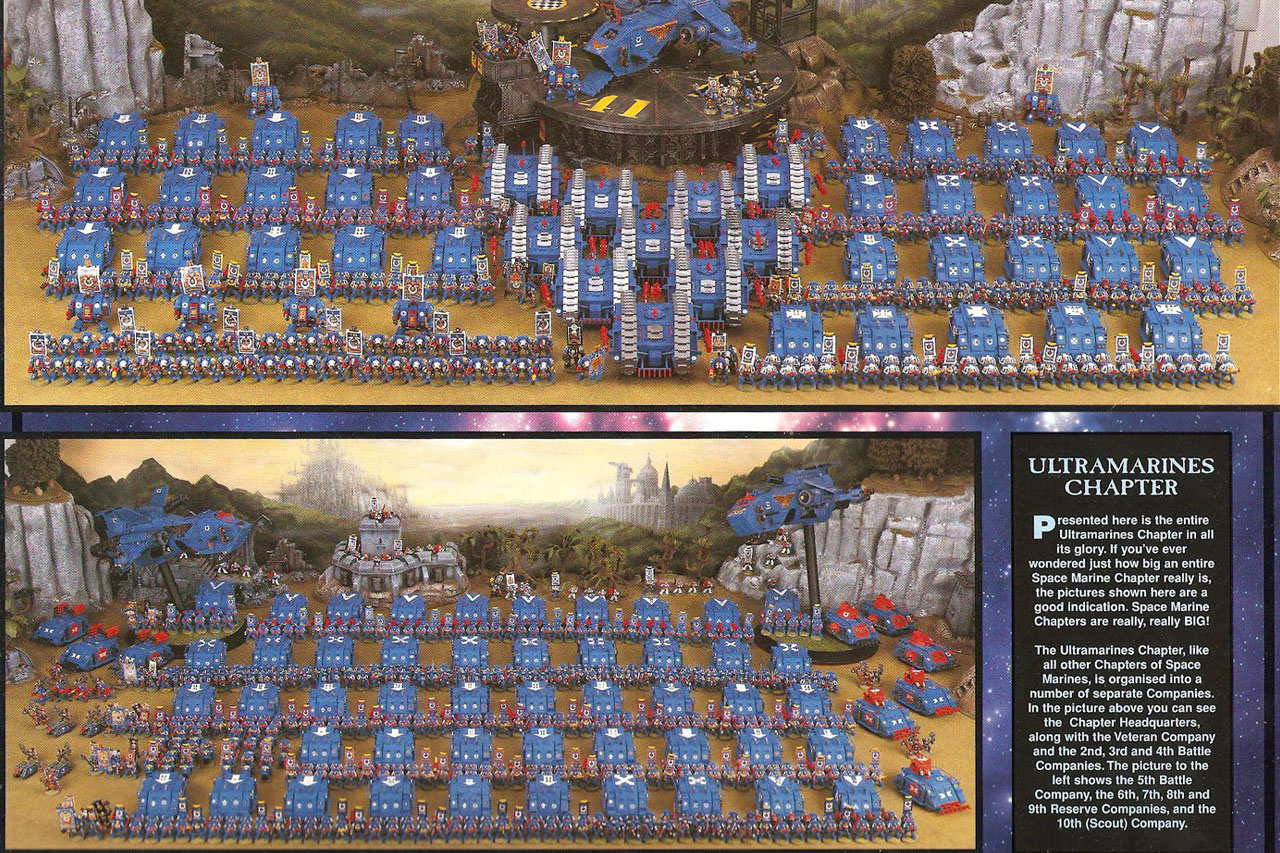
Back in the Age of Darkness, the Adeptus Astartes were organised into Legions known as the Legiones Astartes. There were 18 of them, each following their Primarchs, and they were much bigger than today's Chapters. These legions comprised between 100,000 and 250,000 armed Space Marines, and sometimes even more, as in the case of the Ultramarines and the Word Bearers. These legions were organised into Chapters, Companies and Squads. However, after the Horus Heresy, such concentrated power was deemed undesirable, so the Legions were broken into smaller Chapters of around 1,000 Space Marines. This explains why we talk about Chapters in 40k and Legions in 30k, and also why Chapters are more distinctive in 40k than in 30k (and less flexible).
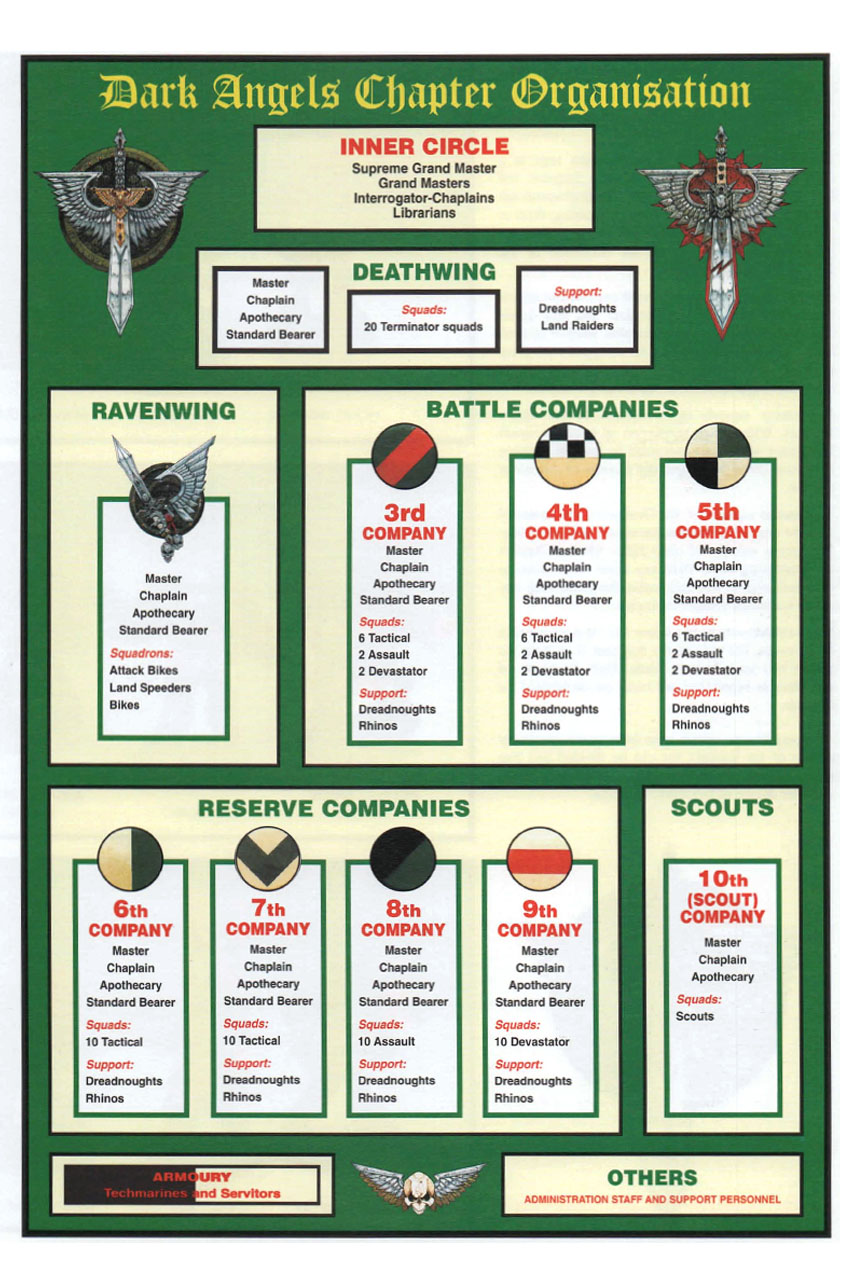
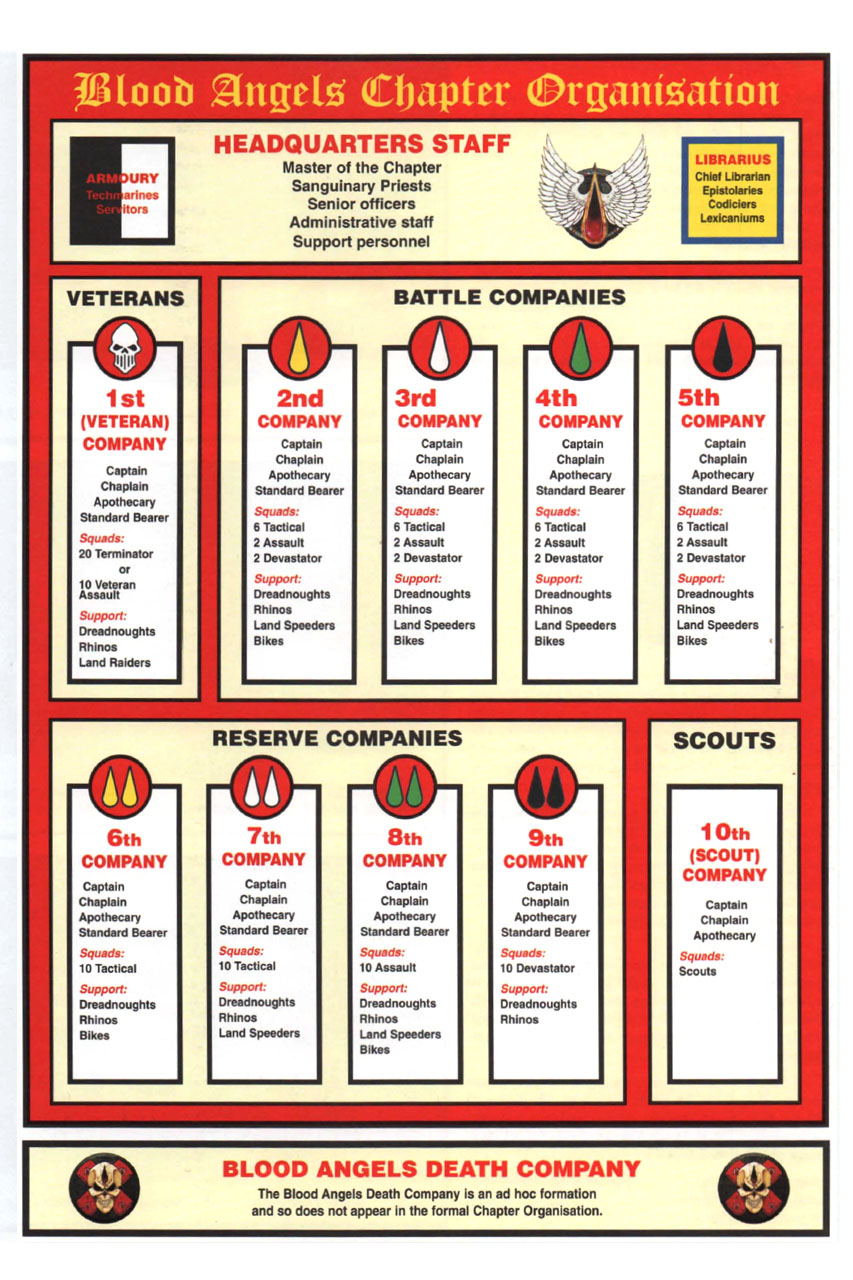
According to the Codex Astartes, a Space Marine Chapter is organised into ten companies. The first is the Veterans Company; the second to fifth are the Battle Companies; the sixth to ninth are the Reserve Companies; and the tenth is the Recruitment/Training Company of the Chapter, consisting of Scouts. Each of these companies has identifying colours, which are used on their armour and banners (see the organisation in the picture below). Note: Space Marine Chapters that are not organised in alignment with the Codex Astartes use different methods to organise their squads and identify their units. Blood Angels use different identification methods, such as coloured blood drops, different helmets colours and squad badges, while others, such as the Dark Angels and Space Wolves, have entirely different structures. Several Successor Chapters also have rather loose interpretations of the Codex Astartes as well.
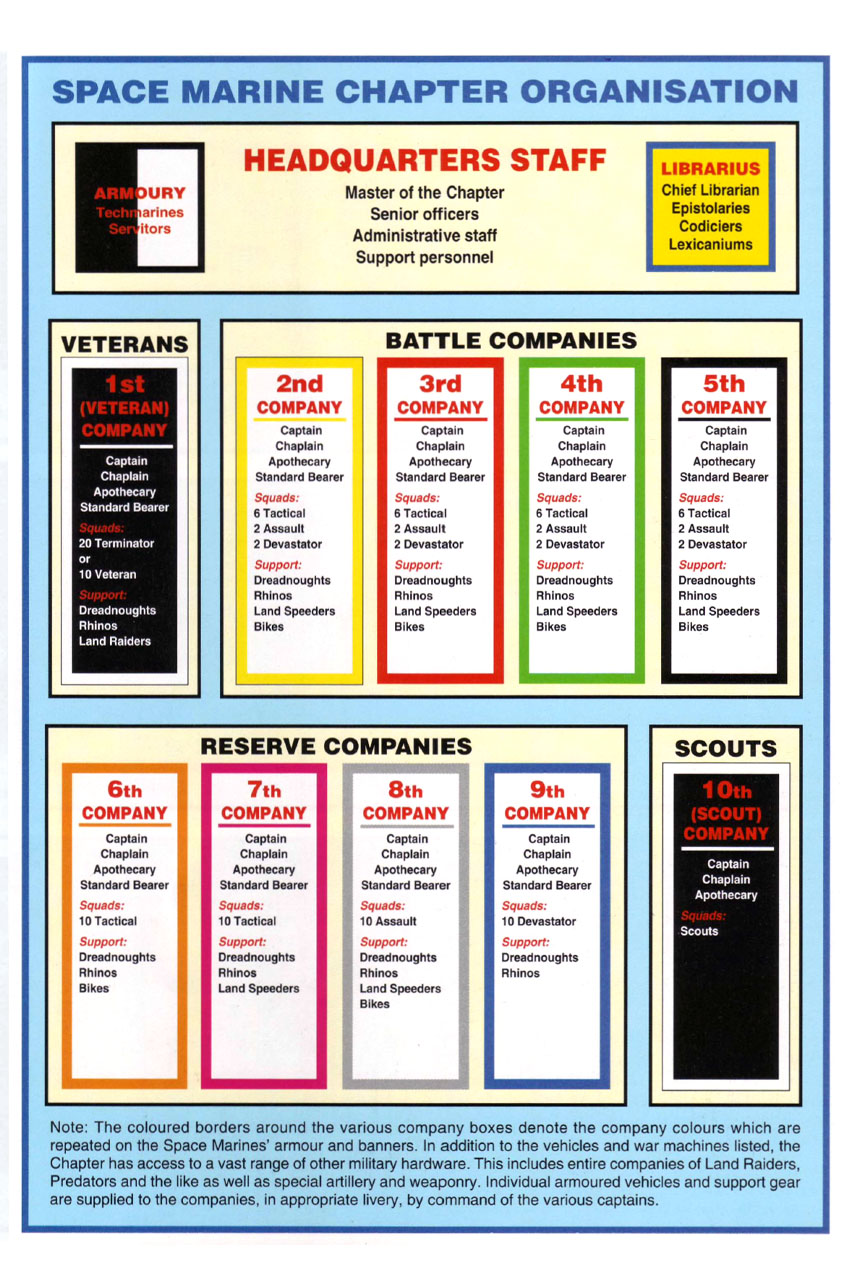
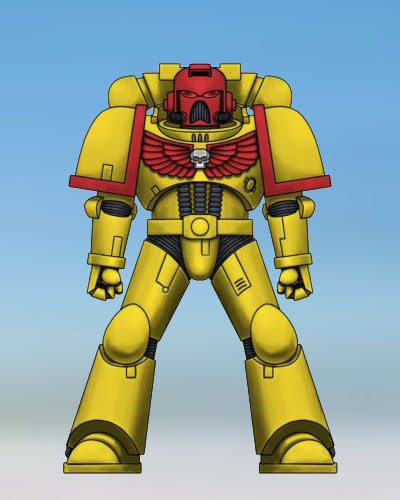
I wanted to play with a regular Battle Company, supported by some elite units from the 1st Company. This would give me the option of adding yellow (2nd Company), red (3rd Company), green (4th Company) or black (5th Company) to the Imperial Fists' yellow. The 2nd company is definitely out due to a total lack of contrast, and the 4th company is also out, as the green doesn't provide much better contrast. The 5th Company is quite popular with newer 40k releases, but it feels more like a 30k colour scheme, so I opted for the 3rd Company instead. Leaning into the "red era of Warhammer (around 1992 to 1996), a time frame where distinct, vibrant painting style characterised the look of many pictures in White Dwarf and Games Workshop publications, with the heavy use of bright red on weapons and armour, often contrasted with bright yellows or blues, and of course gobling green bases. In our case red would be used for the trim on the shoulder pads; other chapters or later Codex Space Marines would offer variants where the company colour would be shown on the aquila or knee pad. As well as the painted trim, the shoulder pads display the chapter insignia on the left shoulder pad and the unit identification on the right shoulder pad (a symbol representing the squad type and a number representing the squad number). These symbols and numbers would also be displayed on vehicles assigned to that unit, such as Rhinos.
The lore of the 3rd Company was later expanded upon, for example by giving them the title The Sentinels of Terra, as well as recounting some interesting battles and introducing named characters. The army project will therefore be the Imperial Fists' 3rd Company, along with a matching tag to sort all the articles about them on this blog.
This would mean that all non-veteran units, including the company's command structure, would have red shoulder trims. In the case of characters, including sergeants, these colours would be visible on the trim of their banners as well. Before the introduction of the Rubicon Primaris, a battle company consisted of a command structure comprising a Captain, a Chaplain, an Apothecary and a Standard Bearer, as well as six tactical squads, two assault squads and two devastator squads. They were supported by Dreadnoughts, Rhinos, Land Speeders and bikes. Any other vehicles or equipment would be assigned from the chapter's armoury. To help with orientation, I have used the picture from the Codex: Ultramarines, as well as the Bolter & Chainsword Space Marine Painter.
While many weapons were red in the 2nd edition, as can be seen with the Ultramarines and Xenos forces, this would be excessive for the 3rd Company of the Imperial Fists, even during the red era. Therefore, I have opted for black casings, as can be seen below, and this will be applied across the army.

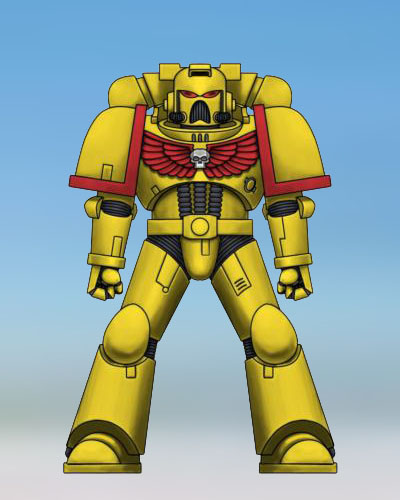
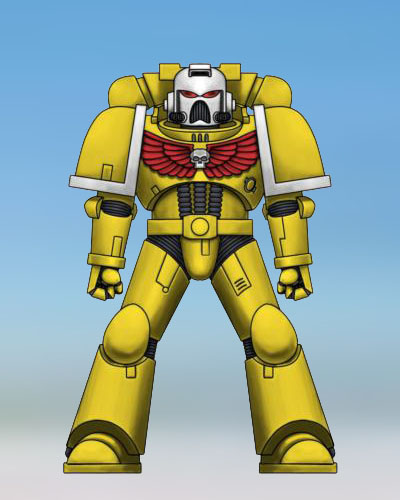
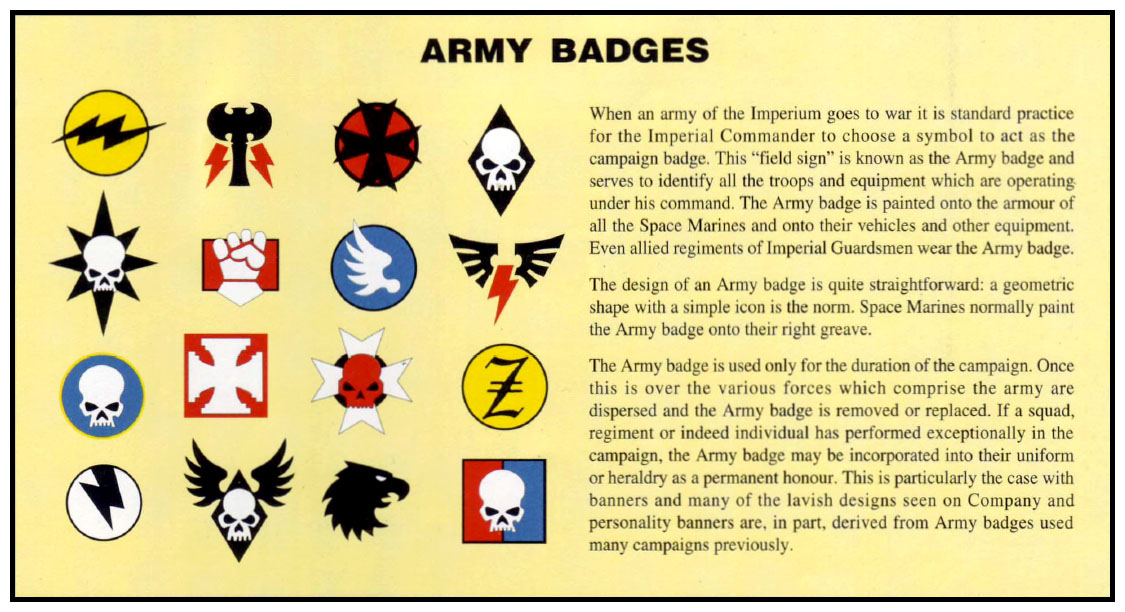
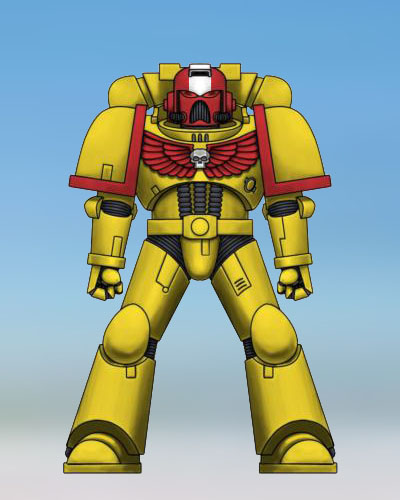
Vehicles would have a round company badge in the company colour (red) in addition to Roman numerals (III). Veterans of the Space Marines have white trim. This is only seen on regular power armour as Terminator armour does not feature trim that can be painted in this way. Librarians and Techmarines are exceptions to these colour identifications as they are part of the Chapter's headquarters and organised within the Armoury and Librarius. However, there are identifications across those companies. For example, army badges (called campaign badges or campaign markings in other publications) were used to identify all units belonging to a certain campaign and could even be extended to non-Astartes units, such as allied regiments of the Imperial Guard.
While I like the idea of using these to tie in with other army projects, I think I will only use honour badges on the Space Marines to indicate the experience of the units or characters. The Imperial Guard will be connected through their origins in Necromunda and Inwit.
However, there are some continuity errors in the publications, or at least some contradictory information. This mostly concerns the Veteran helmets of the Imperial Fists. The Codex Ultramarines states that the Imperial Fists sergeants use an iron skull as a helmet badge in red. The Veterans do not use white helmets, but rather a red stripe in the middle of their helmets. However, the boxed set of the Supremacy Force shows not only sergeants without the red skull, but also that none of the veterans/terminators have any red on their helmets, which are regular yellow. The fact that a lot of 30k lore is mixed into the information available online does not provide further clarity at first glance.
Later releases of the Codex Space Marines and even the Imperial Fists supplements are in line with the Codex Astartes. For my 3rd company, I’ll therefore ignore the older oddities and stick to the later, Codex-aligned markings. This mostly affects the Veteran Sergeants and Terminators, as it is unlikely that I will have a Veteran unit in power armour.
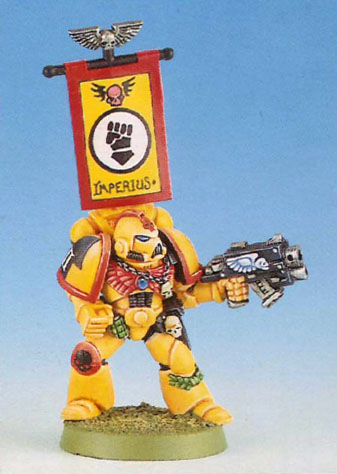
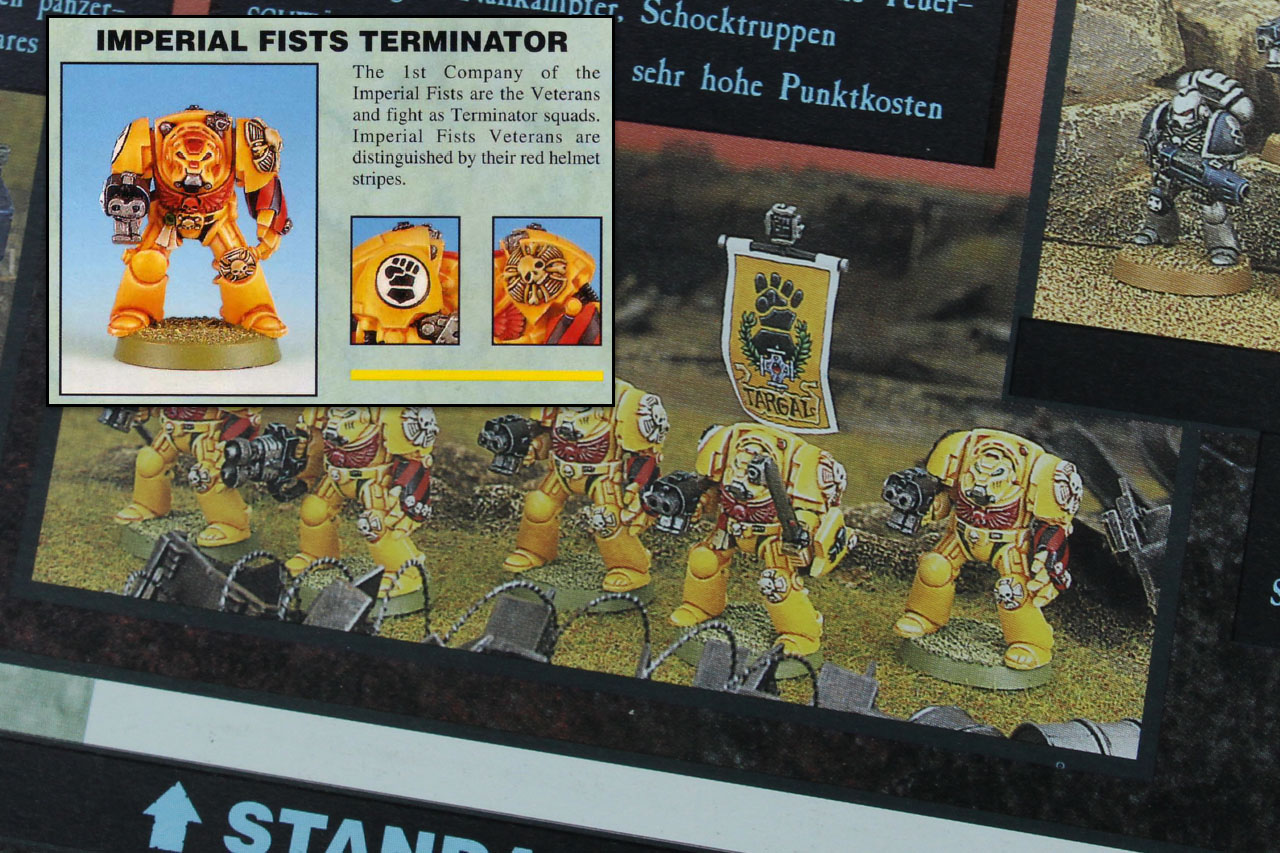

Now that the basics are in place, the next question is whether to put squad numbers on the decals and, if so, which ones. I could designate two Tactical squads as II and V, and with the Land Speeder, Bikes and a full Assault squad, I could fill out VII and VIII. The Devastator squad could then be IX or X. There is not much space for a unit number on the metal Terminator shoulder pads, but I assume I can place it in a corner with smaller numerals, similar to the Horus Heresy pads. Due to this limitation, I will probably stay within the range I–X to keep the numerals small yet readable.
Vehicles are more flexible, except for the Rhino, which is permanently assigned to a specific squad. This is mainly a lore choice rather than something dictated by gameplay. As I have some parts to build a command Rhino, I could allocate it to either the 1st Company or one of the Tactical squads of the 3rd Company, depending on the composition of the rest of the force.
All of this creates a need for specific decals, more shoulder pads, banners and, to round things off, unit lore – for example, names for the banners. The Imperial Fists had no special characters of their own in the 2nd edition; the first one, Sergeant Lysander, arrived in the 3rd edition and was later promoted to Captain in 5th, undergoing adjustments over the years. I could 'white label' some Ultramarines characters (Marneus Calgar's entry would be a fitting Tor Garadon), but I don't plan to use special characters very often, if at all.
Now that the company choice, markings and basic organisation are finalised, the next step will be to determine the exact squad numbers and banner designs, and start on the first test models for the 3rd Company.
Enjoy this article?
Like us on Facebook

Follow me on Instagram

Categories
- events (201)
- fantasy (589)
- General (160)
- historical (627)
- Little Big Adventures (4)
- offtopic (5)
- reviews (531)
- science fiction (662)
- showroom (101)
- terrain (114)
- work-in-progress (411)









Leave a Reply