Oathmark – Battles of a Lost Age Core Rules 2nd Edition
Seven years after the first edition, Joseph A. McCullough returns to the Marches. Oathmark: Second Edition, Battles of the Lost Age was released by Osprey Games on 27 August 2026. If the name McCullough sounds familiar, it should. We have covered a good part of his work on this blog, from Frostgrave and Stargrave to The Silver Bayonet. Oathmark is the odd one out in that list, because it is not a skirmish game. It is a mass battle game, and it comes with a full range of plastic miniatures behind it.
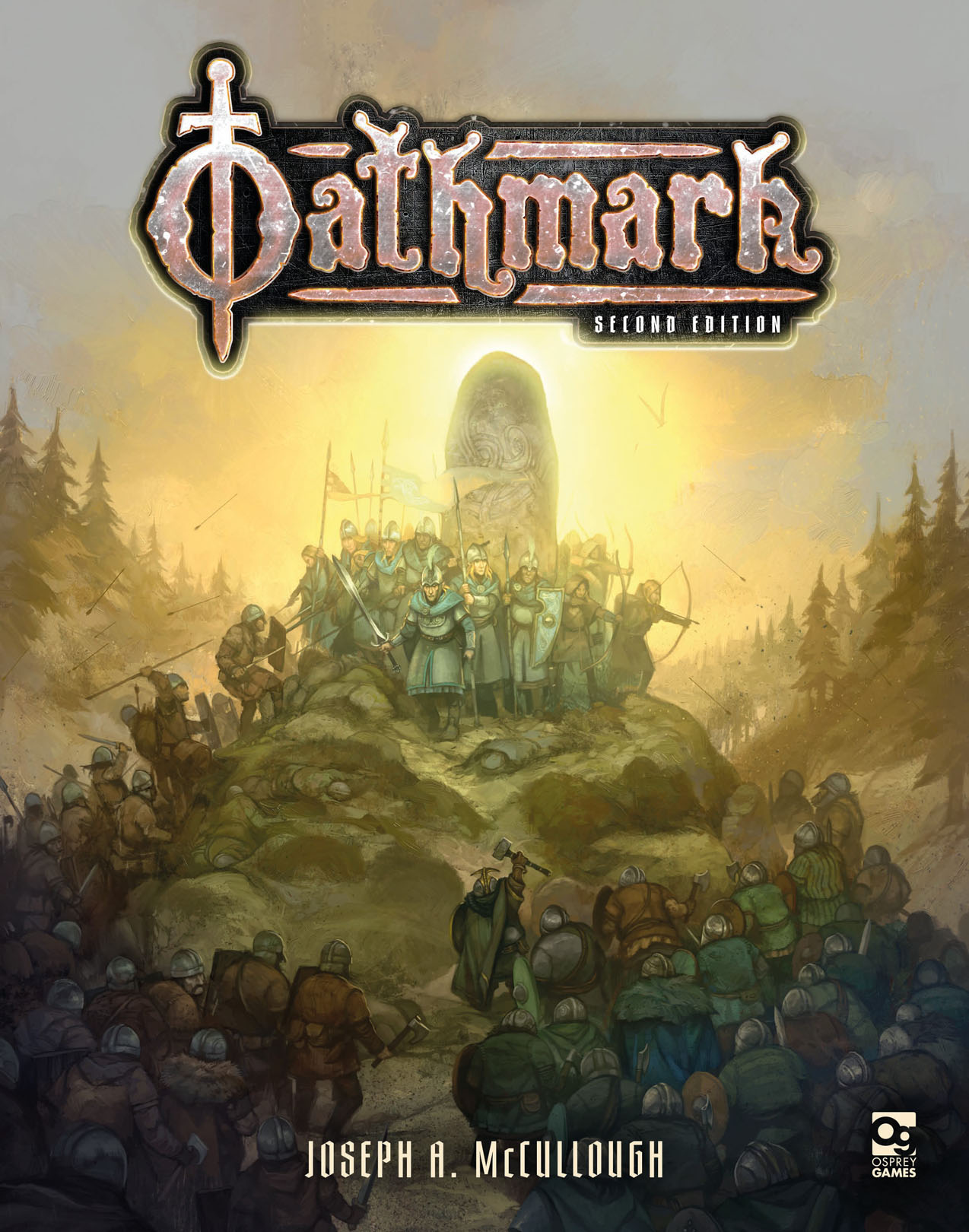
Oathmark has always been a co-production between Osprey and North Star Military Figures. Osprey publishes the rules, North Star produces the miniatures. We have reviewed several of those plastic kits over the years, and they have left a lasting impression. The Oathmark Skeleton Infantry are, in my opinion, among the best models in the whole range. The Goblin Infantry have found a second life in Dino's Sword & Sorcery Adventures. You can find all of our coverage under the Oathmark tag.
I have to be honest here. I never played the first edition. What always caught my attention was the miniature range, and the fact that Michael Anderson was involved in sculpting it. The kits are modular, come with lots of weapon options and offer good to very good value for money. The undead in particular have been tempting me for years. A classic High Fantasy army of skeletons, put together from affordable plastic boxes, sounds like exactly the kind of project I would enjoy. The new edition was the perfect excuse to finally take a closer look at the rules themselves.
Warhammer 40,000 – JoyToy Imperial Fists Mk III Legionary
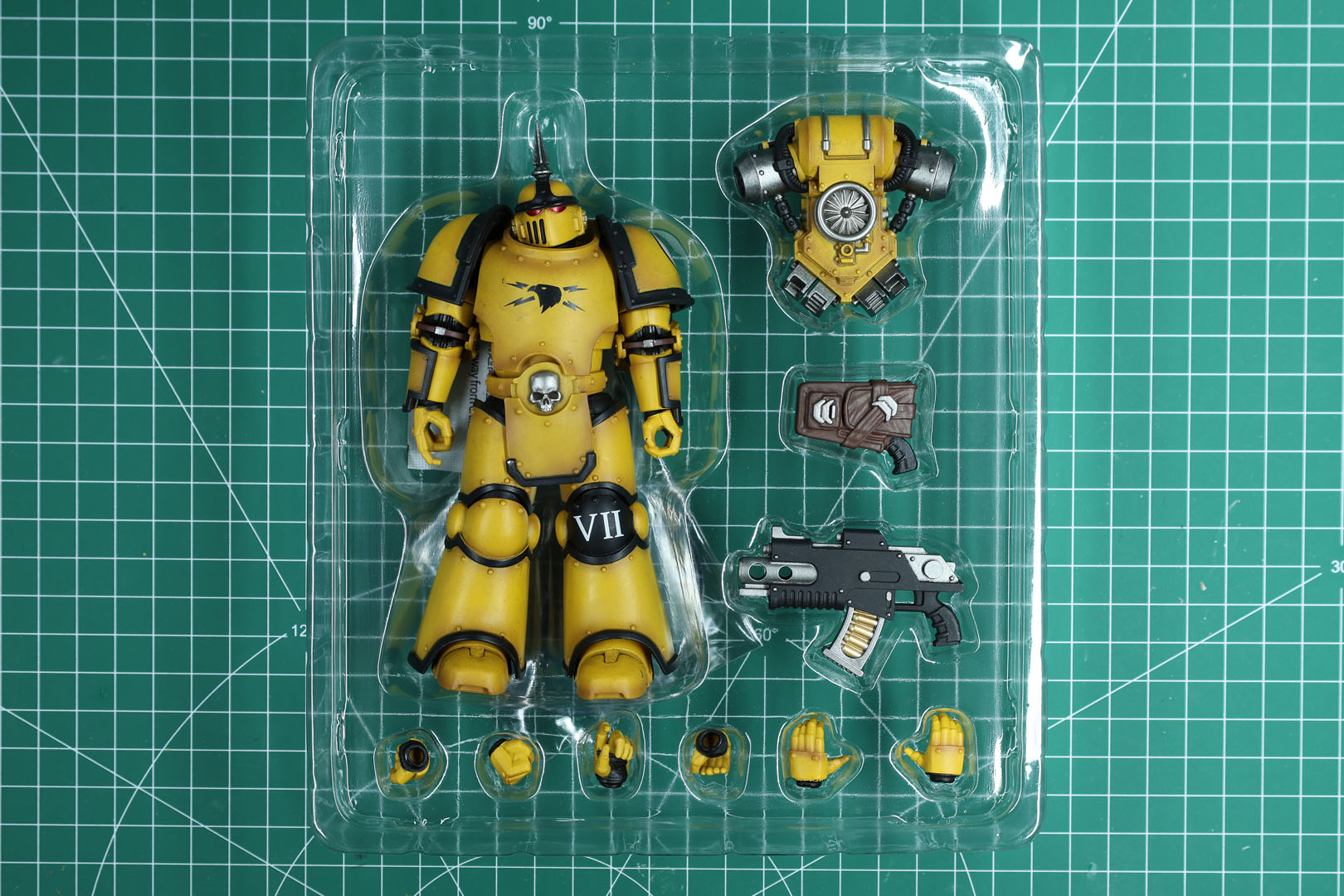
This JoyToy model has been on my wishlist for quite some time. Not the Legionary, a Breacher to be honest, but availability is an issue and prices vary quite a bit, so I pulled the trigger on a regular Imperial Fists Tactical Legionary in Mk III armour instead.
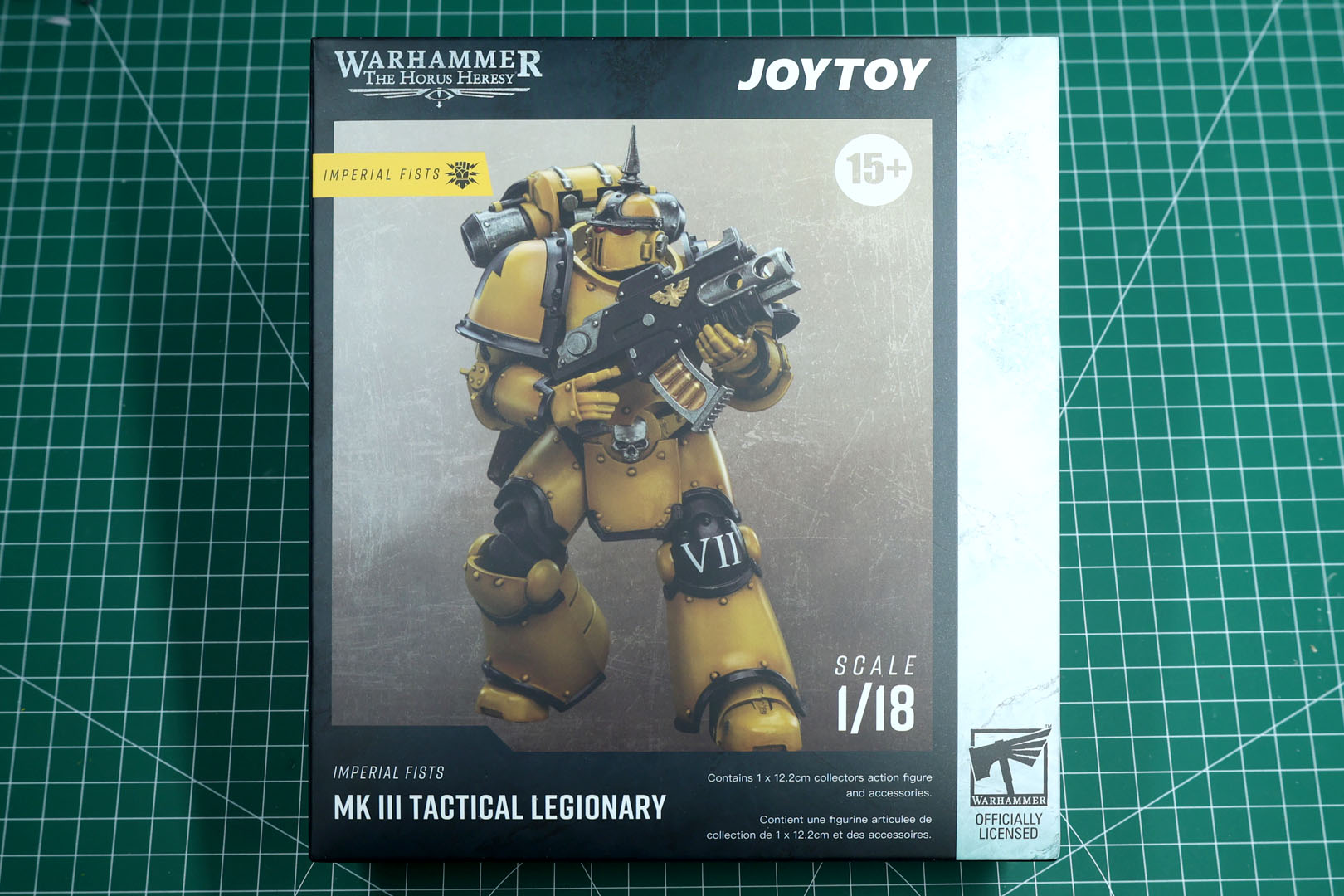
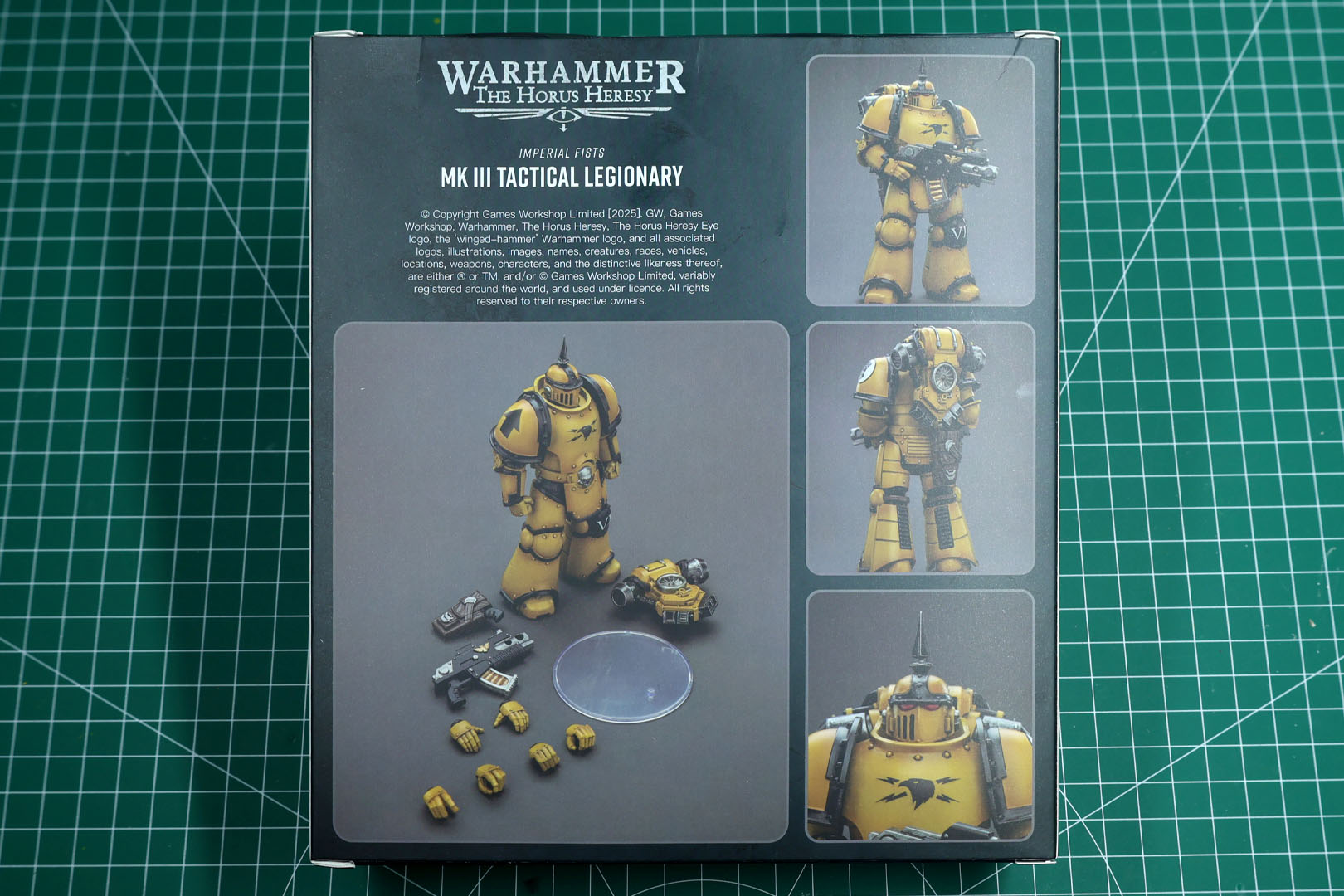
This is not my first larger-scale Warhammer figurine. I own a Funko Pop, a McFarlane Primaris Space Marine in the creator's variant (so you can paint it yourself), and an Ultramarine from the old Weta Workshop / Sideshow Collectible collaboration. And now one of JoyToy's, in 1/18 scale!
JoyToy is a Chinese collectibles manufacturer, founded back in 2015, and they've built their name on highly articulated, pre-painted 1/18 scale sci-fi and mecha action figures. Since 2021 they've held an official licence from Games Workshop, so we're talking about roughly five years now of JoyToy putting out proper Warhammer action figures. It started with a handful of Space Marines and has since grown into a massive range covering Primarchs, vehicles, Chaos Space Marines, Necrons, and most recently their first Age of Sigmar figures with the Blacktalons.
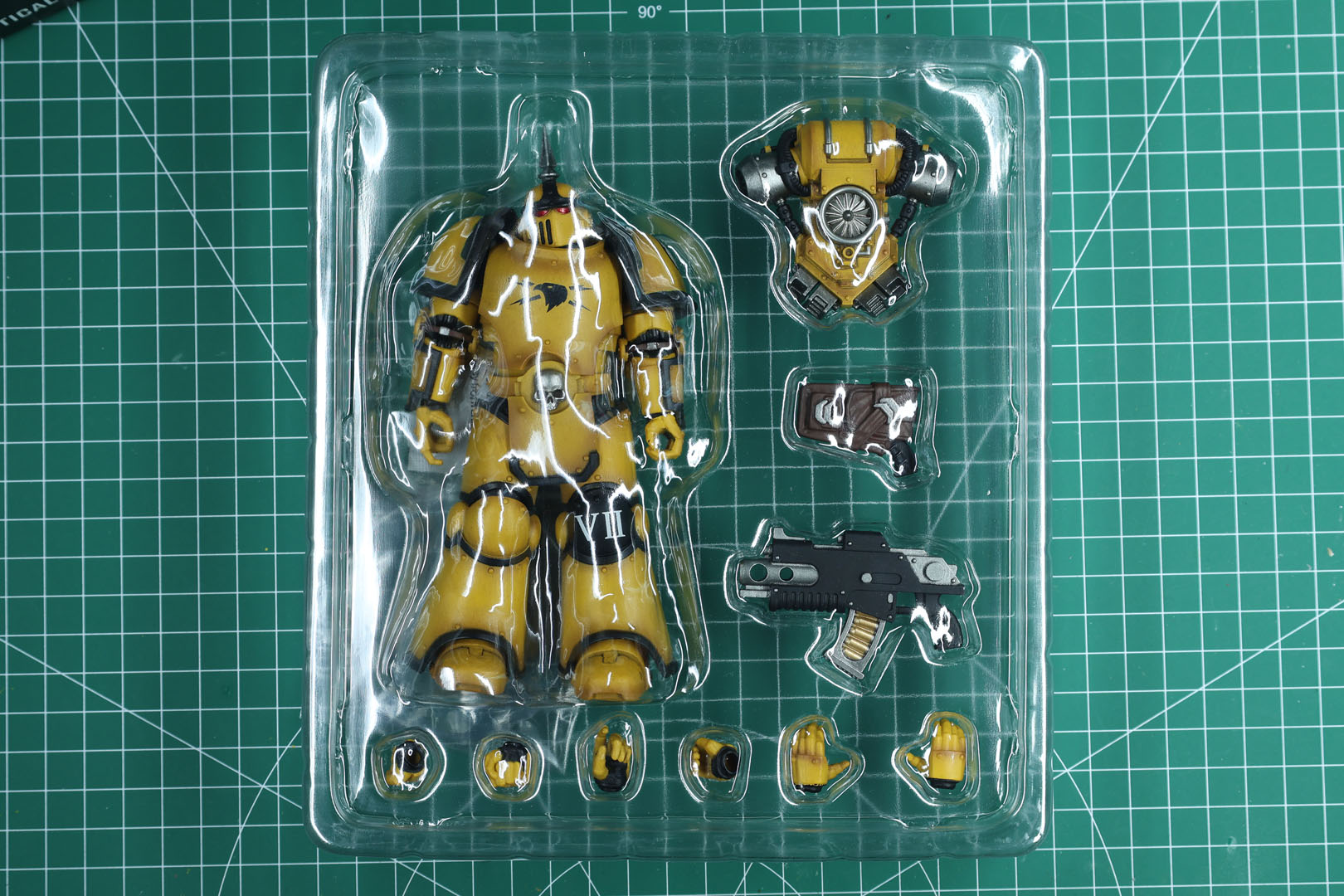
As I mostly collect regular tabletop miniatures and Lego, this is a bit of a side step, so I might not be familiar with all the proper terms for these. The Tactical Legionary comes with a bit less gear than some of the other figures available; it has a Phobos-pattern boltgun, four pairs of different hands, a holstered bolt pistol and a separate backpack. I paid roughly 30 EUR including shipping for this one. The Breacher costs about 60-80 EUR and comes with a breacher shield, bolt pistol, special weapon and an empty holster on top. There are further poses and variants for Sergeants or different weapons as well.
Pricing is honestly all over the place. There's an official MSRP from China, but most eBay listings I found actually ship from France, while on Amazon the offers come straight from China, with delivery times of up to three months. So it pays off to check where a listing is actually shipping from before you order.
Dead Man’s Hand – Standing Horses
Great Escape Games has sent us one of their novelties for Dead Man's Hand. It is a scatter terrain sprue covering standing horses with a few extras, and we're going to take a closer look at it.
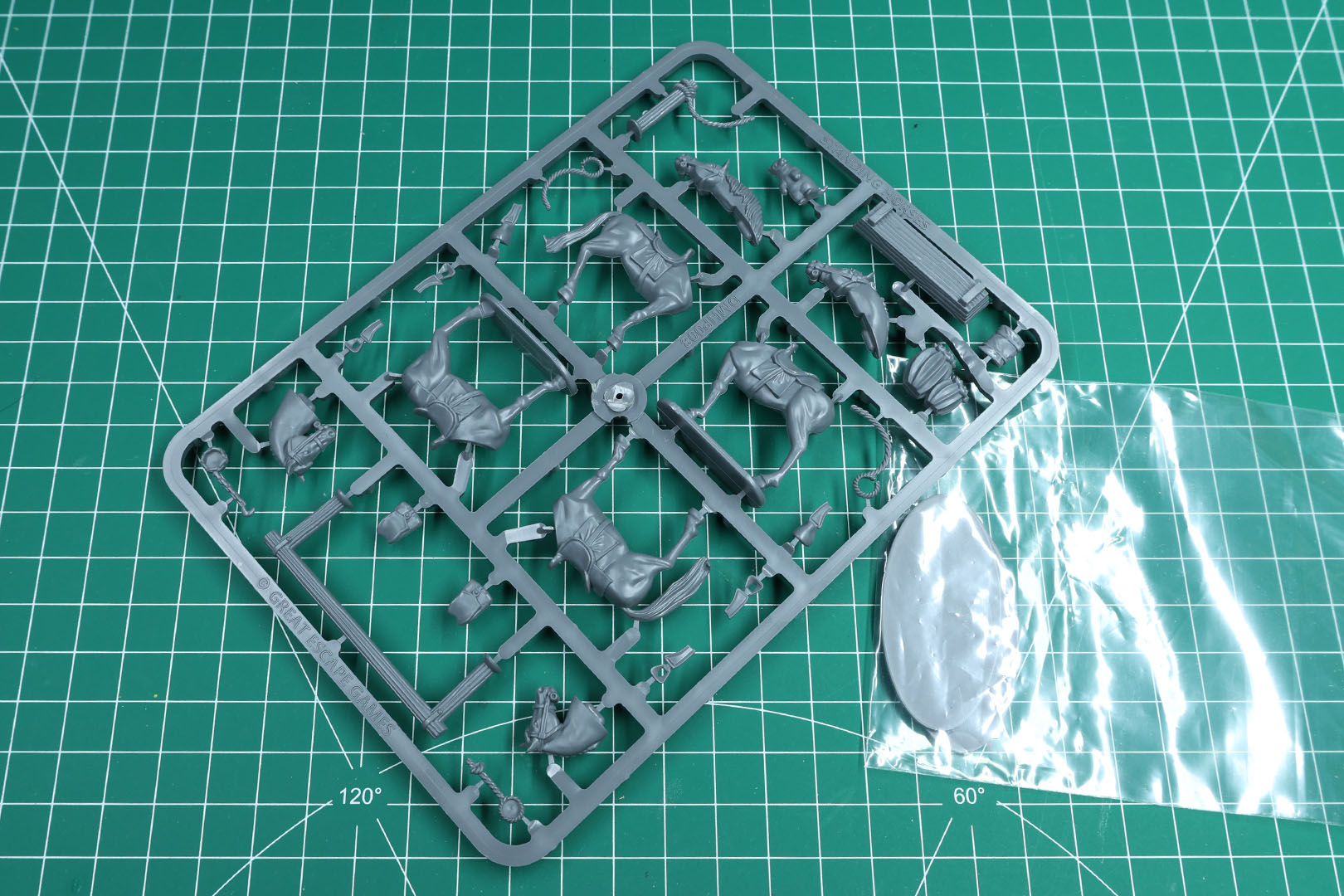
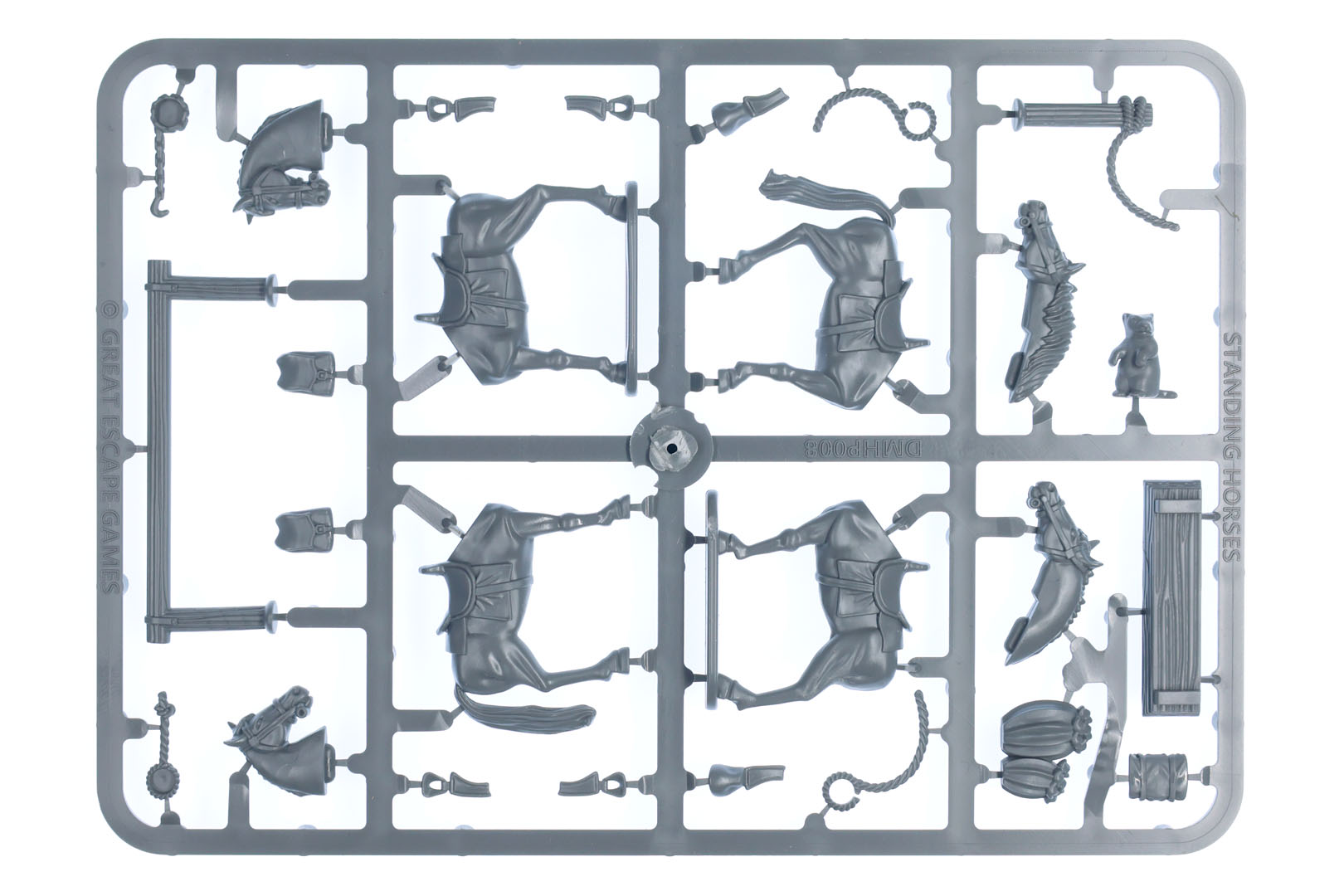
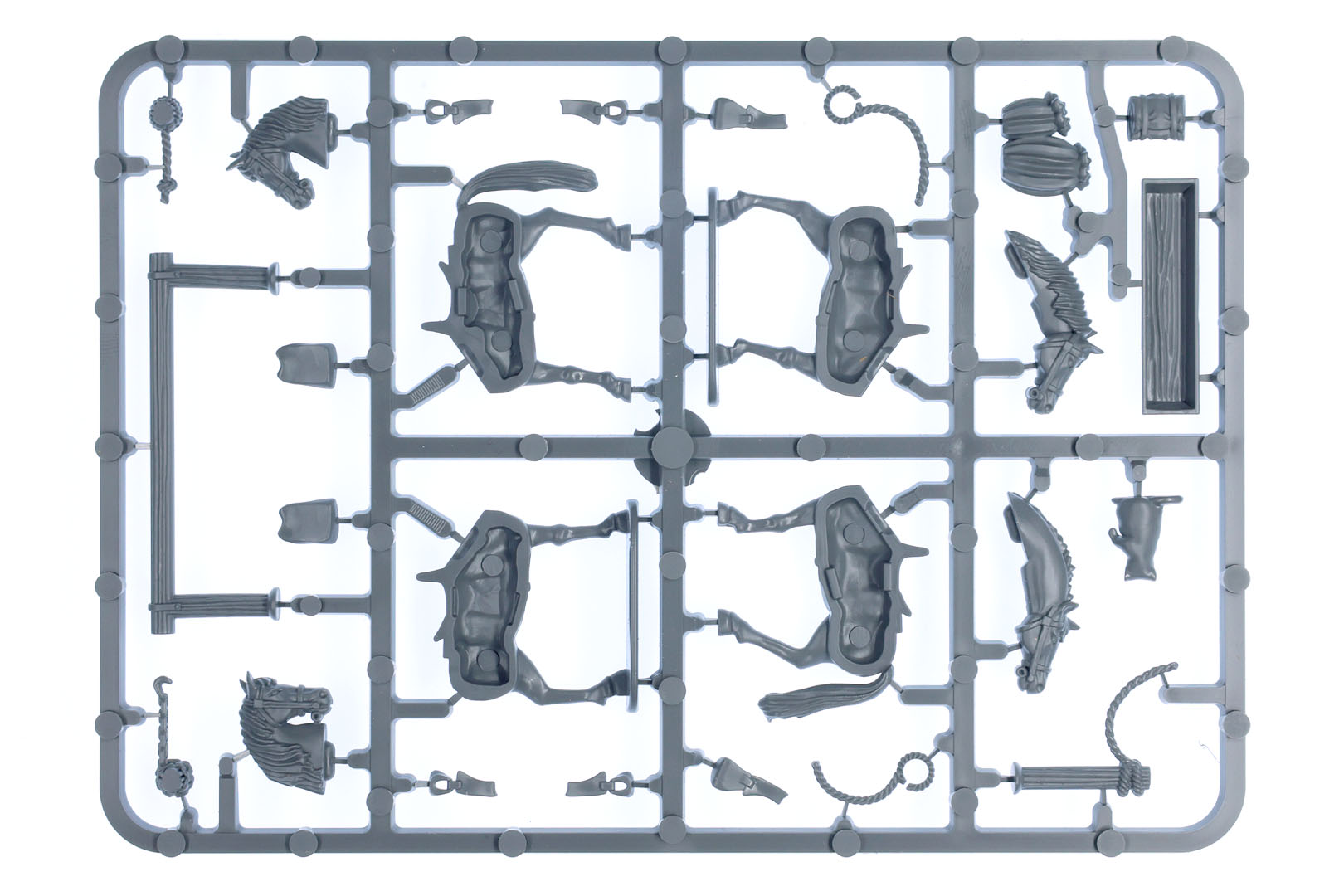
The Dead Man's Hand - Standing Horses set covers four standing horses (two sprues) at 13 GBP, and there are bundles of 3 sets for 33 GBP instead of 39 GBP and 5 sets for 50 GBP instead of 65 GBP. Each set includes two of the sprues shown below, along with another sprue of 5 oval bases.
Casting overall was solid. Crisp details, but mould lines were an issue, as they were quite present. This might be due to the fact that we got an early production sprue for the review and they are still dialing them in. Nevertheless, all the details were captured properly and removing mould lines is less time-consuming than filling in gaps.

Graal Miniatures – Marius Mules Legends of Rome
Earlier this month we gave you a short introduction to Graal Miniatures, and today we are taking a closer look at the infantry from the currently running Kickstarter, which covers Romans in 32mm scale. We have a few of the characters in blisters and a unit from one of the boxed sets on the desk.
Although Graal Miniatures also offers digital products via their Patreon, the crowdfunding campaign is purely about physical, resin 3D-printed models, intended for game systems such as Saga: Age of Caesars, Hail Caesar or Swordpoint.
But first, a bit of context, because Romans are a safe bet in tabletop gaming and are already available in 25-32mm from plenty of manufacturers, in metal as well as plastic. But not all Romans are the same. We will keep this brief and simplified to give you a quick overview, rather than turning it into a multi-volume master's thesis. Simply put, when people talk about Rome they usually mean the period from 509 BC to 476 AD (referring primarily to the Western Roman Empire, as the Eastern Roman Empire, or Byzantium, lasted until 1453). That is a span of roughly 1,000 years, and we will leave the Regal Period before the Roman Republic aside for now.
The Roman Republic, from 509 to 27 BC, can be divided into three eras: the Early Republic, in which Rome gradually conquered Italy, the Middle Republic with the Punic Wars and expansion across the Mediterranean, and the Late Republic, which includes Caesar, the Roman civil wars, the Marian reforms and the Gallic Wars. Even these three phases show differences in the soldiers' armour and weapons. The Republic was followed by the Imperial period (27 BC until the division of the empire into West and East in 395 AD), during which the Roman Empire reached its greatest extent in 117 AD. After that comes Late Antiquity, lasting until the end of the Western Roman Empire in 476 AD. To simplify things once more, in tabletop terms you can roughly split them into Republican Romans and Imperial Romans, which is where the most obvious visual differences lie. Set apart from those are the Late Romans of Late Antiquity, who look quite different again.
FIRE! Modern Combat – Core Rulebook
We got pointed toward FIRE!, a modern combat ruleset from Spain, by the folks at Team Würfelkrieg. This isn't our first rodeo with modern combat skirmish systems as we've previously spent time with Force on Force, Black Ops, Spectre Operations, and Asymmetric Warfare, and now we want to share our impressions on FIRE! with you.
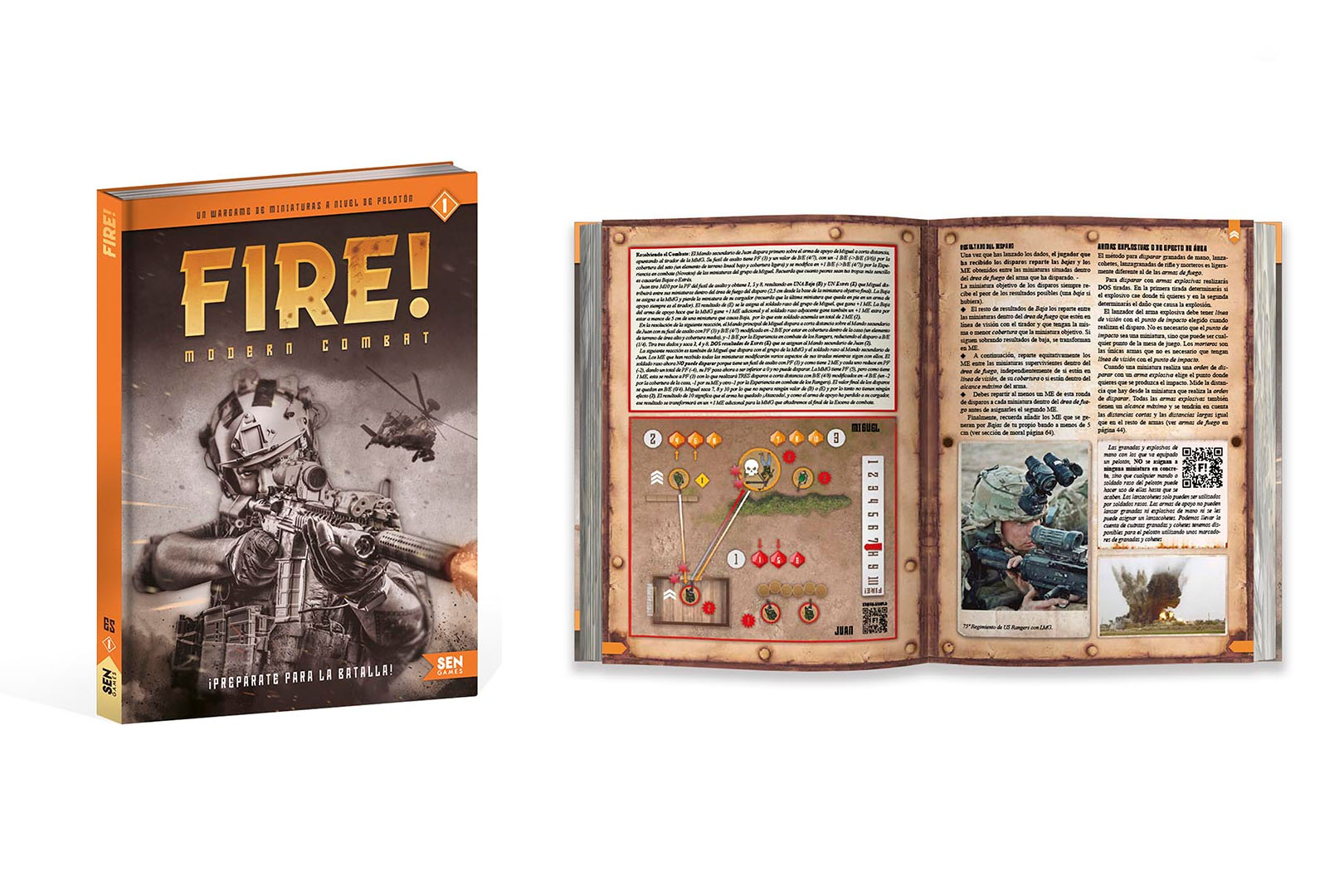
The game is available in different variants. You can pick up the hardcover rule book itself for 27,95 EUR (available in four different languages: English, Spanish, German and French), or as a FIRE! boxed set for 129,95 EUR, that comes with two small squads (US Rangers and Insurgents) as well as cardboard scenery and dice. SEN Games offers FIRE! markers that are available separately.
What Is It About?
FIRE! Modern Combat is a squad-level skirmish miniatures wargame from SEN Games, a small independent publisher based in Barcelona. The game grew out of designer Ricardo Ponz's own gaming group, who spent years being mildly dissatisfied with existing modern combat rulesets and eventually decided to write his own. That house-rule seed grew for roughly a decade before becoming a standalone product, funded via Kickstarter in early 2025 (343 backers, ending at 39.600 EUR against a 9.500 EUR goal).
Mechanically, FIRE! could handle skirmishes anywhere from the Korean War to today, but the core rulebook's focus (army lists, scenarios, equipment) is squarely on the 1990s to present. But as profiles and weapon lists are kept on a generic level, you could easily adapt it to various settings with a bit of research. This is one of the reasons why SEN Games does not only cover the rules, but books on various conflicts as well.
FIRE! is built for two players, is scenario-driven, and is typically played at 500 to 600 points, which translates to roughly 8 to 15 models per side. Games run around an hour on a 4x4ft (120x120cm) table, a very manageable footprint for a squad-based skirmish game.
Legions Imperialis – Reaver Titan with Graviton Obliterator and Volkite Annihilator
This new Reaver Titan with Graviton Obliterator and Volkite Annihilator is the third boxed variant of a Reaver Titan, after the Reaver Titan with Gatling Blaster, Laser Blaster, Power Fist and Carapace Apocalypse Missile Launcher, and the Reaver Titan with Melta Cannon, Chainfist and Carapace Turbolaser Destructor.
With this box, we conclude our brief series on the latest releases for Legions Imperialis and Adeptus Titanicus, thanks again to our sponsor Radaddel.
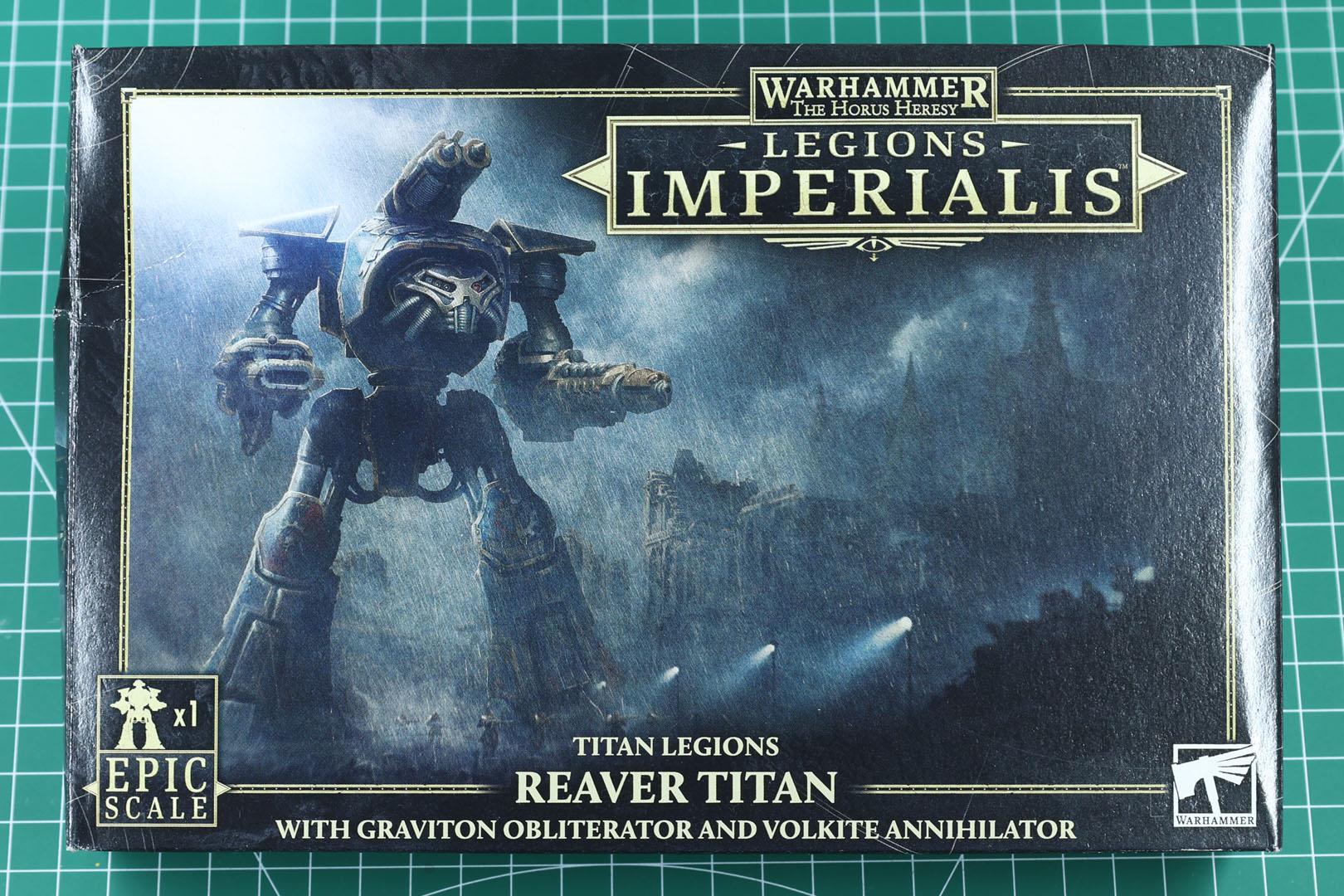
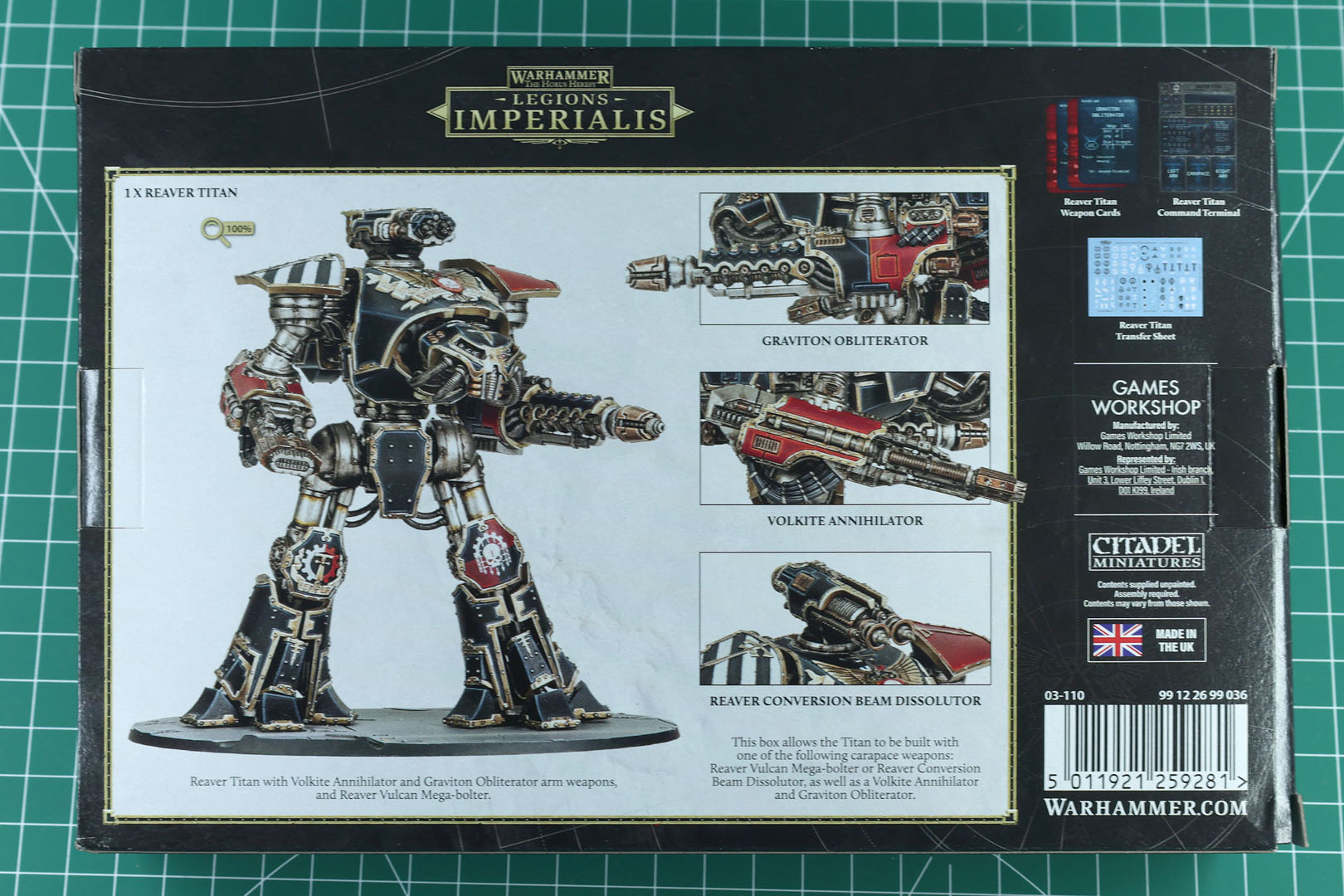
Just like the two other kits, the pre-order for the Reaver was opened on July 18th, with public release on August 1st. The new options in plastic are either available as a full kit for 51,50 EUR or just the Mail Order exclusive sprue for 23 EUR.
The boxed set provides everything you need to use the Reaver Titan in Adeptus Titanicus right inside the box: a Command Terminal plus Weapon cards covering the included armament. The sprue-only upgrade only covers the plastic and nothing else. The rules for using it in Legions Imperialis are covered in the core rulebook (p. 214) and the Liber Strategia (p. 162) rather than in the box.
Legions Imperialis – Warlord Titan with Volkite Destructor and Macro-Gatling Blaster
Among the freshly released Warlord Titan variants, the Warlord with Volkite Destructor and Macro-Gatling Blaster sits alongside its sibling kit, the Warlord with Quake Cannon and Conversion Beam Extirpator, as options four and five for the chassis. Joining the existing line-up of the Warlord with Volcano Cannons and Apocalypse Missile Launcher, the Warlord with Power Claw and Plasma Annihilator, and the Warlord-Sinister Psi-Titan.
We use this release to revisit and update the reviews of the Warlord Titan with the support of Radaddel, and cover today the second new Warlord Titan kit, with Volkite Destructor, Macro-Gatling Blaster and Graviton Ruinator.
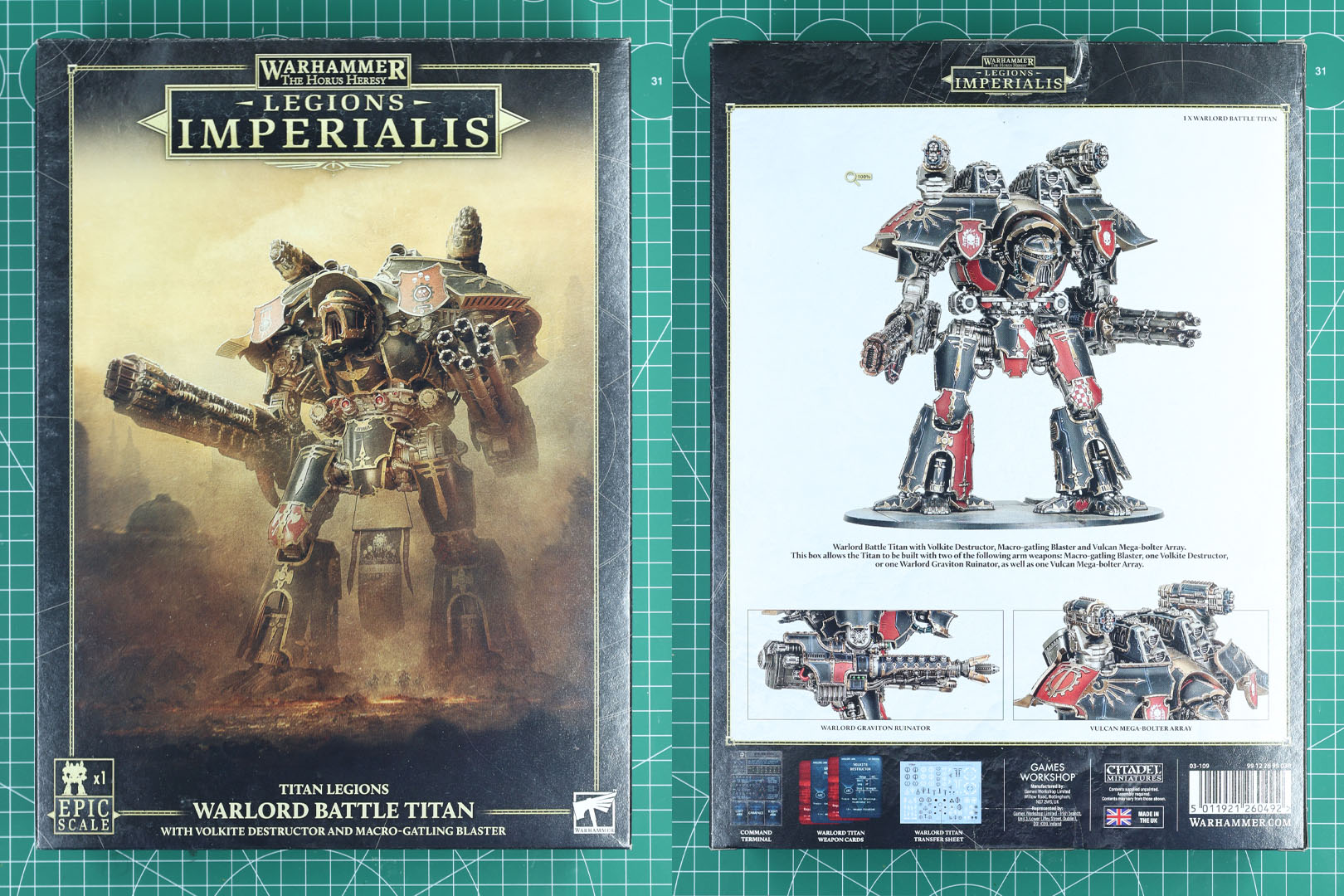
The box art depicts the model at a larger, more heavily detailed scale than the actual Epic-scale kit delivers. Shield designs differ noticeably from the finished miniature, and the weaponry (for example the gatling barrels being the clearest example) carries more sculpted detail on the packaging than what ends up in your hands.
Pre-orders for the kits opened on July 18th, with general availability following on August 1st. As with the other Warlord releases, this one comes in two versions: the complete kit for 100 EUR, or a Mail Order exclusive upgrade sprue on its own for 42 EUR.
Everything needed to field the Warlord Class Battle Titan in Adeptus Titanicus ships inside the box; a Command Terminal plus Gear cards covering the included armament. The cheaper 42 EUR sprue-only option gets you the plastic and nothing else; no cards or printed material for Adeptus Titanicus use. Rules for fielding it in Legions Imperialis, meanwhile, live in the core rulebook (p. 216) and the Liber Strategia (p. 164) rather than in the box.
Legions Imperialis – Warlord Titan with Quake Cannon and Conversion Beam Extirpator
As for the new Warlord Titan variants, Warlord Titan with Quake Cannon and Conversion Beam Extirpator and Warlord Titan with Volkite Destructor and Macro-gatling Blaster, these are the 4th and 5th options for the Warlord Titan, after the Warlord Titan With Volcano Cannons and Apocalypse Missile Launcher, Warlord Titan With Power Claw and Plasma Annihilator and the Warlord-Sinister Psi-Titan.
And for us the perfect excuse to revisit and update the reviews of the Warlord Titan kits we have posted on the blog, with the support of Radaddel. We will begin the short series with the Warlord Titan with Quake Cannon and Conversion Beam Extirpator.
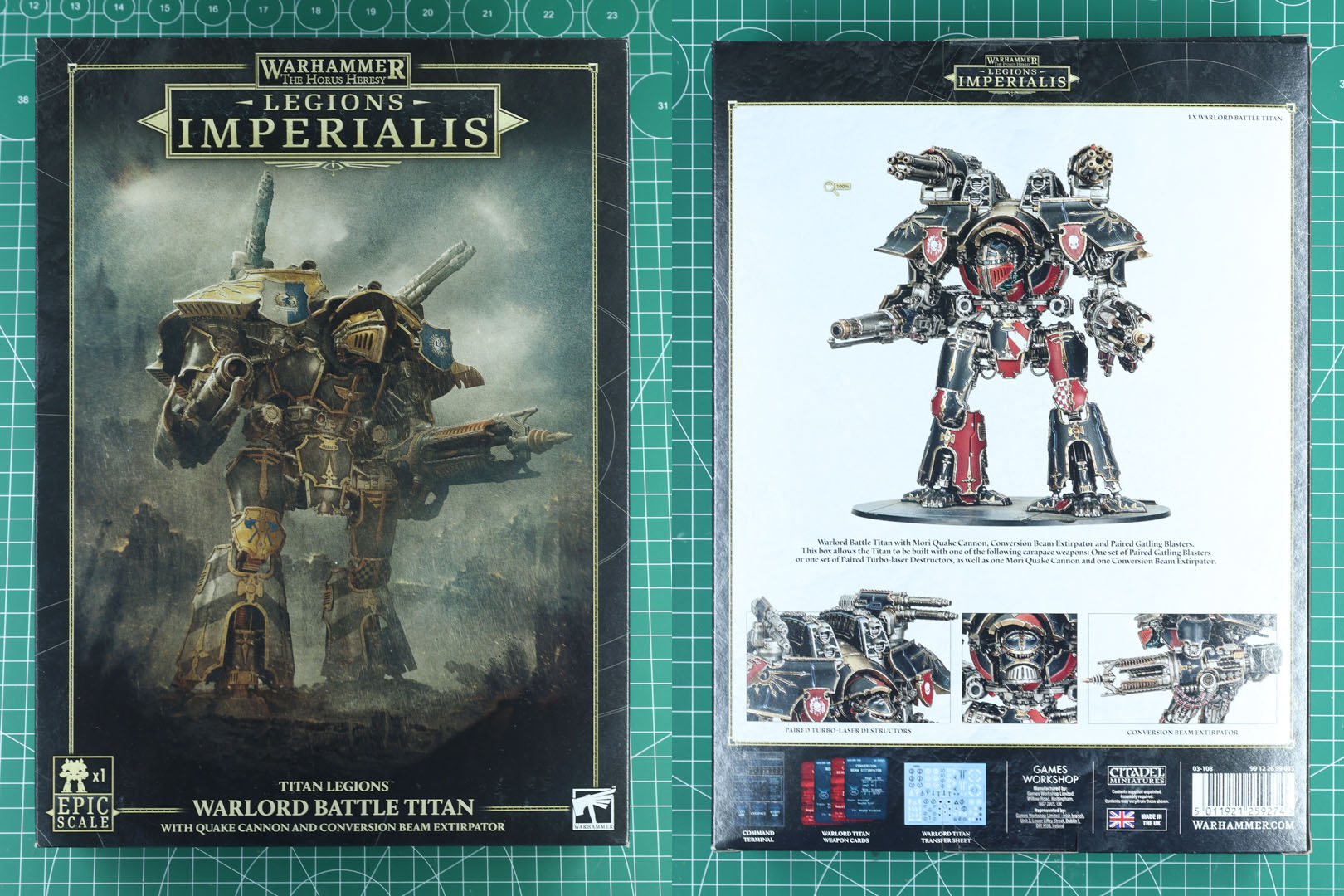
The kits went on pre-order on July 18th and are set for public release on August 1st. The new Warlord kits are available in two versions, as a full kit for 100 EUR or for 42 EUR with just the single upgrade sprue exclusive to Mail Order.
The rules for using the Warlord Class Battle Titan with Adeptus Titanicus are included in this boxed set with a Command Terminal and Gear cards for the included weapon systems. The 42 EUR upgrade only covers the plastic, no printed material, cards, etc. for the use in Adeptus Titanicus. The rules for their use in Legions Imperialis are included in the core rule book (page 216) and Liber Strategia (page 164).
Too Fat Lardies – What a Tanker!
The TooFatLardies have built a solid reputation for producing wargames that prioritise historical feel over rulebook complexity, with games like Chain of Command or Sharp Practice. With What a Tanker!, they returned to the Second World War back in 2018, publishing rules for tank combat with vehicles from various nations of that era. And while I didn’t have the chance to give that game a try at LARDwerp back in 2022, I finally had the chance to do so with Team Würfelkrieg last month, and I’d like to share my experience with the rules in this review.
To give you a brief orientation on the scale of the game: if you want a tabletop game that scratches the same itch as World of Tanks, putting you in the commander’s seat of a WWII tank without drowning you in charts and counters, you should keep reading.

As the release was a few years ago, the printed rules are a bit scarce (~30 GBP / 35 EUR), but no worries — you can still pick up the digital download in their store for 17 GBP.
What Is It About?
What a Tanker! is a tabletop wargame for two or more players set during the Second World War. Each player controls one or more tanks, with the goal of knocking out the opposing side’s vehicles, either through sustained damage or a catastrophic hit. The game covers the full span of the war from 1940 to 1945, with national tank lists for Germany, the USA, the Soviet Union, Great Britain, France, Italy and Japan all included in the rulebook.
Those lists are substantial. On the German side alone, you’ll find everything from the early Panzer II and Panzer III variants of the Blitzkrieg years, through the mid-war workhorses like the Panzer IV F2-G and StuG III, right up to the heavy hitters of the late war: the Panther, the Tiger I, the Jagdpanther and the King Tiger. The Allies are equally well covered. British players can work their way from A13 Cruisers and Matilda IIs up through Cromwells and Sherman Fireflies to the Churchill Mk VII, while Americans progress from M3 Stuarts and Grants into the various Sherman variants and ultimately the M26 Pershing. Soviet players get a compelling path through T-34 variants, KV heavies and the fearsome IS-2. Each nation also has a career ladder that maps tank progression year by year, so there is a genuine sense of historical context to how forces develop over the course of the war.
Dead Man’s Hand – Mounted US Cavalry
The second part of the US Cavalry range for Dead Man’s Hand by Great Escape Games is a box of mounted soldiers: the Mounted U.S. Cavalry. It continues the line of cowboys (and cowgirls) on horseback and makes perfect sense for the US Cavalry. The mounted US Cavalry was crowdfunded through Kickstarter in March 2026 and delivered in April and May this year.
If you missed it, we already covered the US Cavalry on foot earlier on the blog.
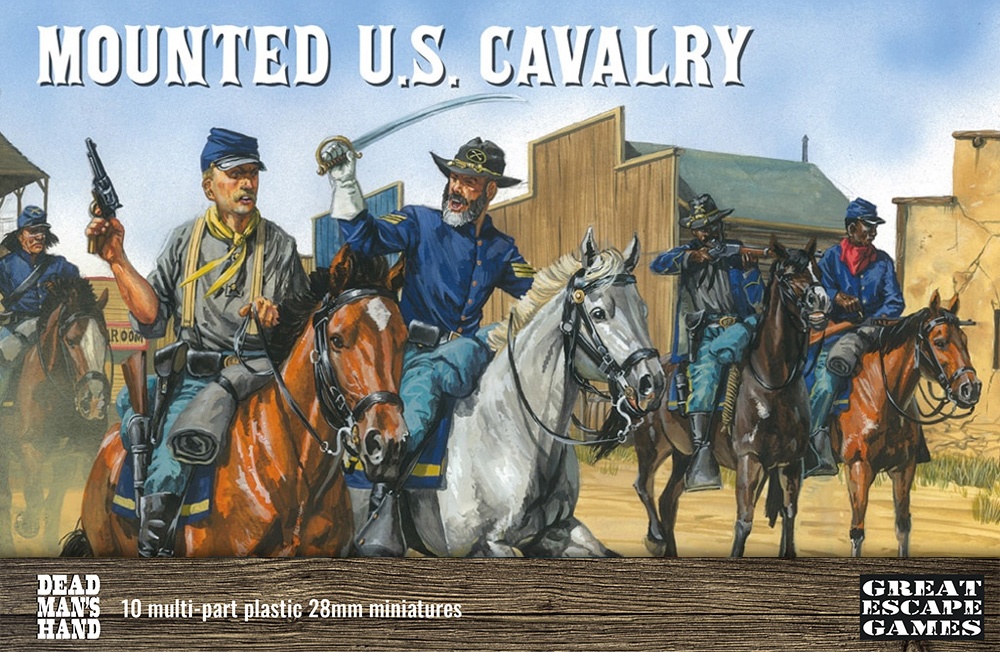
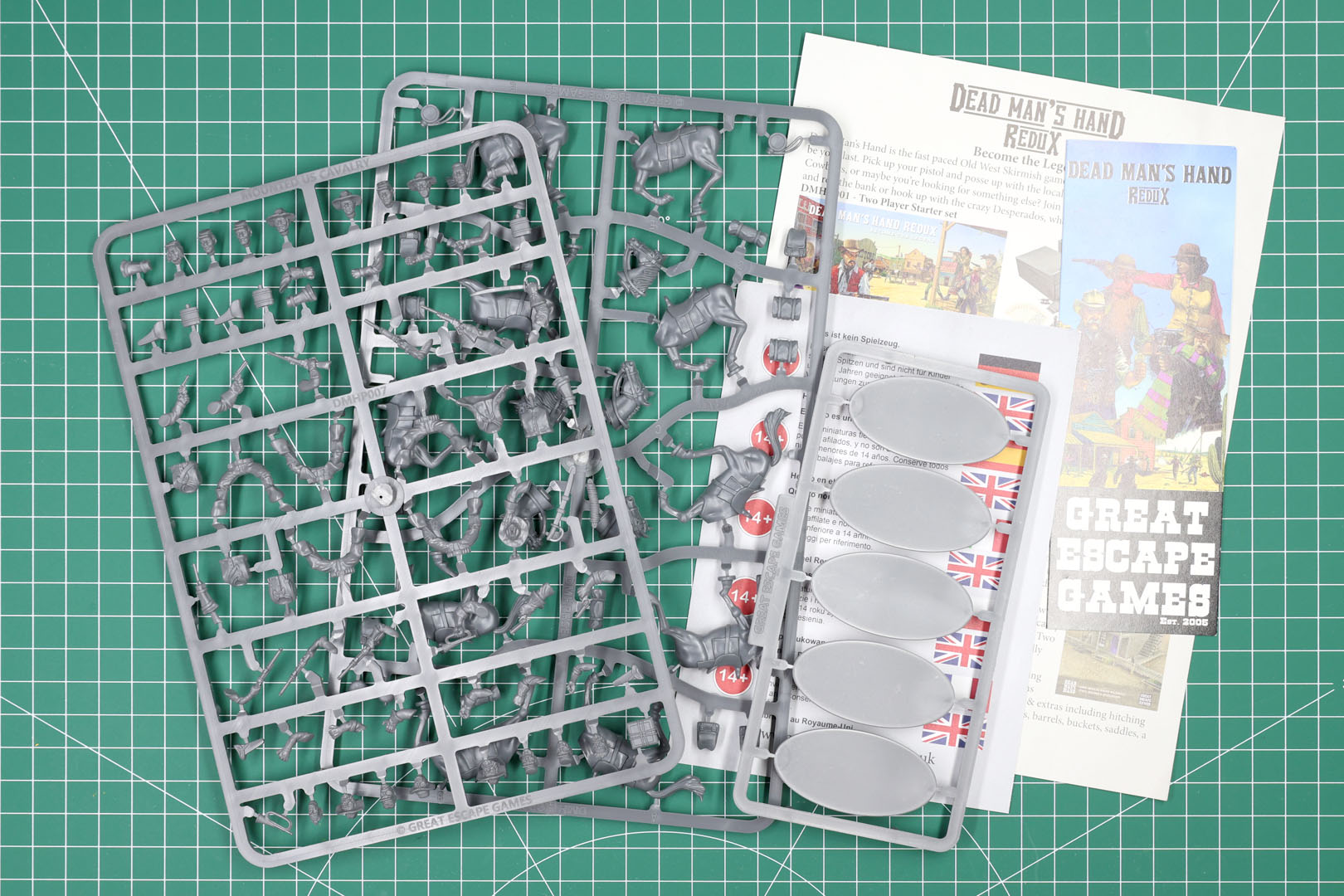
The Mounted US Cavalry (DMHP007) boxed set contains 10 multi-part plastic miniatures for an RRP of 28 GBP. Just like the infantry set, it gives you the parts you need to build US Cavalry on horseback, as well as options for the 9th and 10th Buffalo Soldiers. We received a sample covering half a box, with three different sprues.
Like us on Facebook

Follow me on Instagram

Categories
- battle report (5)
- events (213)
- fantasy (614)
- General (162)
- historical (651)
- Little Big Adventures (4)
- offtopic (5)
- reviews (557)
- science fiction (716)
- showroom (108)
- terrain (120)
- work-in-progress (424)