Rubicon Models PaK 38 – PaK 97/38 AT Gun with Crew
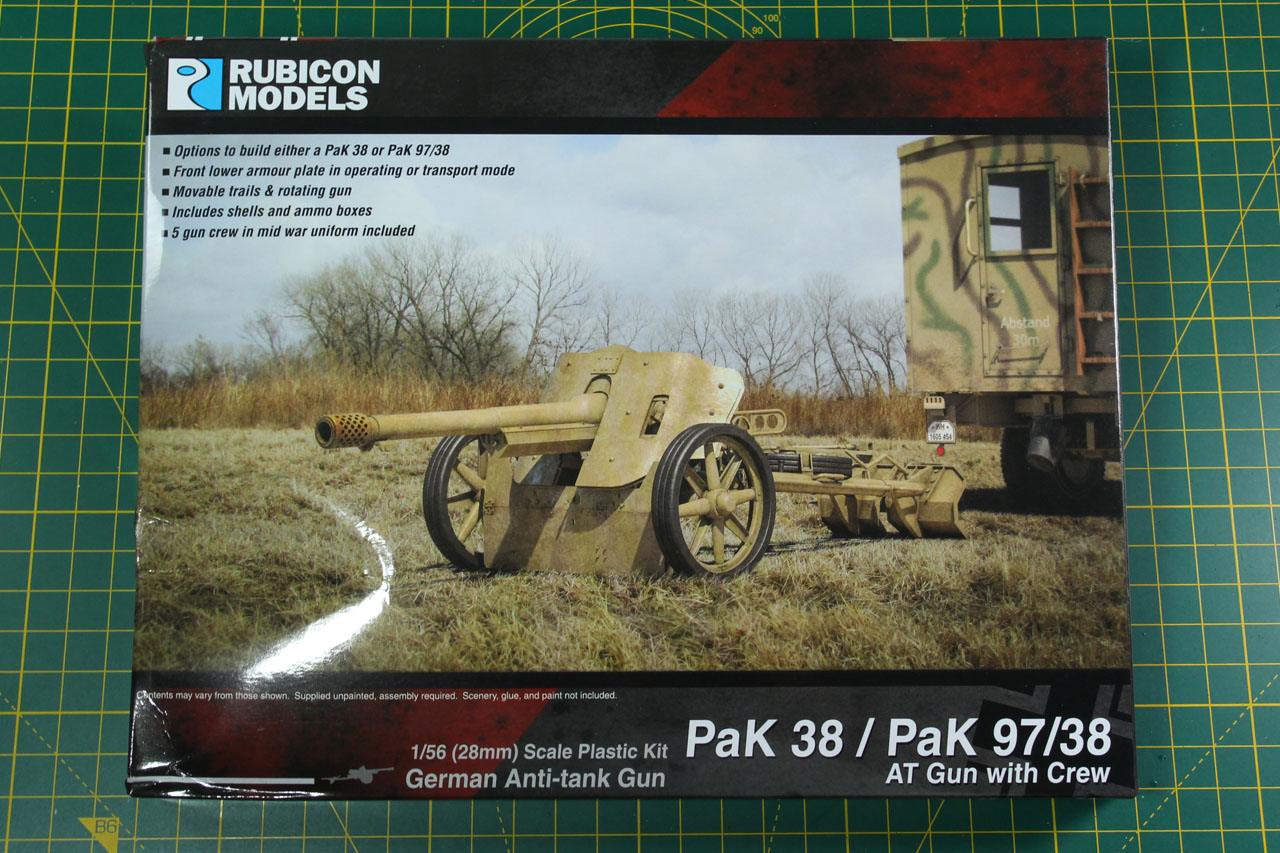
Today we're looking at the successor of the PaK 36, the PaK 38 by Rubicon Models. This kit covers the variants 38 and 97/38 of the anti-tank gun including a crew.
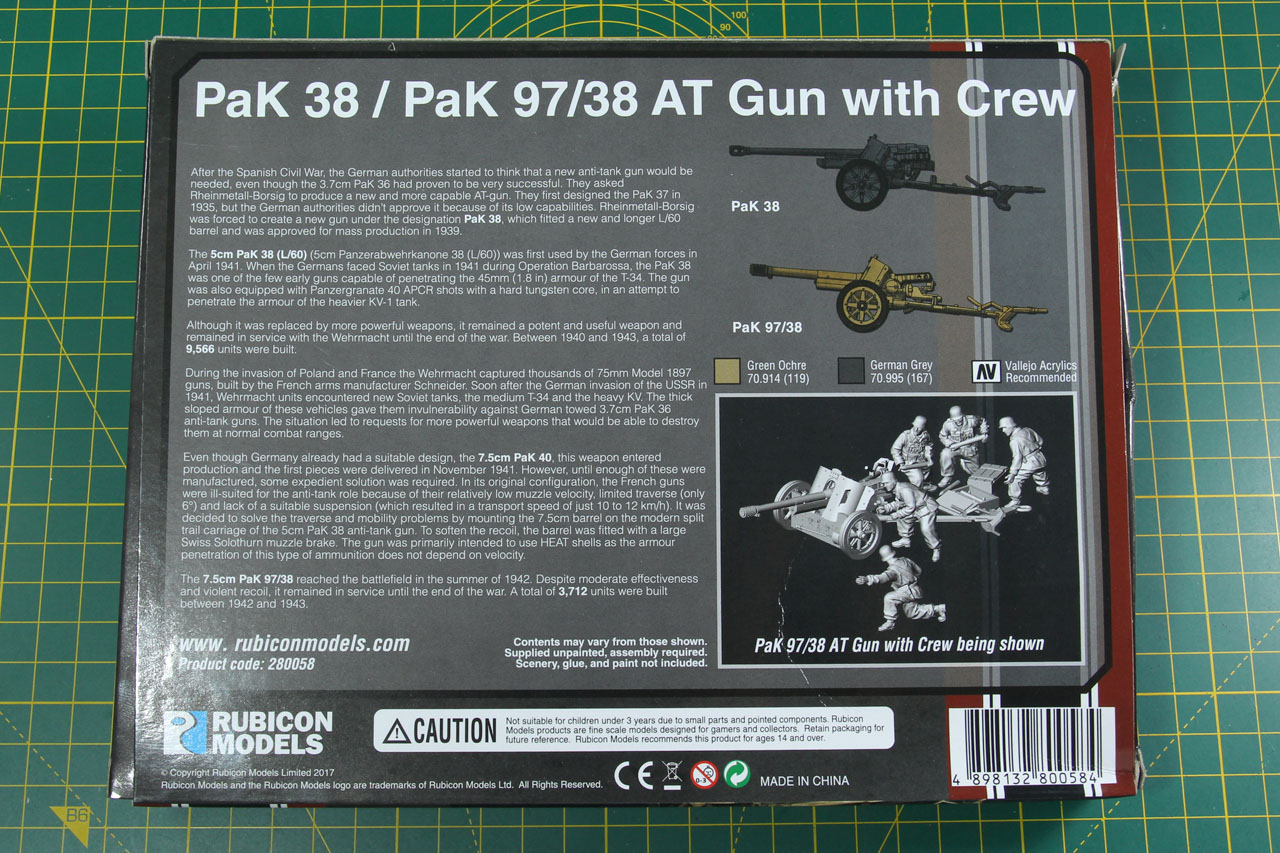
Rheinmetall-Borsig, who produced the earlier PaK 36 as well, were ordered to develop a new, heavier anti-tank gun after the Spanish Civil War. After an initial sketch of a new pattern named 37, which was not approved by the German authorities, they had to come up with an improved version, the PaK 38. This more powerful anti-tank gun was one of the few guns being able to penetrate the sloped armour of the T-34 in 1941.
Rubicon Models PaK 36 AT Gun with Crew
This week is all about anti-tank guns. We'll cover a couple of different sets in 28mm, beginning with this PaK 36 AT Gun incl. crew by Rubicon Models.

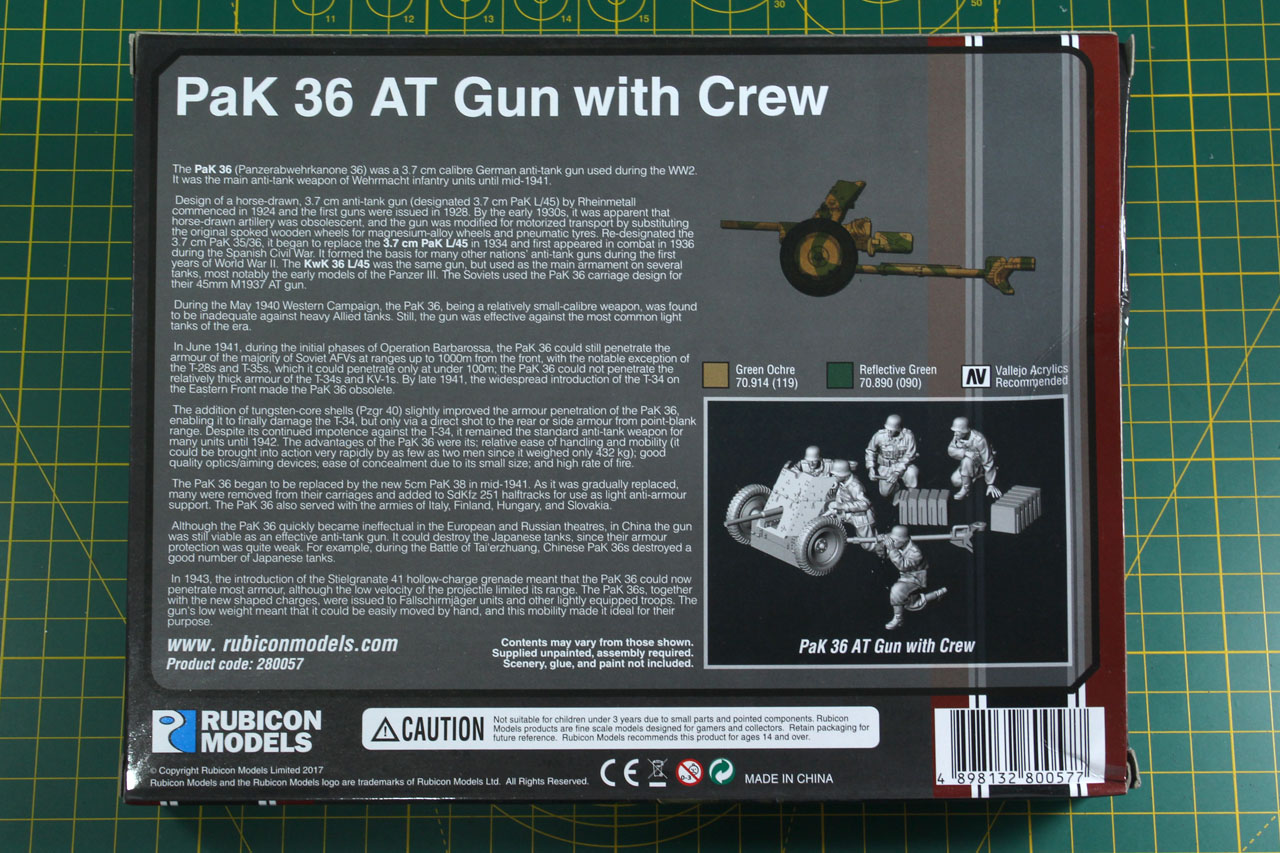
The PaK (Panzerabwehrkanone) 36 was a German anti-tank gun, that was issued to the German army in 1936 and used by the tank hunter units until 1942. It even saw action before World War 2 in the Spanish Civil War, and performed well against the light tanks and later against the Polish tanks in 1939. In the Battle of France it showed its weakness against French and British heavy tanks. The PaK 36 was replaced from late 1940 onward by the 5 cm PaK 38 anti-tank gun and from November 1941 by the 7.5 cm PaK 40. Until the production ceased completely, there were over 20.000 units produced, of which roughly 6.000 were built for export. Other nations like the Soviet Union and Japan copied the design in the 1930s.
Dead Man’s Hand: Outlaws – Part 2
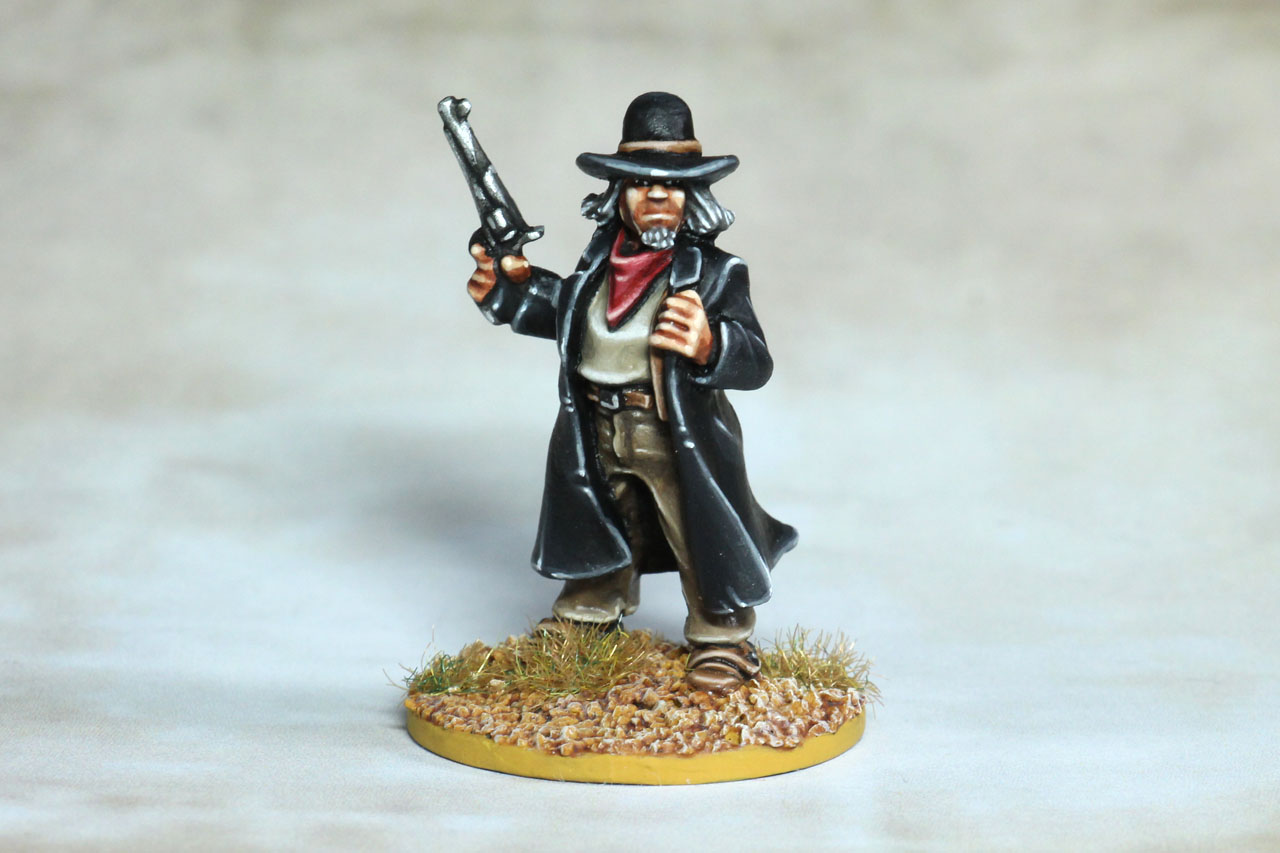
Unlike old McMiller, I've chosen brighter colors for Eugene, inspired by the beige and pastel tones of the Briscoe County Jr. series, a Western adventure series from the 1990s.
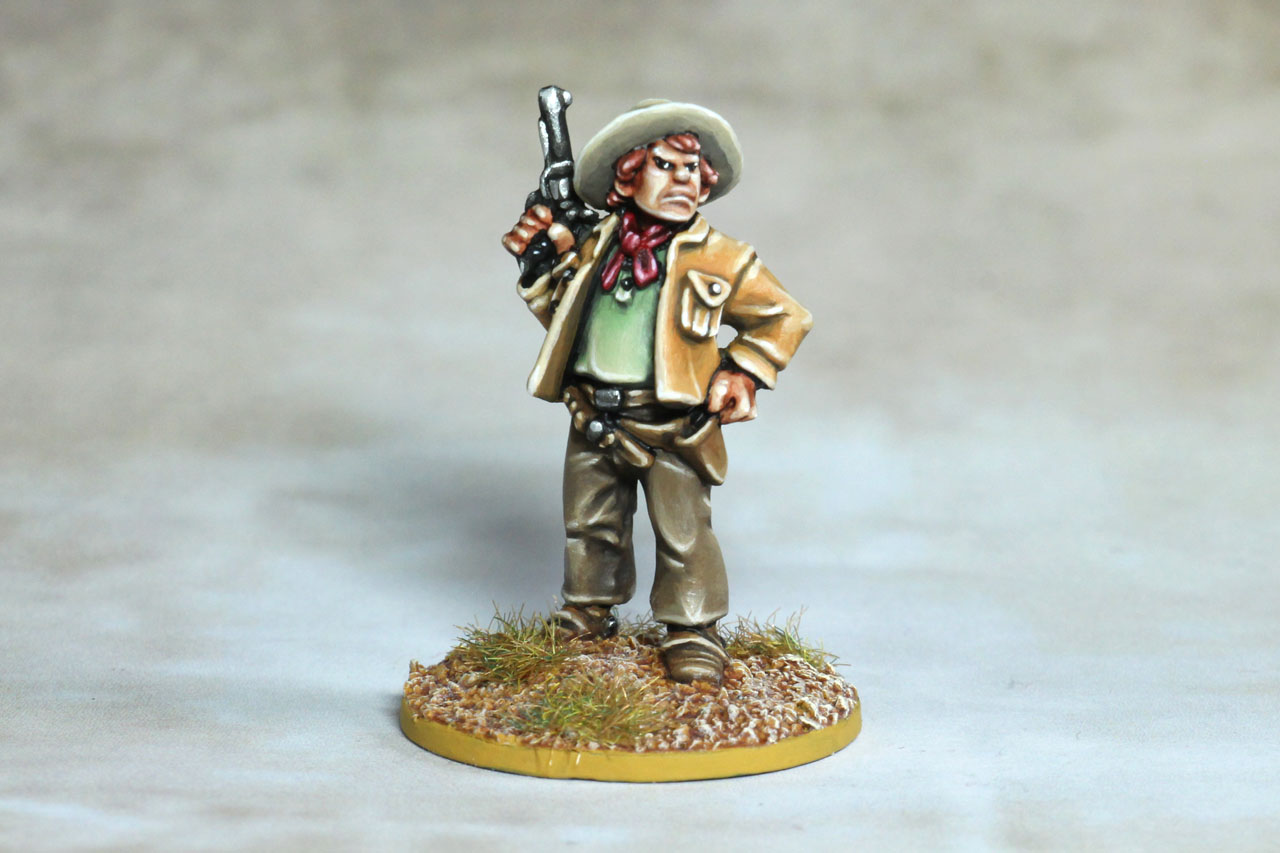
The model is from the Foundry range and offers a wonderfully silly facial expression. That was just right for Eugene to get a matching backstory that went well with the bright colors of his appearance. The trousers were painted in Steel Legion Drab again, while the hat is a wild mish-mash of shades of gray. You do not have to be very neat with the shades because sweat stains on the hat do not leave a consistent mark and are rather random instead.
Bolt Action Waffen-SS Grenadiers
Closing the themed week on Operation Market Garden with one of the antagonists. Fighting against the Allied Airborne units were dominantly units of the Waffen-SS. Warlord Games released a plastic kit of the armed wing of the Schutzstaffel this summer and we're covering it in a review.
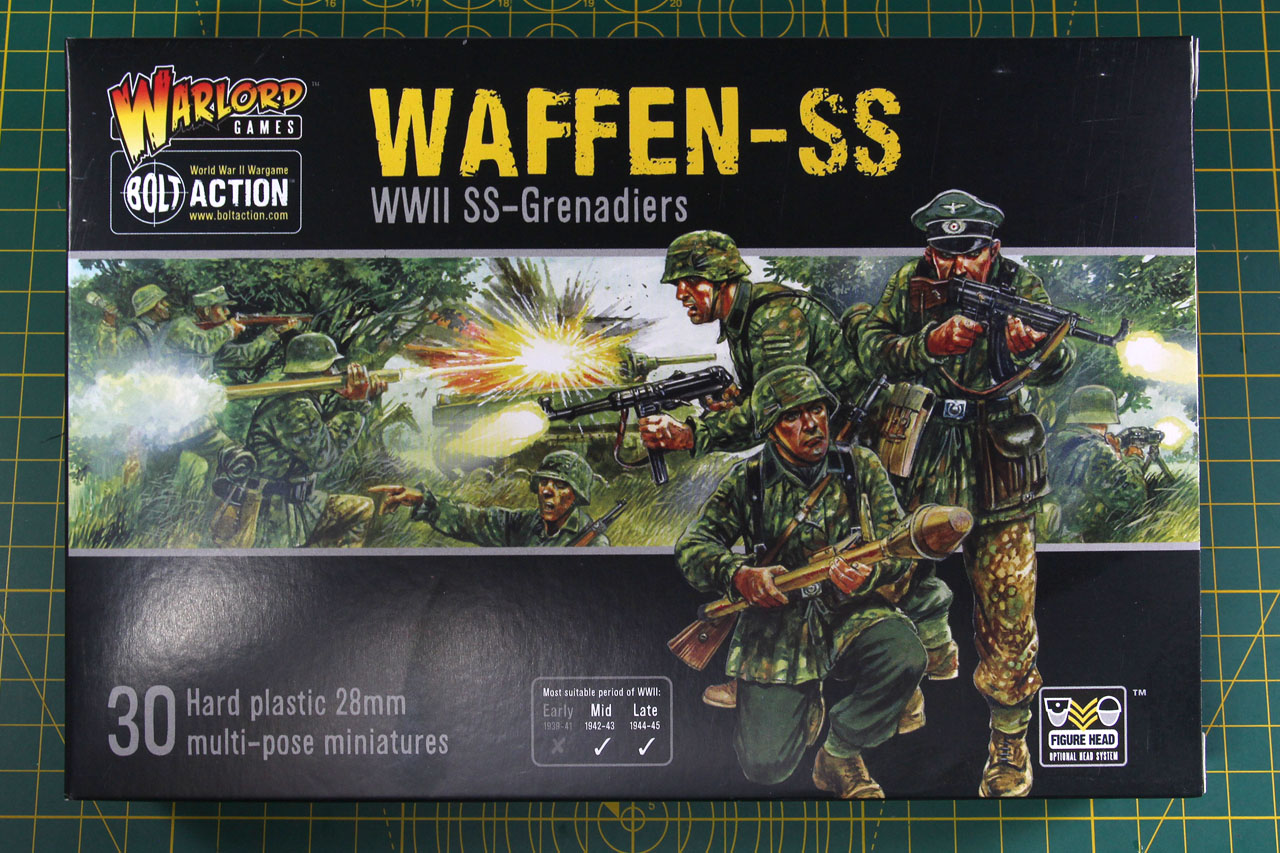
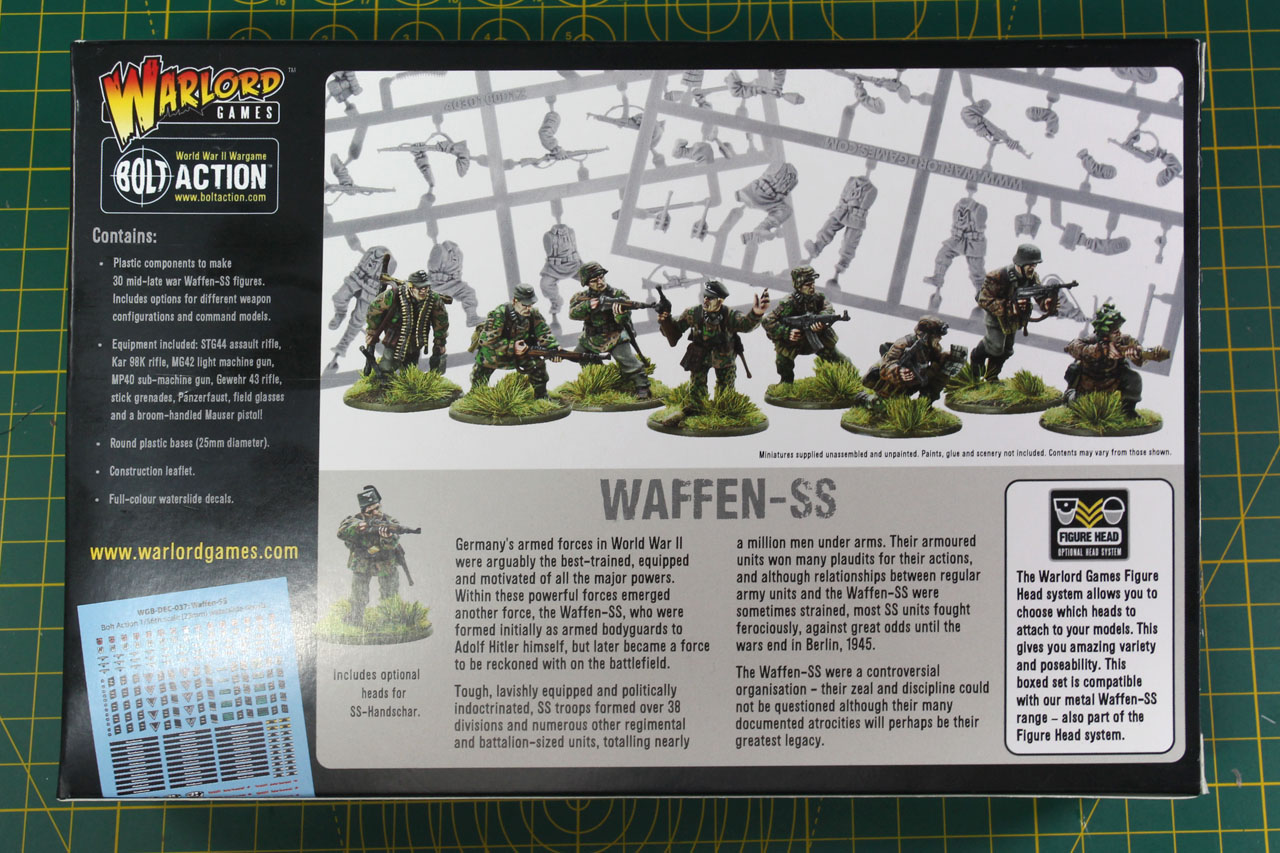
This review is not meant to glorify any political ideas or (military) activities of the Waffen-SS and is purely meant to cover the quality of the plastic kit and its miniatures.
The former armed guards of the Nazi party grew from three regiments to 38 divisions over the war. Seen by many as the elite, veteran infantry of the German forces, the Waffen-SS is a controversial topic. They fought fiercely and zealous, indoctrinated and well equipped by the party, but not to forget committed many atrocities and war crimes. Units of the Waffen-SS weren't just drafted within Germany, but there were many volunteer divisions in (occupied) countries like in the Netherlands with the 23rd SS Volunteer Panzer Grenadier Division Nederland. These volunteer divisions could be as large as 80.000 men (Latvia) or just 54 (British Free Corps).
Bolt Action Char B1 Bis
It might be a bit odd to present a French tank during the Operation Market Garden week, but the Char B1 Bis is in there for a reason. They were used for example by the Panzerkompanie 224 in the battle of Oosterbeek.
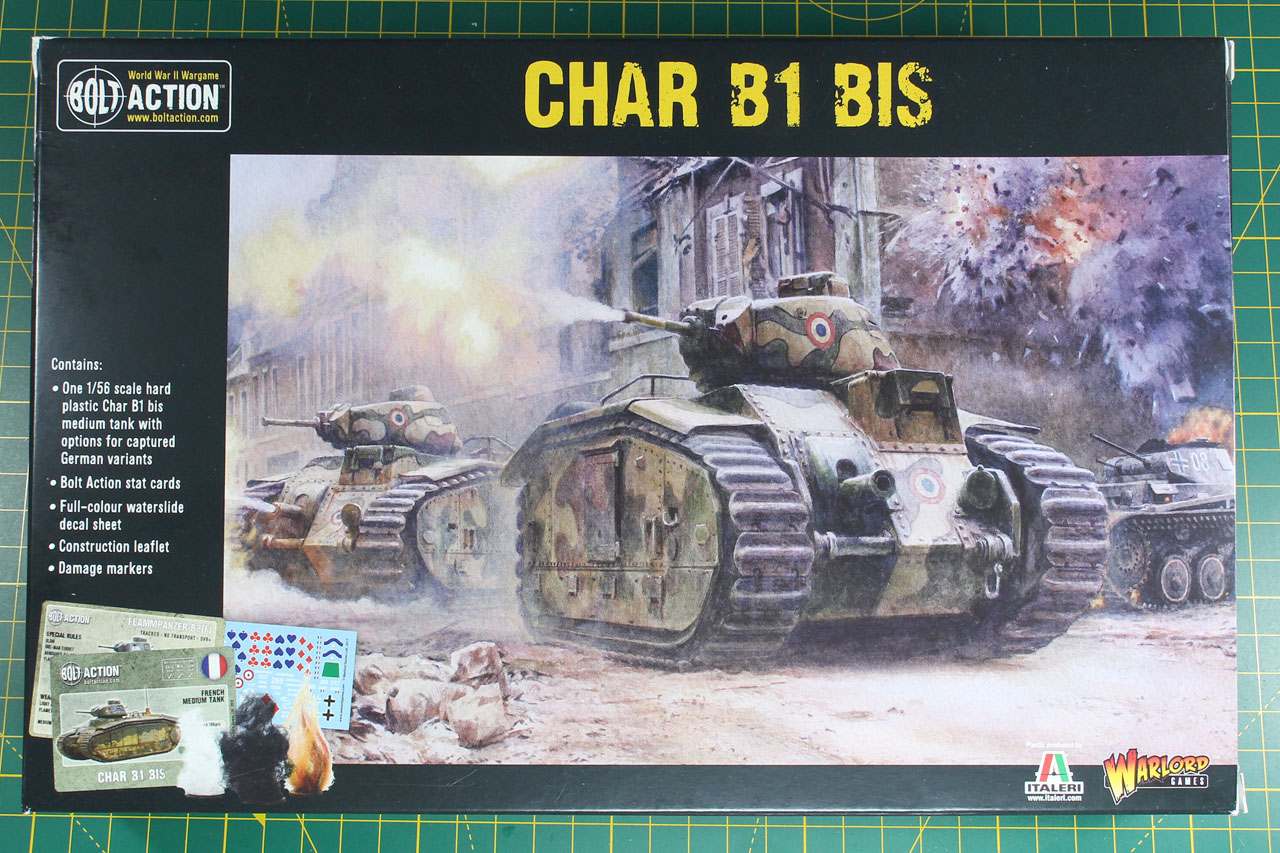

The Char B1 was a French heavy battle tank that was designed in the 1920s and produced between 1935 and 1940. After an initial run of 34 Char B1, the pattern was improved and around 370 units of the heavier armoured and armed Char B1 Bis were build. It was one of the most powerful tanks at the time and proved to be very effective against German tanks during the Battle of France. But it was designed to be a break through vehicle and did not adapt very well to the modern, more fluid style of warfare, especially the rapid Blitzkrieg of the Germans.
Bolt Action British Airborne
One of the latest kits and the youngest of the paratrooper plastic kits, are the British Airborne. A must for this week's series of reviews around the Operation Market Garden along with yesterday's US Airborne kit.
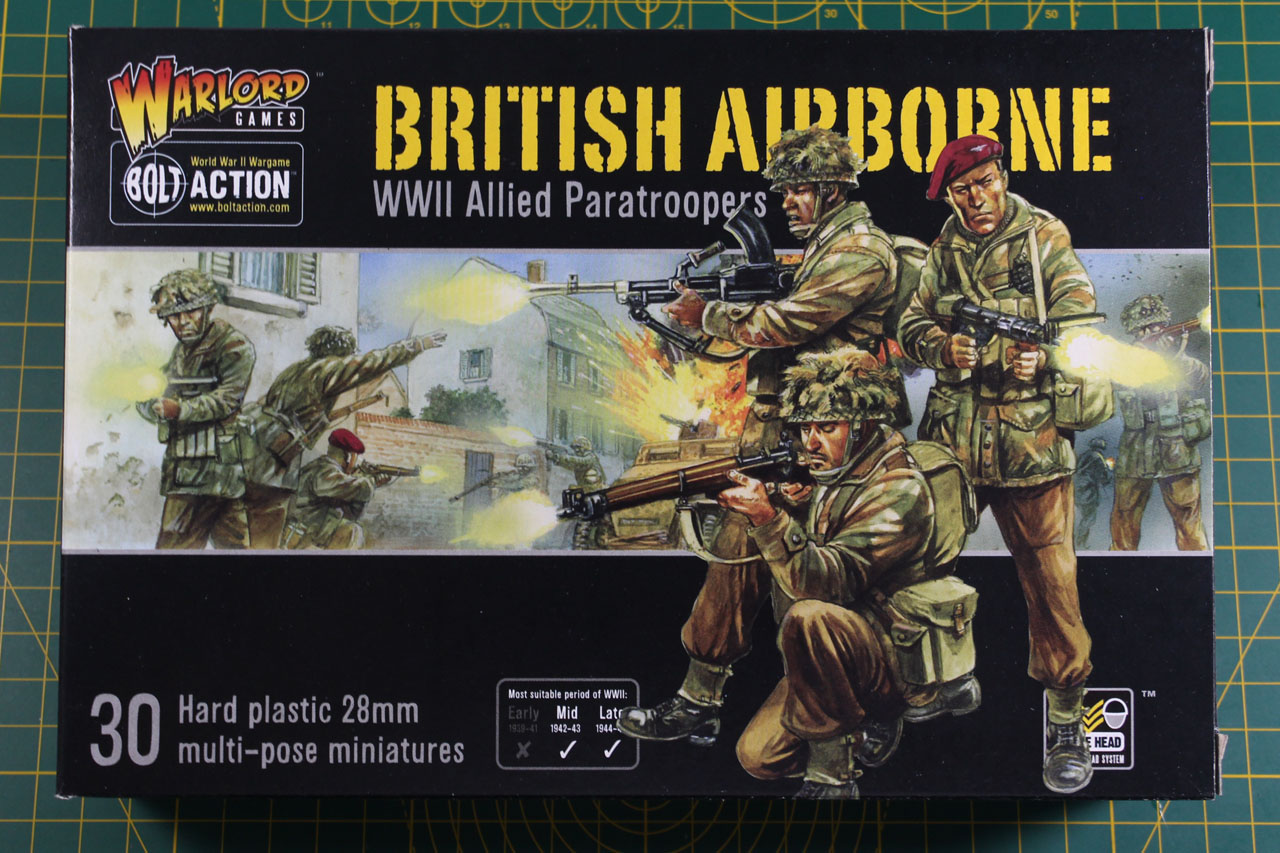
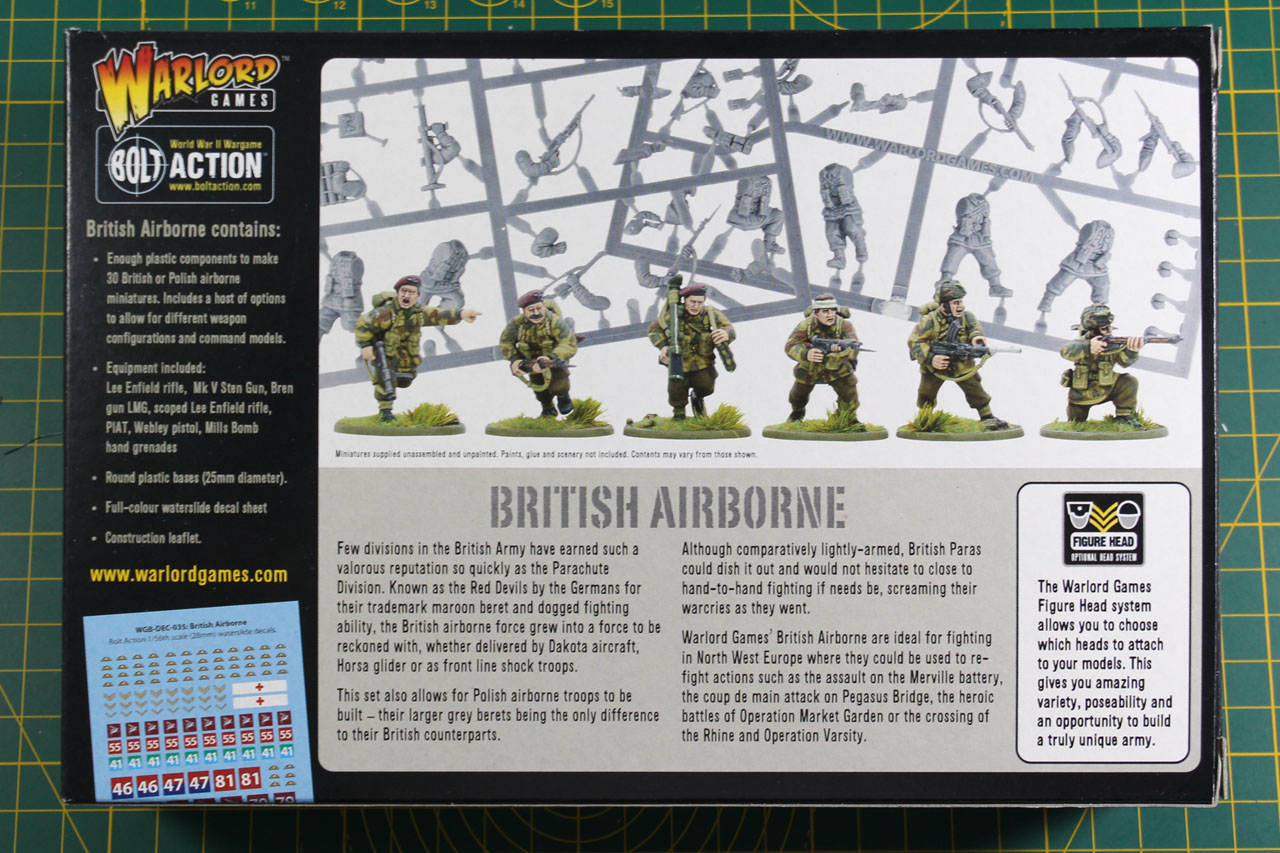
The British airborne is one of the many special combat divisions of the commonwealth's armed forces. They were founded in 1941, roughly a year earlier than their US American counterpart, and the 1st Airborne Division was send to North Africa for Operation Torch. But this kit covers the Red Devils in their North Western European gear, making them the best fit for the mid to late war operations of Pegasus Bridge, Operation Market Garden and the late fights crossing the Rhine / Operation Varsity, the largest airborne operation in history. In cinema the British paratroopers are mostly known from A bridge too far.
Bolt Action US Airborne
After we started the themed week with the supplement Campaign Market Garden, it is time to introduce and cover the matching Airborne units in a review - starting with the US Airborne. They were the second paratrooper unit released in plastic after the German Fallschirmjäger.
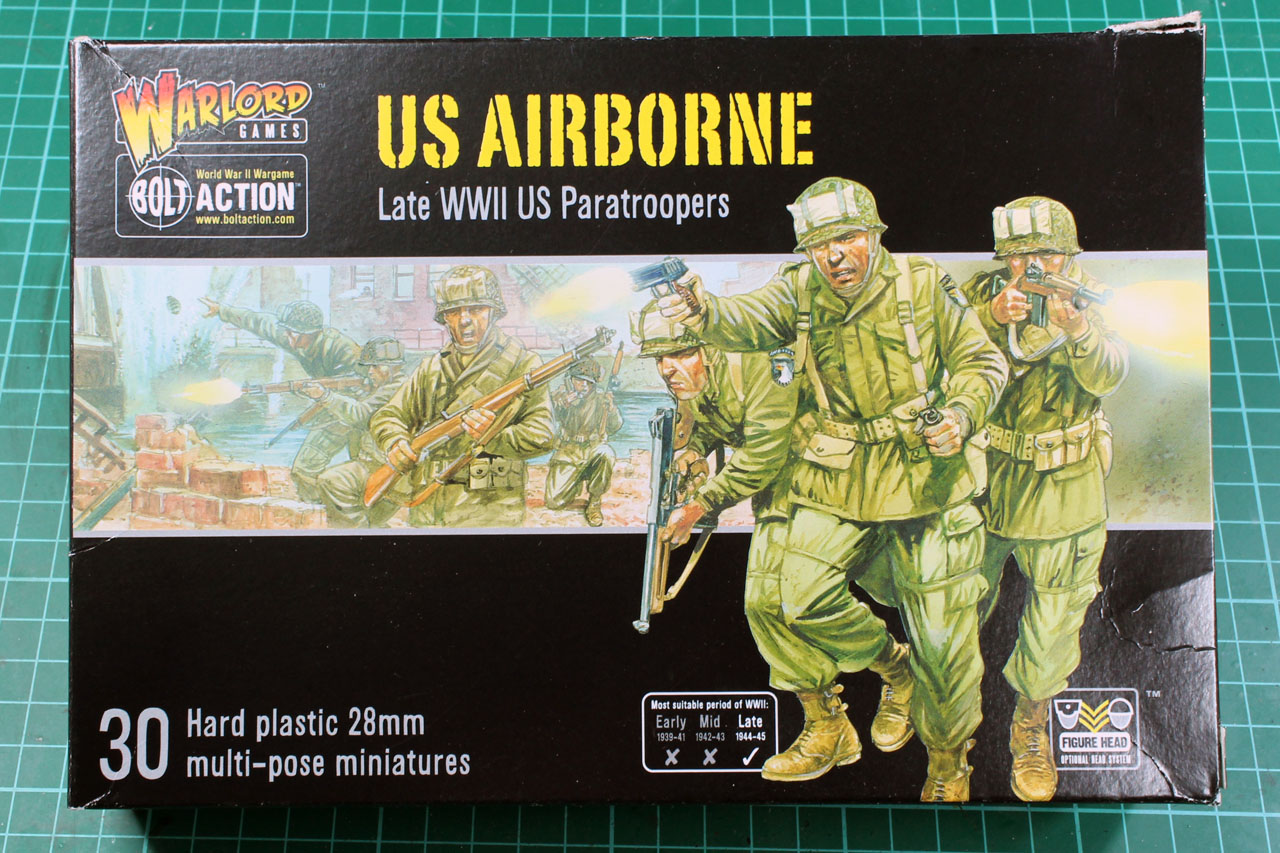
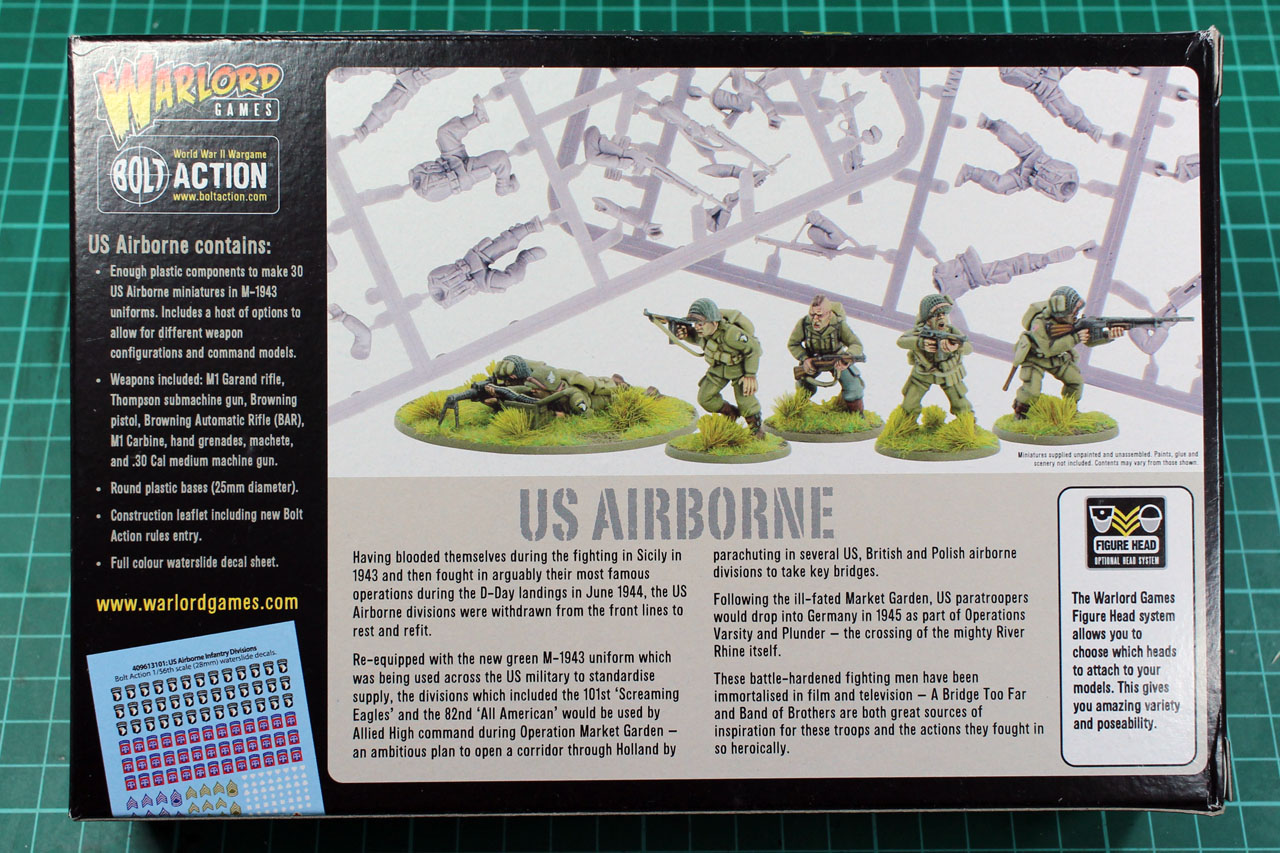
The US Airborne was founded more or less in 1942, when the 82nd Infantry Division was renamed 82nd Airborne Division, regrouped and assigned a new task, Operation Husky, the airborne landing in Sicily, Italy. The 82nd Airborne are along with the 101st Airborne Division the only airborne division of the American forces, and both took part in Operation Overlord (D-Day / Landing in the Normandy) and Operation Market Garden. US Airborne soldiers were heroically represented in movies like Band of Brothers or Saving Private Ryan.
Dead Man’s Hand: Outlaws – Part 1
In the review of Dead Man's Hand, I had already suggested that I would make a small gang, and after relieving Dennis's holdings by a few minis, it was not long before the first protagonist of my outlaws was done. These are my first experiences with "historical" minis and I have to say that they are quite grateful models paintwise.
Bolt Action Campaign Market Garden
After covering the battles in the Pacific, the Eastern front and the Ardennes, the next Bolt Action supplement moves to North Western Europe with Campaign Market Garden. An instead of whole years of war, this battle has its eye on very intense 9 days in late September '44.

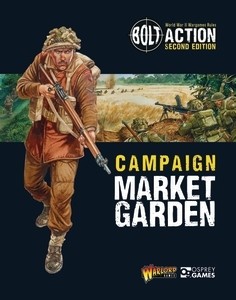
This campaign supplement covers the story of Operation Market Garden, the unsuccessful allied military attempt to take 9 bridges along the Dutch-German border. The military operations between September 17th and 25th are covered on 116 pages. Warlord Games charges the usual 19.99 GBP or 30 USD for the book, which is roughly 25 EUR. I've covered both the final cover (left) and the early cover (right) in the first row of pictures. We've often seen changes in the artwork between the first announcement and later publication; it was similar with The Road to Berlin and Campaign New Guinea.
Heroes and Commanders for the Landsknechte
After or better said, during, assembling the Landsknechts for the different reviews (Pikemen, Missile Troops and Zweihänders), I tried to get a bit more out of the kit, as with the three boxes, I only got one command sprue.
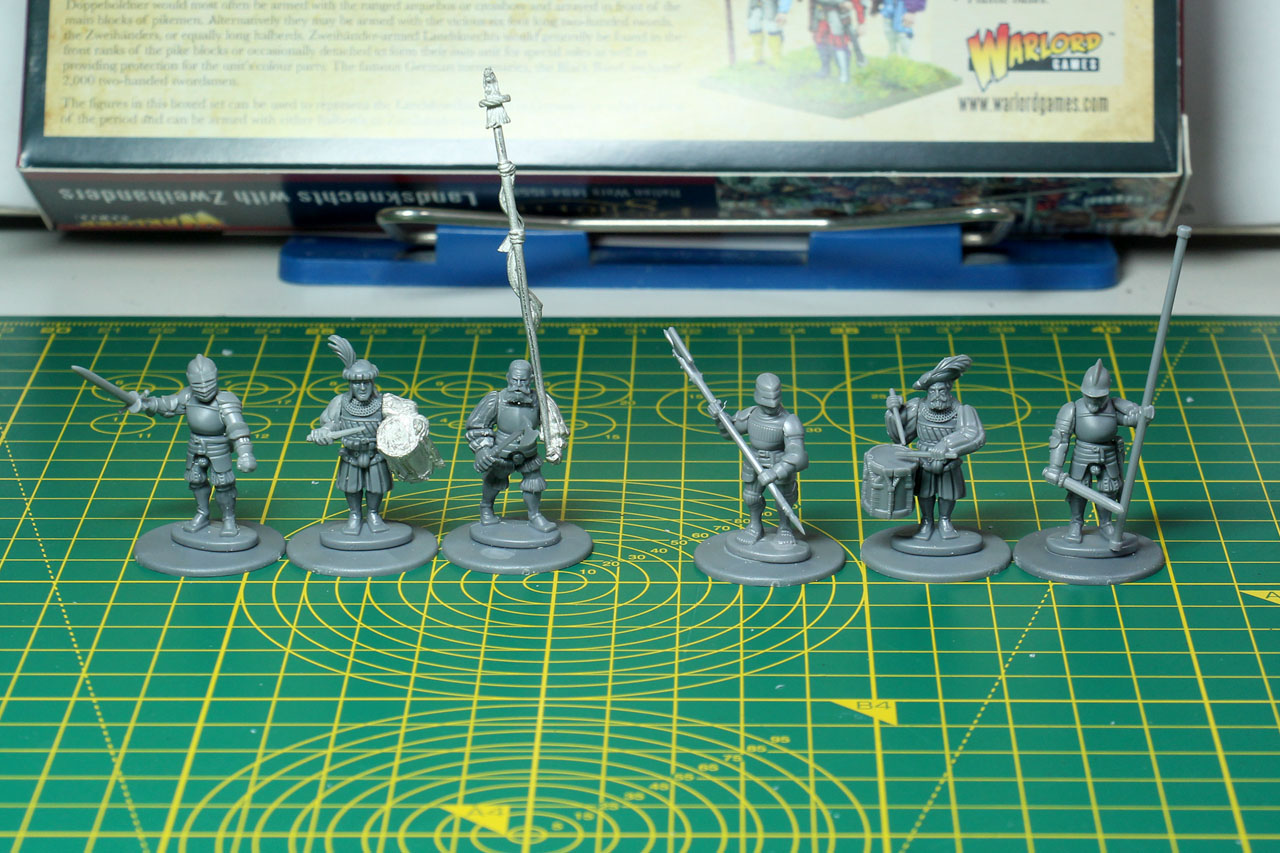
The bitz come from the old command upgrades for the Empire plastic infantry, the drum is from the Soldiers of the Empire box (with swords and halberds) and the banner is from the Crossbowmen Regiment.
Like us on Facebook
Follow me on Instagram
Categories
- events (212)
- fantasy (611)
- General (162)
- historical (648)
- Little Big Adventures (4)
- offtopic (5)
- reviews (553)
- science fiction (714)
- showroom (108)
- terrain (119)
- Uncategorized (1)
- work-in-progress (423)