Bolt Action – Third Edition Core Rules
When the first edition of Bolt Action hit the shelves, Warlord Games promised nothing less than to do for historical wargaming what Games Workshop once did for science fiction: an accessible rule set, a huge miniature range and lots of supplements, all from a single source. That got me hooked from day one. Back in 2017 I reviewed the second edition rules and described it as a careful update, errata and community feedback worked in, a few new ideas like officer orders and HE templates, and twelve more pages than before.
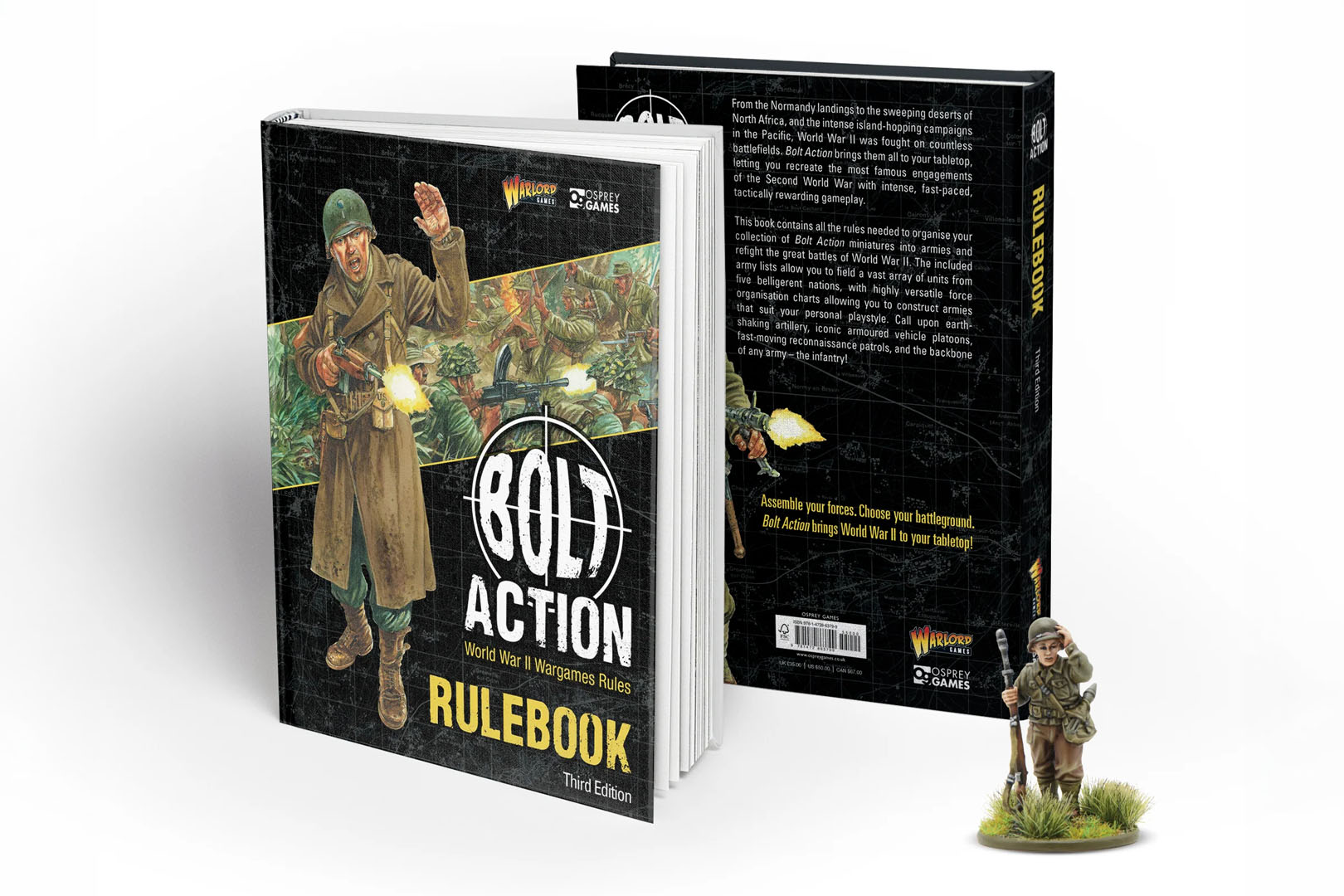
The third edition of Bolt Action was released in autumn 2024, and I have to admit that I did not feel the urge to switch right away. The second edition and its vast library of supplements served me well for years. But now a lot of material for the new edition is out, so it is time for a proper look. And this is not a careful update. This is the first real overhaul since Bolt Action was launched.
Just like the previous editions, the third edition was written by Alessio Cavatore and Rick Priestley, who have been with Bolt Action since its very first days. It is available in English, German, French and Spanish for 38 GBP or 44.50 EUR, as a hardback, a mini-softcover and digital PDF. This review is based on the German hardcover and the English PDF, both provided as review samples.
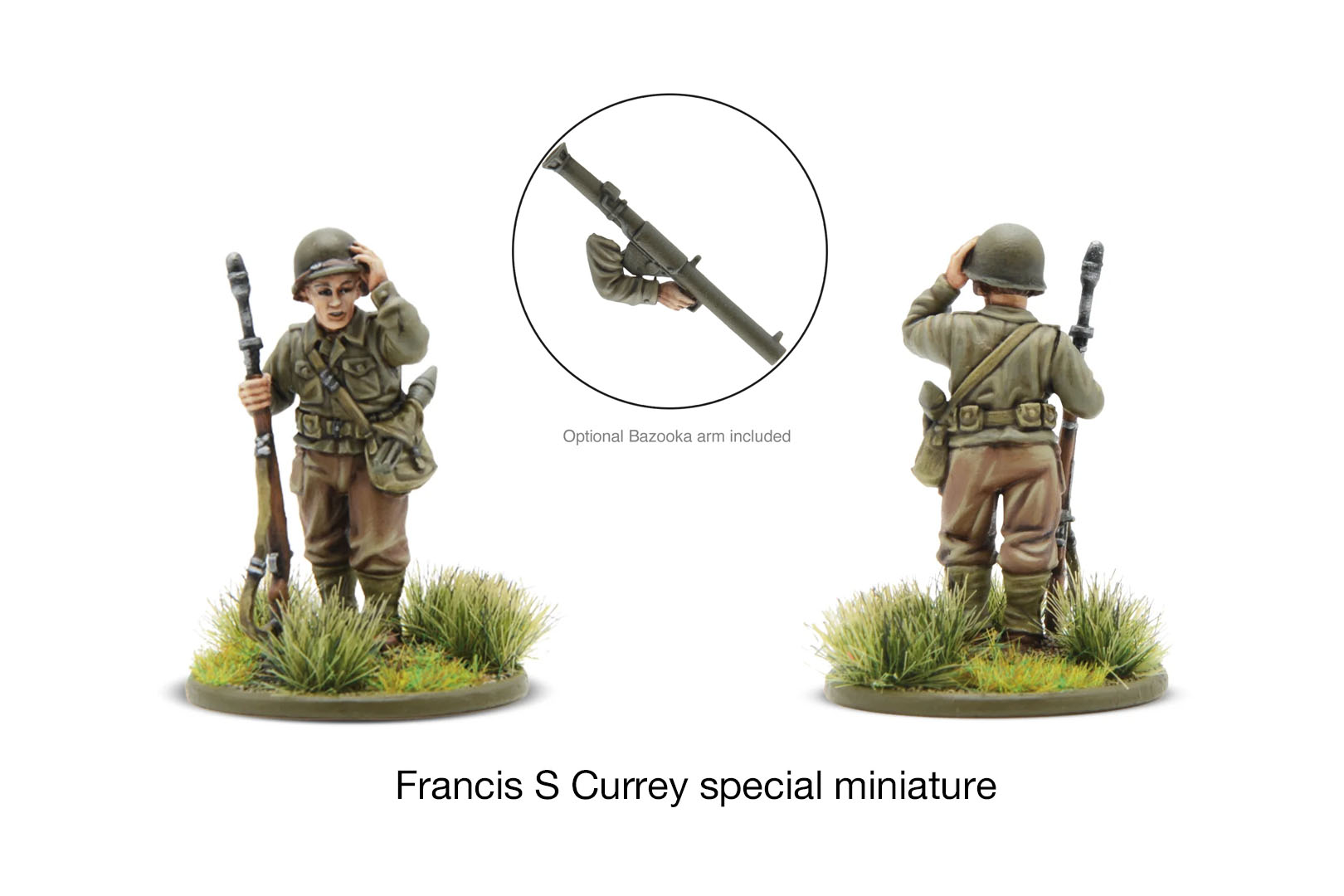
As usual, the rulebook comes with a free special miniature when ordered directly from Warlord Games or selected retailers. This time it is Sergeant Francis S. Currey, a fitting choice as the accompanying starter set covers the Battle of the Bulge. Born in 1925 in Loch Sheldrake, New York, Currey served with Company K, 120th Infantry Regiment, 30th Infantry Division. On 21 December 1944 near Malmedy, his position came under attack by German armour and infantry. He found a bazooka in a nearby building, crossed a street under heavy fire to fetch rockets and knocked out a tank, then drove the enemy off with grenades and a machine gun so that five of his comrades could escape. He was awarded the Medal of Honor in July 1945 and died in 2019. Fun fact: he was the first Medal of Honor recipient to be turned into a G.I. Joe action figure.
What is it about?
For those of you new to it: Bolt Action is a World War 2 wargame in 28mm by Warlord Games, published together with Osprey Games and backed by what is probably by now the largest official miniature range for this period. The game covers platoon sized engagements, roughly 30 to 50 infantry models per side, supported by a few artillery pieces and vehicles. A standard game is played at 1,000 points on a 6' by 4' table.
Bolt Action never wanted to be a simulation. It is a game, meant to be fast, cinematic and narrative, and that philosophy is still at its core. What I appreciate most is the scale. An army is a manageable project, whether it is your first force or a second one for a different theatre. My own focus has always been North West Europe and North Africa, and both work for me perfectly at this size.
Another point I want to mention: Warlord Games handles the setting with a lot of awareness. There are other WW2 rule sets out there that use certain symbols of the period as design elements far too generously, the WW2 equivalent of "sex sells". That does not go down well with everyone and is not even allowed everywhere. Bolt Action avoids this despite its anglocentric perspective, and that deserves a thumbs up.
First Impression
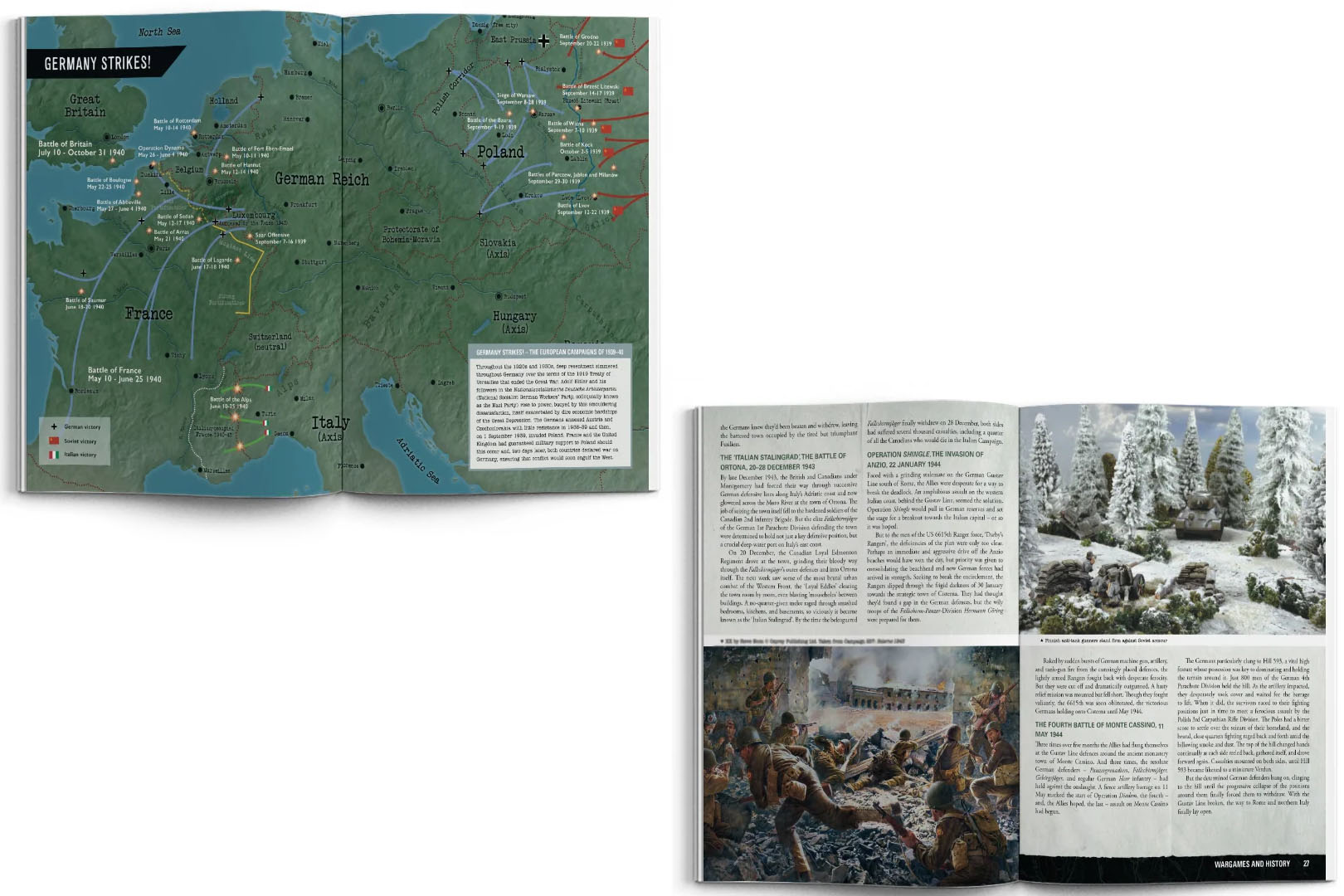
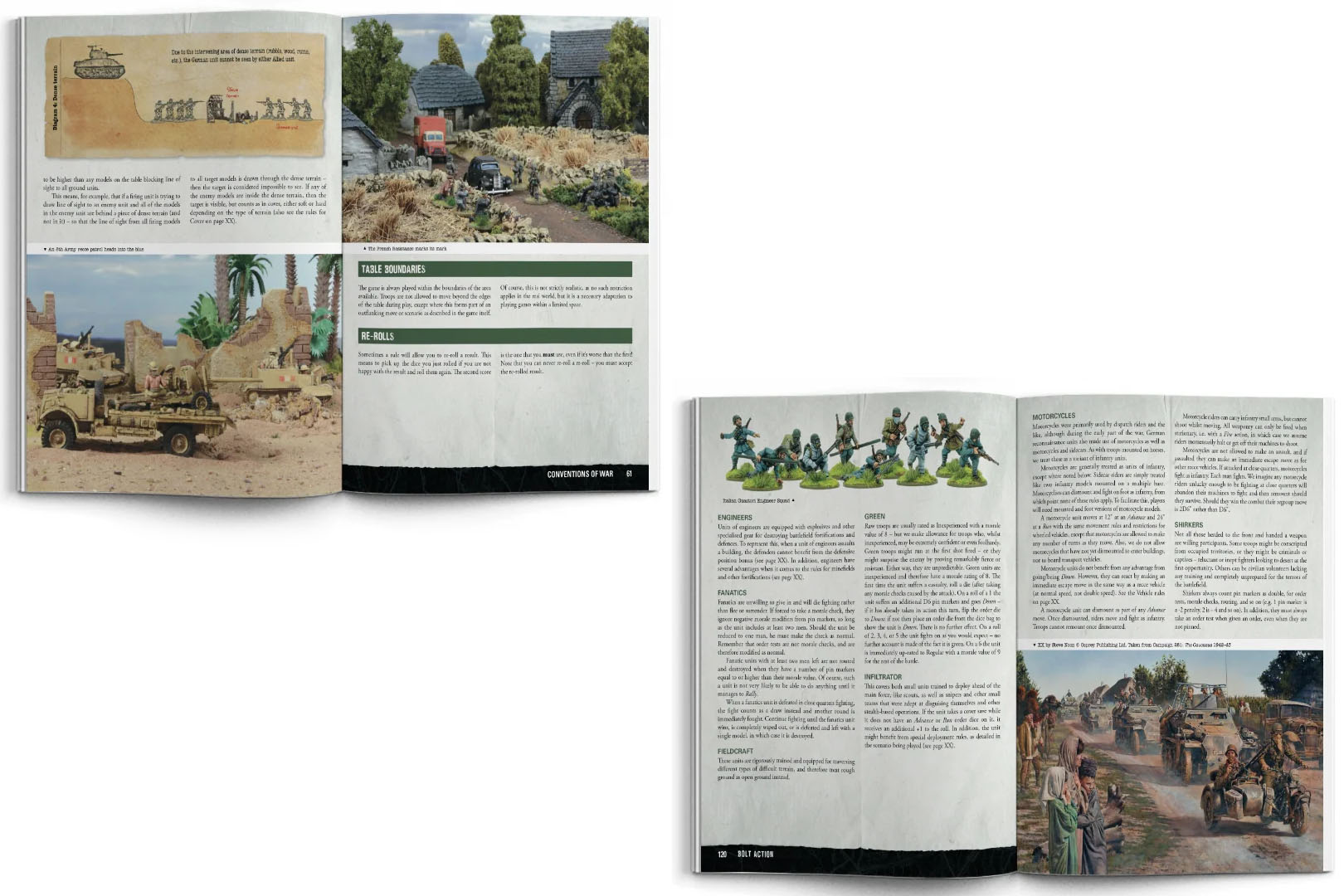
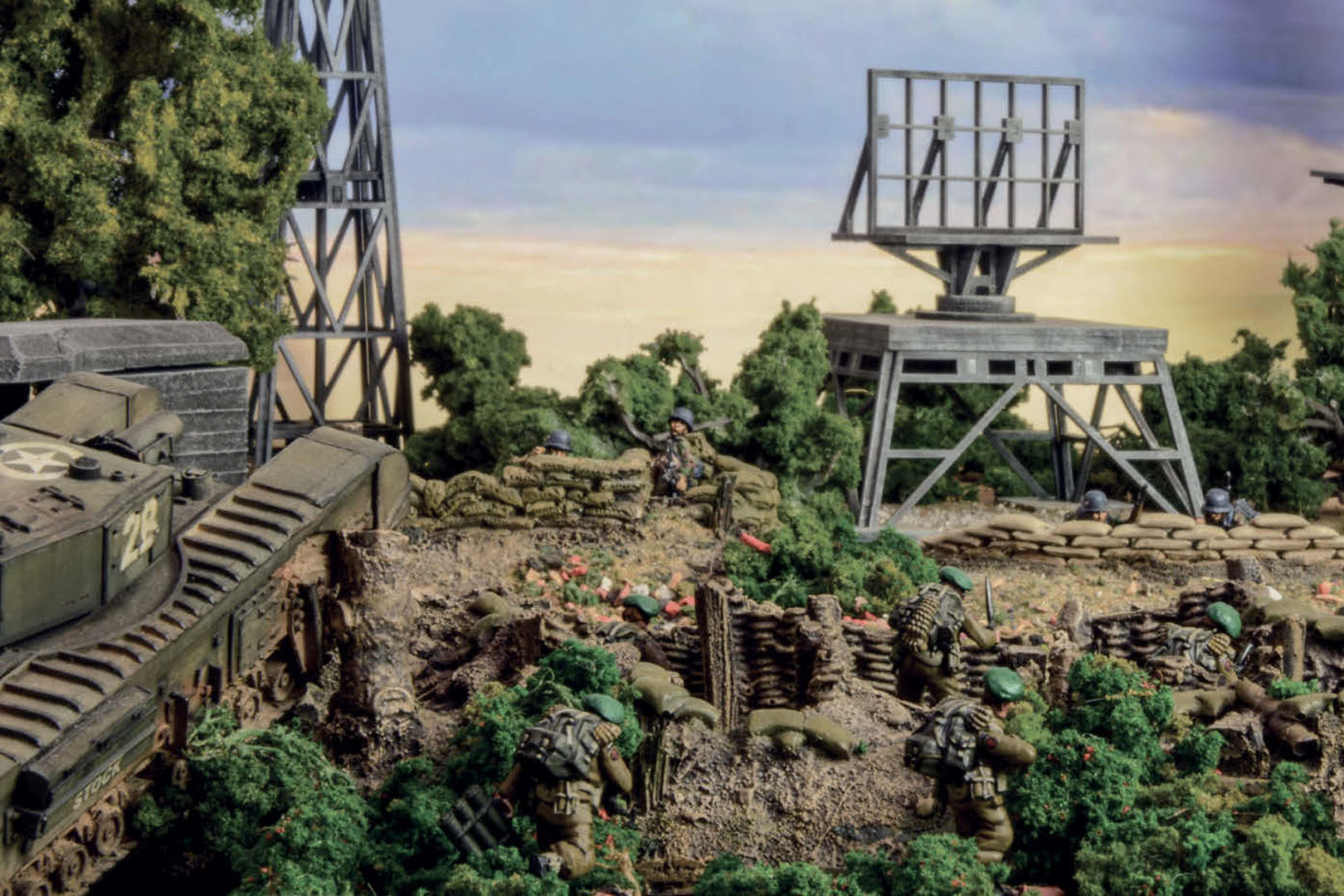
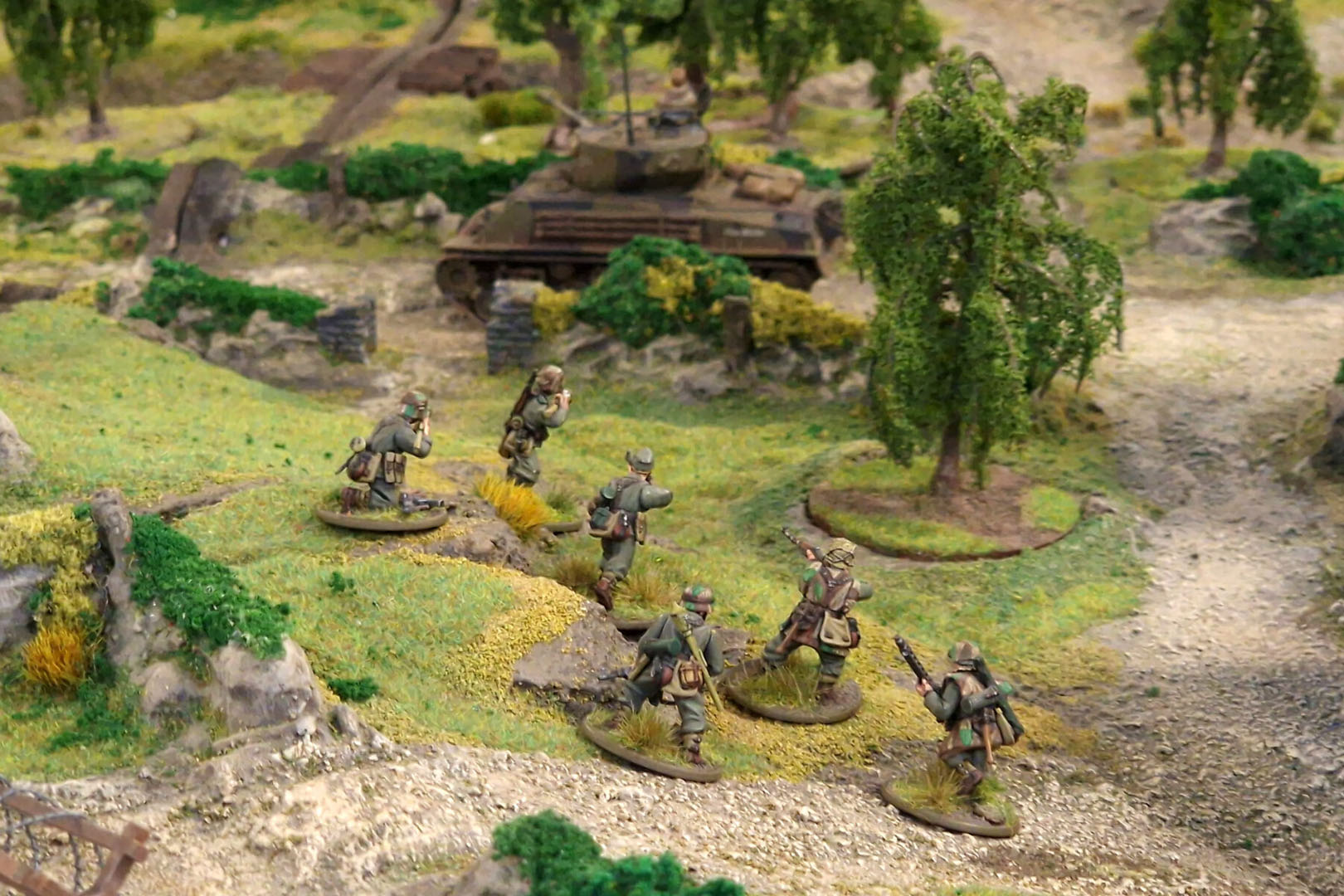
Osprey and Warlord deliver what we are used to from them: a solid hardcover with a proper binding, high quality print and a layout on the familiar high level, loosened up with artwork by Peter Dennis, Steve Noon and Graham Turner as well as lots of painted miniatures and dioramas.
What stands out is the sheer size. The second edition had 228 pages, the third edition comes in at around 320, so we are talking about almost 100 pages of additional content. Here is how the book is structured:
- Introduction, split into a part for new recruits and one for veterans of earlier editions
- Wargames and History
- Basic Supplies, Conventions of War and Units
- The Turn, Orders, Movement, Shooting, Weapons and Close Quarters
- Headquarters, Unit Special Rules, Artillery, Vehicles and Buildings
- Arranging a Game, the Battle Scenario system and five Story Scenarios
- Force Selection with six platoon selectors and three example armies
- Army Lists for Germany, the United States, Great Britain, the Soviet Union and Imperial Japan, plus common transport vehicles
- Optional Rules and Guidelines for Large Games
- Rules Summary, Templates and Tokens, and an Index
So where do the extra pages come from? The first 40 pages are dedicated entirely to the war itself. Where the second edition had a timeline and a short appendix, the new book walks you through the conflict theatre by theatre, from the invasion of Poland to Okinawa, with short vignettes of individual battles like the Danzig Post Office, Tobruk, Kohima or the bridge at Remagen. That might seem like a lot for a rulebook, but Bolt Action reaches a much broader audience than most historical wargames, and for newcomers this is a great way into the subject.
Force selection grew from four to around seventeen pages, the special rules for units and vehicles were extended considerably, and an entirely new chapter of optional rules was added. This covers airborne landings, amphibious assaults, city fighting, desert warfare, dug in positions, fortifications, minefields, hidden deployment, night fighting and weather. Many of them are known from the campaign books, but having them collected in the core book is a big plus. And finally, there is an index. About time.
The army lists in the core book are a logical step, the second edition had them as well. They cover the standard forces of each nation and are fully playable, while thematic lists and special units are found in the Armies of... supplements. A fair split: casual players have everything they need, and those who want to dig deeper can specialise later on.
How does it play?
At its heart, Bolt Action still plays like Bolt Action. Each unit generates an order die, both players put their dice into a bag and draw them blindly. Whoever's colour comes up activates one unit and gives it one of six orders: Fire, Advance, Run, Ambush, Rally or Down. A turn ends when all dice are drawn, and you never know who acts next.
Units do not have a classic stat line. Their troop quality, Inexperienced, Regular or Veteran, defines their morale and how hard they are to damage, and this has not changed at all. Taking fire places pin markers on a unit, which lower its morale and make it less reliable. A pinned unit has to pass an order test on 2D6 before it does what you want. Weapons are still grouped by type, a rifle is a rifle, no matter if it is a K98 or an M1 Garand. So far, so familiar. The devil, however, is in the details.
Shooting
This is the biggest change. In the second edition you hit on 3+, followed by a long chain of modifiers for range, cover, small units, units going down and every single pin marker. That chain is gone. You now hit on 4+, and only four modifiers remain: moving, being pinned (a flat -1, regardless of the number of pins), being Inexperienced and point blank range, which now grants +2. Cover moved to the defender: after you have rolled to damage, the target takes cover saves, 5+ in soft cover, 4+ in hard cover, and going Down grants either a 5+ save in the open or +2 to an existing one.
I found the second edition quite lean already, but this change makes sense. Fewer modifiers mean faster turns, and the cover saves actively reward using terrain. That fits the idea of a narrative game rather than a simulation very well.
Orders and Morale
Rally now removes all pin markers instead of D6+1, and so does keeping a unit Down at the end of the turn. Both make a tactical withdrawal more plannable, a unit can get back into the fight without relying on a lucky roll. I would have liked to see a difference between the two, though, as staying Down should not be as effective as an actual Rally order. FUBAR results were reworked as well: a panicking unit now runs for the nearest table edge and is lost once it reaches it.
Officers were streamlined from four ranks to two, the platoon commander and the company commander, and Exceptional Damage is gone completely. The latter was quite powerful on snipers, which could wipe out entire weapon teams with a single shot. They were rewritten to pick off leaders instead, much closer to their actual role. Officers also became a lot cheaper. A regular platoon commander now costs 30 points, where a second lieutenant used to cost 50 in the second edition. The "You men, snap to action!" ability remains, so a platoon commander can pass on two orders to nearby units and a company commander four. As every platoon needs its own commander, you will usually see several officers on the table. Spotters and forward observers were opened up as well: any Regular or Veteran indirect fire weapon may now use what any spotter or observer of your force can see.
Weapons and Special Rules
Quite a few weapon profiles were adjusted. Medium machine guns now fire six shots instead of five, and heavy machine guns doubled from three to six shots with a range of 48". The anti tank rifle reaches out to 48" as well, and the light mortar to 36". On the other hand, pistols lost the Assault rule, and flamethrowers became a double-edged sword. A hit still turns into D6 hits and ignores cover saves, but the operator now receives a pin marker himself whenever he fires, and the tank runs dry on a 1 or 2. Light machine guns got cheaper, while the Panzerfaust tripled in price.
The unit special rules were cleaned up, too. Several rules from the supplements that did the same thing under different names were combined into Fieldcraft, which lets a unit treat rough ground as open ground. Infiltrators now have their deployment rules in one place and gain +1 to their cover saves as long as they did not Advance or Run. And Engineers got a proper rule of their own, with advantages against fortifications and minefields.
Close Quarters
In the second edition the attacker struck first. Now both sides fight simultaneously, unless the attackers have to cross an obstacle or rough ground to get there, in which case the defender strikes first, as long as he has not gone Down. Close combat is chaotic carnage, and in many games it looks too much like an orderly exchange of blows. Simultaneous combat is a sensible solution, and favouring defenders in cover makes sense, as assaulting dug in troops was a risky business. It does make digging infantry out of buildings harder, though, and that is where Engineers come in, as they ignore the bonus when assaulting buildings.
A short example
Let's put this together. A British section of ten Regulars, a corporal with a Sten, a Bren team and seven riflemen, spots a German squad of eight Regulars behind a stone wall about 20" away. The section receives an Advance order, moves a few inches and opens fire. With the Sten out of range and the loader busy feeding the Bren, that leaves eleven dice: four from the Bren and seven from the rifles. They hit on 4+, but suffer -1 for moving, so every 5 or 6 is a hit. Let's say four dice come up. The Germans immediately receive a pin marker, no matter how many hits were scored. Now the British roll to damage, needing 4+ against Regulars, and score two. The German player takes his cover saves, 4+ behind the stone wall, saves one of them and removes a single rifleman. But the pin marker hurts: the next time the Germans are activated, they first have to pass an order test on 2D6 against a morale of 8 instead of 9. Going Down would have improved their save to 2+, at the cost of their activation.
Later in the game, the British decide to finish the job with the bayonet. The section is given a Run order and declares an assault. As the Germans have not been activated yet this turn, they may react with a hail of fire before the Tommies reach the wall. The survivors are moved into contact, and since the Germans are defending behind an obstacle, they strike first: every German model rolls to damage, no hits to roll and no cover saves in close quarters. Only the surviving British can strike back. Whoever caused more casualties wins, and the loser is wiped out entirely. In Bolt Action an assault is always decisive, which makes it a powerful but costly tool.
Vehicles
Damage against armoured vehicles is now split into two tables. If you roll exactly the damage value, you roll on the superficial damage table, which includes compromised steering, a jammed turret or engine damage. Beat it by one or two and you roll on the full damage table, beat it by three or more and you roll twice. I welcome this, as it allows for much finer degrees of damage and limited functionality instead of the binary "nothing happened or it's burning". And it happens more often than you might think: the weaker your gun compared to the armour, the more of your penetrations end up there.
On top of that, fully enclosed vehicles with Inexperienced or Regular crews are now pinned by any hit from a heavy weapon, while Veterans only flinch at hits that can actually hurt them, anti tank guns gain +1 to hit vehicles, and vehicles got more expensive across the board. Late war vehicles have always tended to become a point sink in Bolt Action. Whether the new edition solves that or makes it worse remains to be seen.
Buildings
Before the game, players now decide for every building whether it is a ruin or an intact building. Ruins are simply treated as dense terrain providing hard cover, while troops entering intact buildings are removed from the table much like units boarding a transport. Units inside count as being in hard cover, HE shells that find their way inside cause multiplied hits, and a single heavy shell causing ten or more hits brings the whole building down. Bazookas, PIATs and Panzerfausts now act like a 2" HE shell against buildings, which finally gives infantry anti tank weapons a use when it comes to clearing a house. Bunkers grant a 2+ save and only collapse after twelve hits, so a flamethrower remains the tool of choice for cracking them open.
Scenarios and Force Selection
The twelve fixed scenarios of the second edition were replaced by a scenario generator. You roll for one of six victory conditions, one of two deployment zones and one of three deployment types, which results in 36 combinations. Add a "Grand Tactical" mode and five story scenarios. As the campaign books are packed with fixed scenarios anyway, the generator is a varied tool for a quick game.
The reinforced platoon was replaced by six platoon selectors: Rifle, Heavy Weapons, Engineer, Artillery, Armoured and Recce. Every army is built around a rifle platoon, and you need one rifle platoon for each additional platoon of the same type. For a start this is more than enough, and the Armies of... books add even more flexibility later on. For a core rulebook, this is an impressive amount of army list content.
Each nation keeps its own character through army special rules, and some familiar ones were reworked. The Germans still have Hitler's Buzz Saw with an extra shot for their machine guns, and their officers may hand out one additional order. The American Fire and Manoeuvre no longer allows moving and shooting without penalty, but grants a bonus die for every three riflemen instead, joined by gyro stabilisers for Veteran tank crews and air superiority. The British pick one of five national characteristics, from rapid fire to the "Tough as Old Boots" close combat bonus. The Soviets lost their free squad of conscripts, but gained commissars who keep wavering units in line and massed artillery batteries. And the Japanese are Fanatics across the board, with a Banzai charge that allows a failed order test to assault to be re-rolled.
What's next?
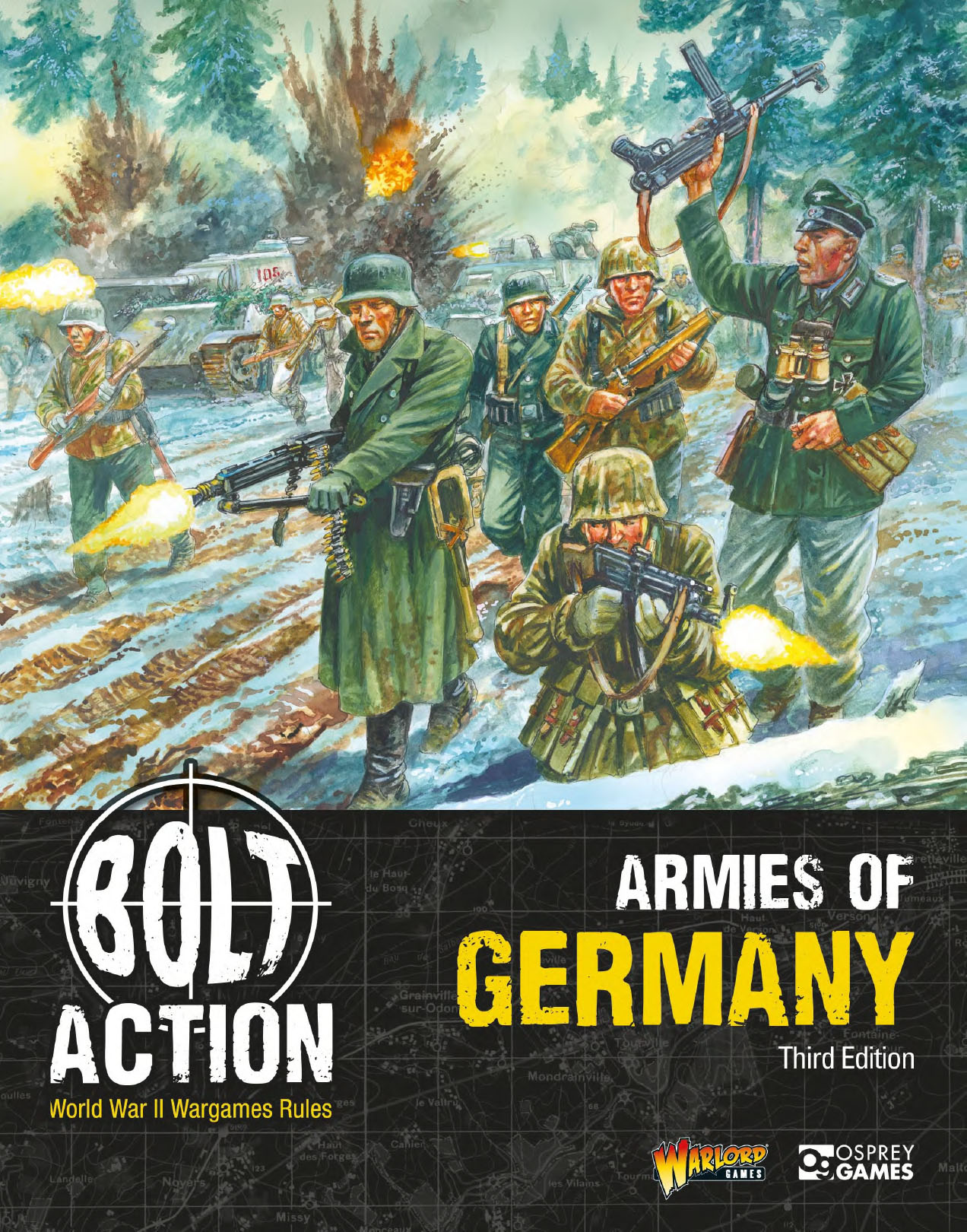
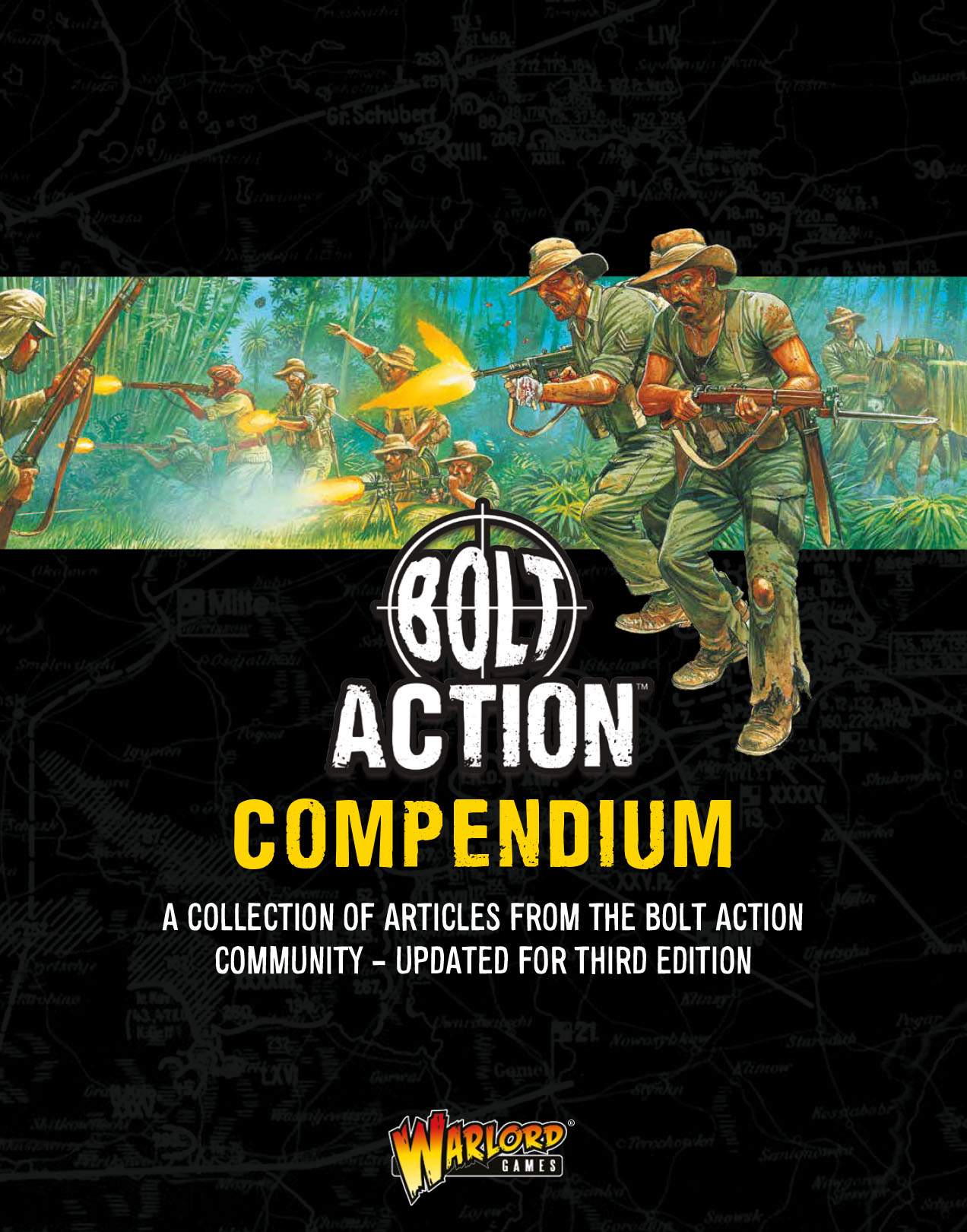
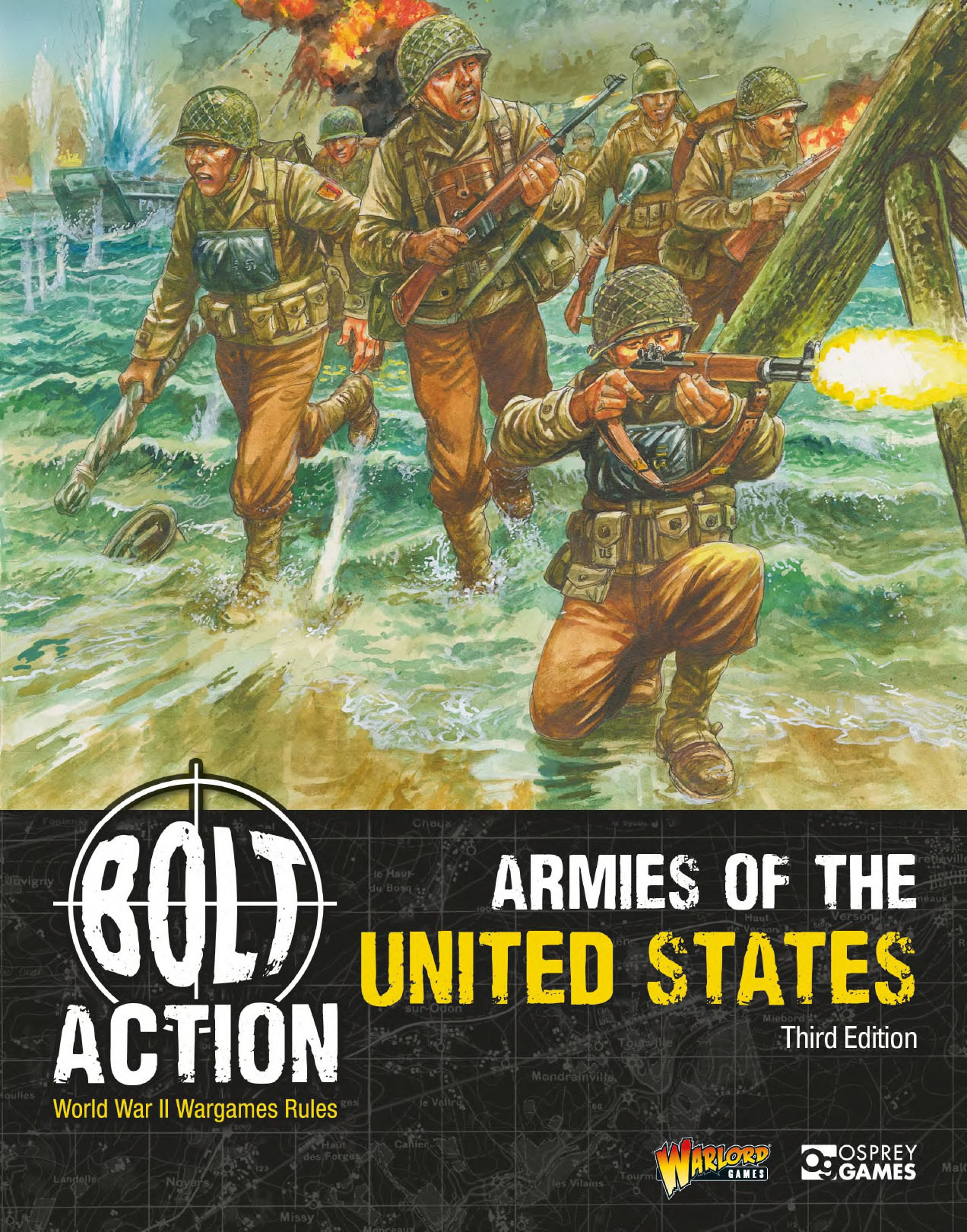
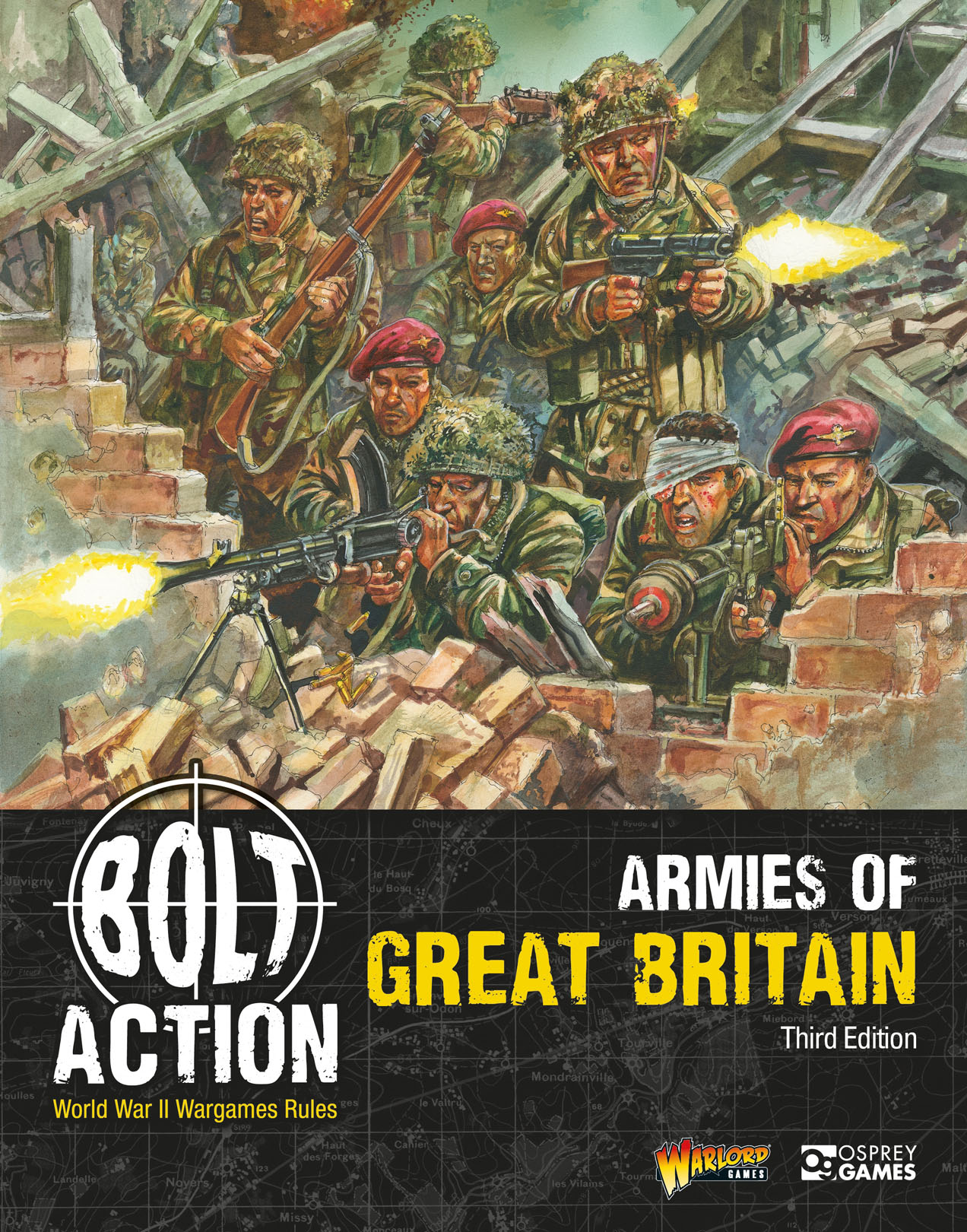
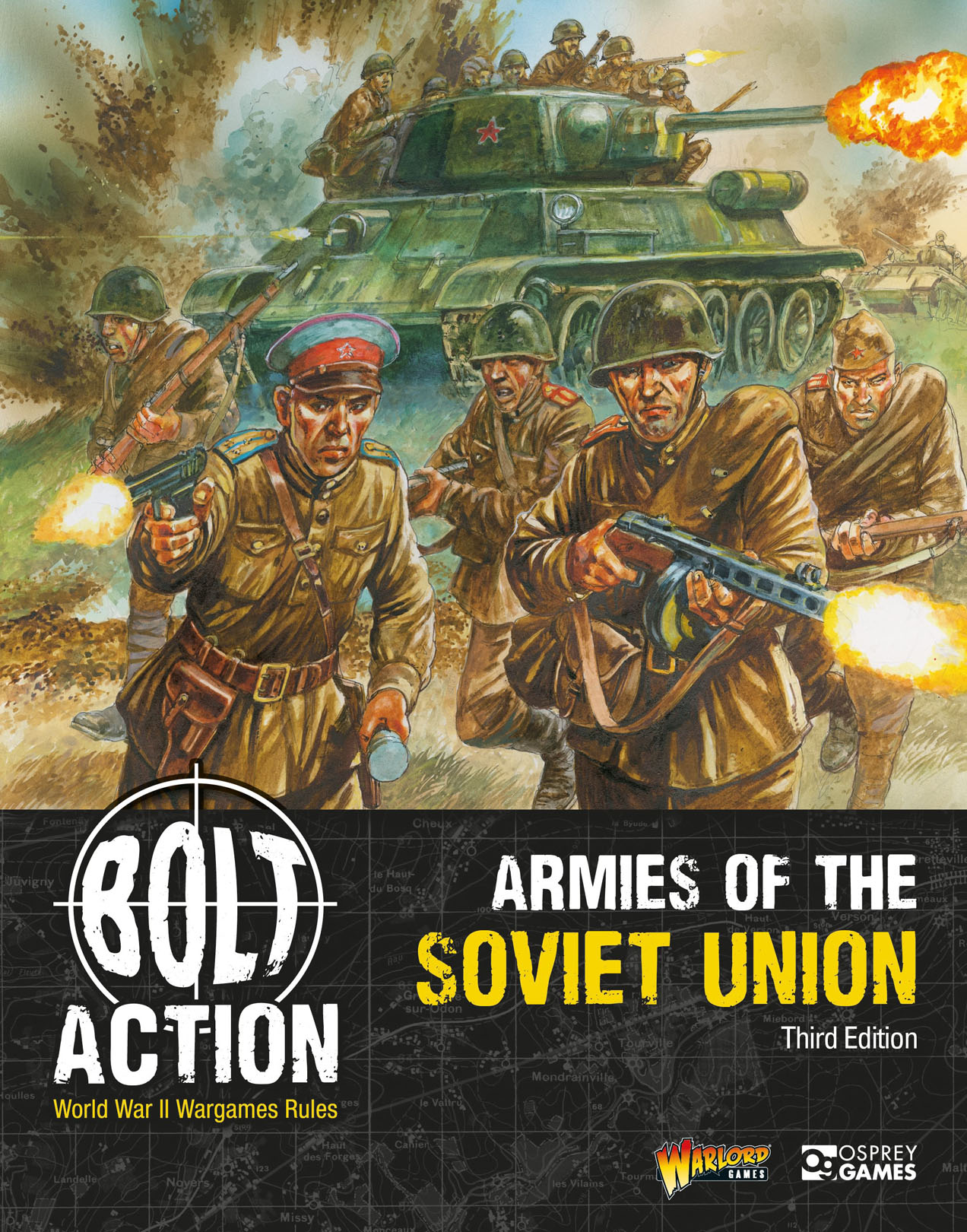
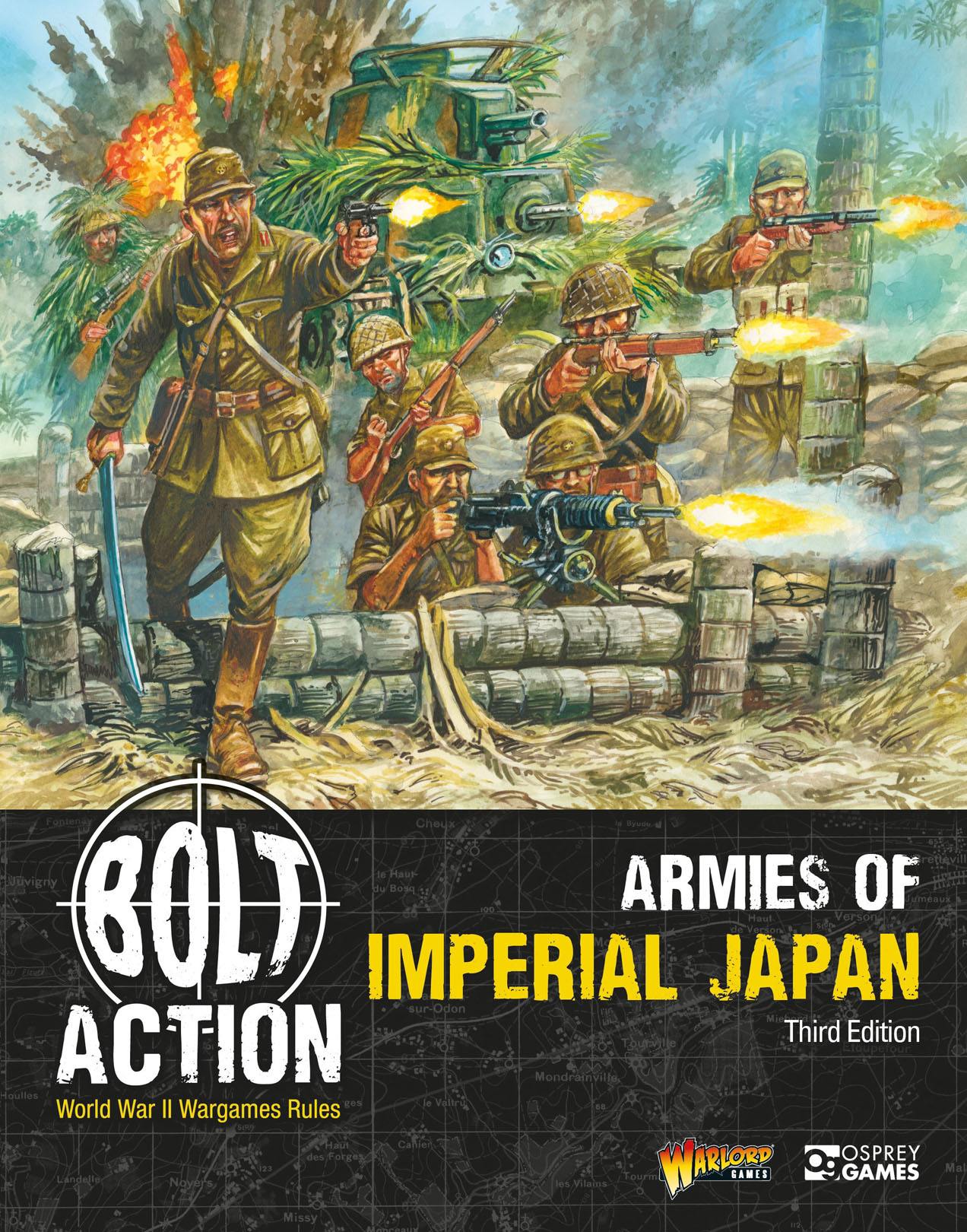
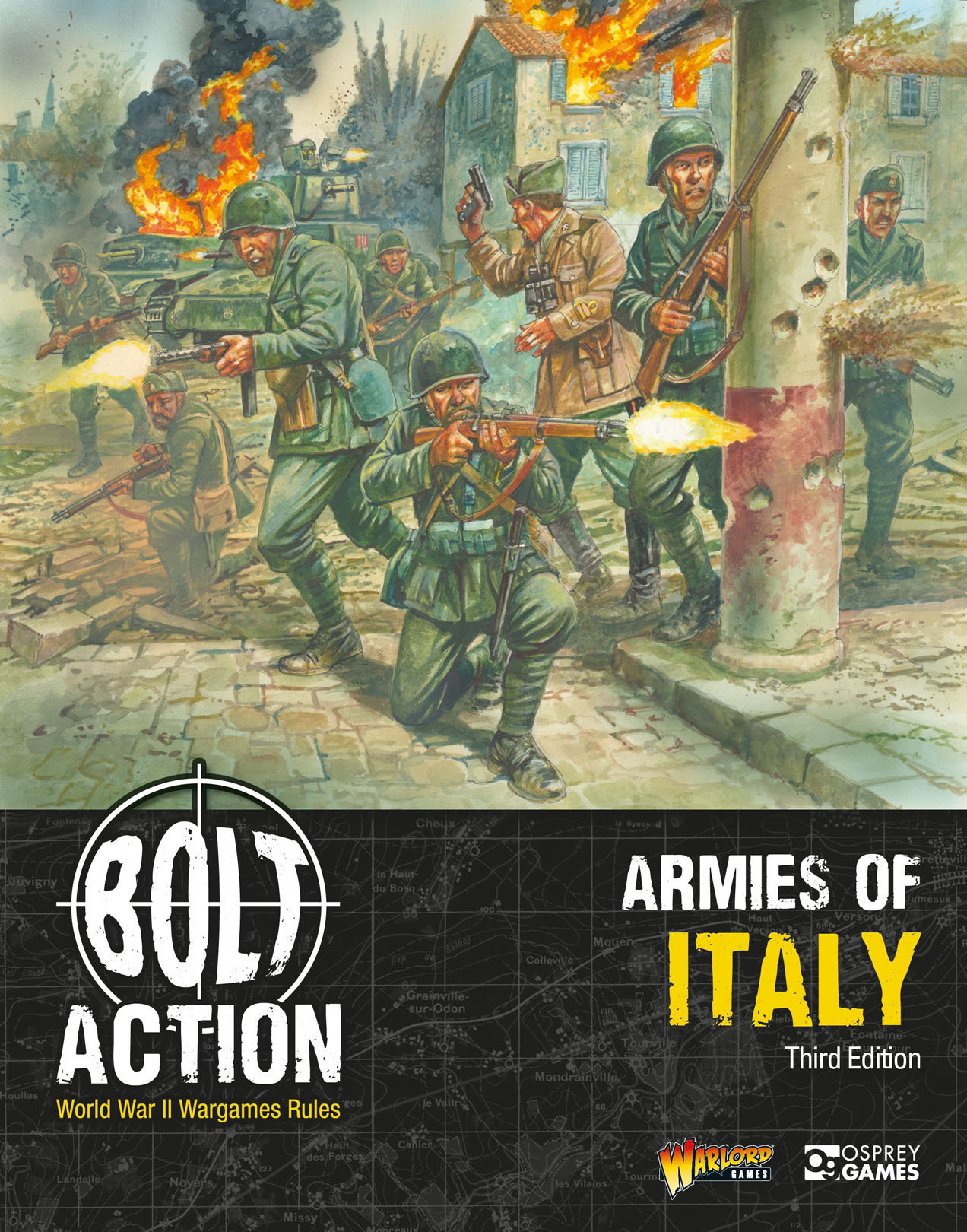
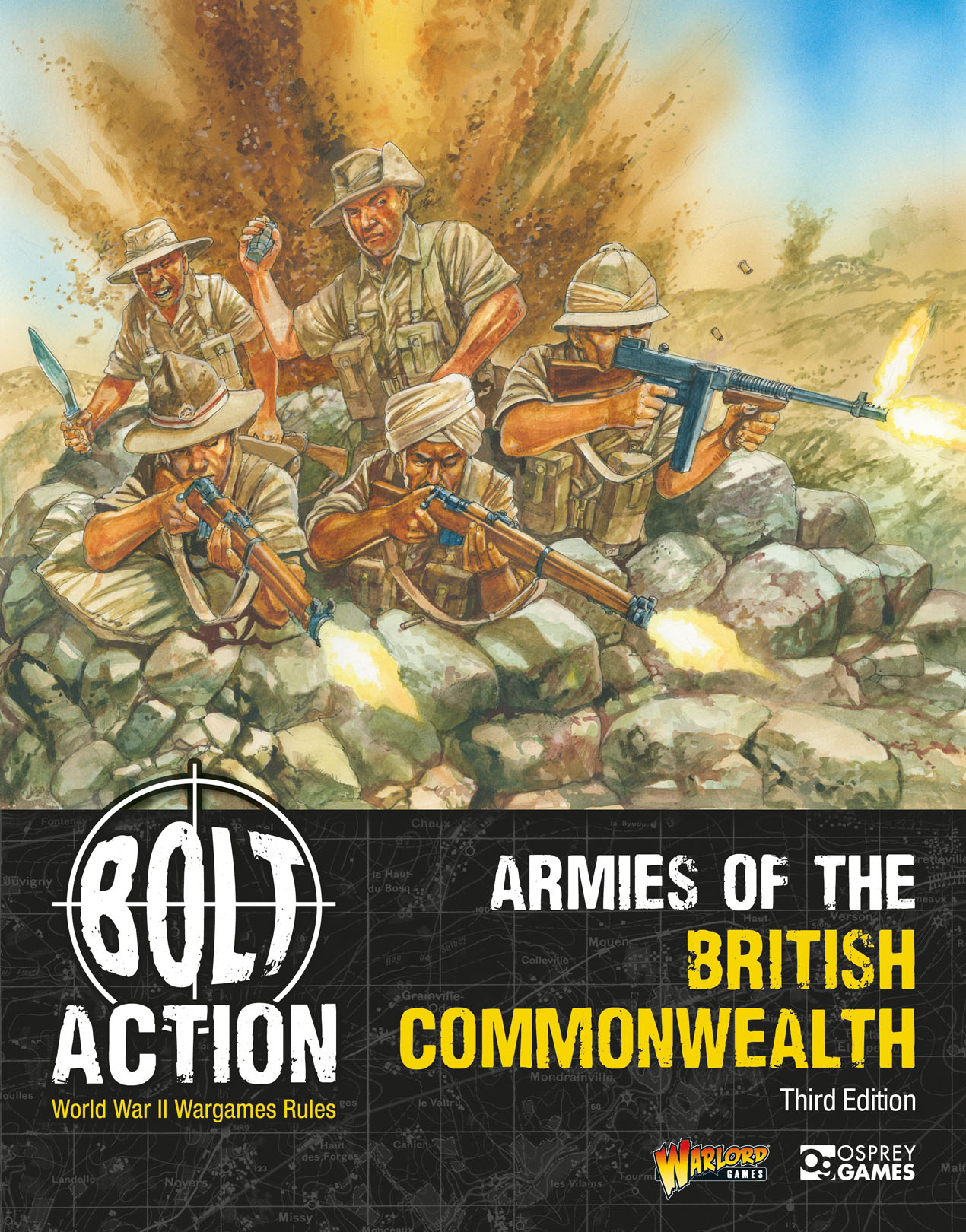
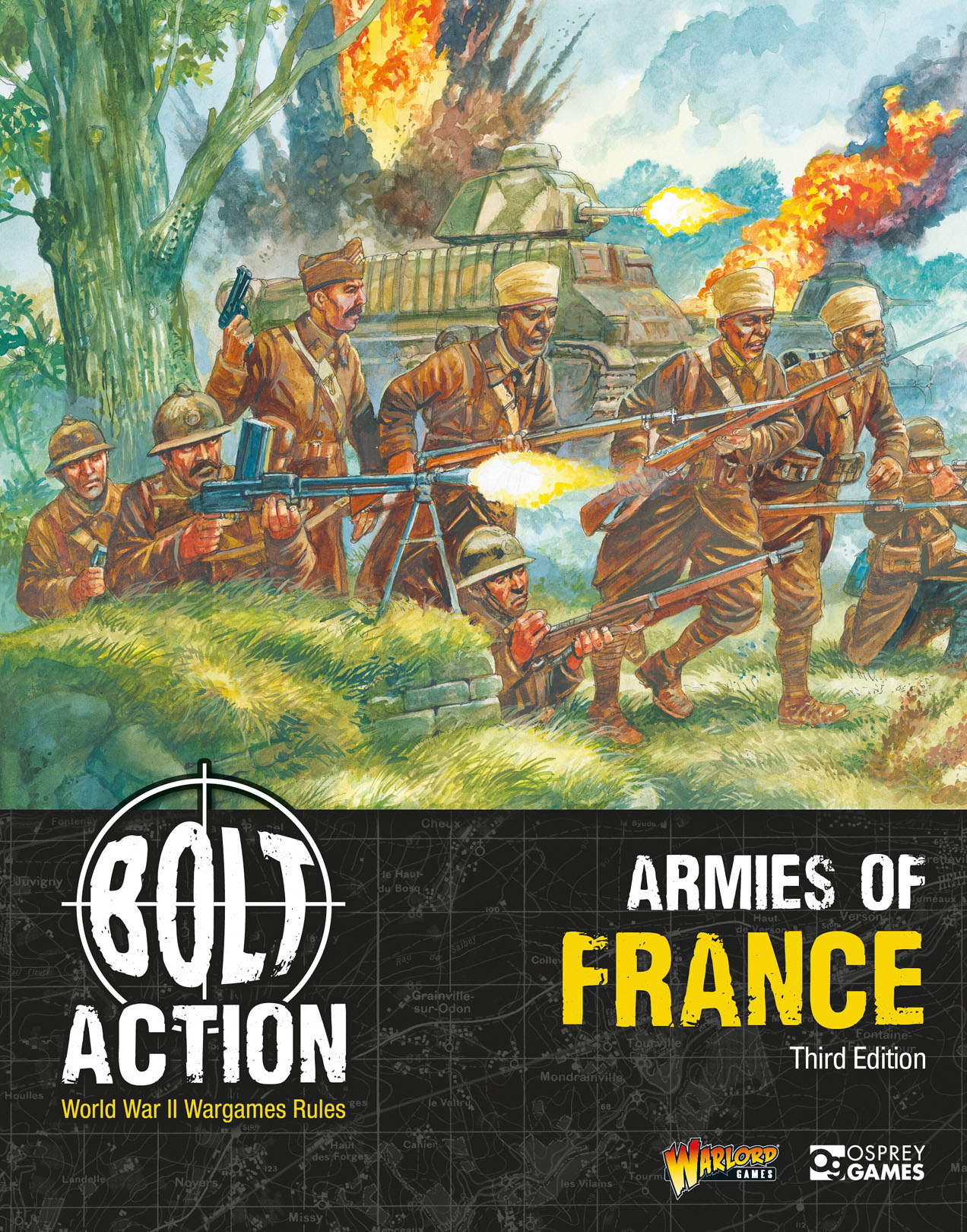
As before, the third edition is supported by a series of Armies of... supplements. They replace the unit entries and points from older books, while the campaign books remain a great source for scenarios and background. So far the following books have been released, including the Compendium, a collection of scenarios, unit profiles and community articles:
- Armies of Germany (2025)
- Bolt Action Compendium (2025)
- Armies of the United States (2025)
- Armies of Great Britain (2025)
- Armies of the Soviet Union (2025)
- Armies of Imperial Japan (2026)
- Armies of Italy (2026)
- Armies of the British Commonwealth (2026)
- Armies of France (2026)
For the first time Italy and France no longer share their books with the minor nations, and the Commonwealth is no longer just an appendix to the British army. Armies of the Allies & Axis is scheduled for January 2027 and will cover the remaining nations like Finland, Hungary, Romania or the Partisans. Until then, Warlord Games provides free PDF army lists for these forces.
We will continue this series in order of release, starting with Armies of Germany, followed by the United States and Great Britain. If you are already playing a German force, you might also want to have a look at my house rules for the E-Series and Löwe, written for this edition.
Conclusion
What surprised me most is how complete this rulebook feels. The scope gives it immense standalone potential. I did not necessarily miss that in the second edition, but it means that a starter set along with this book is a self-contained product with a lot of play value, which first of all needs more miniatures, not necessarily more books.
Where the second edition was a careful polish, the third edition is a proper overhaul. The shooting process is leaner, cover matters more, close combat gives defenders a fighting chance and vehicles can be damaged in finer steps. Not every change hits the mark for me. Down removing all pins makes Rally less special, and the defender bonus in close combat will certainly keep the community busy. But it still is Bolt Action, still fast and still narrative, and that is what counts.
There are several options for you to get into the third edition of Bolt Action. The cheapest is the digital release of the core rulebook at around 25 EUR (it's currently on sale), followed by a printed A5 mini rulebook at 26.50 EUR. The larger hardback of the core rules is available at 44.50 EUR, and if you want to dive in right away you can either pick up some army specific bundles or a starter set like Band of Brothers or Island Assault (both at 114 EUR), including dice, terrain and even vehicles. Of course there is also the Battle of the Bulge set mentioned at the beginning. There are further variants of the starter sets available, for example the lean Introductory Set at roughly 50 EUR, but this has stripped down content compared to the other boxed sets as well as not covering all the rules mentioned above.
So who should get it? For newcomers there is no question, this is the current state of the game. The same goes for anyone playing tournaments or at events beyond their own club, you will not get around the third edition. If you are a happy second edition player with a full shelf of supplements, that is a decision you have to make for yourself, as with any system. Read up on the changes, play a few test games with your group and see if they matter to you. Reviews like this one are meant to help with exactly that.
Bolt Action is a brand of Warlord Games.
The reviewed products were provided by the manufacturer.
Enjoy this article?
Like us on Facebook
Follow me on Instagram

Categories
- battle report (5)
- events (217)
- fantasy (620)
- General (162)
- historical (657)
- Little Big Adventures (4)
- offtopic (5)
- reviews (560)
- science fiction (721)
- showroom (108)
- terrain (120)
- work-in-progress (426)









Leave a comment