Too Fat Lardies – What a Tanker!
The TooFatLardies have built a solid reputation for producing wargames that prioritise historical feel over rulebook complexity, with games like Chain of Command or Sharp Practice. With What a Tanker!, they returned to the Second World War back in 2018, publishing rules for tank combat with vehicles from various nations of that era. And while I didn’t have the chance to give that game a try at LARDwerp back in 2022, I finally had the chance to do so with Team Würfelkrieg last month, and I’d like to share my experience with the rules in this review.
To give you a brief orientation on the scale of the game: if you want a tabletop game that scratches the same itch as World of Tanks, putting you in the commander’s seat of a WWII tank without drowning you in charts and counters, you should keep reading.
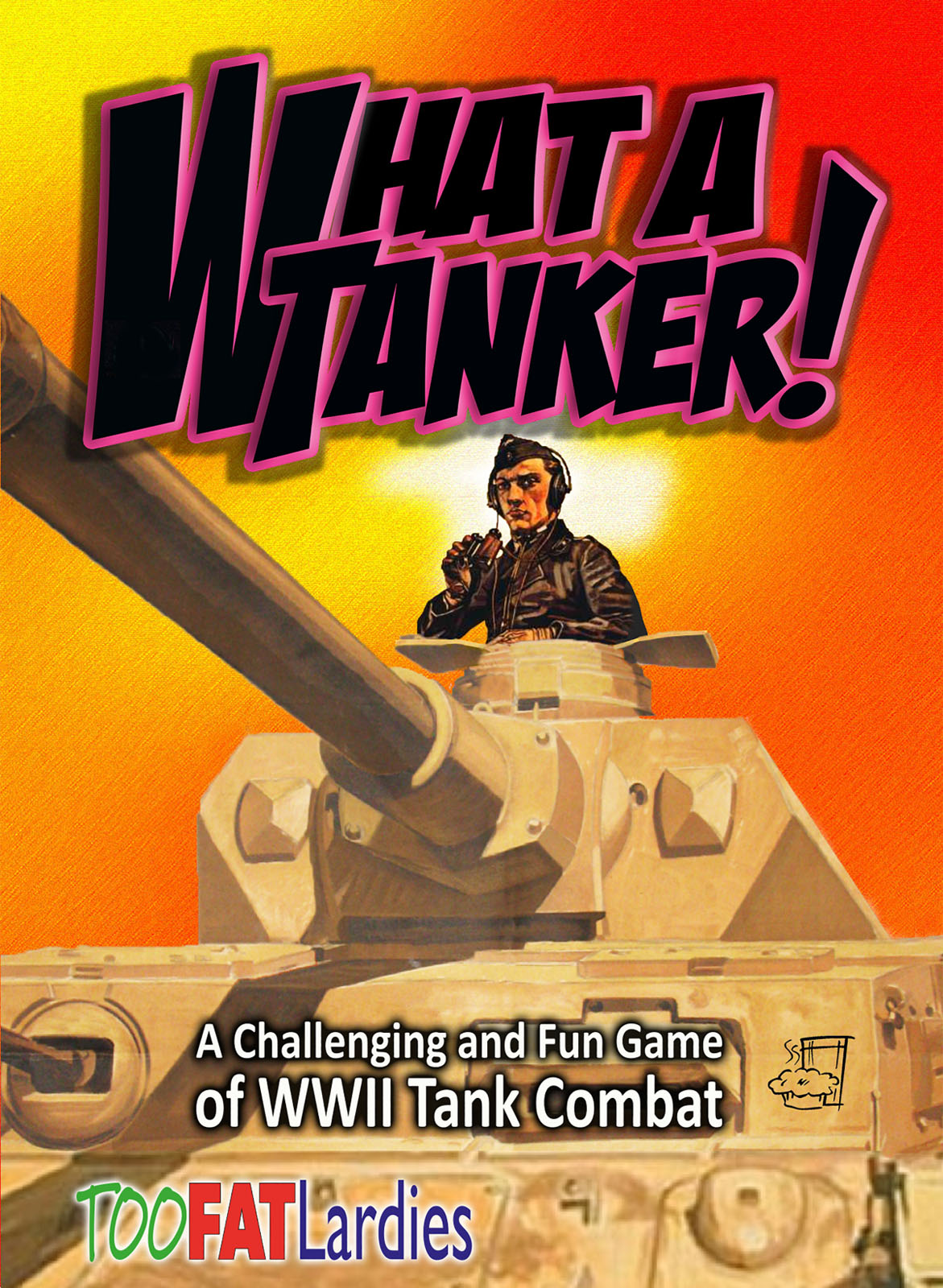
As the release was a few years ago, the printed rules are a bit scarce (~30 GBP / 35 EUR), but no worries — you can still pick up the digital download in their store for 17 GBP.
What Is It About?
What a Tanker! is a tabletop wargame for two or more players set during the Second World War. Each player controls one or more tanks, with the goal of knocking out the opposing side’s vehicles, either through sustained damage or a catastrophic hit. The game covers the full span of the war from 1940 to 1945, with national tank lists for Germany, the USA, the Soviet Union, Great Britain, France, Italy and Japan all included in the rulebook.
Those lists are substantial. On the German side alone, you’ll find everything from the early Panzer II and Panzer III variants of the Blitzkrieg years, through the mid-war workhorses like the Panzer IV F2-G and StuG III, right up to the heavy hitters of the late war: the Panther, the Tiger I, the Jagdpanther and the King Tiger. The Allies are equally well covered. British players can work their way from A13 Cruisers and Matilda IIs up through Cromwells and Sherman Fireflies to the Churchill Mk VII, while Americans progress from M3 Stuarts and Grants into the various Sherman variants and ultimately the M26 Pershing. Soviet players get a compelling path through T-34 variants, KV heavies and the fearsome IS-2. Each nation also has a career ladder that maps tank progression year by year, so there is a genuine sense of historical context to how forces develop over the course of the war.
The system is deliberately scale-agnostic. 15mm and 28mm are the natural sweet spots for club nights and conventions, but there is nothing stopping anyone from rolling out 1:35 scale models at a modelling show for a genuinely spectacular table presence.
The career and campaign layer, the so-called Kill Ring system, adds a nice progression angle. Tanks accumulate kill rings from victories, unlocking bonus cards and eventually Ace status, which in turn allows the crew to upgrade to a more powerful vehicle. It is a neat loop that lends itself well to a league format at a local club, or a multi-session campaign with a regular group.
First Impressions
The PDF is a clean, full-colour production. The layout is generous without feeling padded. The pages breathe, the diagrams are clear, and the situational illustrations do exactly what they need to do: explain movement arcs, line of sight scenarios and firing positions without ambiguity. Don’t expect the evocative battlefield artwork of an Osprey wargame, but the functional approach works in the rulebook’s favour. Everything you need is easy to find.
The digital release also includes printable tokens, cards and dashboards, so you can be up and running without any additional purchases beyond the models themselves. That is a thoughtful inclusion. In the case of the printed version, there was also an optional physical card deck you could pick up if you did not want to copy or print your own.
At 17 GBP, the PDF sits at the higher end for a rulebook of this size. That said, What a Tanker! is a complete, self-contained system: the national tank lists are all in here, there are no army books to chase, and no supplements are required to play. For a small publisher operating without the print runs of a Warlord Games or Games Workshop, the pricing is understandable, especially when the physical edition sits at around 35 EUR.
How Does What a Tanker! Play?
The heart of the game is the Command Dice system. At the start of each activation, a player rolls six D6. The results determine what actions are available that turn:
- 1 – Drive (movement and turret rotation)
- 2 – Target Acquisition (spotting and locking onto an enemy)
- 3 – Aim
- 4 – Shoot
- 5 – Reload
- 6 – Wild Dice (flexible, can substitute for any other result or be banked for initiative bonuses)
The elegance is in the tension. A full engagement sequence (acquire, aim, shoot, reload, shoot again) requires exactly the right mix of results, and the dice do not always cooperate. Entire activations can pass without a shot being fired simply because the numbers did not fall right. This is either flavourful or frustrating depending on your tolerance for randomness. In practice, it plays well, but one house rule I would recommend is allowing players to swap three dice for any single result of their choice. The multi-step firing process is demanding enough that a persistent string of unhelpful rolls can leave a tank feeling completely incapable for a turn or two without much recourse.
The buttoned/unbuttoned mechanic is a lovely touch: commanders with their heads out of the hatch acquire targets more easily, but take extra Strike Dice on any incoming hit. It is a small decision that creates real tactical tension, especially once the shooting starts.
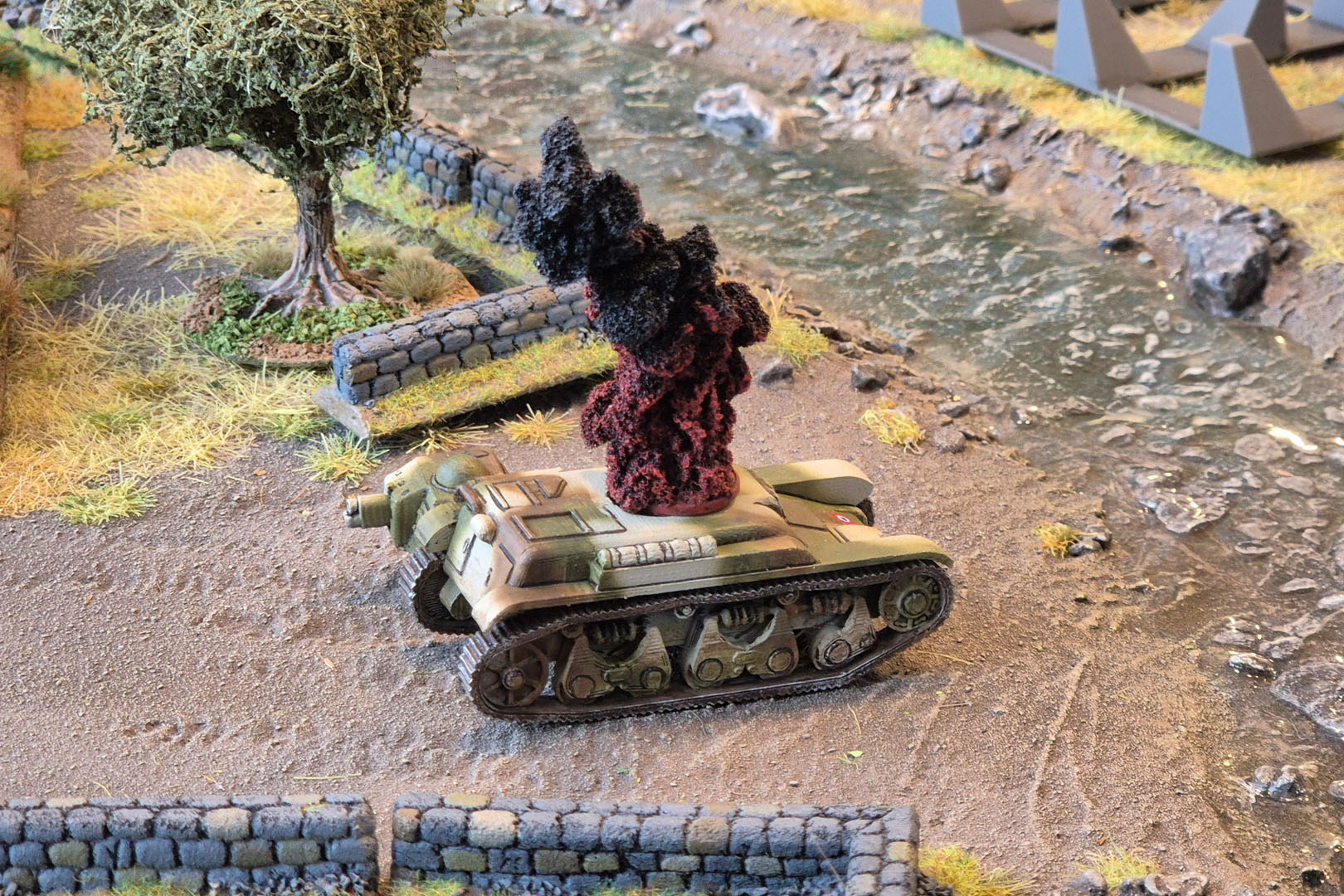
Tank damage is handled through Command Dice reduction. Lose enough and the crew bails out. Three net hits against armour, regardless of tank size, will put a vehicle out of action. This keeps the game moving briskly, though it does mean that when armour penetration finally happens (which can feel hard-won against heavier late-war tanks) the end can come very suddenly. Speaking of late war: the dynamic shifts noticeably when you move from Early War vehicles into the heavier stuff. Early engagements can feel like a scrappy back-and-forth where shots bounce off regularly. Late War and What-If 1946 scenarios with King Tigers and similar behemoths take on a different rhythm entirely, more deliberate, with flanking manoeuvres and positioning mattering a great deal more.
The game rewards players who think tactically about the sequence of their dice, rather than those who simply roll and react. The Wild Dice in particular are a constant little puzzle: use it now to recover a lost Command Die, convert it into a needed Shoot die, or bank it for an initiative advantage next turn?
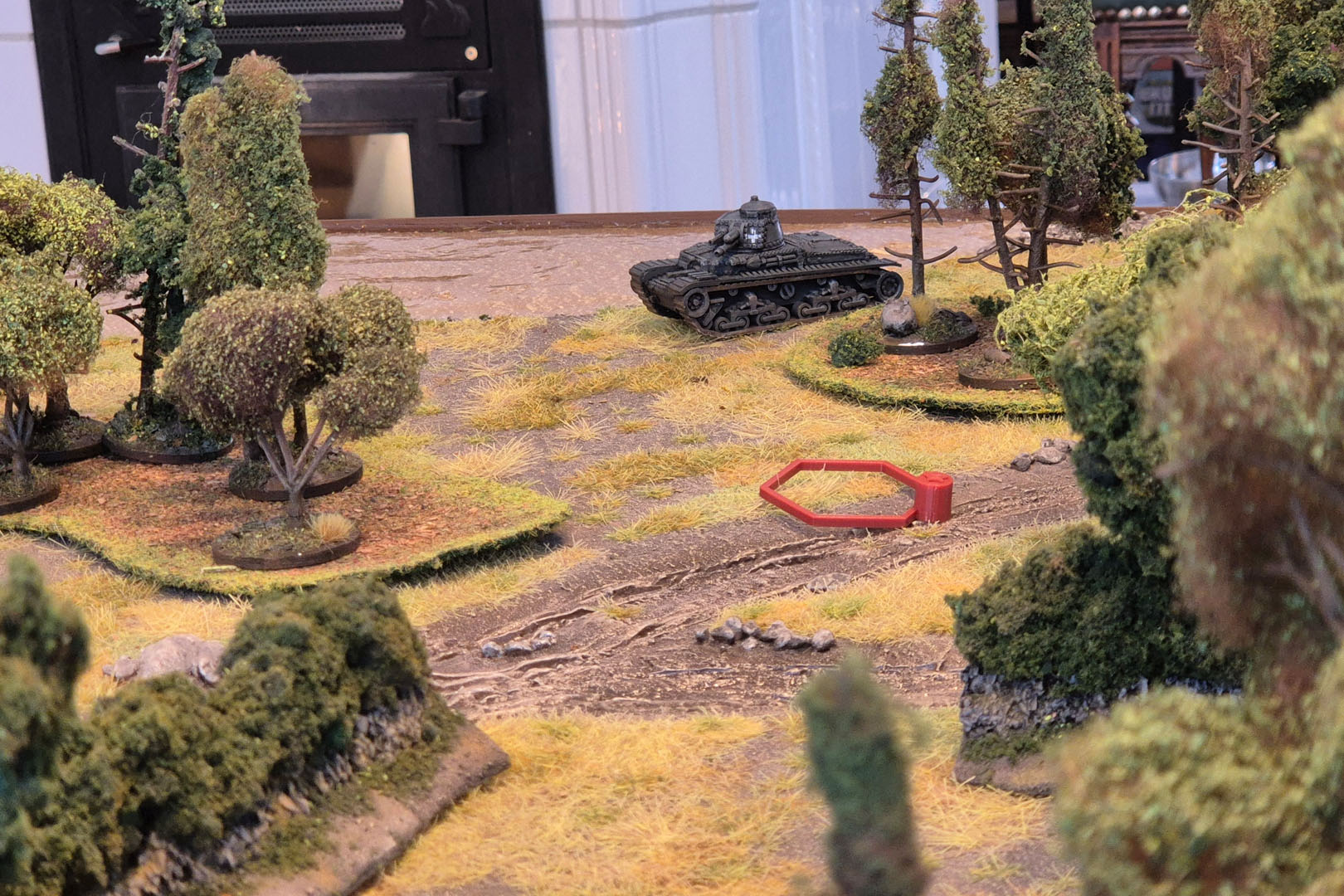
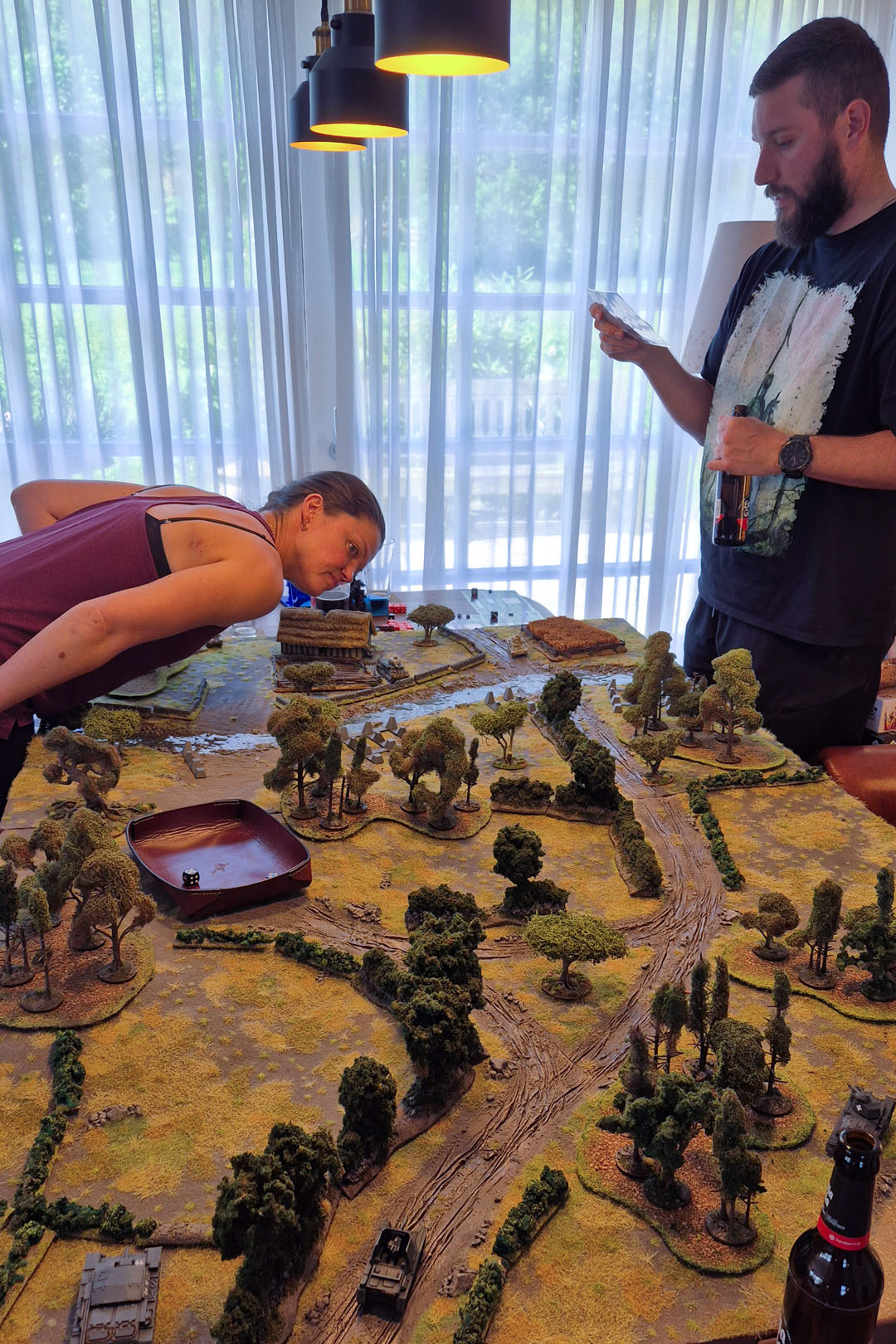
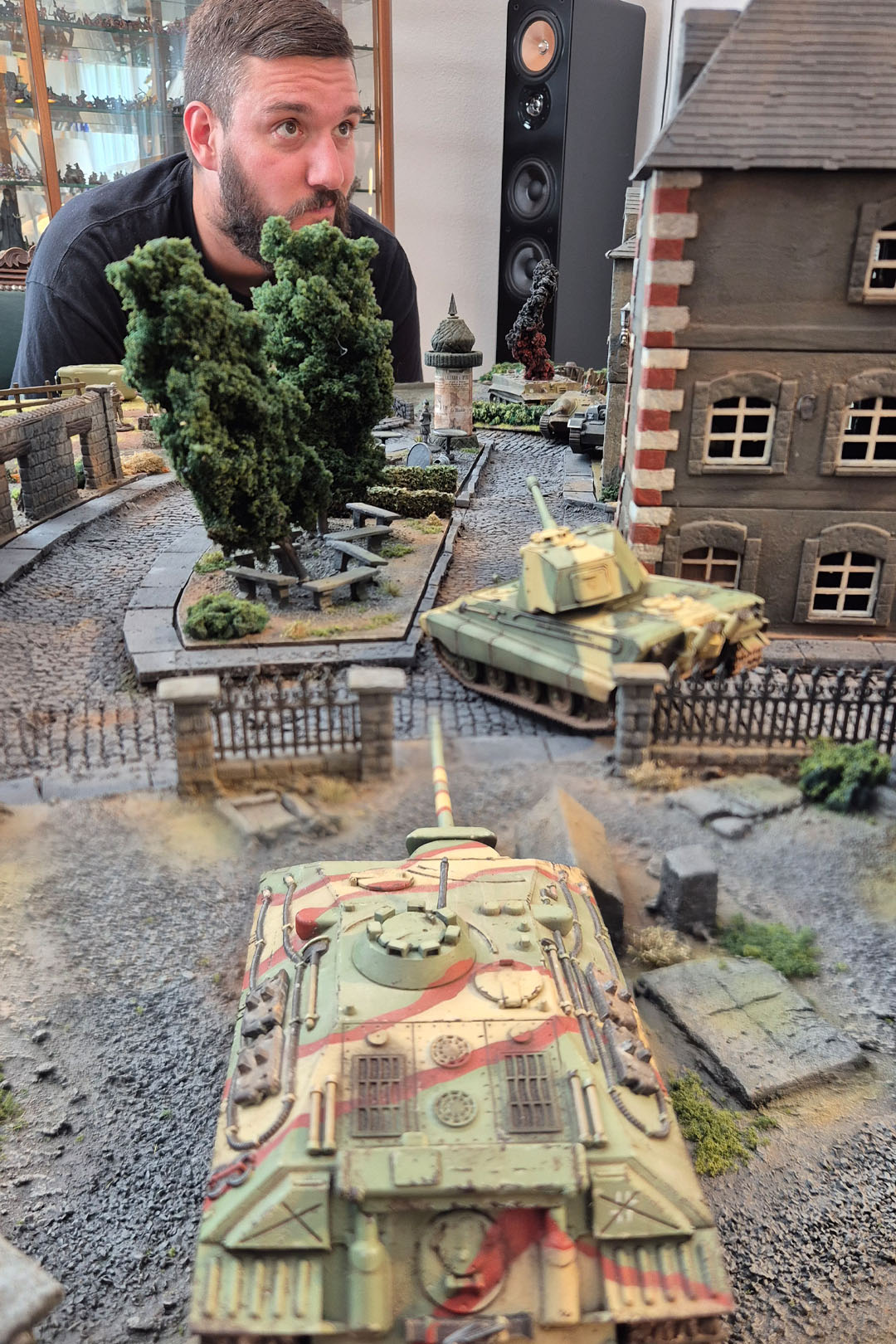
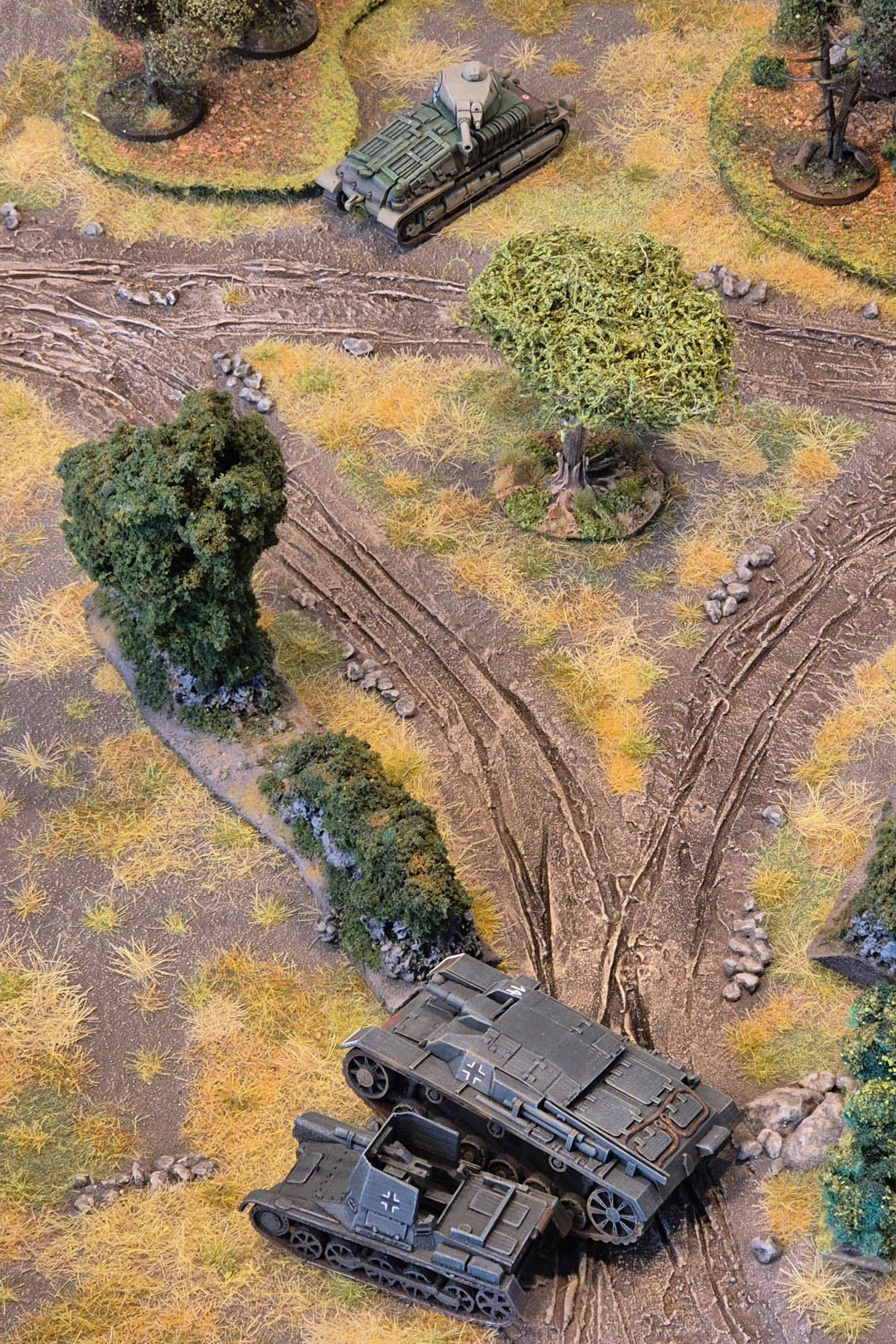
We played a series of three games as a small narrative campaign to get a feel for the mechanics of the rules, as well as for the unit profiles and differences. The first mission used early-war vehicles to infiltrate enemy territory (Allied French against Panzer Lehr) with around 20–25 points per side. That was followed by stealing prototypes from the tank factory with late-war vehicles and around 45 points per side, and then a third mission to bring the prototypes out of the country via the port of Antwerp. All of that took place in a prolonged afternoon into the (early) evening, which should give you a sense of the length of the games.
What's Next?
The core rulebook is the entry point, but the campaign and career system provides plenty of replay value without requiring additional purchases. A club league built around the Kill Ring progression could run for an entire season on the base rules alone, and with seven different nations to pick from, all with quite a table of tanks across the different years, there is a lot of variety built into the system. If you are missing a vehicle you want to use, you will probably find something similar somewhere in the long lists of units you can use instead. So there is not really the feeling that something is missing. And honestly the only thing I could think of would be more scenarios than the three you get in the rulebook without bloating the game too much.
There are no official supplements, but there is fan-made content, for example Cold War Tanker, which gives you a list of tanks and vehicles to use the rules with various 1980s vehicles. Or there is What a Tanker! 40k, covering more than 100 unit profiles from the Grim Dark Warhammer Universe. In addition, I will add house rules and unit profiles for the very late-war prototypes from Ambush Miniatures in an upcoming article here as well.
Conclusion
What a Tanker! does exactly what it sets out to do. It captures the chaos and decision-making of tank command in a ruleset light enough for conventions and casual club nights, while offering enough tactical depth to reward experienced players. The Command Dice system is inventive and thematic, even if a small house rule smooths out some of the rougher edges.
While other World War II rulesets often focus on platoon-sized games, simply leaving the infantry and other non-motorised units off the table is not the same as having rules for a proper tank battle. And after that, the question is what you expect from a game like this. If you go for fewer models per side, especially with a scale of 28mm and above, you create room for more micromanagement. Yet it depends on whether you want to go that deep into bookkeeping, fuel, ammunition and damaged areas. Other games that focus on tank battles are Achtung Panzer! or the Flames of War / World of Tanks collaboration, Tanks.
Compared to Achtung Panzer!, What a Tanker! sits at a completely different point on the simulation-to-beer-and-pretzels spectrum. Achtung Panzer! is a very simulation-leaning game and far less casual. What a Tanker! is fast and forgiving enough that you can explain the rules to a new player while setting up and have them rolling dice within ten minutes. As such, it is closer to the 15mm games by Battlefront / Gale Force 9, who offer Tanks and the World of Tanks Miniatures Game (which re-implements the rules of the tank skirmish). The main difference here is that in What a Tanker! you can each grab a tank (ore more), while in Tanks you command a small armoured platoon, and therefore the later use faster, less individually vehicle-focused rules for gameplay.
If you want a full-fat tank simulation, look elsewhere. If you want a fast, fun, thematic WWII tank game that gets everyone engaged quickly and generates memorable moments, including the occasional inexplicable explosion from a critical hit, What a Tanker! earns a firm recommendation.
What a Tanker! is a game by Too Fat Lardies.
Enjoy this article?
Like us on Facebook
Follow me on Instagram

Categories
- events (212)
- fantasy (611)
- General (162)
- historical (648)
- Little Big Adventures (4)
- offtopic (5)
- reviews (553)
- science fiction (714)
- showroom (108)
- terrain (119)
- Uncategorized (1)
- work-in-progress (423)








Leave a Reply