Necromunda Roleplay – What happened in the Underhive?
When Games Workshop showed Necromunda: Roleplay during this year's Big Autumn Preview, it looked like a done deal, and I was instantly reminded of Inquisitor, the 54mm scale Specialist Games title from 2001, or rather of the later community adaptation known as Inq28 / Inquisimunda, which moved the entire game into 28mm scale and quite often into the Underhive.
The announcement of eighteen miniatures, a 224-page rulebook, character creation, two adventures, an Arbitrator's screen, handouts and dice brought the presentation close to a classic roleplaying game, as you know it from Dungeons & Dragons or, in Germany, from Das Schwarze Auge (The Dark Eye), but set in the Underhive. The announcement, which combined the recently updated Necromunda range with a classic d100 roleplaying core, was labelled "coming soon" and then left without any further information. That is not how you present a concept; that is how you present a product that is about to hit the shelves.
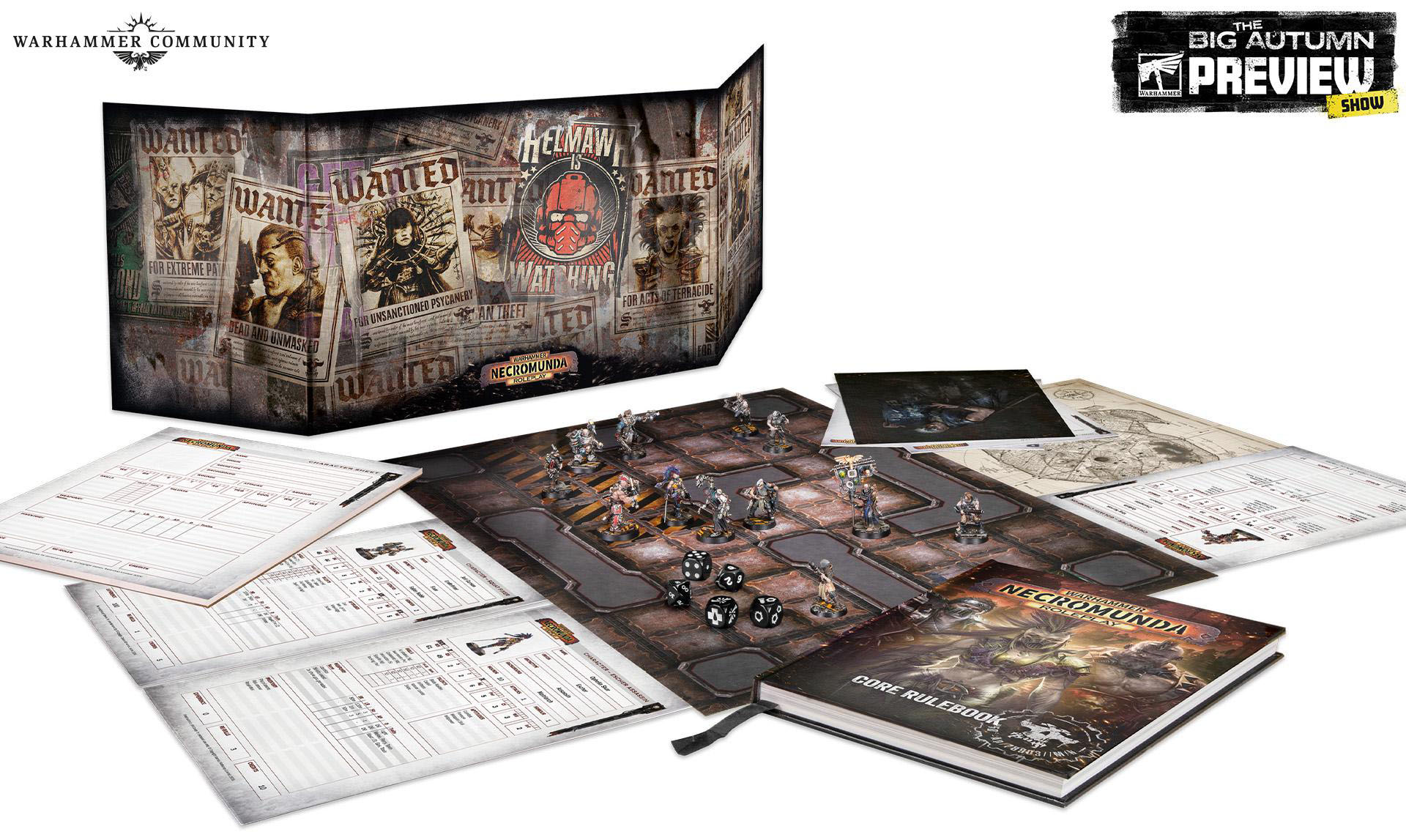
Shortly after, the Warhammer Community article returned a 404, and the game had been removed from the numbered roundup of the preview as well. The recording of the stream still showed it, but everything else was gone. Then, on Friday, October 23rd, a brief note appeared in an article about Necromunda in 2027: there won't be a Necromunda: Roleplay.
Games Workshop's own explanation is short. After careful consideration, they decided to focus their efforts on "even more great minis for the core game". All the miniatures shown in the Big Autumn Preview are still on their way and will be available for use in standard games of Necromunda. As I understand it, the miniatures will be repacked for the core game, while the printed RPG parts will simply be binned and written off.
There have been fumbled product launches in the past. There were issues with Warhammer Quest: Cursed City, and there were issues with the initial launch of Legions Imperialis. So what was behind it this time? Beyond the statement above, we do not know. My own guess was licensing, as Cubicle 7 holds the licence for Warhammer roleplaying games, from the Old World through the Mortal Realms to the 41st millennium. Licensing is a big deal for Games Workshop: in 2024/25 it brought in around 52.5 million GBP, roughly 8.5 percent of the group's 617.5 million GBP revenue (annual report). The current year is expected to land lower, at roughly 30 million GBP, but that is still far more than at the beginning of the 2020s, when licensing brought in single-digit millions. So licensing could have been an issue, but Cubicle 7 has dismissed this: screenshots of a statement by their head of marketing, as well as comments by Cubicle 7 on Facebook, state that they do not hold the licence for Necromunda as a roleplaying game.
There is also an unconfirmed rumour, from several different sources, that members of the board stopped the product because it would stray too far from Games Workshop being first and foremost a miniatures company, even though it had already been announced. I cannot verify this, but it is in line with the official statement above. From a business perspective, I can understand such a stance to some degree: adding an in-house product to a category that you license out could cannibalise and/or devalue the licence, and those numbers are important as you just read.
But don't worry: if you fancy the idea of miniature-based roleplaying in the 41st millennium, we are going to talk about options and alternatives in this article.
Not Games Workshop's first rodeo
First of all, roleplaying in the 41st millennium is nothing new, and it is not even new for Games Workshop. Rogue Trader, the very first edition of Warhammer 40,000 from 1987, was much closer to a sci-fi roleplaying game than to the battle system we know today. It had a Gamesmaster, scenarios built around a handful of characters, random tables for pretty much everything and a strong focus on small skirmishes. Over the following years and editions, the game grew into the army-scale wargame it is now, and the roleplaying side faded into the background.
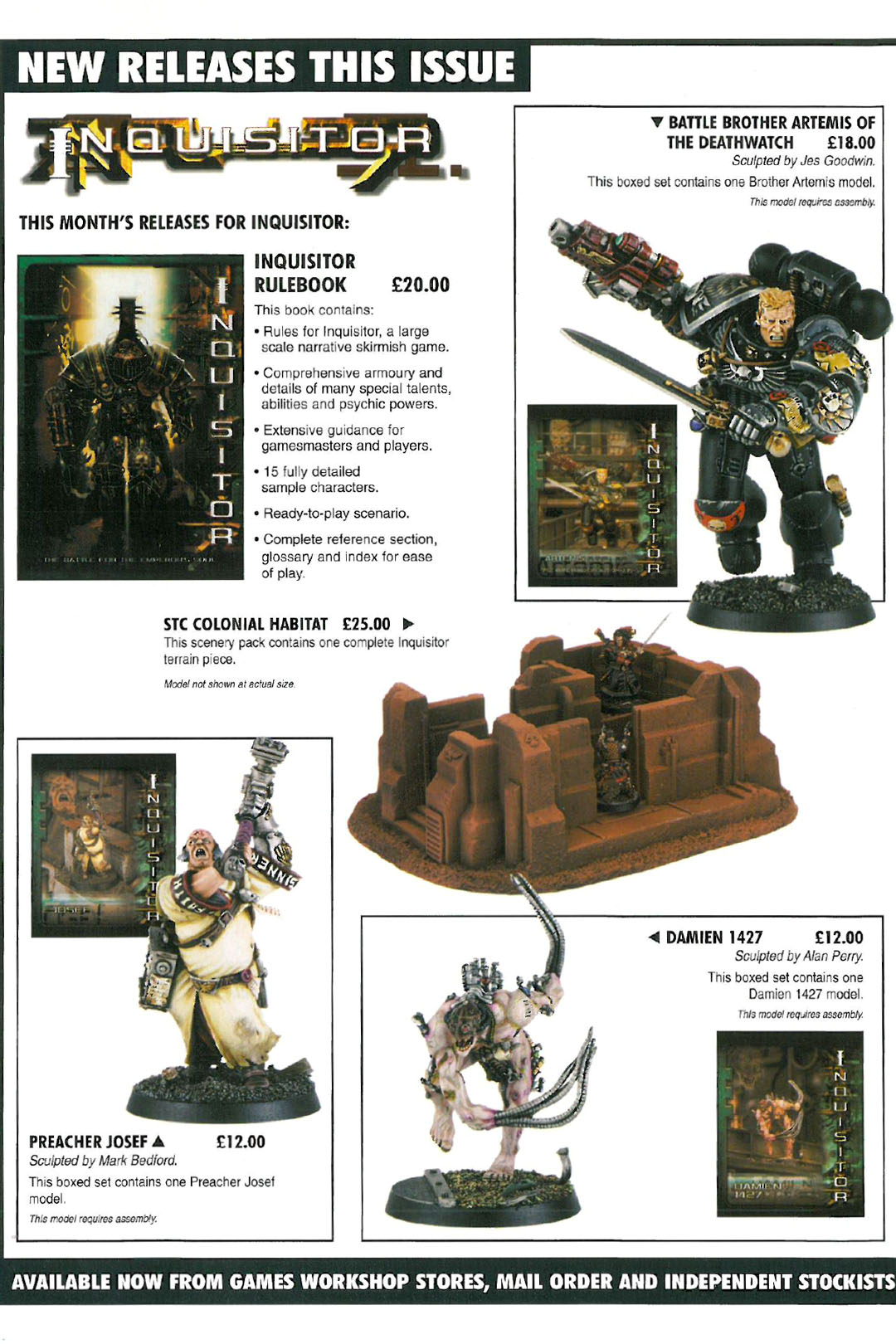
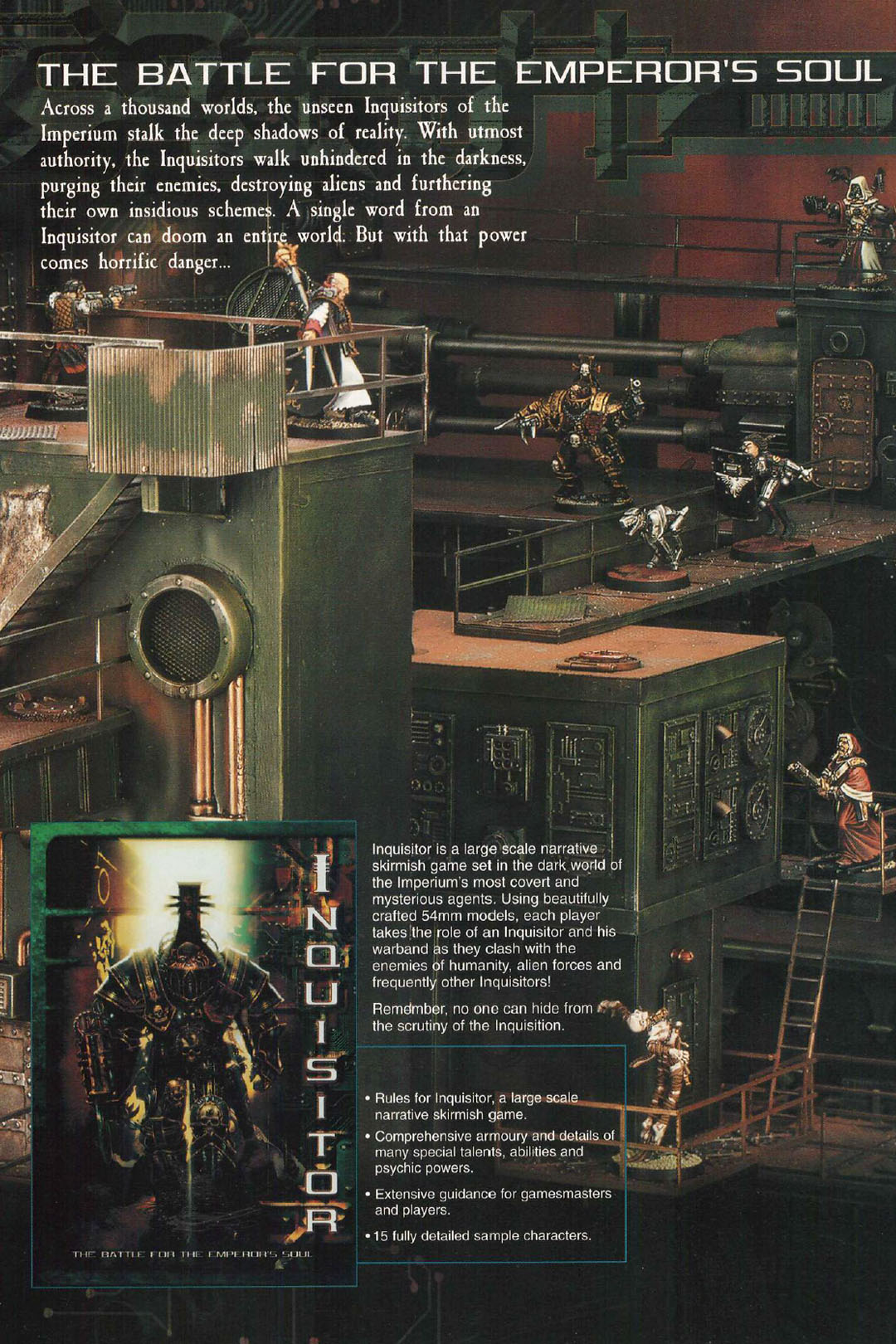
It came back in 2001 with Inquisitor. Released through Specialist Games (a "subsidiary", if you will, set up to cover and support the non-core games), Inquisitor was a narrative skirmish game in 54mm scale that clearly understood itself as a tabletop roleplaying game. A Gamesmaster ran the scenario, characters had percentile-based characteristics, injuries were tracked location by location, and players were encouraged to do what their character would do, not what would win the game. There were no points, no army lists and no balance in the tournament sense. It was improvised theatre with metal miniatures.


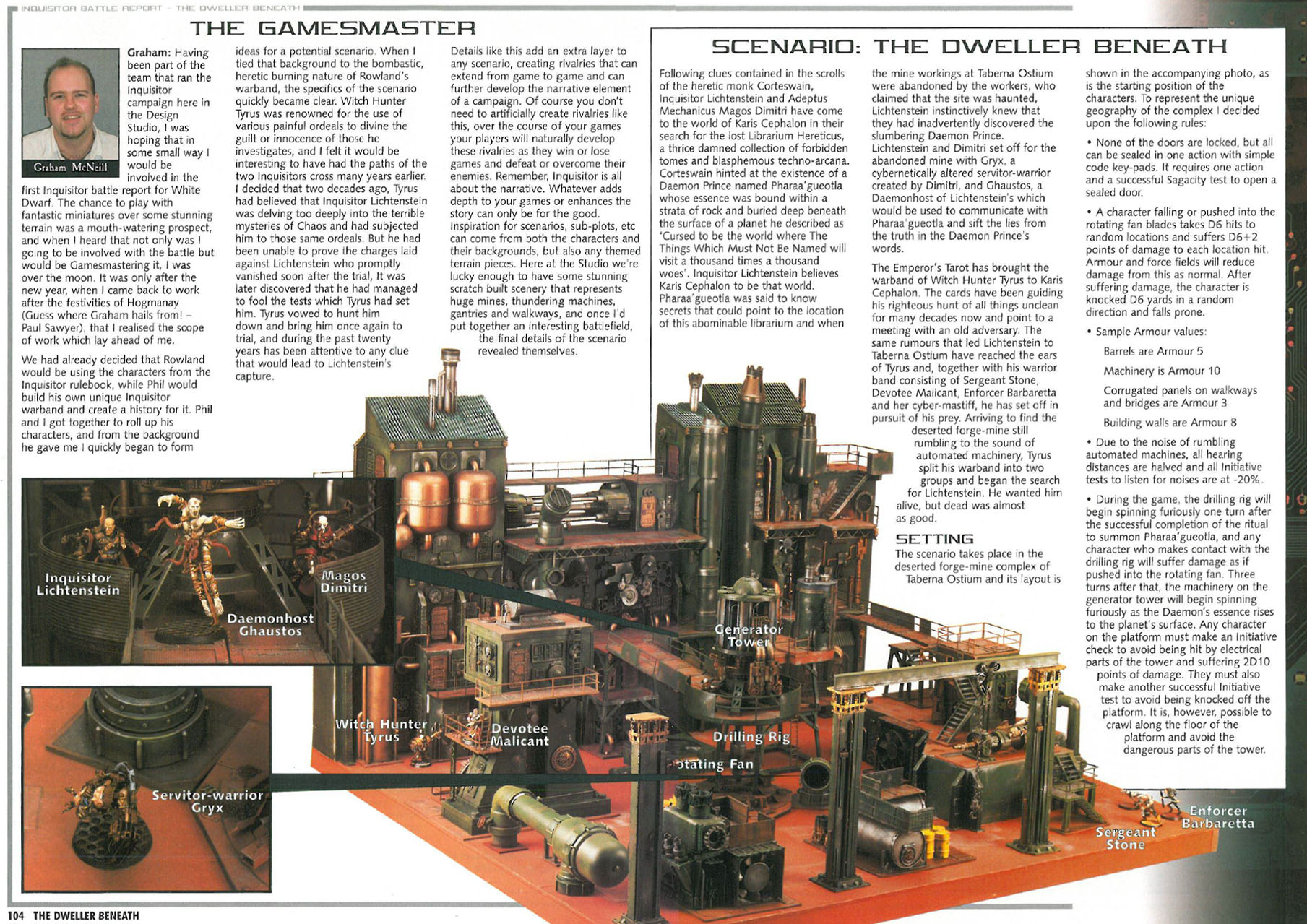
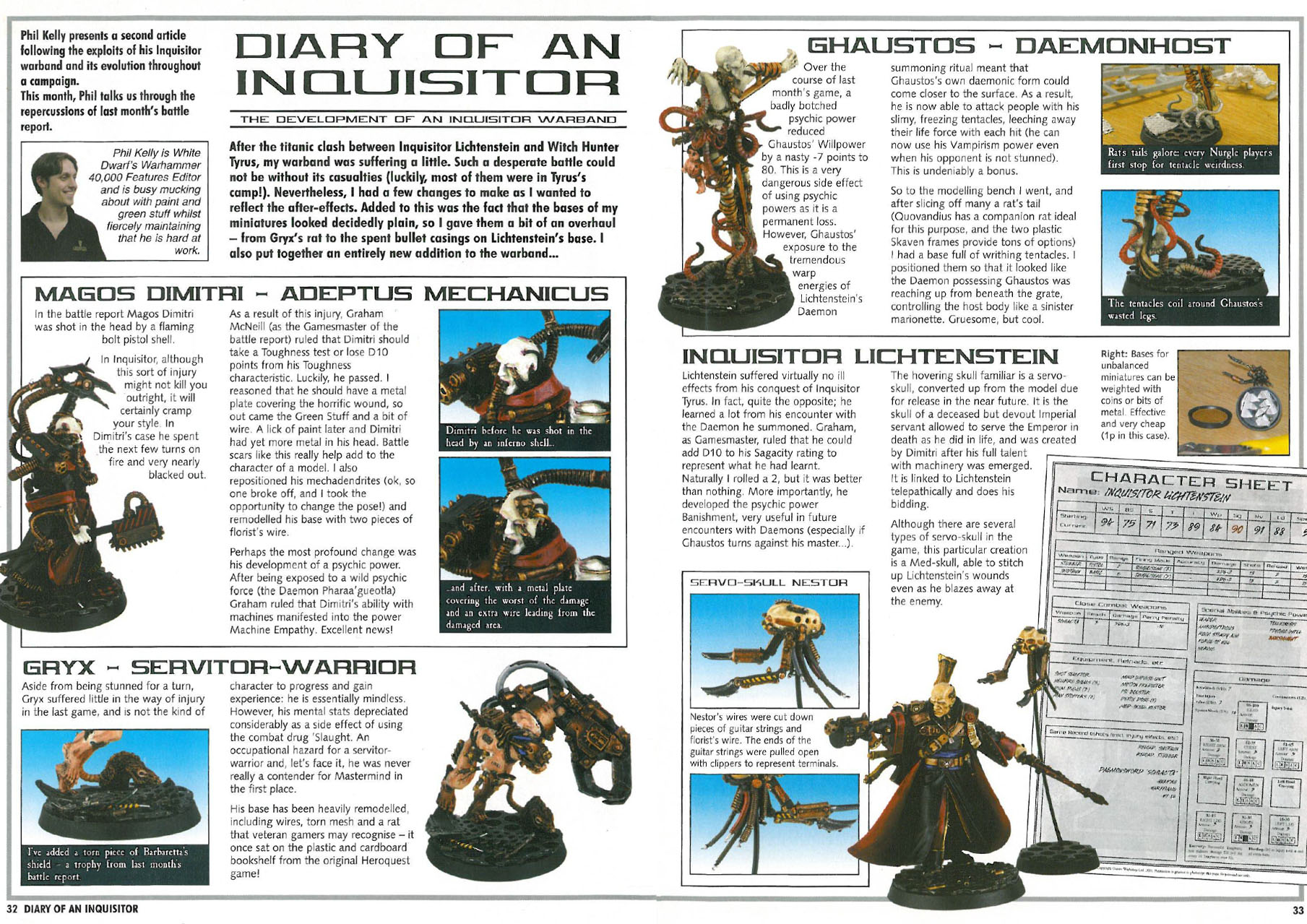
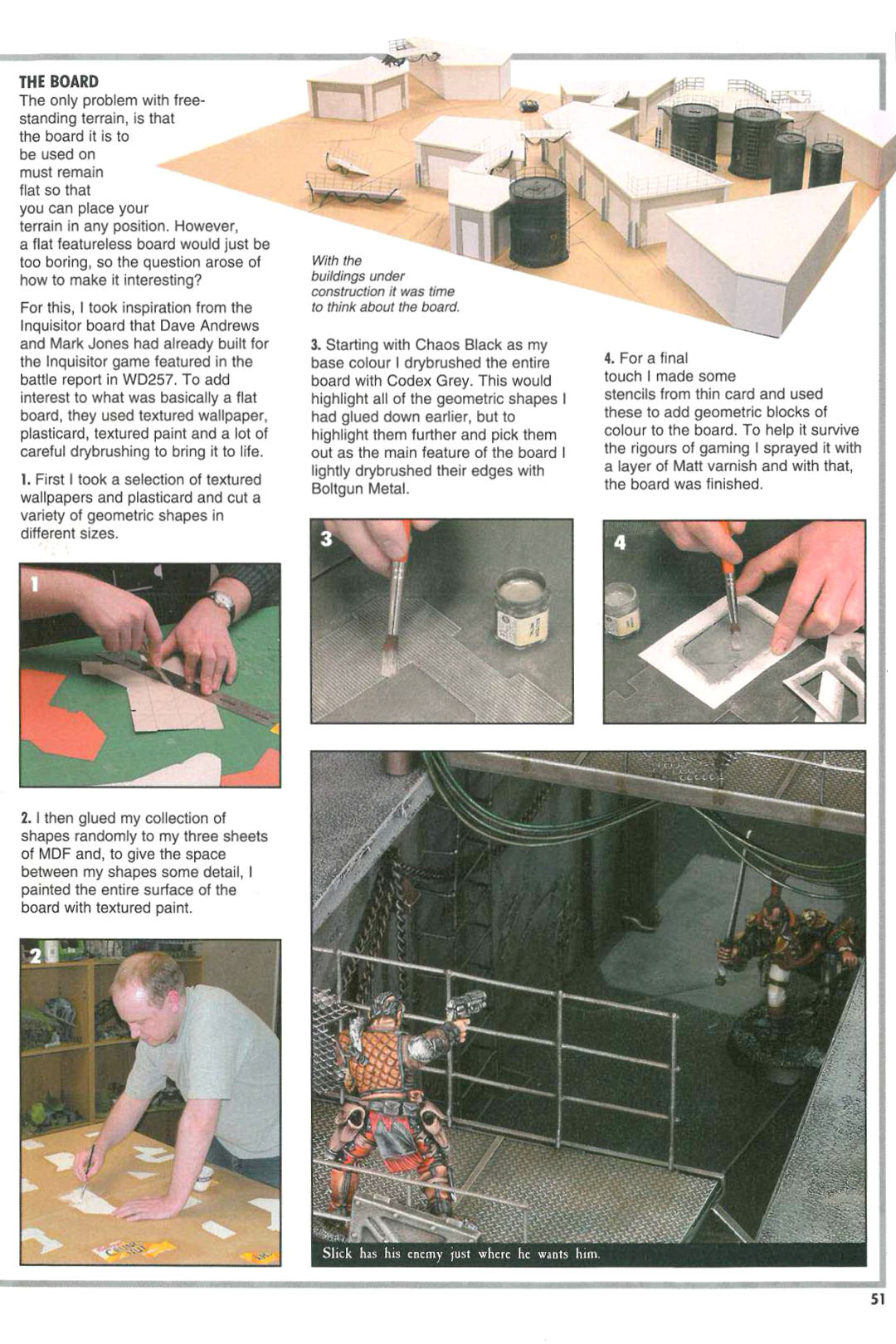
Inquisitor never became a big seller, and the 54mm range eventually disappeared along with most of the Specialist Games line. But the idea stuck. Necromunda: Roleplay looks a lot like a return to that concept, now in 28mm and set in the Underhive, which has always been the most character-driven corner of the 40k universe anyway. In my opinion, the biggest issue with Inquisitor was that you couldn't repurpose existing terrain and had to build a densely packed table of 54mm terrain, which created an additional barrier to entry for a hobby that is not easy to get into anyway, especially back in the day. Nevertheless, we got an incredibly beautifully done range of miniatures with lots of bits, and some of the additions that came later through Mail Order / Specialist Games are among the rarest miniatures Games Workshop ever published. Like many other Specialist Games, Inquisitor was picked up by the community, but more on that further below.
The Warhammer 40,000 roleplaying games
Alongside the miniatures games, there has been a whole line of proper pen and paper roleplaying games set in the 41st millennium, and the licence has changed hands almost as often as a Rogue Trader's warrant. It all started with Warhammer Fantasy Roleplay, which Games Workshop published itself in 1986 before passing it on to Hogshead Publishing in 1995. In 2004 the roleplaying games came back in-house with Black Industries, which released Dark Heresy around the turn of 2007/2008 and was closed down only weeks later.
Fantasy Flight Games (who were bought by Asmodee in 2014) took over and built Dark Heresy into a family of five games, until their licence ended around the turn of 2016/17. Ulisses Games, the German publisher behind The Dark Eye, picked up 40k next and launched Wrath & Glory in 2018, but by 2019 the licence had moved on to Cubicle 7, who already held Warhammer Fantasy Roleplay and have been in charge of the Warhammer roleplaying games ever since. Games Workshop has not published a roleplaying game of its own since Black Industries closed, which is why the announcement of Necromunda: Roleplay was all the more remarkable.
Each of the 40k games has its own focus and power level, as described below.
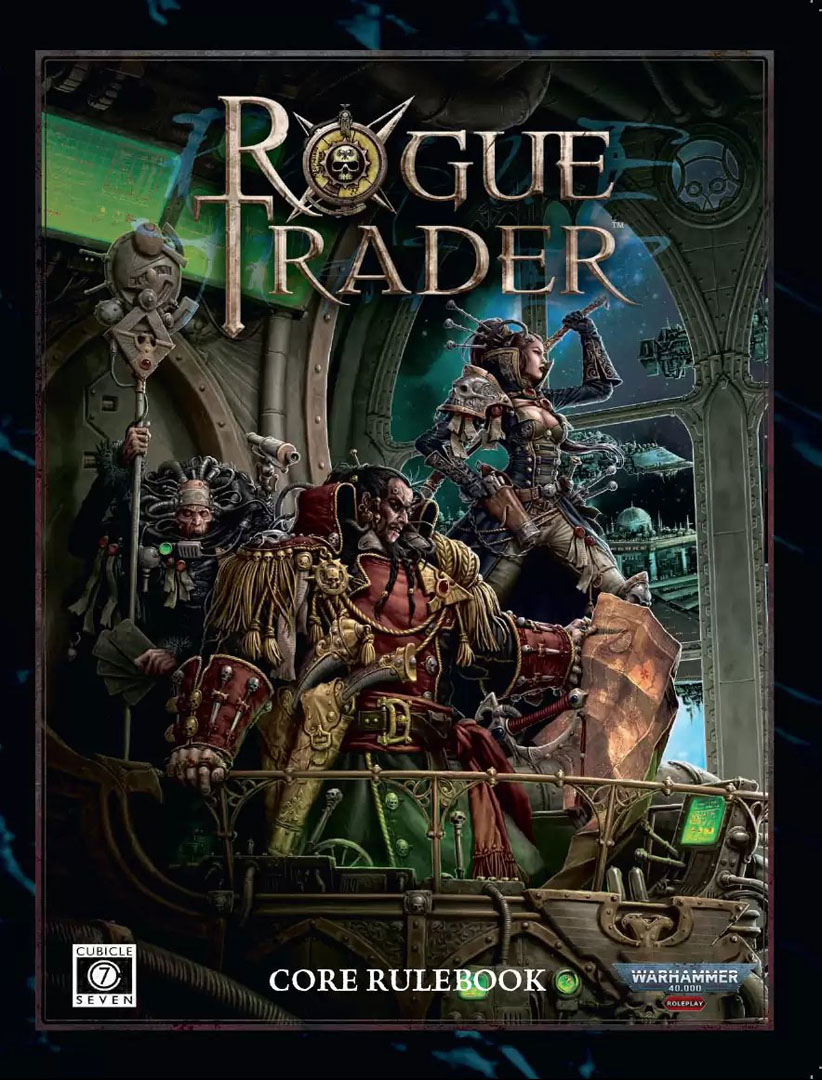
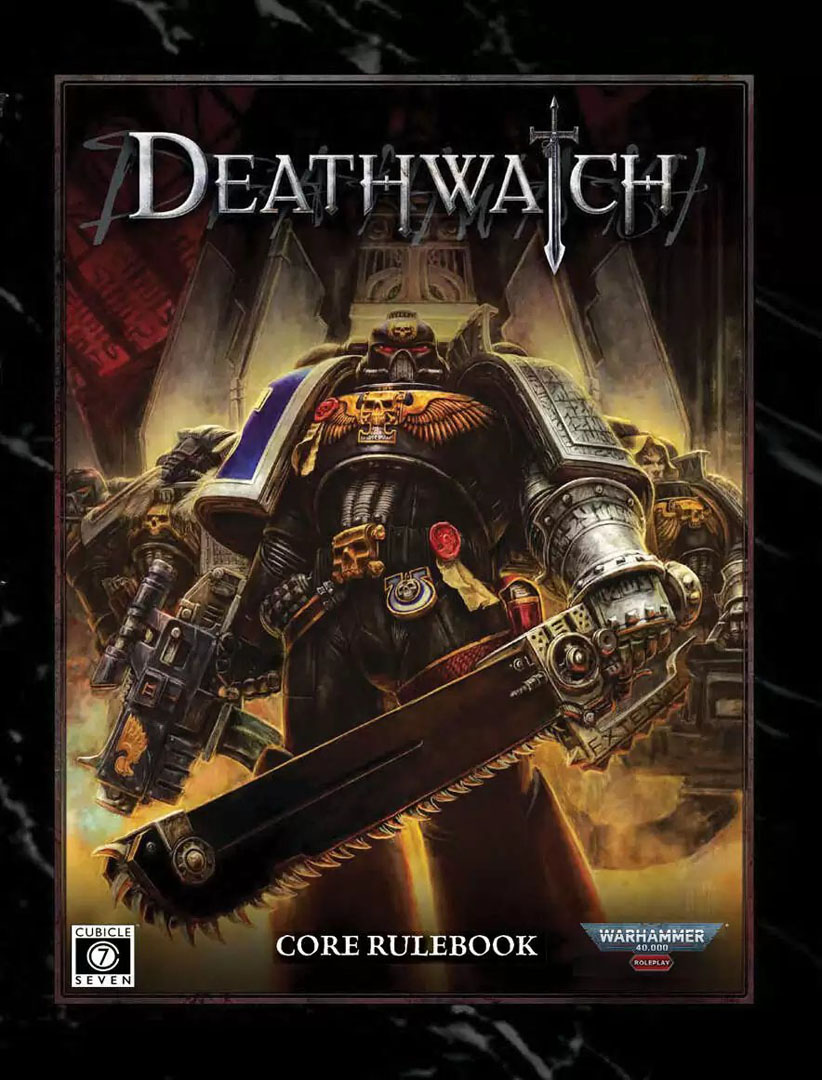

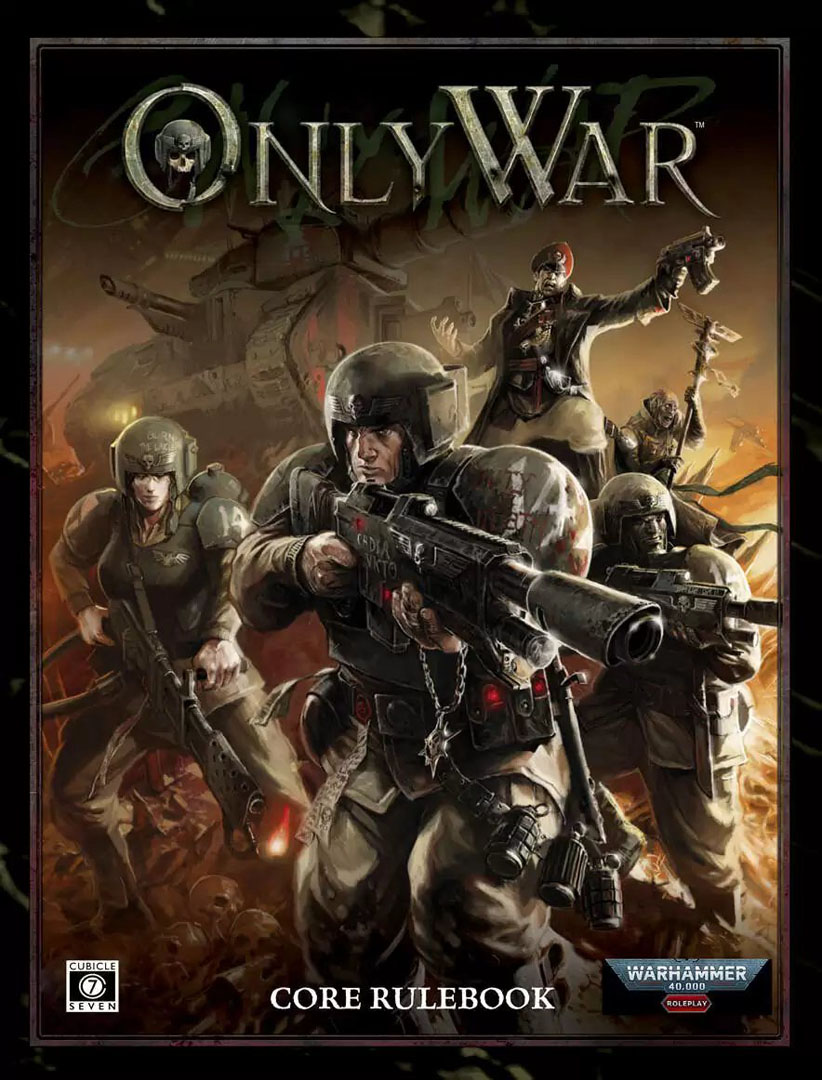
The Black Industries and Fantasy Flight Games era
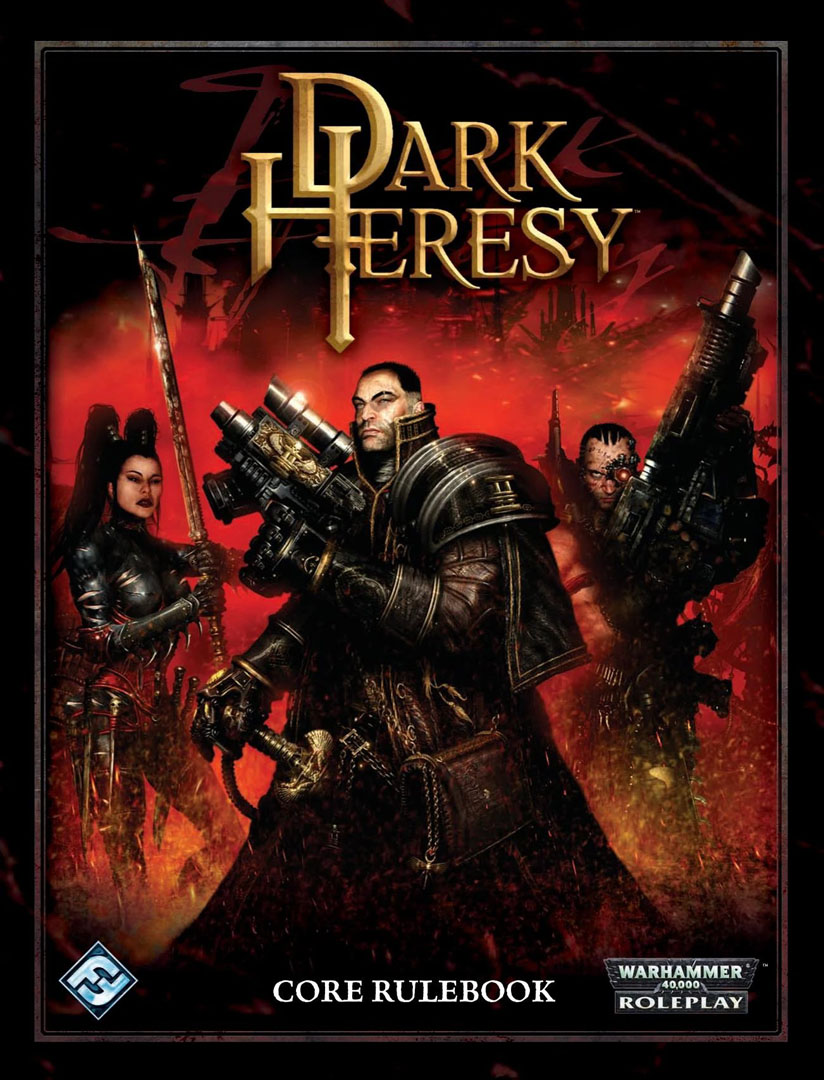
- Dark Heresy (2008) started the modern line of proper 40k pen & paper roleplaying games. Originally published by Black Industries and later continued by Fantasy Flight Games, it puts the players in the shoes of Acolytes serving an Inquisitor in the Calixis Sector. These are ordinary humans: a hive ganger, a guardsman, a tech-priest, a sanctioned psyker. Investigation, horror and a very short life expectancy are the order of the day. A second edition followed in 2014.
- Rogue Trader (2009) raised the power level considerably. The players are a Rogue Trader and their retinue, exploring the Koronus Expanse with their own voidship. Starship combat, trade, colonisation and the mysterious Profit Factor make this the most "space opera" of all the 40k roleplaying games. The supplement Into the Storm even allowed players to take xenos characters such as Kroot mercenaries or Ork freebooters.
- Deathwatch (2010) is the pure Space Marine experience. Players form a kill-team of the Deathwatch, made up of battle-brothers from different Chapters, and take on missions in the Jericho Reach. Squad mode rules and hordes of enemies make sure the players actually feel like the Emperor's finest.
- Black Crusade (2011) switched sides. Here the players are heretics and Chaos Space Marines in the Screaming Vortex, chasing infamy and the favour of the Dark Gods, while corruption slowly changes their characters. If you always wanted to play the bad guys, this is the one.
- Only War (2012) is the low sci-fi entry of the line. The players are a squad of the Astra Militarum, created together with their own regiment, fighting on the Spinward Front. It is muddy, gritty and closer to a war film than to any heroic adventure. Comrades, rations and orders matter more than relics and power armour.
All five games share the same d100 core and play in neighbouring regions of space, so mixing material between them is possible with some work. Since the Fantasy Flight Games licence ended, the original FFG books are only available secondhand, often at prices that make you wonder if they are printed on vellum. But there have been re-releases under the changing licence holders, and a couple of Humble Bundles over the last years (among others in 2019, 2023 and 2025), where you could pick up an entire (digital) release for pennies on the dollar.
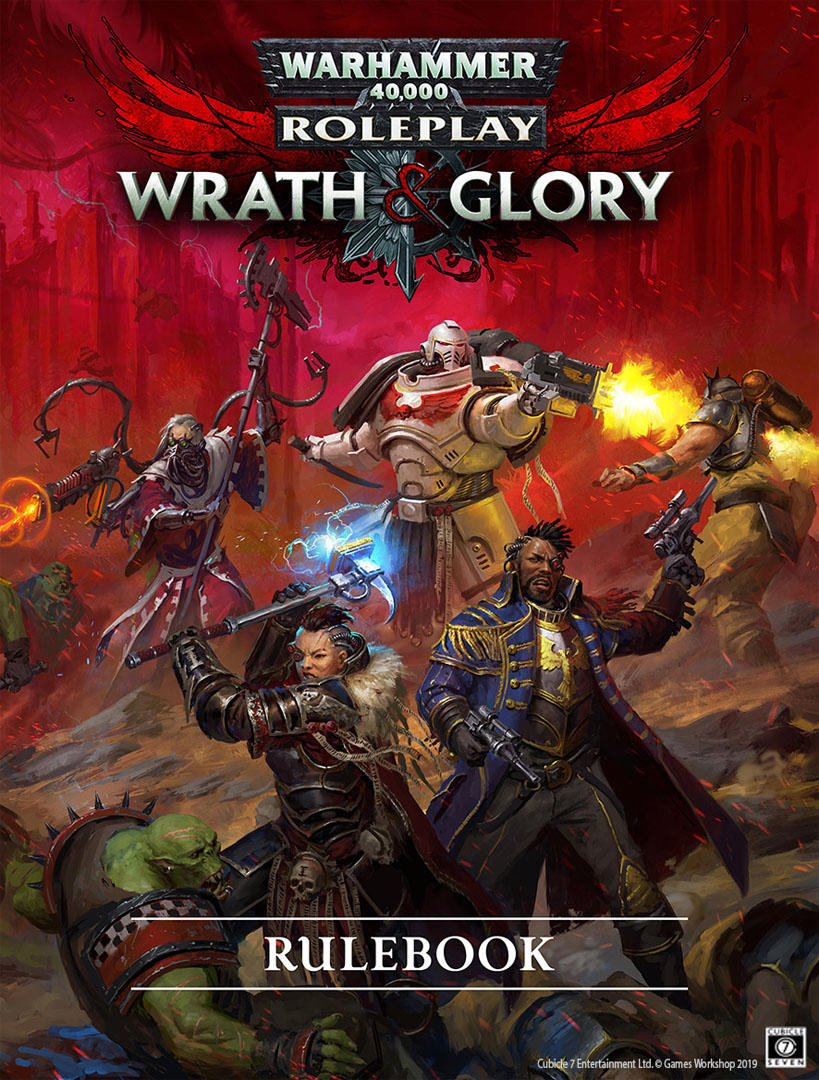
The Cubicle 7 era
- Wrath & Glory was first published in 2018 by Ulisses Games before the licence moved to Cubicle 7, who released a revised core rulebook in 2020. It breaks with the d100 tradition and uses a d6 dice pool. Its big selling point is the tier system, which allows mixed groups of humans, Space Marines, Aeldari and Orks in the same campaign, set in the Gilead System. It is the heroic, action-driven option, and supplements such as the Space Marine sourcebook Vow of Absolution, the Aeldari adventure The Shards of Ul-Khari or the Darktide Extraction campaign keep expanding it.
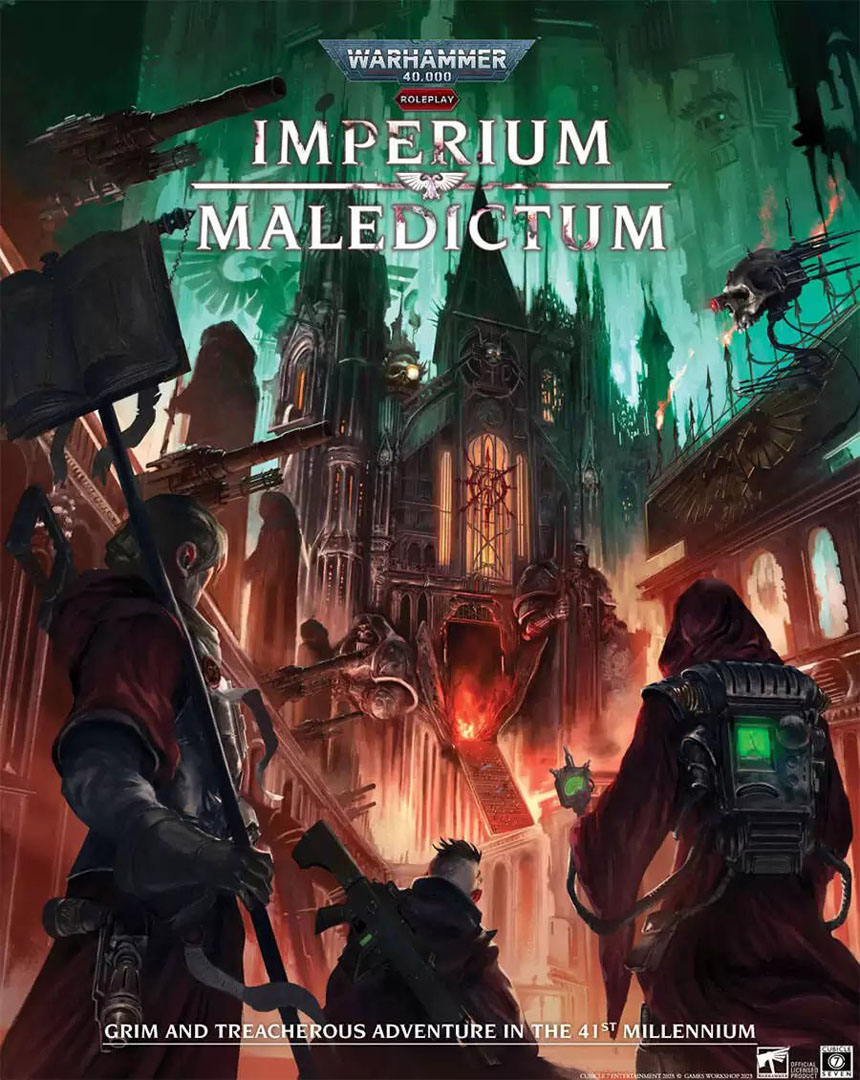
- Imperium Maledictum (2023) is Cubicle 7's spiritual successor to Dark Heresy. It returns to a d100 system derived from the fourth edition of Warhammer Fantasy Roleplay and puts the players in the role of agents serving a powerful patron in the Macharian Sector. Influence with the various Imperial factions decides where you can go and what resources you get. Player's and GM's guides for the Inquisition and the Adeptus Mechanicus have followed since.
So if you are looking for a specific flavour: Space Marines are best served by Deathwatch or Wrath & Glory, renegades and Chaos by Black Crusade, xenos by Wrath & Glory or Rogue Trader, low sci-fi soldiering by Only War, and Inquisition-style investigation by Dark Heresy or Imperium Maledictum.
I have played the Warhammer Fantasy RPG a couple of times back in the day and found its combat system a bit unbalanced (we rolled far too many crits) and had the pleasure to play Dark Heresy two times, but we never made into a proper campaign. Beside that, in terms of Warhammer, fancied the miniature based systems more than the pen & paper games. But more on that in the next paragraph.
Inquisitor and Inq28: what the fans made of it
But the systems mentioned above are proper pen & paper RPGs, where you can use miniatures to keep track of fights and such, but they are not fully miniature-based tabletop RPGs. The original rules for Inquisitor were released in May 2001 (White Dwarf 257 introduced the system). The Inquisitor rulebook and its "Living Rulebook" updates were later available as free PDFs from the Specialist Games website, but have since been taken down (The Conclave has an extensive collection of the PDFs, and Dreadquill Publishing has a mirror of the core rulebook). Secondhand copies of the printed book still turn up.
After Games Workshop stopped supporting Inquisitor a few years later, the community did what it always does: it carried on, and in the case of this game, it scaled things down. Most of us already owned plenty of 28mm miniatures that fit the setting, and plastic kits are a lot easier to convert than 54mm metal. That is how Inq28 was born: it used the existing, extensive content of the (Living) Rulebook and various White Dwarf and Fanatic articles and either halved all distances or simply read inches as centimetres to make them fit 28mm scale. I wrote an introduction to Inq28 back in 2018, so there is a short overview of the material that is out there.
One different approach was Inquisimunda (sometimes also written Inquimunda). It uses the Necromunda rules as a base and adds rules for Inquisitors, retinues and all the other factions that don't exist in the Underhive. It started with second edition Necromunda, but players have since adapted the current edition (often called N17) as well. Plenty of rule sets have been shared online, and most of them are heavily house-ruled. I even spent some time on this back in 2011 and laid out a more appealing variant of the v1.3 rules of Inquisimunda.
Since then, various other ideas have come up, depending on the gaming group. There are house rules for using, for example, Kill Team or Shadow War: Armageddon (which is heavily influenced by N95), and if you want to look into those, Yaktribe, Bolter & Chainsword, The Ammobunker and DakkaDakka are perfect resources. Others have completely opted for third party rules, from Osprey's Rogue Stars and Reality's Edge to Stargrave (which benefits from solo play), or use free fan rulesets such as In the Emperor's Name.
The important thing to understand is that Inq28 is not a specific rule set. It is a way of approaching the hobby, built around characters, narrative and conversions, and every group plays it a little differently, as the many different rule paths above show. On Instagram, the #inq28 tag is a bottomless pit of inspiration, and the Blanchitsu column in White Dwarf, closely tied to the work of John Blanche, has done more for the look of the scene than any rulebook ever could. John passed away this June, and we remembered him in an obituary.


Back to the Underhive
Whether Necromunda: Roleplay ever comes back in some form or not, it shows that at least the creatives at Games Workshop have noticed what the Inq28 crowd has been doing for over twenty years: small stories, individual characters and miniatures that tell you who they are before you read a single rule. And as I hopefully showed you in this article, there are various ways to put these ideas not only into miniatures but also into play, whether or not Games Workshop finds a way to release something in the future.
What about you? Have you played any of the 40k roleplaying games, or do you run your own Inq28 warband? Let me know in the comments.
Enjoy this article?
Like us on Facebook

Follow me on Instagram

Categories
- battle report (5)
- events (212)
- fantasy (612)
- General (162)
- historical (651)
- Little Big Adventures (4)
- offtopic (5)
- reviews (556)
- science fiction (716)
- showroom (108)
- terrain (120)
- work-in-progress (423)










Leave a Reply