Stargrave – The Last Prospector
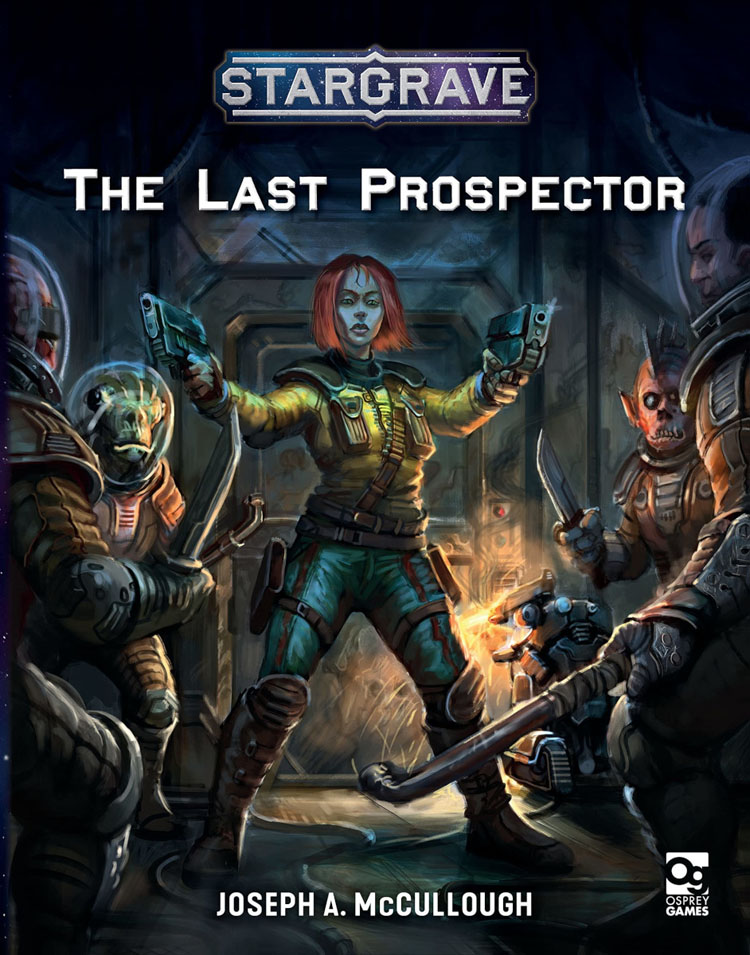
With Quarantine 37 covered, we move on to the second full supplement for Stargrave: The Last Prospector, released in 2022. Where Quarantine 37 leaned into science-fiction horror, The Last Prospector takes the game somewhere different entirely – the space western.
What is it about?
The setup arrives as an intercepted message. An old contact, known only as the Prospector, has found something big in the Honereb System – a run-down cluster of asteroid mining operations near the edge of a forgotten galactic arm. He wants to cut you in. By the time your crew arrives, the Prospector is nowhere to be found.
What follows is a ten-scenario campaign built around tracking down your missing contact while navigating the politics of a system that nobody with options would choose to visit. The Honereb System is populated by five factions, each with their own agenda: Pa, the mysterious authority running the decaying Penthalia Station – nobody is sure if Pa is a person, a council, or a computer; the Honera Collective, a semi-socialist operation on a jungle planet with strict border controls; The Gliders, a pirate gang operating out of a scuttled ore hauler called Saint Mollia; United Minerals Incorporated, a pre-war corporation that is now functionally a dictatorship; the Freeholders League, independent asteroid miners who pool resources for mutual survival; and the Darksiders, a secretive, robe-clad group in the third asteroid belt that nobody quite understands but most people leave alone.
Joseph A. McCullough is upfront about his inspirations. The space western as a genre has a long history. George Lucas built the Mos Eisley cantina on it, Joss Whedon ran with it for a single glorious television season, and the British film Outland put Sean Connery in a mining colony and filmed a remake of High Noon. For tabletop hobbyists, the reference points extend further: Marshal BraveStarr, The Mandalorian, the whole visual grammar of the frontier in space. The Honereb System is built from these materials, and the supplement wears its influences without apology.
First Impression
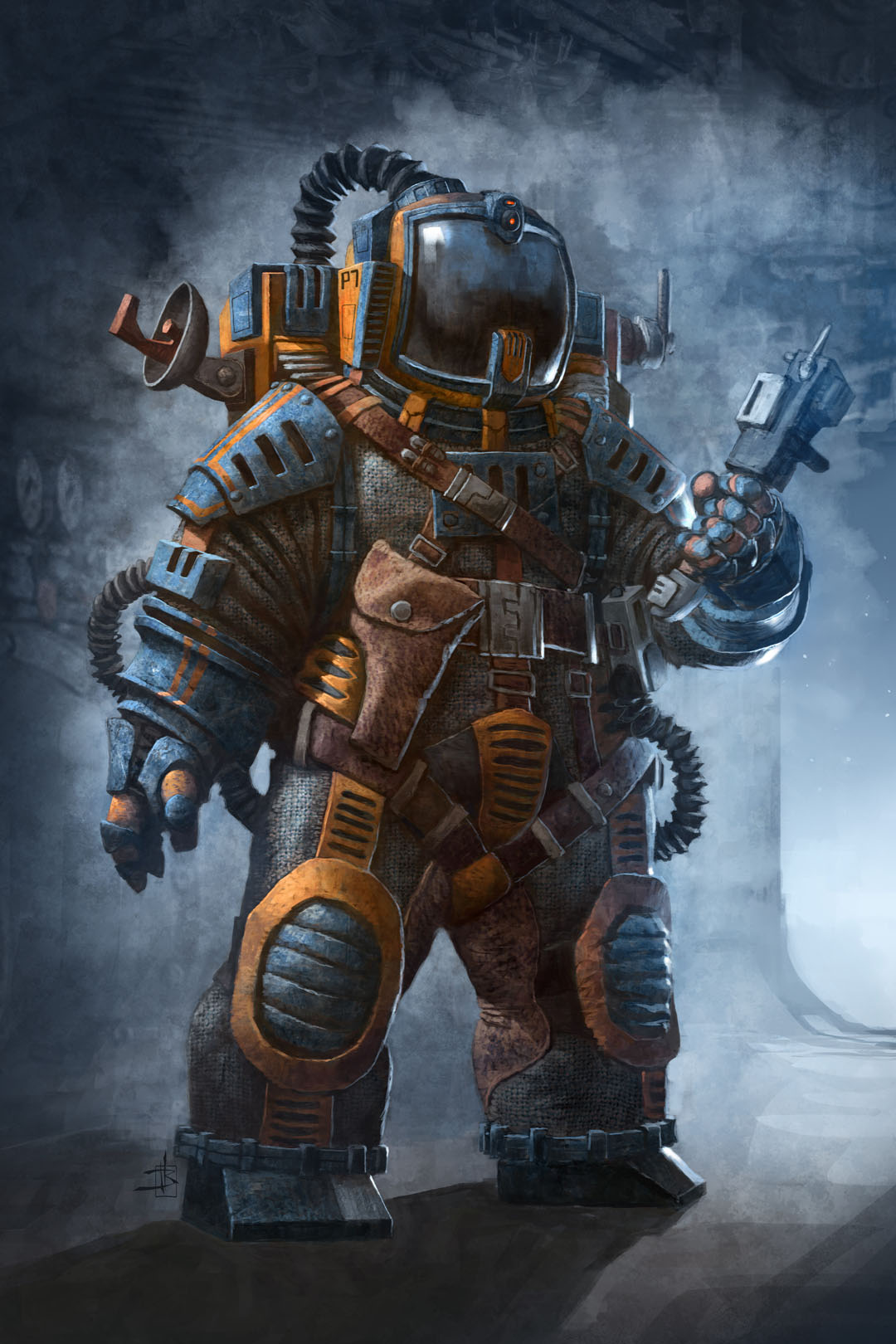
At 98 pages The Last Prospector is the same size as Quarantine 37 and consistent in production quality with the rest of the Stargrave line. The setting artwork leans into the frontier aesthetic – dust, rust, and the hard edges of people who have been living outside of any safety net for a long time. It looks like it belongs in the same galaxy as Stargrave while feeling distinctly different from Quarantine 37's horror palette.
The contents break down as follows:
- Chapter One: Introduction
- Chapter Two: New Backgrounds and Powers (Investigator, Fatewinder, 8 new powers)
- Chapter Three: New Soldiers (Striker, Bruiser, Engineer, Terrain Expert)
- Chapter Four: The Last Prospector Campaign (background, campaign rules, 10 scenarios)
- Chapter Five: Advanced Technology
- Chapter Six: Bestiary (9 new creatures)
What stands out immediately is the ambition of the campaign structure. McCullough explicitly wanted to move away from the linear narrative format he had used previously, and The Last Prospector represents his most complex design work in the Stargrave line up to this point. The result is a supplement that rewards groups willing to invest in the system while remaining accessible enough for those who just want to pick up the scenarios individually.
The thematic bridge from Stargrave's base concept to the space western is entirely convincing. The Ravaged Galaxy of Stargrave was always a frontier setting at heart with independent crews, no functioning central authority, fortunes made and lost. The Last Prospector simply makes that subtext explicit and builds a campaign around it.

How does it play?
The Last Prospector introduces two new campaign mechanics that run alongside the standard Stargrave rules.
The first is the Investigation Score. Every loot token secured during a scenario adds to a crew's running tally of investigation points, with Information and Secrets tokens worth an extra point each on top of their normal value. The crew with the highest Investigation Score after each scenario chooses which scenario is played next. This creates meaningful strategic decisions: do you play the scenario where your faction standing gives you an advantage, or the one that denies your opponents theirs? Investigation points can also be cashed in for bonuses in the final showdown, which gives them value throughout the campaign rather than just at the end.
The second mechanic is Faction Standing. Each crew starts with a standing of zero with all five factions, and actions during scenarios shift these values up or down. At standings of 3 and 6, crews unlock out-of-game bonuses – access to medical facilities, specialist markets, additional experience points, and similar advantages. Critically, no crew can hold a standing of 6 or higher with more than one faction simultaneously, which forces genuine decisions about political alignment.
Together these two systems give The Last Prospector a non-linear structure that suits both the genre and the skirmish format. Rather than following a fixed narrative, crews chart their own course through the system, balancing investigation efficiency against faction politics. For a game about independent operators in a lawless galaxy, it is the right approach.
The new soldiers extend the roster in useful directions. The Striker is a dedicated close-combat specialist with mechanics to match, hard to shoot at, armour-piercing on a won fight, and bonus damage with two weapons. The Engineer offers a 20% discount on ship upgrades and repairs, which compounds in value over a long campaign. The Terrain Expert effectively operates in light cover anywhere on the table when targeted from distance, making them an excellent choice for scenario types with open ground. The Bruiser is the other end of the scale – free to recruit, no ranged capability, useful purely as a body. All four add granularity to crew building and serve double duty in the solo format as NPCs and opponents.
The two new captain backgrounds, Investigator and Fatewinder, fit the setting well. The Investigator – part detective, part information broker – comes with powers built around intelligence gathering and reusing sold information. The Fatewinder reads probability rather than the future and brings powers focused on initiative, positioning, and avoiding damage. He feels like Marvel's Doctor Strange. Both open up crew concepts that were previously underserved by the core backgrounds.
What's next?
The Last Prospector was the second of six supplements for Stargrave. The remaining titles are:
- Hope Eternal – a dedicated solo and cooperative campaign
- Side Hustle – a card deck of 40 side missions and tasks
- Bold Endeavour – rules for crews' ships as strategic campaign bases
- Dead or Alive – already covered here, with its major solo rules overhaul in 2024
- Death Vector – adding Terminator and Cyberpunk to the game.
- Accetable Losses – coming in November 2026
We will work through the remaining supplements in the coming months.
Conclusion
The Last Prospector is the most ambitious supplement in the Stargrave line yet. The space western theme is not a superficial coat of paint as McCullough builds the entire campaign structure around the genre's core ideas of freedom, self-reliance, and politics on the frontier. The Investigation Score and Faction Standing systems add genuine strategic depth without overwhelming the skirmish core of the game.
For hobbyists, the new soldiers and backgrounds offer more options to represent the crew concepts you already have in mind, and every addition works equally well as campaign content and as solo/NPC material. The creative energy McCullough brings to his supplements is evident throughout, and The Last Prospector represents a clear step forward in design ambition from Quarantine 37.
Whether your reference point is Firefly, The Mandalorian, BraveStarr, or Sean Connery alone against hired killers on an asteroid – the Honereb System is worth a visit.
The Last Prospector is available as a paperback for 20 GBP or as a digital edition for 16 GBP from Osprey.
Stargrave is a brand of Osprey Games and North Star Miniatures.
The reviewed product item was provided by the manufacturer.
Enjoy this article?
Like us on Facebook

Follow me on Instagram

Categories
- events (212)
- fantasy (611)
- General (162)
- historical (648)
- Little Big Adventures (4)
- offtopic (5)
- reviews (553)
- science fiction (714)
- showroom (108)
- terrain (119)
- Uncategorized (1)
- work-in-progress (423)










Leave a Reply