Warhammer Fantasy – Through the Ages Part 1
As the article on Warhammer 40k through the ages was so popular, I decided to write something similar on Warhammer Fantasy. Actually this draft has been sitting on my desk for a while now, and I finally pulled through to finish it.
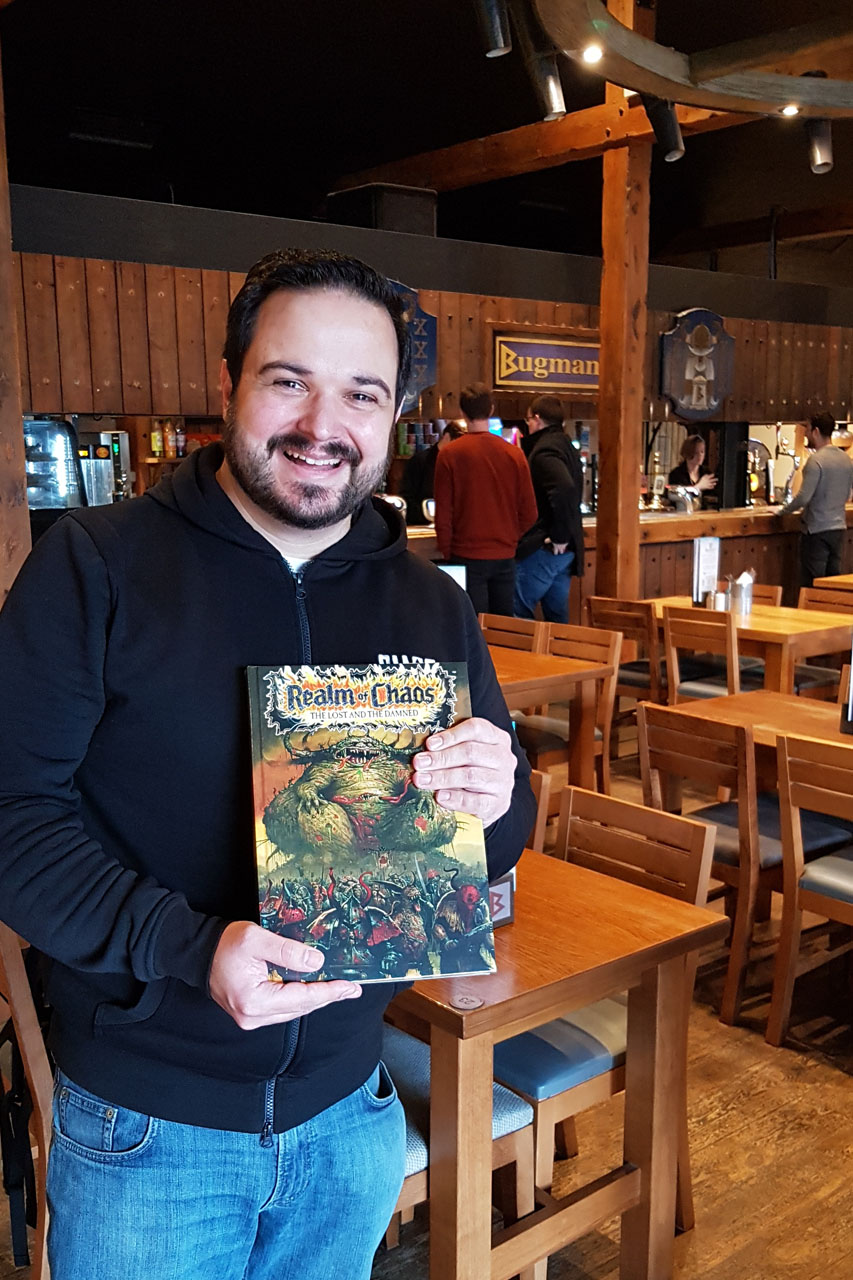
On November 15 of 2019 an article on Warhammer Community created a lot of buzz - Old World? New Warhammer! With a teaser the day before on social media, everything comes round again, even squares.
The post announced the return of the Old World of Warhammer Fantasy, a game system and lore that had been discontinued in 2015 with the End Times and replaced by the new brand of Age of Sigmar. But why was this the case? For that, we have to go back to where Warhammer Fantasy started. It is quite the journey, so I split it into two parts: part one covers Warhammer Fantasy Battles from 1983 to the End Times, part two covers Age of Sigmar and the return of The Old World.
1983 Warhammer - The Mass Combat Fantasy Role-Playing Game (1st Edition Logo)
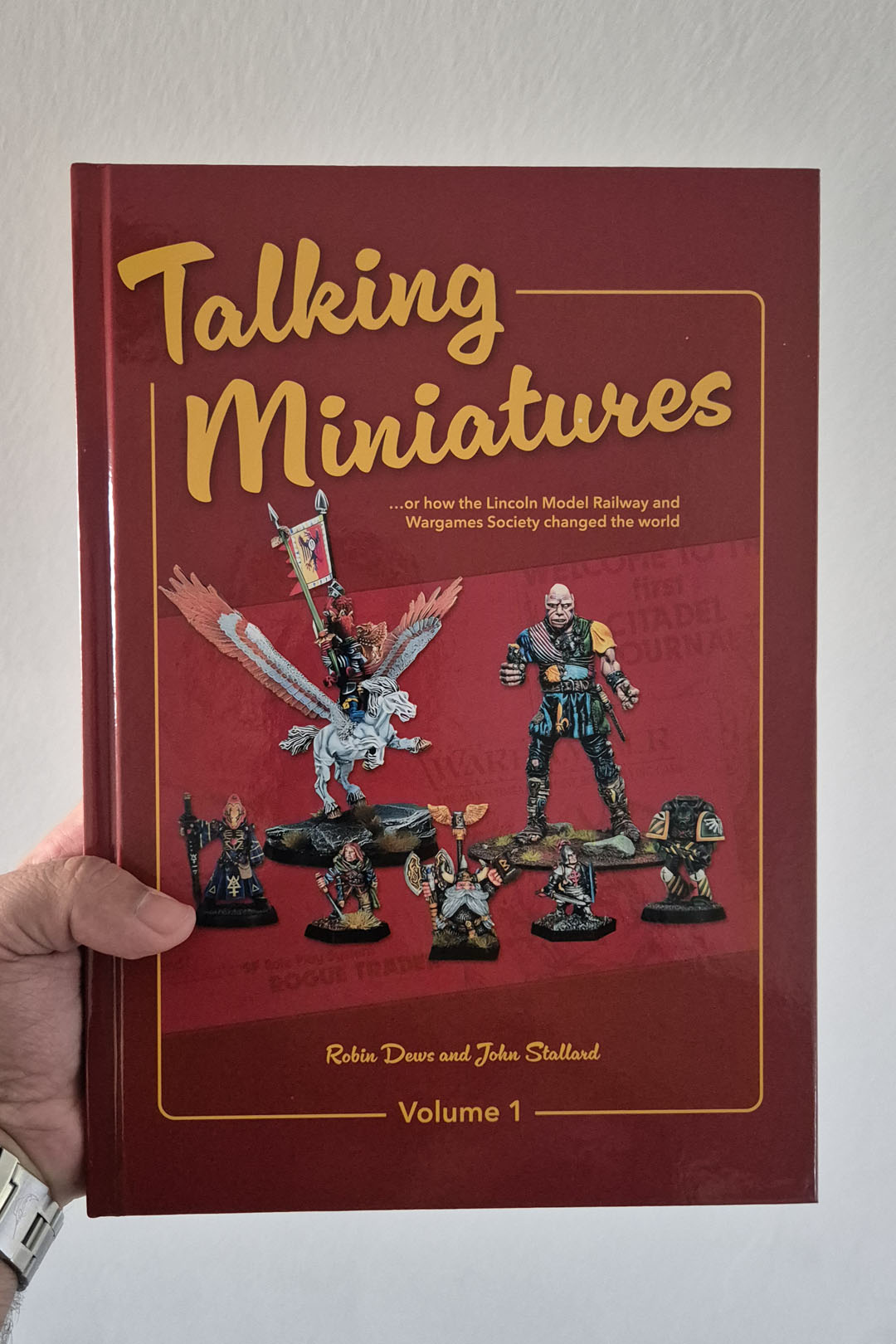
The first edition of Warhammer was released in 1983. The idea behind it was to create a rule set, which made it possible for role players to use their miniatures in skirmishes and mass combat. There are multiple books on the origins of Games Workshop and Citadel Miniatures, for example Dice Men or Talking Miniatures, but to put it briefly Games Workshop was a distributor of role playing games and Citadel Miniatures a company that produced Ral Partha miniatures under license in the UK until 1984 and their own unique ranges as well. To promote sales of these miniatures set of rules was needed and Rick Priestley and Richard Halliwell, who wrote the Reaper Fantasy Wargame Rules in the late 70s, would be the authors of the first edition of Warhammer, together with Bryan Ansell.
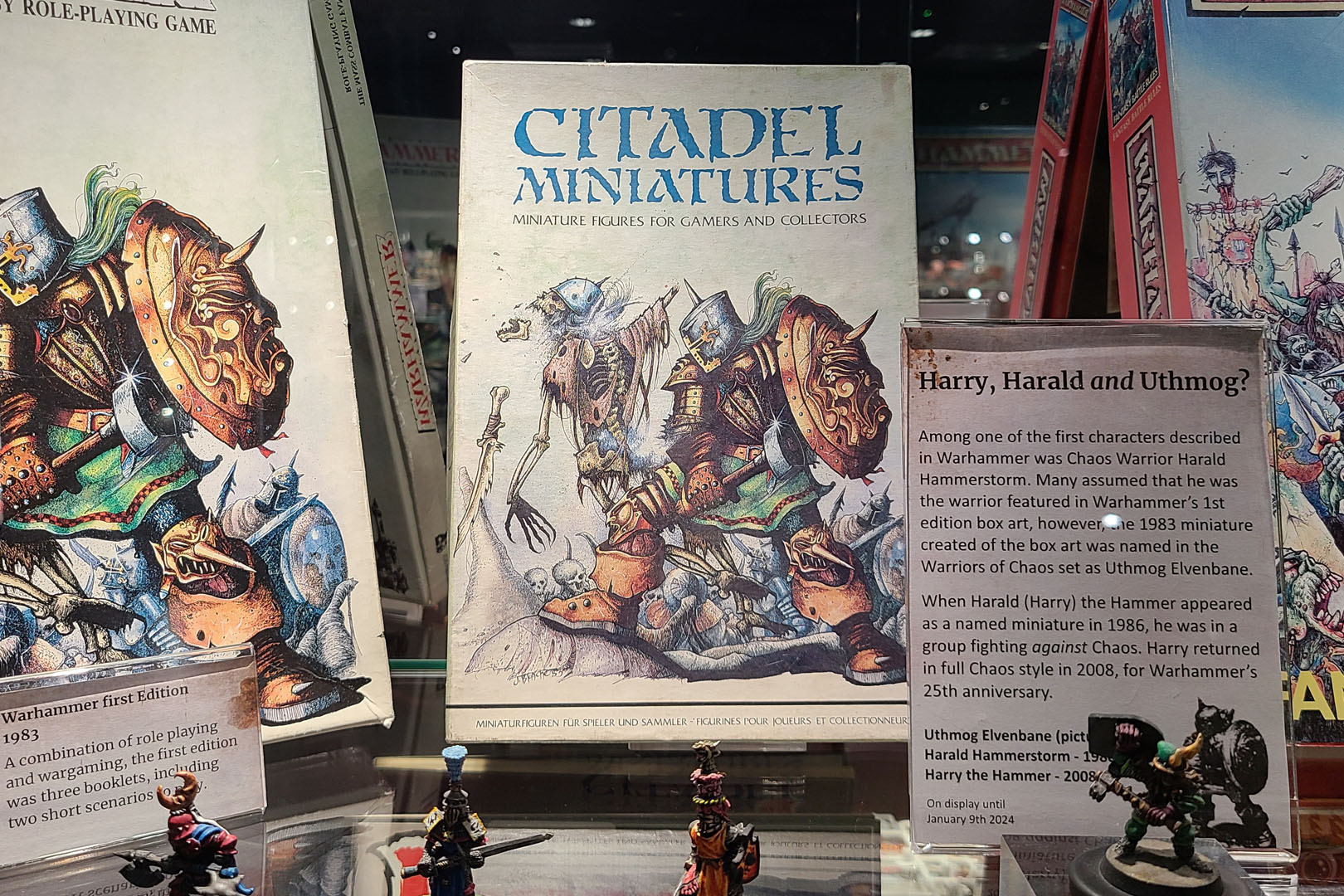

The lore was far from what we know today about the old world, most of it was heavily inspired by other fantasy games or literature from that day. Yet, some things have survived over the years and made it into the later editions of Warhammer Fantasy. There was a white box set with three books, Vol. 1 Tabletop Battles (basic rules and the scenario The Ziggurat of Doom), Vol. 2 Magic (rules for the use of magic, incl. spells and types of wizards), Vol. 3 Characters (character generation and the scenario The Redwake River Valley). In addition there were two supplements, the Forces of Fantasy (additional rules for races, magic and legendary Regiments of Renown), and The Book of Battalions (multiple suggested army lists with lore written for them).
There wasn't even a proper Warhammer World yet. Locations like Lustria only began to appear in the supplements, and it took until the 2nd edition for a full map of the Old World and a timeline to go with it. And keep the name Forces of Fantasy in mind: in 2024 it returned as one of the two army list books for The Old World, alongside Ravening Hordes, a name we'll meet in a moment, and once more with the 6th edition.
1984 Warhammer Fantasy Battles Rules (2nd Edition Logo)
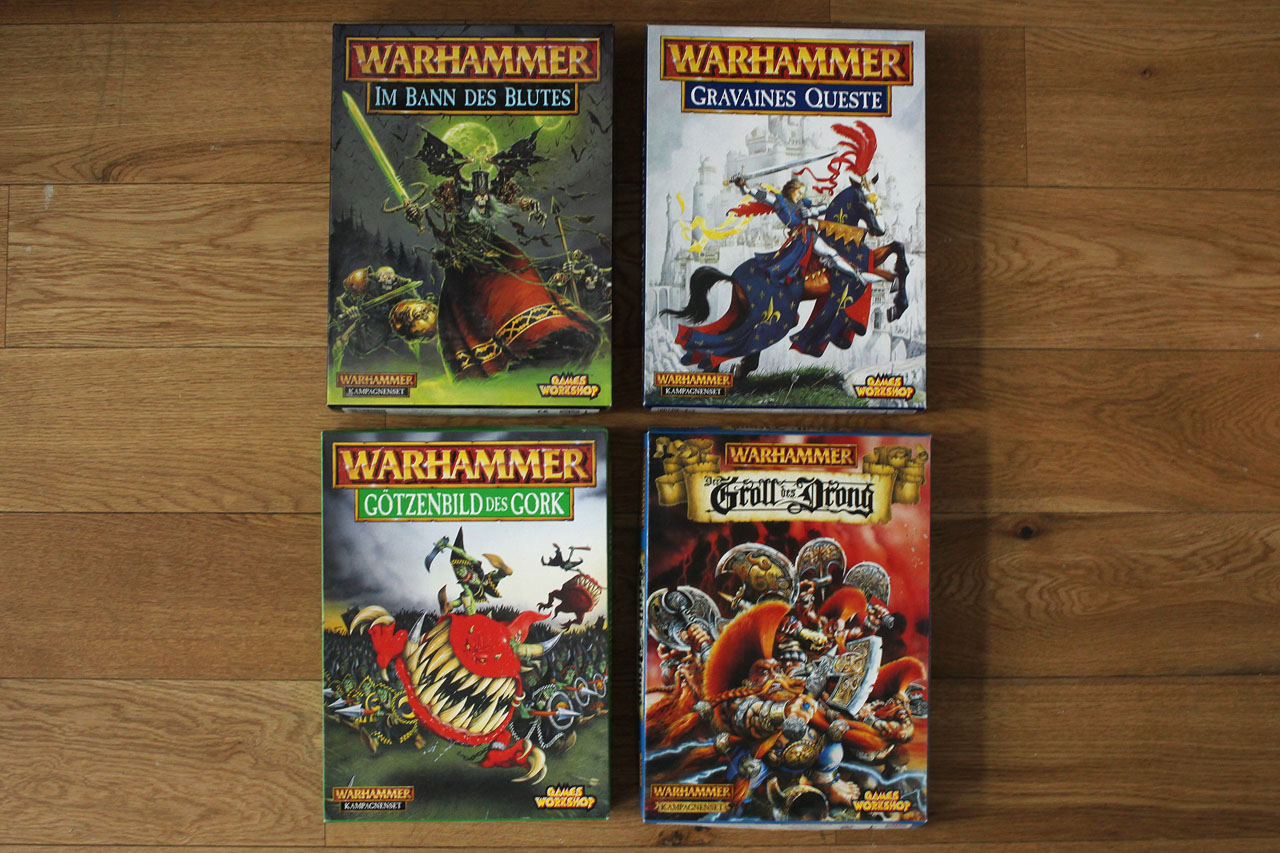
A year later the 2nd edition of Warhammer was released and was visually upgraded compared to the first edition. Once again the core set was split into three books, Vol. 1 Combat, Vol. 2 Battle Magic (incl. the scenario The Magnificent Sven) and Vol. 3 Battle Bestiary. There were multiple scenario packs, Blood on the Streets (October 1985, adding buildings and rules for mounted characters), Blood Bath at Orc's Drift (August 1985), Terror of the Liche Master (January 1986) and Tragedy of McDeath (April 1986).
In 1986, the roleplaying side branched out into a game of its own with Warhammer Fantasy Roleplay, leaving "battles" free to become just that, a battle game.

In 1987 Ravening Hordes was released as a supplement, The Official Battle Army Lists, and provided full army lists for Warhammer, and was the immediate ancestor of the 3rd edition supplement, Warhammer Armies. The name would be picked up again and again over the next editions for combined army list releases. This would be the first release of army lists, very similar to what we still have around in the latest editions of Warhammer. Ravening Hordes provided 10 different races; Orcs & Goblins, Undead, Dark Elves, Skaven, Nippon, Chaos, Norse, Dwarfs, High Elves & Sea Elves, Wood Elves and Empire. There were also allies and mercenaries from independent sub-lists for those races who had access to them, among others Lizardmen, Ogres and Kislev.
1987 Warhammer Fantasy Battles (3rd Edition Logo)
The third edition of Warhammer Fantasy was the first to be released with a Hardback rulebook, with later reprints as soft covers, that included fixed typos and new war engines and monsters. The further supplements of Warhammer Armies (1988, an extended update to Ravening Hordes), Warhammer Siege (1989) and the two Realm of Chaos (Slaves to Darkness and The Lost and the Damned; 1988 and 1990) books were all released as hardbacks, giving this edition the nickname "Hard Back Edition". This edition was already moving towards what Warhammer Fantasy would become, while still more open lore-wise, the game itself moved further from the role playing towards a mass combat tabletop system.

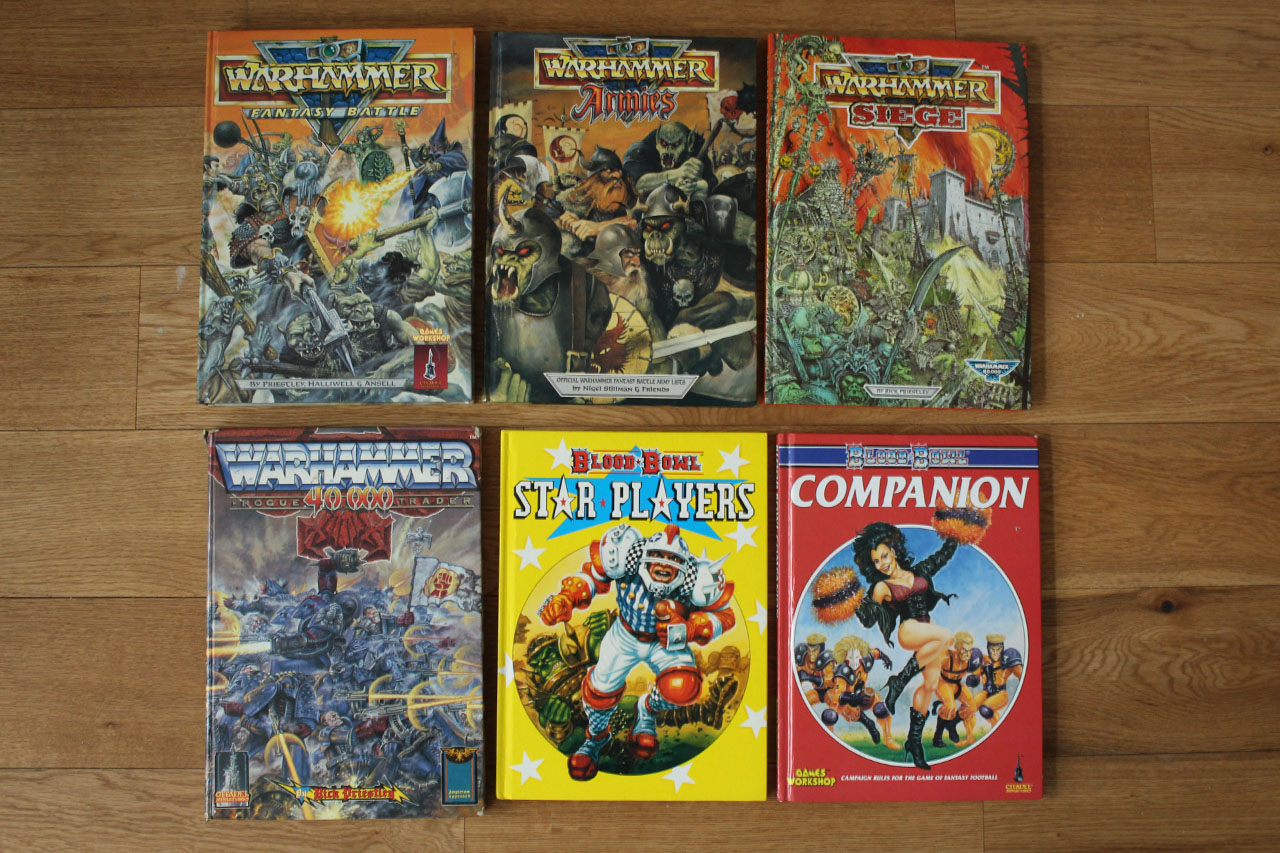
1987 was the year Rogue Trader was released as well, covering the not-that-serious sci-fi world Games Workshop and Citadel brought to life. For that reason the Realm of Chaos and Siege books covered rules for both systems. The lore began to form, yet some armies were still far off from what we would have today. For example the Bretonnians used black powder weaponry and were more like the evil regime from the Three Musketeers than the realm of chivalry we know today. Similar with the Slann, who were a mix of upright walking frogs and today's skinks, and the chaos dwarves, who were "just" renegade dwarves and had none of the Mesopotamian style of the later editions, and Undead or Orcs and Goblins were just goons of the evil forces of Chaos.
We didn't have starter sets or plastic miniatures yet, so to provide some of the armies with fitting miniatures, they used historical miniatures, which paved the way for Bretonnians, Empire and Norse, with some of these sculpts being around until today through Wargames Foundry. Yet without slotta bases, but with small discs on their feet.

1992 Warhammer Fantasy Battles (4th Edition Logo)
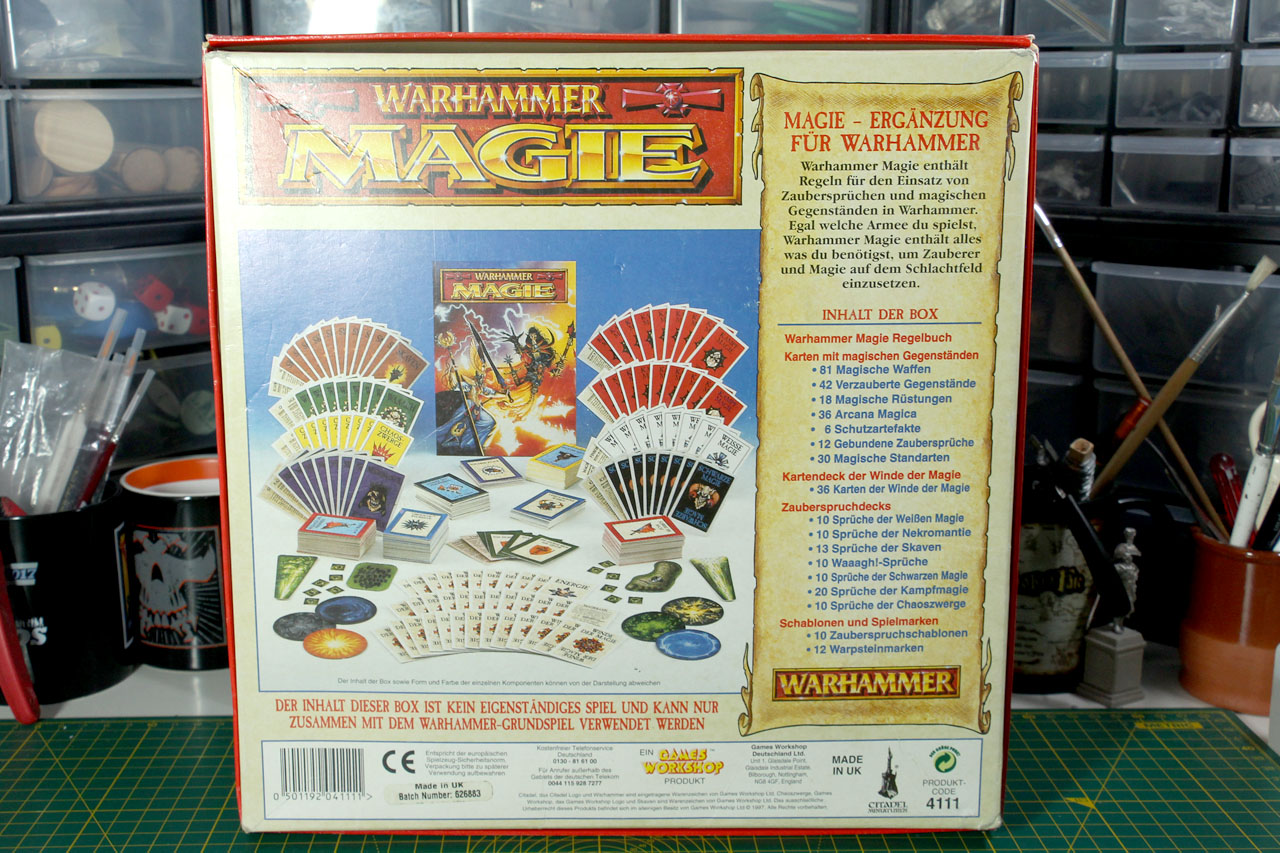
In September 1992 it gets exciting, as the 4th edition of Warhammer Fantasy Battles is released in English, and later translated into other languages like German, French or Spanish. And this edition was revolutionary for multiple reasons. First of all this edition came with a starter set, providing you with the essential gaming material like templates, measuring sticks, dice and miniatures (for two armies)! This wasn't an idea by Games Workshop, but Grenadier did this earlier with Fantasy Warriors. But for Games Workshop / Citadel Miniatures this was a concept so successful that they kept doing this from that point on for all their systems. In addition there was a supplement as a boxed set – Battle Magic – for the use of magic in the form of cast spells and various magic items. You got a lot of cards (more than 200!) and templates with that release. The same approach followed for 40k a year later with Dark Millennium.
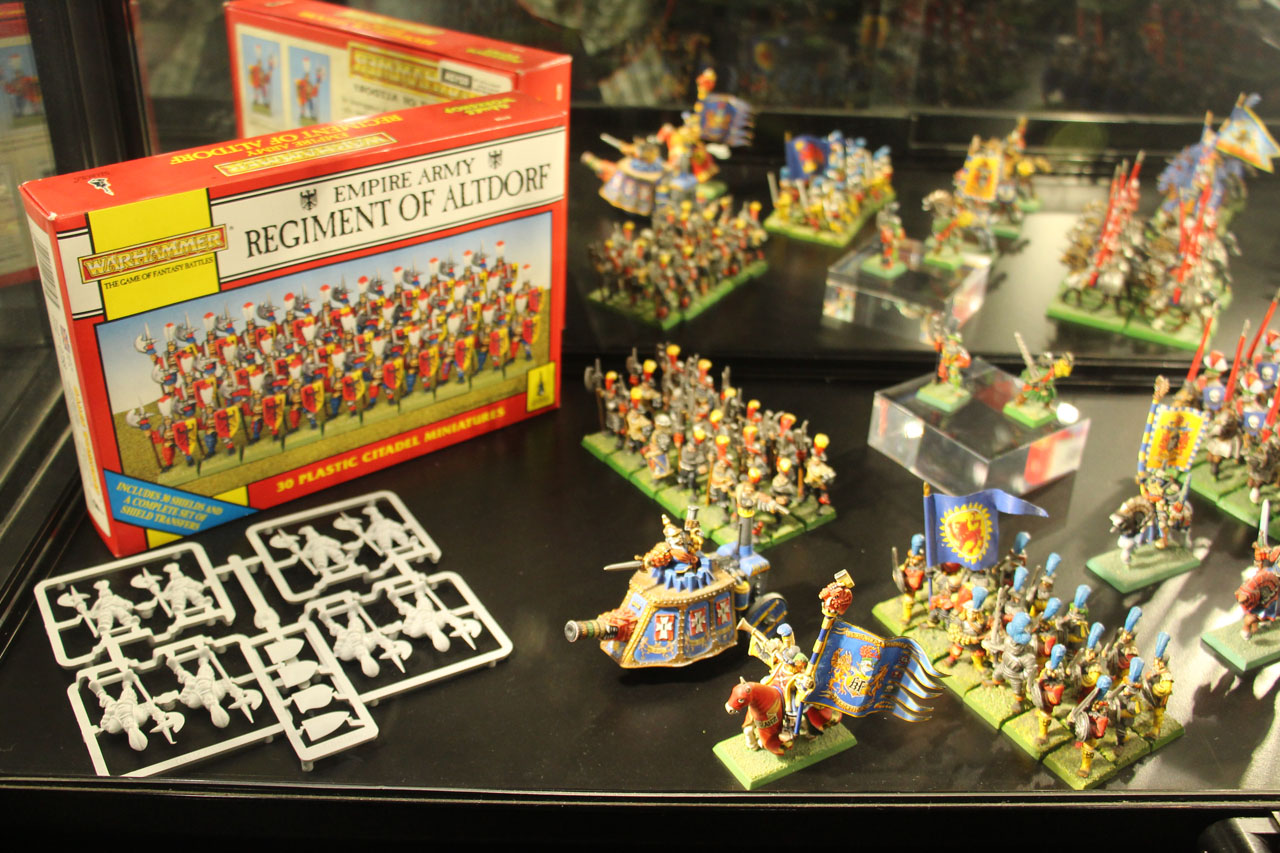
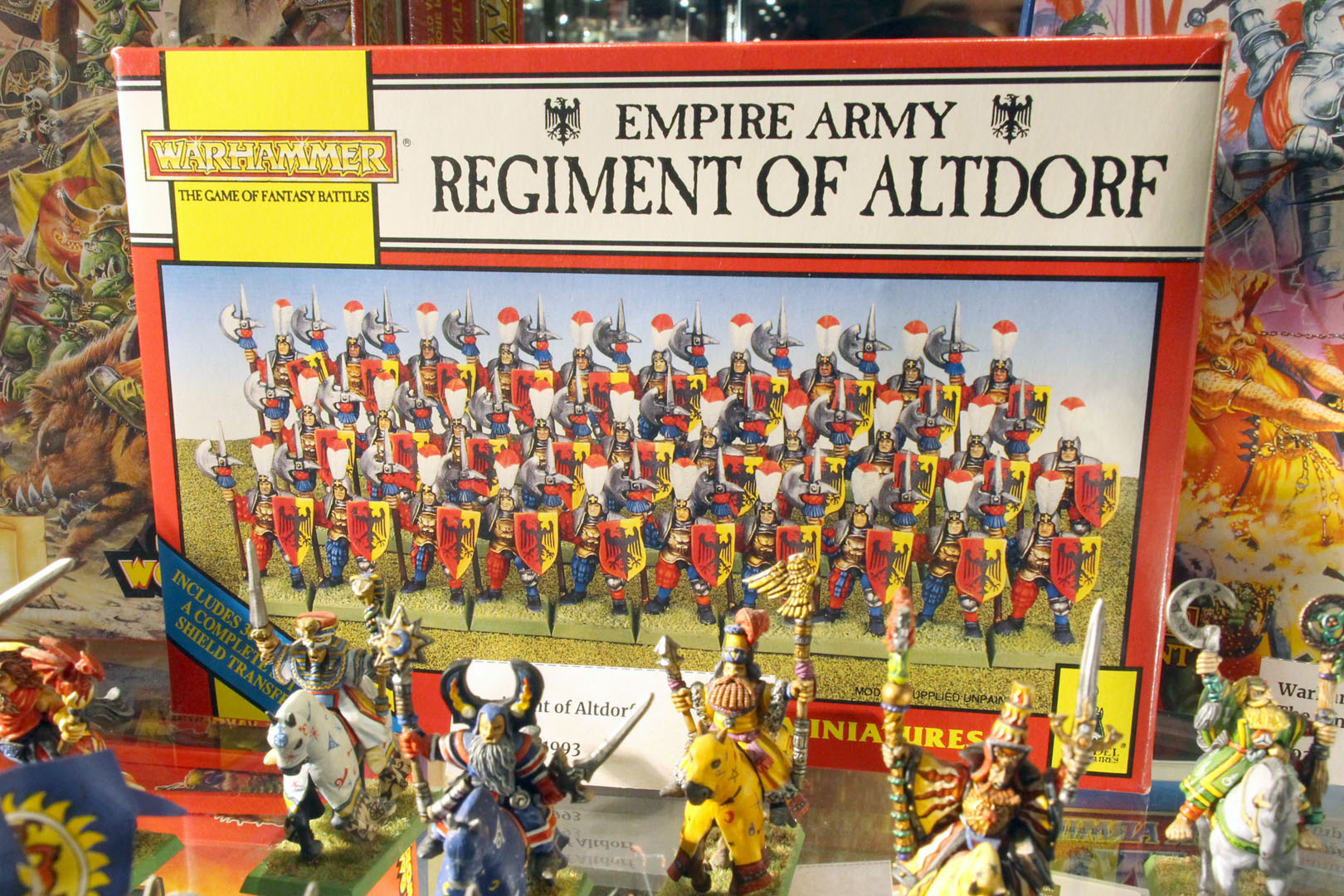


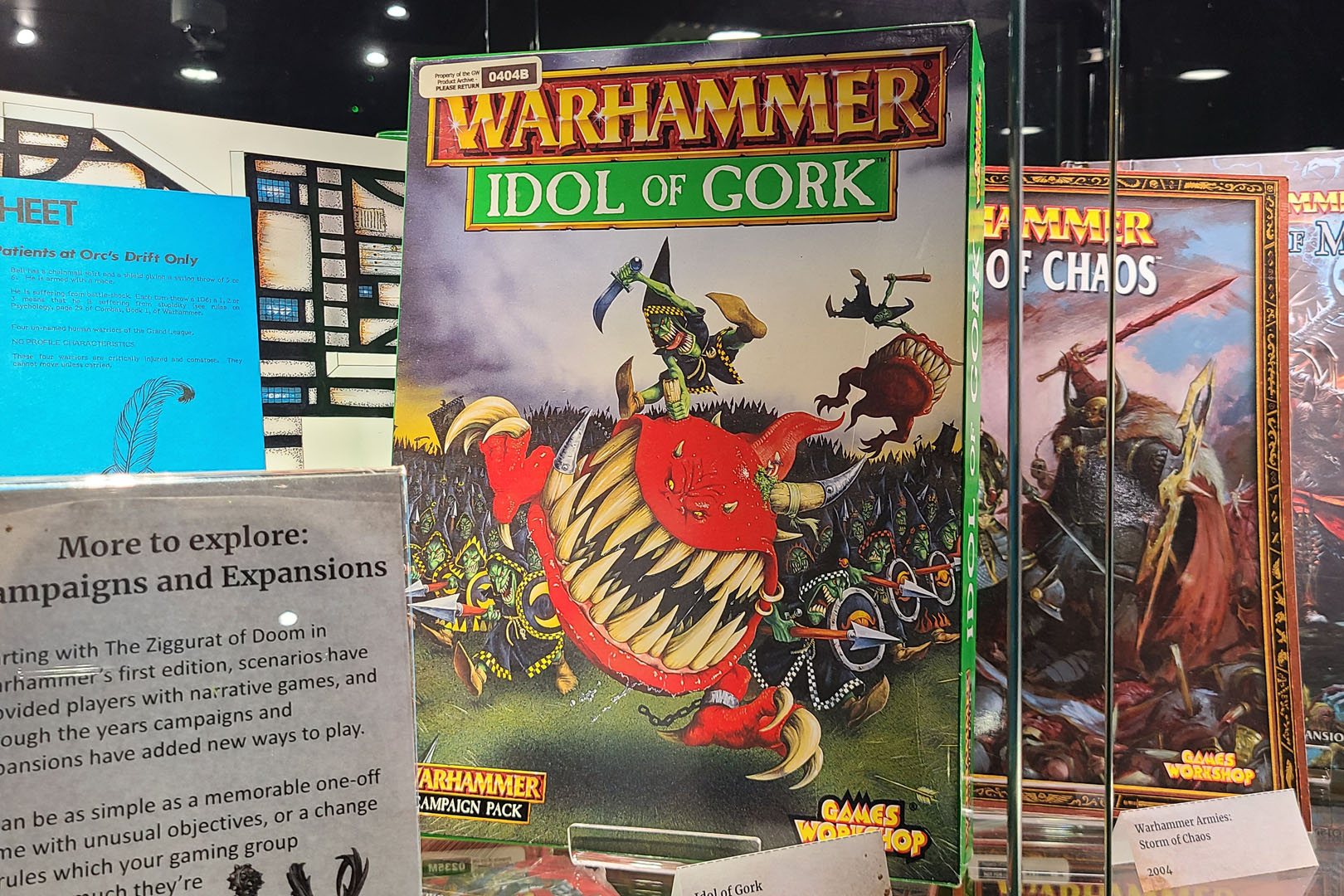
With this edition a lot of the world building began. Plastic miniatures were released in boxed sets, providing you with regiments worth of models. There were army books, with a lot of lore, stories and illustrations. Something that was groundbreaking for the immersion. Especially with the amazing work done by people like the late John Blanche, Mark Gibbons and Wayne England. Games Workshop had big plans for this game, with a lot of publications and supplements, indeed so many that a few of the army books that were planned for the 4th edition were released during 5th edition.
The armies had a lot of flexibility, but you would decide on a point value for a battle and fill that with your army list. Up to 50% of your army could be made from characters, at least 25% of Regiments (any, no differentiation) with up to 25% with Monsters, Warmachines or Allies each (Certain armies could have variations of this). Some units were limited to 0-1 to provide at least a bit of balancing, but that wasn't fixed to 0-1 per x amount of points, but in general. Warhammer was used for competitive gaming, but at least for me, was more about scenarios and having a narrative.
This was the edition that I got to know about Warhammer Fantasy, in a very classic way, because somebody brought along HeroQuest, and I remember seeing the miniatures somewhere. A friend of mine bought the starter set with the High Elves and Goblins in it. Loads of miniatures, cardboard cut-outs for some units and it was amazing. Compared to Warhammer 40k, Fantasy Battles felt more grown up, it was more tactical and the entry barrier was higher, as you needed a lot more miniatures. While there were the monopose plastic sets (like Chaos Warriors or Undead), that would give you like 10 miniatures and a starting point for an army or at least a regiment, it was a lot more money and work to get into this. Especially if you were just a lad. In my perception a lot of the Warhammer Fantasy players were older than the 40k players. And to keep the costs low, I went initially with 40k and Eldar for one of the big systems, after starting my tabletop career with Blood Bowl. But keep that entry barrier in mind, it is going to be relevant later on and once more in part two, when Age of Sigmar enters the stage.

1996 Warhammer Fantasy Battles (5th Edition Logo)
With the release of the 5th edition of Warhammer Fantasy, the game became refined. The starter set was further upgraded, with more appealing miniatures, not only monopose but variation in plastics. The starter set began with the Bretonnians and Lizardmen, who came with proper armies right in that boxed set. The Bretonnian range was an incredibly well done project by Alan and Michael Perry (you can browse it on SoLegends), with lots of poses for the metal miniatures, quite appealing plastics and very well-designed characters, that received a lot of story and narrative not only with the army book, but a world wide campaign to accompany the launch – Dark Conspiracy. Fun fact, that campaign included the Crusader City of Antoch, a location that is important once again with the release of The Old World and the Crusade lists of the Bretonnians. And while the old Bretonnian range, that is with Wargames Foundry now, was sculpted by the Perrys as well, this one gave them the room to not just be historical miniatures repurposed for Warhammer, but to include all the magic and slightly overdrawn aesthetics the World of Warhammer had to offer. And they did the same thing with the Lizardmen, who received a proper overhaul. No more wonky looking frogs, but a proper Aztec-themed redesign of the range, with various kinds of units, a deep lore of the cold blooded armies from Lustria.
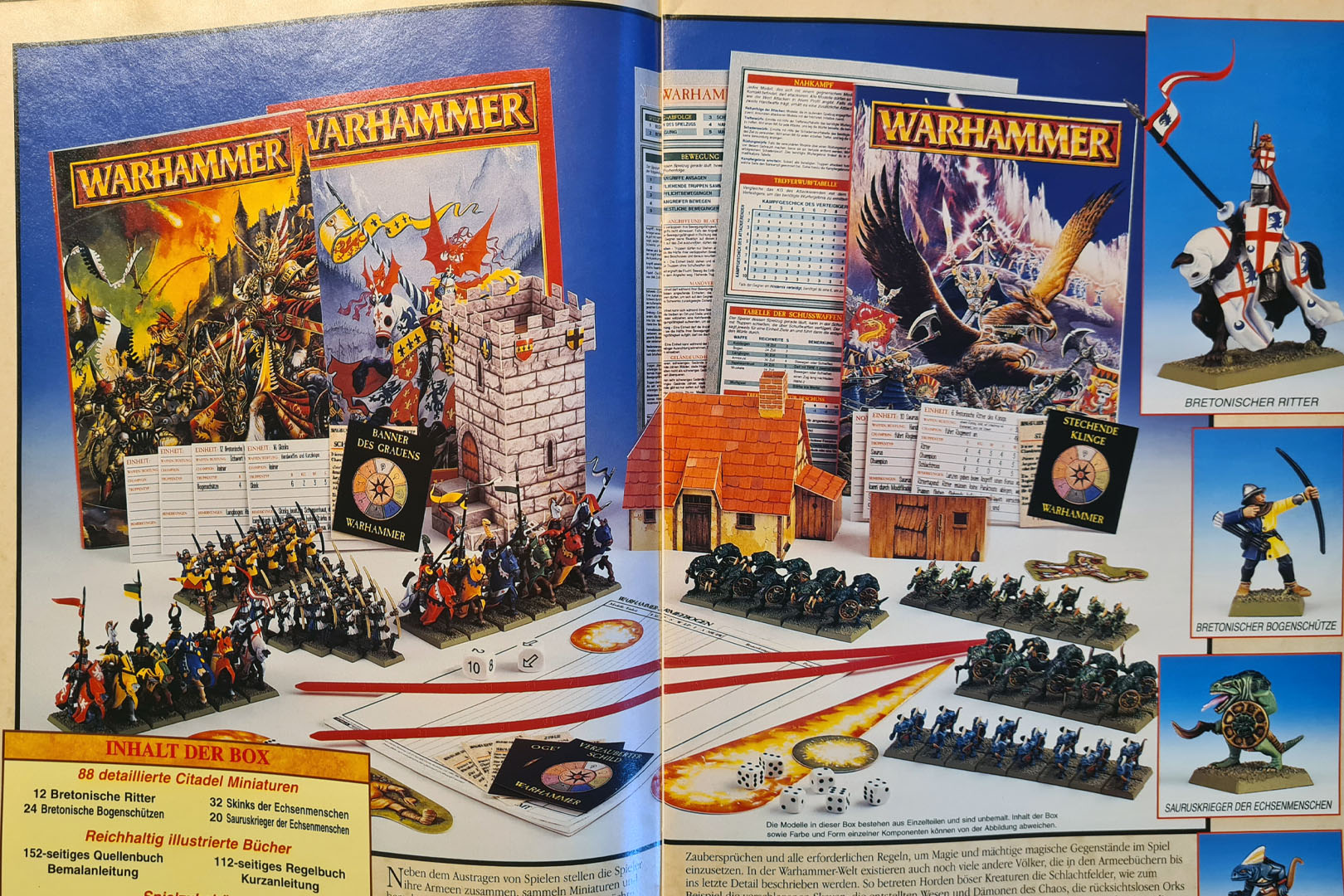
The decision for the two was a great choice, as you had Knights and something more exotic with the Lizardmen. Who doesn't like Knights? You can paint them up like the historical miniatures, you can keep them in simple colours or go the whole nine yards with decals and freehands. This spoke to a lot of people and became a great success.
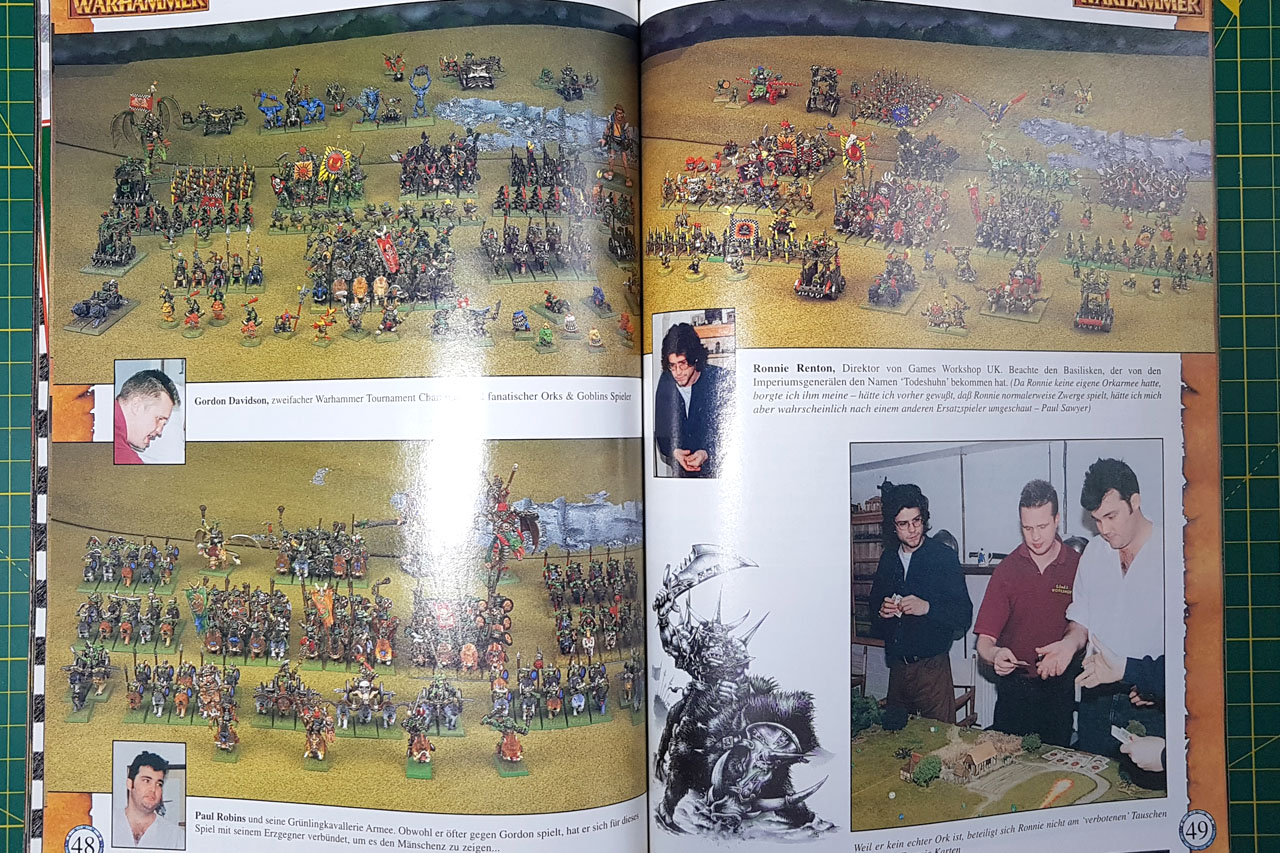
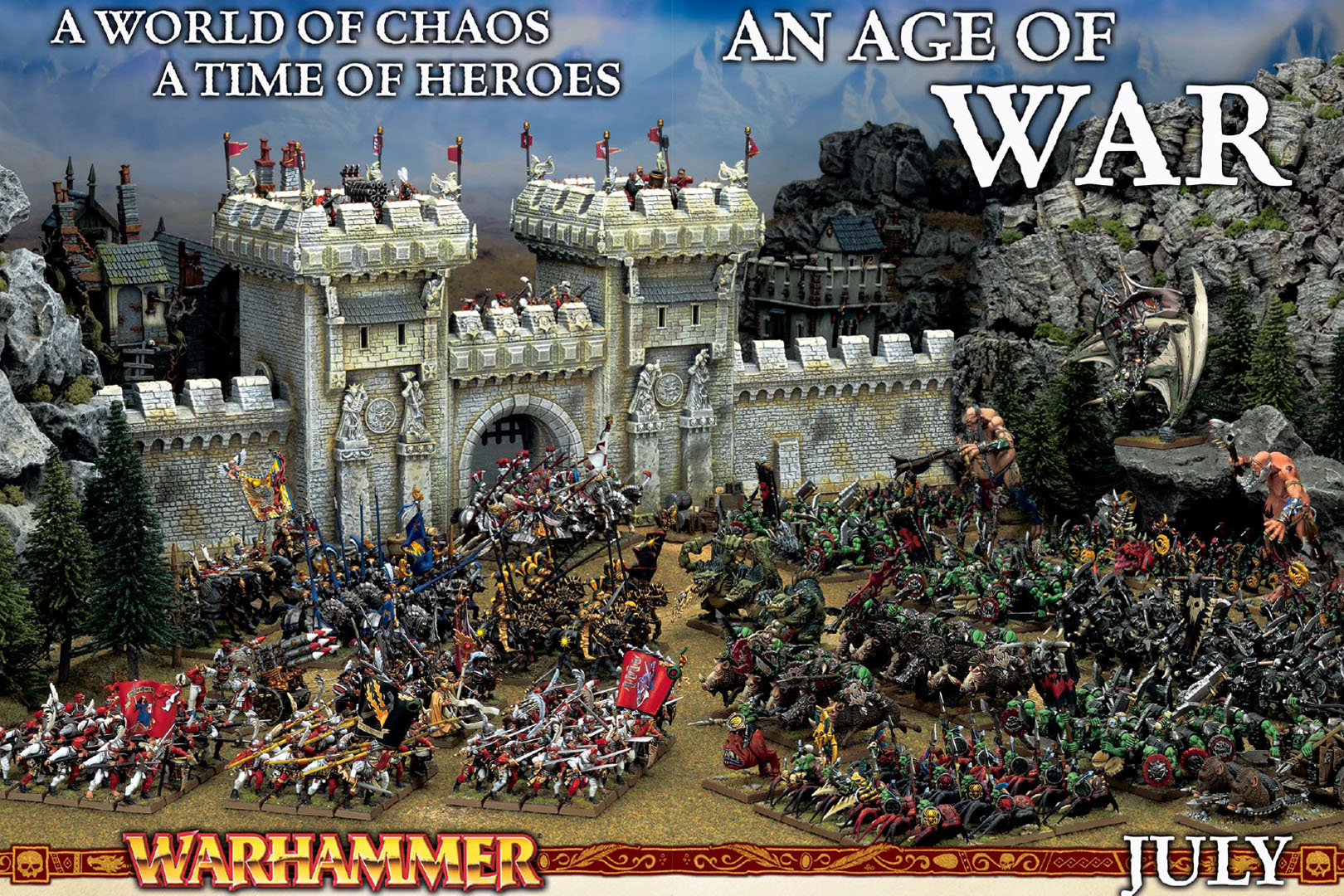
This was the time of Herohammer, mighty characters riding on fantasy monsters, leading multiple units of 20 to 30 soldiers into battle. All with Goblin Green base trim and lots of red and other vibrant colours. I vividly remember the first time I read the battle report in White Dwarf #221 (May 1998) - 48,000 points. A couple of players on each side, among them the well known Perry Twins (now with Perry Miniatures), former UK Sales Director John Stallard (now owner of Warlord Games), former Games Workshop UK Director Ronnie Renton (now owner of Mantic Games), former Head of Miniatures Gordon Davidson (for many years General Manager at Battlefront, later with Gale Force 9). Quite the line up and a very impressive collection between them at the infamous Perry wargaming rooms (you can see a couple more recent games on their Facebook page). I am happy that I had the chance to make the acquaintance of everyone from that report with the exception of Jim Buttler and Paul Robbins.


But that was the time I really fell in love with Warhammer and especially the Empire army. Warhammer was, at least for me, a game of huge regiments and larger battles, and I said to myself, when I have the funds to do this, I'm going for it. I was 14 back in 1998 and my allowance just barely gave me access to Warhammer products, and far from what I needed to begin that project.
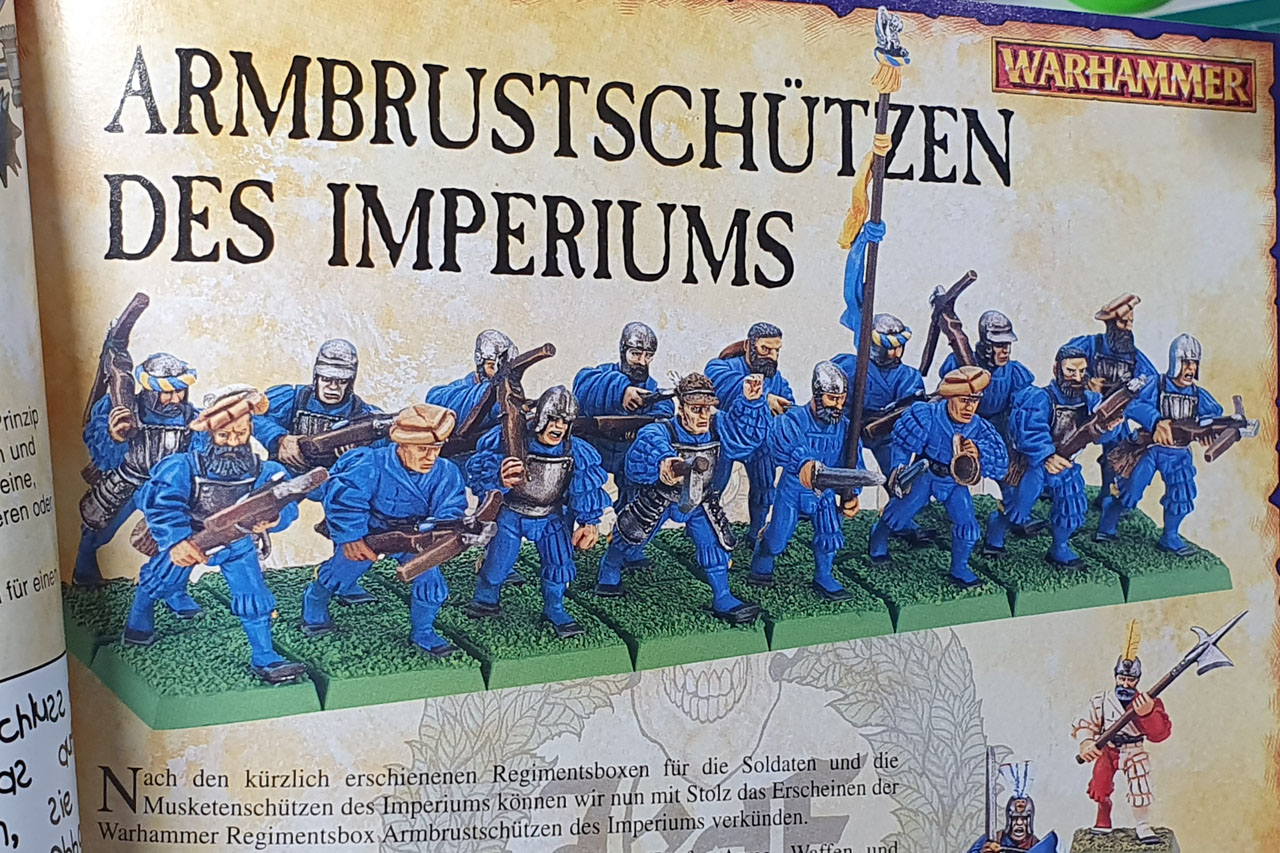
The lore of the game was further extended, armies got more detail and around 1998, while 40k jumped from 2nd to 3rd edition and got more serious, more grim dark, you noticed a jump in production quality, especially in plastic. We got modular multi-part plastic kits, where the miniatures usually were split into legs, upper body, head and arms, giving you usually options for different weapons and a lot more room for conversions. Before that you had to saw metal miniatures and fill it with Green Stuff, but now you could modify with a simple hobby knife and some plastic glue. And while in the beginning command sections were made from small sets of metal bits for the champion, musician and standard bearer, these parts quickly were replaced with smaller sprues adding banners, drums and neat gimmicks to trick out your units.
And while there were huge (!) releases of miniatures with every army book, they usually weren't complete, so that gamers had to either pick up older miniatures, convert them from the existing range or simply had to wait until the 6th edition for them to be released. Beyond that, the game used the mechanics from the 4th edition with minor changes, and army building stayed the same with percentages, with some armies having extended alterations to that (for example Bretonnians didn't have access to warmachines, or Lizardmen no allies).
Magic once again came 1996 in its own boxed supplement, Warhammer Magic, with a revised set of spell cards, so the 5th edition kept the split between core box and magic box from the 4th edition.

2000 Warhammer Fantasy Battles (6th Edition Logo)
Four years later, in 2000, the 6th edition of Warhammer Fantasy was released. More mature, less vibrant, going in a similar grim dark(er) direction as 40k the update to Fantasy Battles came along. It should be the end of Herohammer and move the units more into the focus. Something they managed to keep maybe a few weeks until the first Black Orc character was released that cost 600 points, Grimgor Ironhide. While Warhammer still was Warhammer, with some modification, the army building was heavily overhauled. Units were split into four categories, Characters, Core, Special and Rare, with the subdivision of characters into heroes and lords. And per x amount of points you would get slots for these categories. For example you would need at least 2,000 points to even include a lord level character, as battles smaller than that were beneath them, and these 2,000 points would give you the option for a maximum of 4 characters (up to 4 heroes, 1 lord), at least 3 core units, up to 4 special units and 2 rare units. Allies / Dogs of War (mercenaries) were added using the rare unit slots. Beyond that, the magic system was completely overhauled and simplified, giving the axe to the magic supplement and having them as part of the core rulebook and other lores as part of the fitting army books, with the cards replaced by power and dispel dice. And to bridge the time until every army got its new book, Games Workshop released Ravening Hordes once more as a free booklet with army lists for all races, so nobody was left behind at launch.
This was the first edition of Warhammer Fantasy that I played with my own army, as the starter set covered Empire vs Orcs & Goblins, with quite sophisticated plastic models covering not only the core troops, but cannons, chariots and heroes. So you grabbed a mate, bought two boxes and swapped one half of the box with another, both got a rulebook and a starter army twice the size. The amount of accessible plastic, Battalion bundles (with proper discounts) and reasonable pricing (25 EUR for a box of 20 soldiers, character blisters for less than a tenner) made it possible to collect larger armies. But in 2001 a third main game was released by Games Workshop, using the license for Lord of the Rings, and Warhammer had in-house competition with a smaller, more fast paced rule set, with a far more popular IP and lower entry barrier.
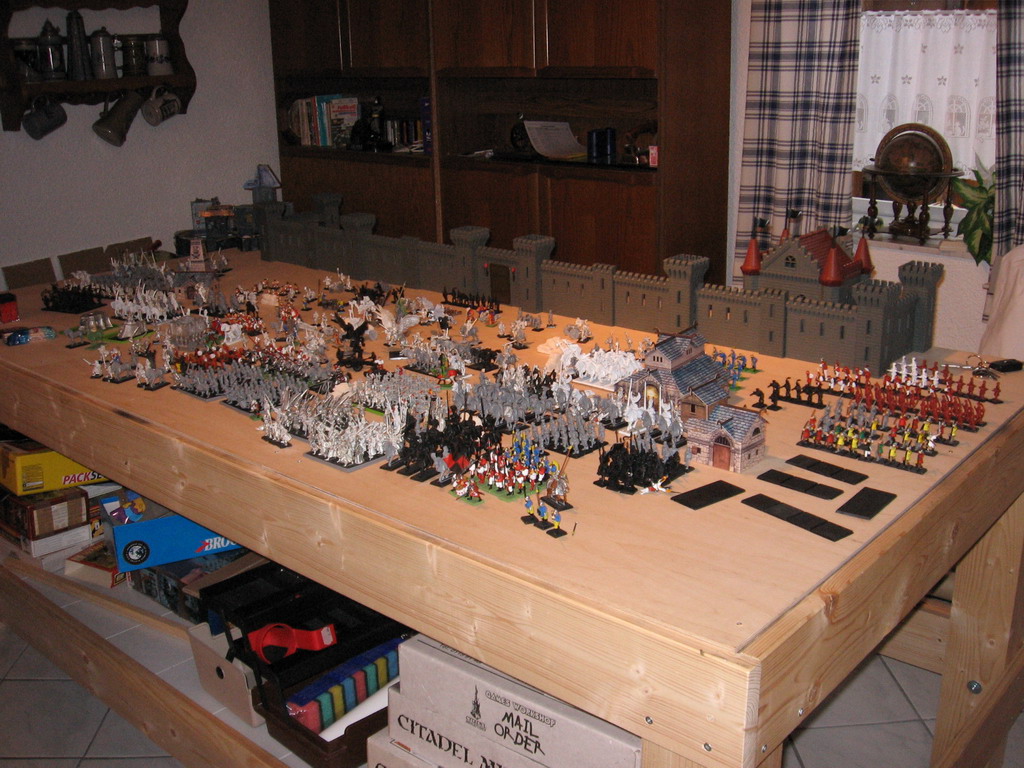

For me as a customer and wargamer the 6th edition and early 2000s were the golden time. You had access to a lot of plastic, the content Games Workshop produced in the early 2000s with the General's Compendium, hobby articles in White Dwarf were proper content, we still had access to mail order bits service. And on top of that, second hand got a lot easier with the internet, I managed to buy a lot of stock second-hand and ended up with 22,000 points of Empire.
The golden years also meant more games around the Warhammer World. With Specialist Games, Games Workshop supported smaller systems next to the big three: Mordheim in 1999 took the setting into skirmish gaming, with warbands fighting over wyrdstone in the ruins of the City of the Damned, while Rick Priestley's Warmaster (2000) brought mass battles to 10mm, a scale that would have suited the huge blocks of later editions quite well. And in 2004, the worldwide Storm of Chaos campaign saw Archaon lead his hordes against Middenheim, with players reporting their game results to shape the outcome.
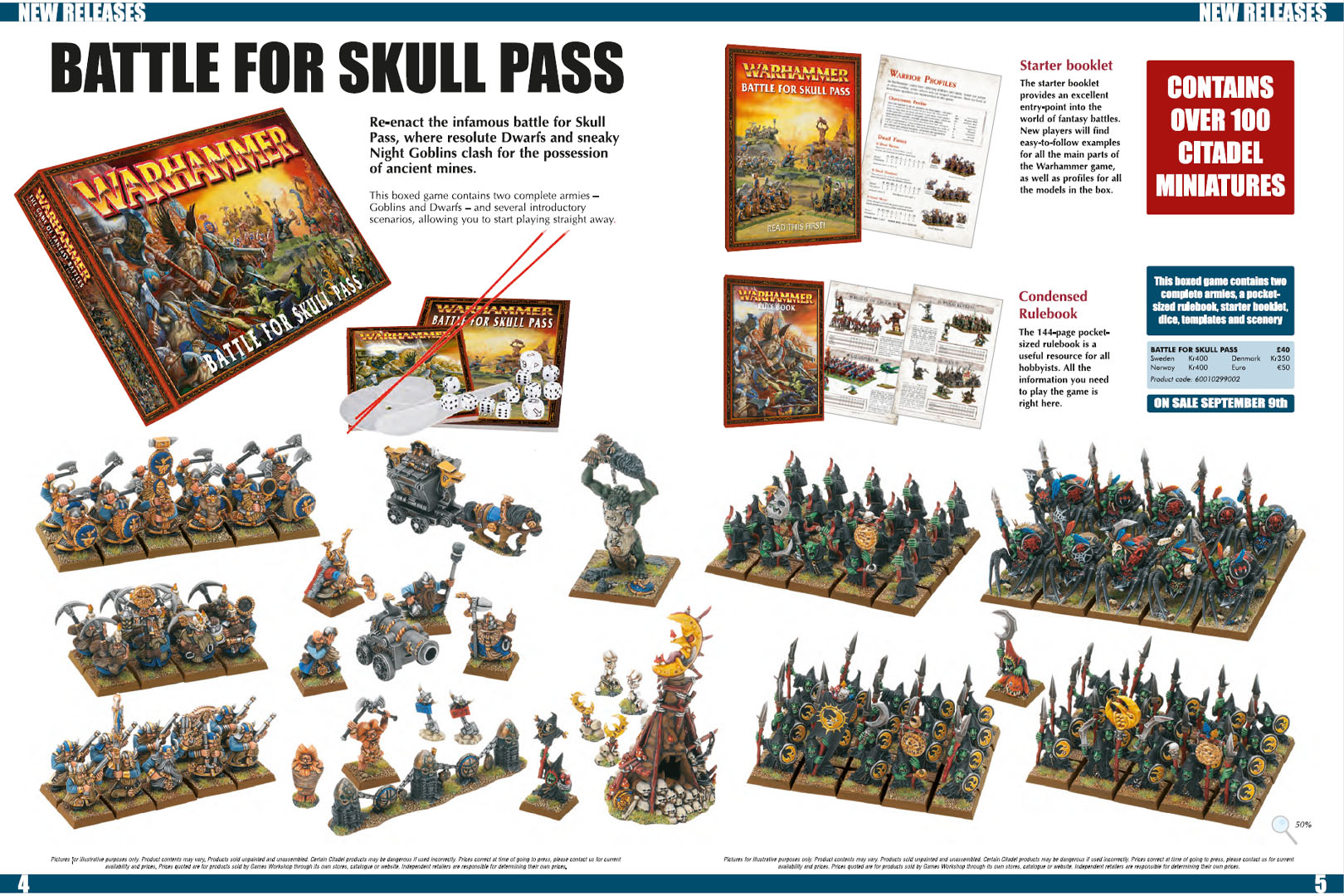
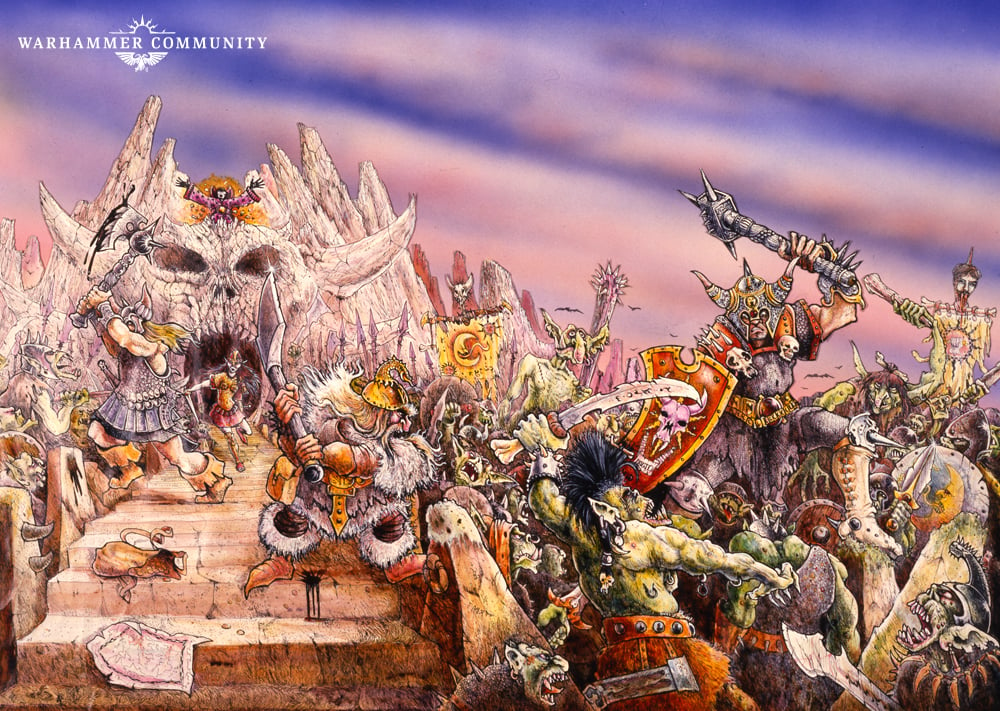
2006 Warhammer Fantasy Battles - Battle for Skull Pass (7th Edition Starter Set)
But while the company and its sales grew, especially with the new attention Lord of the Rings brought to the products, the bubble burst in 2005, when the trilogy was done. This meant streamlining at Games Workshop and alterations to the way things were released. Yet, that didn't have an immediate impact on the 2006 release of the 7th edition, which was rule-wise very similar to the 6th edition with the alterations to the rules in bullet points fitting on two pages. Army building stayed the same, new units were added to stimulate the sales of new products (existing gamers couldn't use their existing stock) along with the rising prices and certain splash releases, that were available only for a short amount of time or directly from Games Workshop, increasing the margins.
Yet, the starter sets and plastic kits were really impressive and well done. The Battle for Skull Pass, pitting Dwarfs against Night Goblins, had some incredibly well done single-piece miniatures at a very reasonable price. The extension of the range with further multi-part plastics kept the entry barrier for Warhammer Fantasy manageable, yet in comparison with 40k it was struggling. It was said, that about half the turnover of Games Workshop was made with 40k, and half of that just with Space Marines, with the remaining 50% split into Lord of the Rings, Warhammer Fantasy and hobby products, with a minor addition of licensing (which would become far more important for GW down the line). On top of that, the old Hordes of Chaos were split into separate armies, Warriors of Chaos and Daemons of Chaos (both 2008), followed by the Beasts of Chaos (2010), while books like Daemons of Chaos became notorious for their power level. Hard times for Warhammer Fantasy and so in 2010 the 8th edition of Warhammer Fantasy was released.
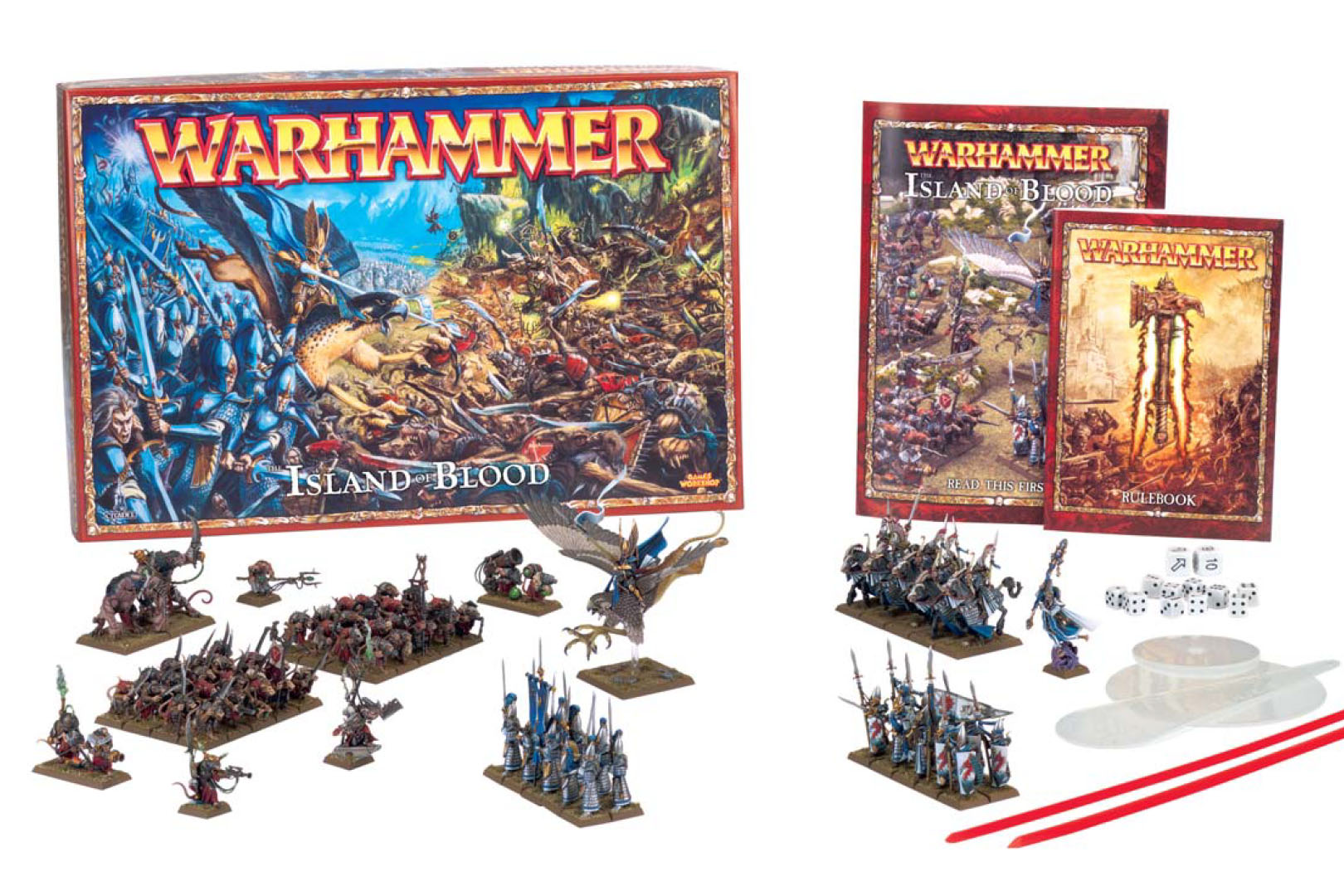
2010 Warhammer Fantasy Battles - Island of Blood (8th Edition Starter Set)
The new starter set, Island of Blood, pitted High Elves against Skaven. With great looking sculpts of Swordmasters, Sea Guard and a Prince on Griffon against Clanrat hordes, Rat Ogres and Skaven weapon teams. Everything easy to handle as push fit models which set a new bar for plastic miniatures in a starter box.
The game had an impact, it came with a rulebook of up to 512 (!) pages, depending on whether you had the hardcover or the softcover. A really heavy book. Well made, lots of illustrations and aimed at a mature audience, they tried to focus on what Warhammer Fantasy was about for many people. Commanding large armies with huge units. The size of games was increased to about 3,000 points for a battle for an evening, the units got incentives to become bigger (for example hordes), but the army organisation into characters, core, special and rare units stayed, but they went back to percentages instead of slots. While Lords and Heroes could make up to 25% each, Core had to be at least 25% with no limitations on duplicate choices, Special could be up to 50% with up to 3 duplicates (and double that on bigger games), as well as rare with up to 25% and up to 2 duplicates. And while even elite units were released in plastic, making them in beginning cheaper than their former metal counterparts, units of 30 or 40 models, 3,000 points army lists raised the entry barrier for new players, in addition to that at least for me that 8th edition felt like a game, that should be 10-15mm and is forced to be 28-32mm to drive sales, as you simply needed more miniatures to flood the gaming table. And while this created a market for third party companies (plastic infantry was now offered by other companies as well), unit fillers and such, it didn't develop the game where it needed to be, to carry its weight in comparison to other product lines at Games Workshop.
And in 2014 the beginning of the end began, with The End Times. Spread across five campaign books (Nagash, Glottkin, Khaine, Thanquol and Archaon) released between late 2014 and 2015, it was a huge campaign that brought in a very dynamic energy in the game, as it delivered further progress to the Warhammer World in lore, with high quality content, but on such a high tempo, that the publications felt rushed and players had problems to keep up. And at some point in these two years of 2014 and 2015 people felt disconnected and realized, "Wait a minute, am I buying into a system, they are going to kill?". And Games Workshop did that. The Old World of Warhammer Fantasy was destroyed with the End Times, countless heroes and even gods fell in these battles, with whole races being wiped out or enslaved.
Looking back, the End Times were some of the best content Warhammer Fantasy ever had, with big stories, big miniatures and real consequences. It was the intended twilight of the gods, and it was meant to be final. But it all came very, very quickly and ushered in the end of classic Warhammer Fantasy at a pace that left a lot of people behind. Five books in little more than a year, the world changing with every release, and long-time players wondering whether their armies would still have a place once the dust settled. With a bit more time, Games Workshop could have taken its community along for the ride. Instead, the answer came in the summer of 2015, and their armies wouldn't have a place, at least not in the Old World.
For me personally, the end had come a little earlier. The 8th edition lost me: even with my large collection I would still have had gaps to fill, and the bigger regiments bloated a game that wasn't all that dynamic to begin with. Add the price increases and the move away from the Middlehammer aesthetic I loved, and I decided to cut my once 22,000 points strong collection down drastically – keeping mainly the metal character models.
32 years after three little booklets in a white box, Warhammer Fantasy Battles had come to an end. What came next and how the Old World found its way back is the story of part two.
Enjoy this article?
Like us on Facebook

Follow me on Instagram

Categories
- events (211)
- fantasy (611)
- General (161)
- historical (647)
- Little Big Adventures (4)
- offtopic (5)
- reviews (552)
- science fiction (713)
- showroom (108)
- terrain (119)
- Uncategorized (1)
- work-in-progress (423)










Leave a Reply