Stargrave – Hope Eternal
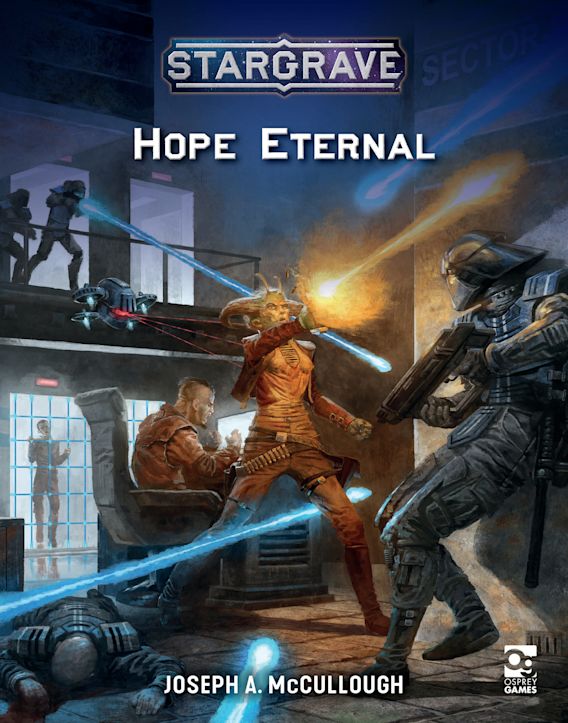
We already gave you the reviews on Quarantine 37 and The Last Prospector. Now we move on to thethird supplement for Stargrave: Hope Eternal, released in 2022. Where the previous supplements expanded the competitive game with new campaign structures, Hope Eternal takes a different direction entirely: it is a dedicated solo and cooperative supplement, and the most narratively ambitious entry in the Stargrave line to date.
What is it about?
It starts with a routine data grab. An anonymous client wants access codes to a prisoner database on a backwater planet. Standard work for an independent crew. What follows is anything but routine.
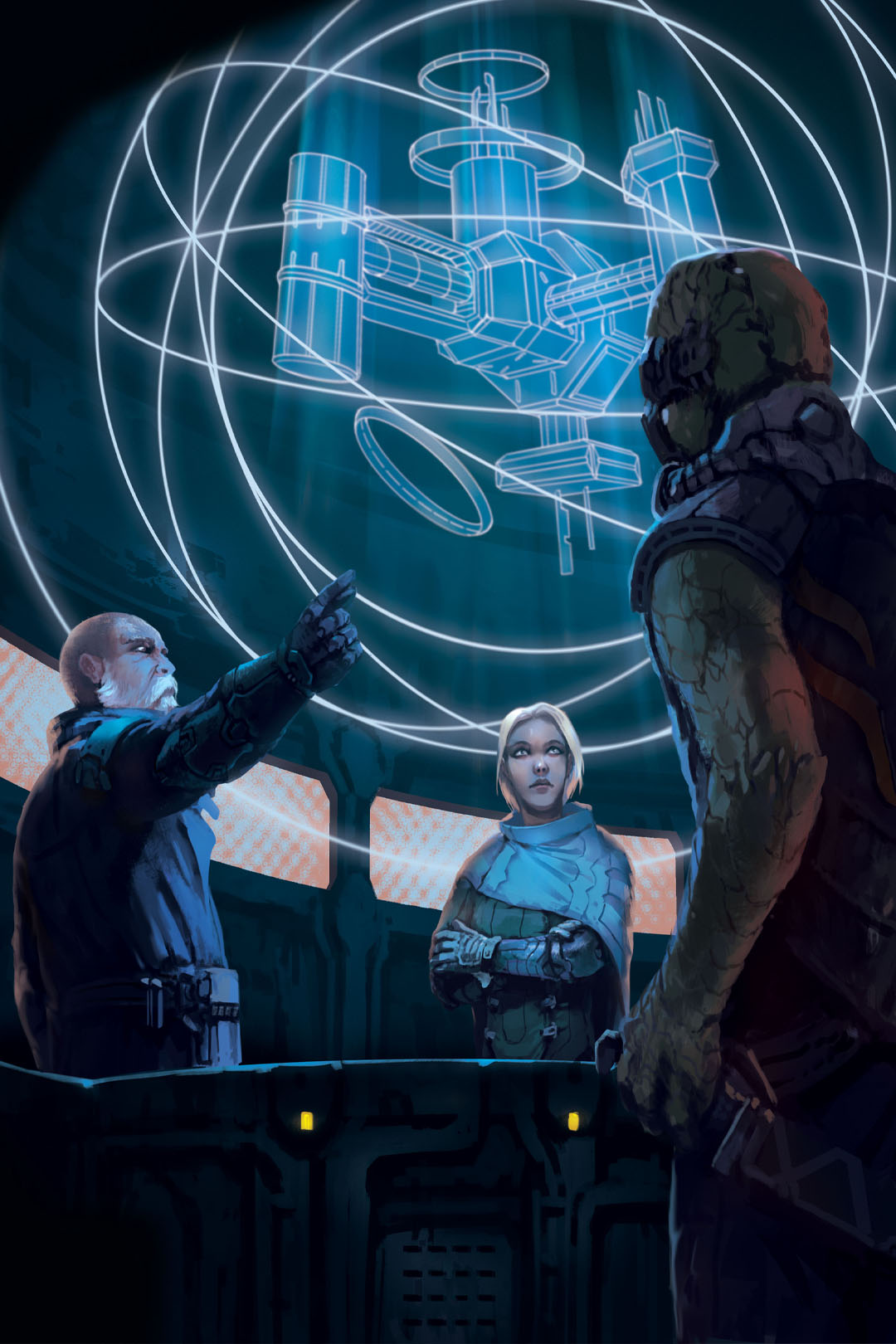
The freed prisoners carry intelligence on a secret meeting between two of the major pirate fleets, the same fleets that have been keeping the Ravaged Galaxy in a state of permanent darkness since the Last War. Somewhere in an abandoned system, there is a space station designed to trigger supernova-level events. If the right crew can board it, arm it, and get out alive, both fleets could be destroyed in a single moment.
Hope Eternal is a ten-scenario linear campaign structured in three acts. Part One covers the initial job, a pair of daring prisoner rescues, and a desperate escape. Part Two tasks the crew with tracking down the last surviving operator of the space station, obtaining a keycode from one of the harshest planets in the subsector, and sourcing a rare mineral that can turn the station into a weapon. Part Three is the infiltration itself – boarding a station that turns out to be less abandoned than expected, restarting the computer, overriding the safety protocols, and triggering the experiment before the pirates work out what is happening. The final question is whether the crew can outrun the blast radius.
Joseph A. McCullough is upfront about his inspirations: the original Star Wars trilogy, Terminator, The Lord of the Rings, and Jack Campbell's Lost Fleet novels. He is equally clear that this is the first time he has written Stargrave with the crews in an explicitly heroic role. Whether that framing sits comfortably with you depends on how you read it. A more pragmatic interpretation is that the moral framing serves a structural purpose – it gives the solo campaign a defined direction that prevents it from becoming an open-ended exercise without stakes. The crews may be rough around the edges and not above pocketing a few credits along the way, but the campaign needs a reason to keep pushing forward, and "destroy the pirate fleets" is a more compelling one than most.
First Impression
Hope Eternal arrives as a 96-page softcover, the same amount of pages as the other campaign expansions. McCullough is explicit throughout that the visual interpretation is entirely up to the player: the scenario photography shows tables built from common terrain collections, and nothing in the book demands a specific aesthetic. Gritty and industrial works. Pulpy and colourful works just as well.
The contents break down as follows:
- Introduction
- Chapter One: Solo and Cooperative Play
- Chapter Two: The Hope Eternal Campaign – Overview
- Chapter Three: Hope Eternal Campaign – Part One (Scenarios 1–3)
- Chapter Four: Hope Eternal Campaign – Part Two (Scenarios 4–7)
- Chapter Five: Hope Eternal Campaign – Part Three (Scenarios 8–10)
- Chapter Six: Epilogue
- Chapter Seven: New Rules (Underwater, High Radiation)
- Chapter Eight: New Advanced Technology
- Chapter Nine: Bestiary (13 new creatures)
What stands out immediately is the standalone ambition of the book. McCullough designed it so that all you need is the core rulebook – no other supplements required. Every character, creature, and piece of technology specific to the campaign is included within these pages. For new players, or those who skipped the first two supplements, Hope Eternal functions as a complete entry point into solo Stargrave.
The decision to omit new backgrounds and soldiers is noticeable, but not a weakness. The bestiary, the new advanced technology, and the two new environmental rule sets – underwater and high radiation – provide substantial content for hobbyists without requiring the framework of new crew options. The creatures in particular cover a wide range of scenarios, from the venomous Agivorus Snake and the mounted Barbarian Horat Rider to the Radioactive Abomination and the Slaverbot.
How does it play?
The solo and cooperative rules are built around a modified turn sequence: Captain Phase, First Mate Phase, Creature Phase, Soldier Phase. The key difference from the competitive game is that enemy figures activate before your soldiers do, which keeps the pressure on throughout. Captains and First Mates each activate two soldiers per phase rather than three, but can select those soldiers from anywhere on the table rather than being limited by proximity – a small but meaningful change that opens up tactical options.
For cooperative play, two players can either share a single crew or each field a half-sized crew built around a levelled-up captain equivalent. The half-sized crew option gives both players equal ownership of their forces, which suits the format well.
McCullough had previously written solo rules for Quarantine 37 and the original Dead or Alive release. It is worth noting the context around that original Dead or Alive: it appeared in 2021 as a free PDF, a direct response to the lockdown period and the need to keep players engaged when finding opponents was impossible. The initial release was deliberately lean in order to get something useful into players' hands quickly. Hope Eternal builds on that foundation with a more fully developed priority list for enemy creatures and a campaign structure specifically designed around the solo experience rather than adapted from the competitive format. The significant expansion of Dead or Alive in 2024, which added a full solo campaign and considerably more mechanical depth, is the logical continuation of this development arc.
The two new environmental rule sets add genuine variety to the campaign. The underwater rules cover movement, jumping, falling, swimming, flying, combat, and shooting with their own modifiers – enough to make aquatic scenarios feel meaningfully different without introducing a separate system. The high radiation rules are simpler but equally effective: radiation zones deal incremental damage each activation, and the new Radiation-skin equipment offers the only complete protection.
The advanced technology table adds twenty new items, several of which will find their way into regular campaign use. The Miracle Shot is a one-use insurance policy against losing a captain or first mate permanently. The Oncadian Exoskeleton adds close combat damage and the Never Wounded attribute, worn under armour. The Matter Whip forces loot-carrying opponents to drop their token and drags it towards the user. The Mindstone and Mystical Text give Psionicists and Mystics respectively a pool of exertion points that draw on something other than their own Health – a meaningful quality-of-life addition for power-heavy crews.
What's next?
Hope Eternal was the third of six supplements for Stargrave. The remaining titles are:
- Side Hustle – a card deck of 40 side missions and tasks
- Bold Endeavour – rules for crews' ships as strategic campaign bases
- Dead or Alive – already covered here, with its major 2024 overhaul expanding the solo rules significantly
- Death Vector – adding Terminator and Cyberpunk to the game.
- Accetable Losses – the latest supplement, which will be released in November 2026
We will work through the remaining supplements in the coming months.
Conclusion
Hope Eternal is (currently) the most self-contained and narratively structured supplement in the Stargrave line. The solo and cooperative rules are well-constructed, the ten-scenario campaign has genuine momentum, and the supporting content – bestiary, advanced technology, underwater and radiation rules – adds up to a substantial package even for players who never run the full campaign.
The heroic framing is a deliberate choice that gives the solo format the direction it needs. The Ravaged Galaxy is a bleak setting, and a campaign with something genuinely worth fighting for makes a meaningful difference when there is no opponent across the table to provide the competition. Whether you see it through the lens of Star Wars, Terminator, or just a crew of pragmatic operators who happen to be pointed in the right direction, the campaign delivers.
For solo players especially, Hope Eternal remains essential reading – even with the expanded Dead or Alive now available, this is where the foundations were properly laid.
At 20 GBP for the softcover or 16 GBP for the digital download you can't do anything wrong with adding this to your collection. It is another supplement for Stargrave that simply delivers.
Stargrave is a brand of Osprey Games and North Star Miniatures.
The reviewed product item was provided by the manufacturer.
Enjoy this article?
Like us on Facebook

Follow me on Instagram

Categories
- events (210)
- fantasy (604)
- General (161)
- historical (644)
- Little Big Adventures (4)
- offtopic (5)
- reviews (552)
- science fiction (710)
- showroom (107)
- terrain (119)
- Uncategorized (1)
- work-in-progress (422)










Leave a Reply