Oathmark – Battles of a Lost Age Core Rules 2nd Edition
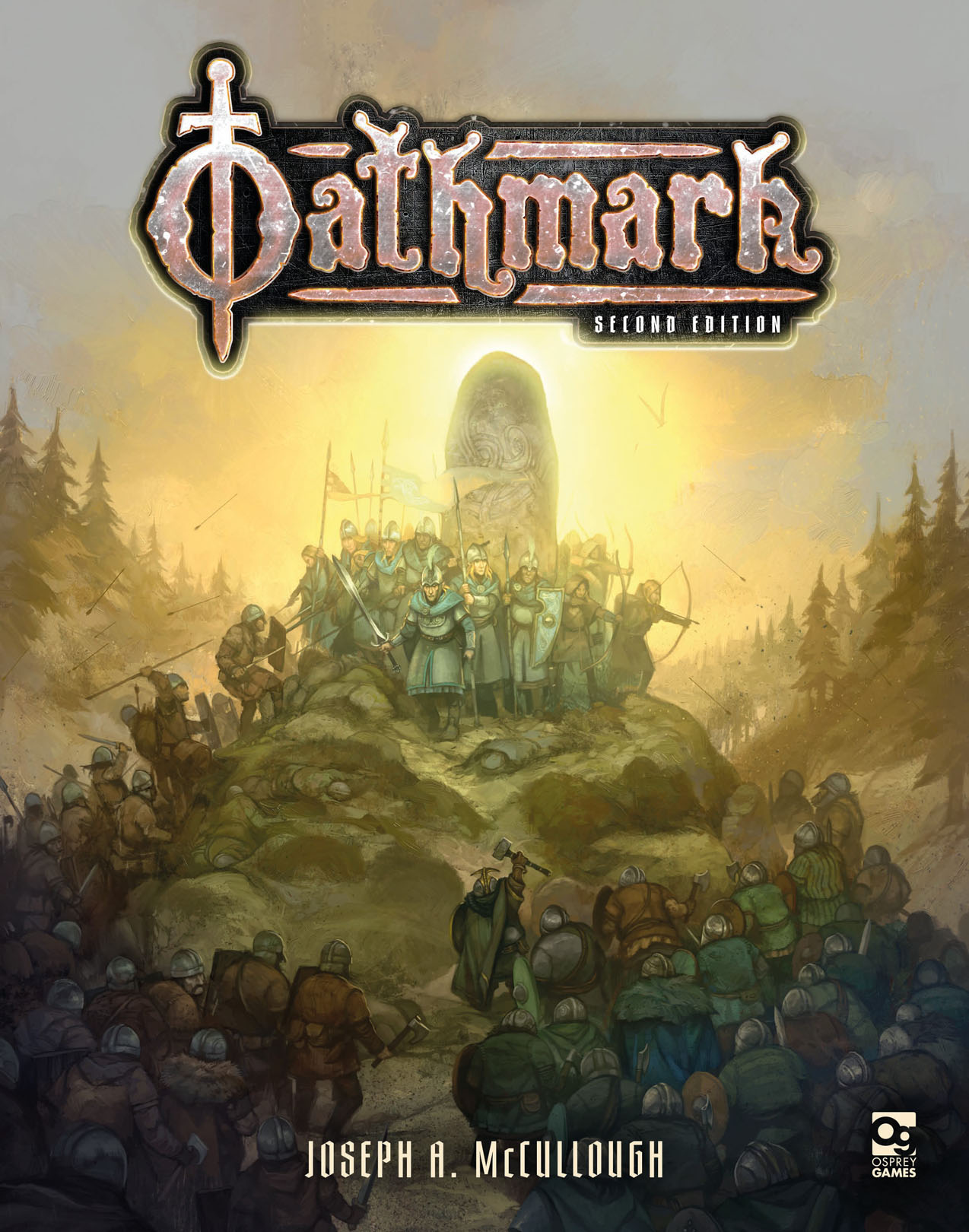
Seven years after the first edition, Joseph A. McCullough returns to the Marches. Oathmark: Second Edition, Battles of the Lost Age was released by Osprey Games on 27 August 2026. If the name McCullough sounds familiar, it should. We have covered a good part of his work on this blog, from Frostgrave and Stargrave to The Silver Bayonet. Oathmark is the odd one out in that list, because it is not a skirmish game. It is a mass battle game, and it comes with a full range of plastic miniatures behind it.
Oathmark has always been a co-production between Osprey and North Star Military Figures. Osprey publishes the rules, North Star produces the miniatures. We have reviewed several of those plastic kits over the years, and they have left a lasting impression. The Oathmark Skeleton Infantry are, in my opinion, among the best models in the whole range. The Goblin Infantry have found a second life in Dino's Sword & Sorcery Adventures. You can find all of our coverage under the Oathmark tag.
I have to be honest here. I never played the first edition. What always caught my attention was the miniature range, and the fact that Michael Anderson was involved in sculpting it. The kits are modular, come with lots of weapon options and offer good to very good value for money. The undead in particular have been tempting me for years. A classic High Fantasy army of skeletons, put together from affordable plastic boxes, sounds like exactly the kind of project I would enjoy. The new edition was the perfect excuse to finally take a closer look at the rules themselves.
What is it about?
Oathmark is set in the Marches, a land that once belonged to two great empires. Each of them ruled almost half the continent, and each contained settlements of every people: elves, dwarves, humans, goblins and orcs. That golden age ended with the War of Lost Fathers, a conflict so destructive that both empires simply fell apart. There was no peace treaty. The war just burnt out because nobody was left to fight. Much of the knowledge of that time was lost, which is why some call the current era the Lost Age.
Now new kingdoms are growing like weeds amongst the ruins. They are not divided along racial lines. A dwarf king may rule over human towns, an elf queen may count goblin wolf riders among her subjects. What binds these realms together are oathmarks, physical signs of loyalty such as standing stones, statues or runic markers. The game takes its name from them, and the idea of a mixed kingdom held together by sworn loyalty runs through the entire book.
This is the big difference to most fantasy battle games. You do not just pick a faction and build an army list. You create a kingdom, and your army is drawn from whatever lands that kingdom holds. Every battle you fight changes the shape of your realm, and over time the list of battles becomes the history of your kingdom.
First Impression
The core rules of the second edition of Oathmark come as a 224 page hardback that retails for 25 GBP, while the ebook costs 17.50 GBP. The hardback makes a very good impression. Binding and print quality are excellent, and the book feels like a product that can easily hold its own against the big players in the market. It has strong classic fantasy vibes, both in tone and in presentation.
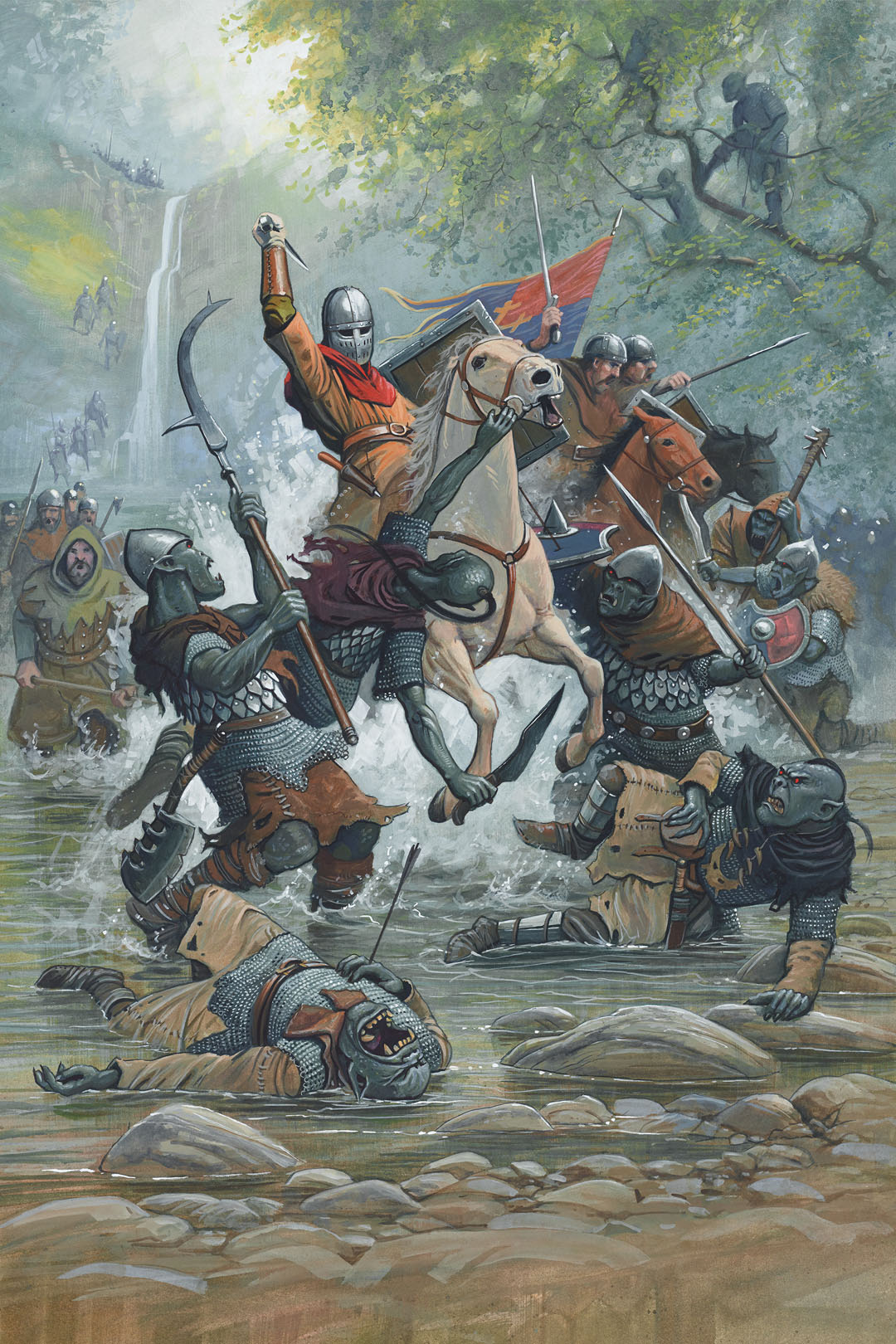
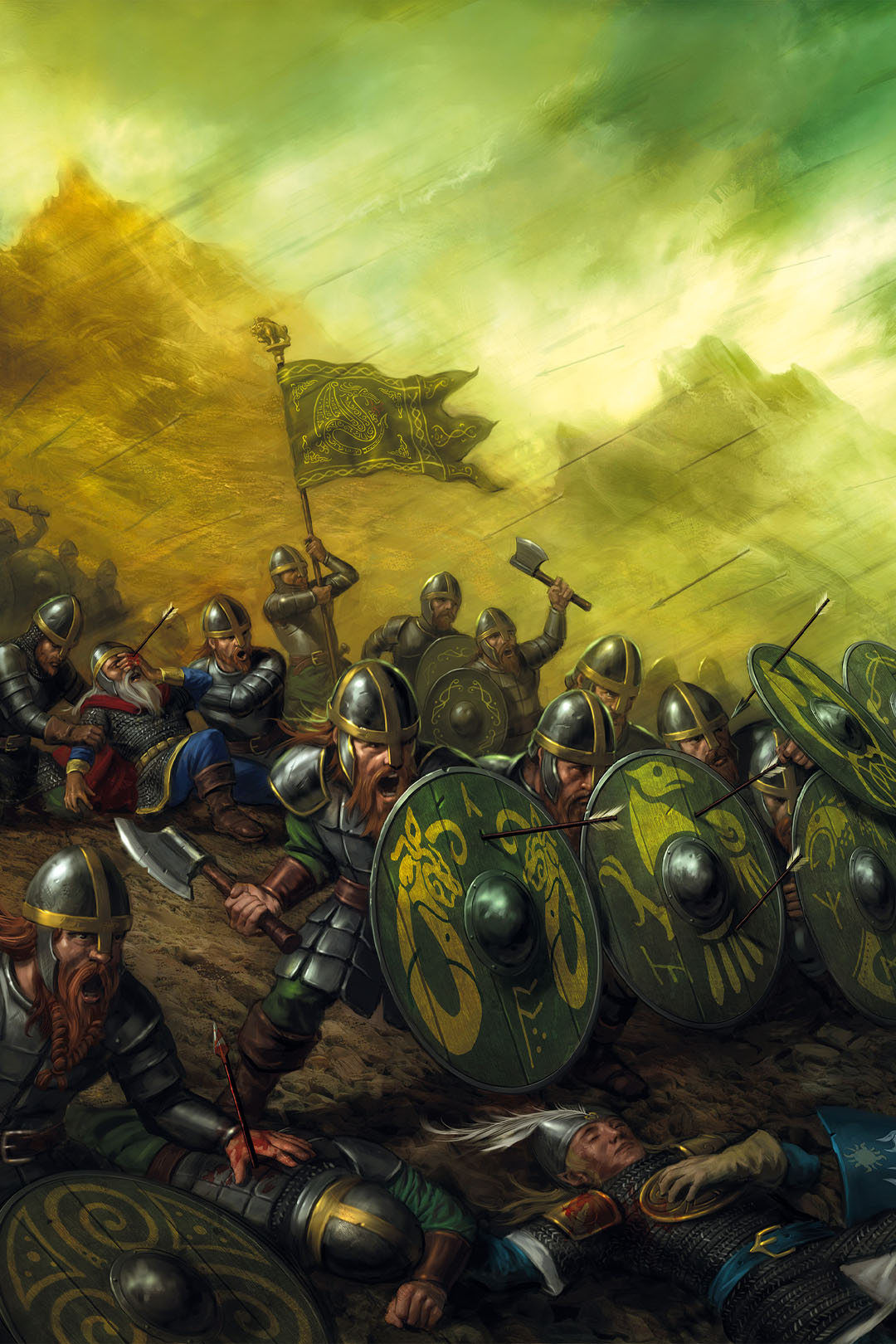
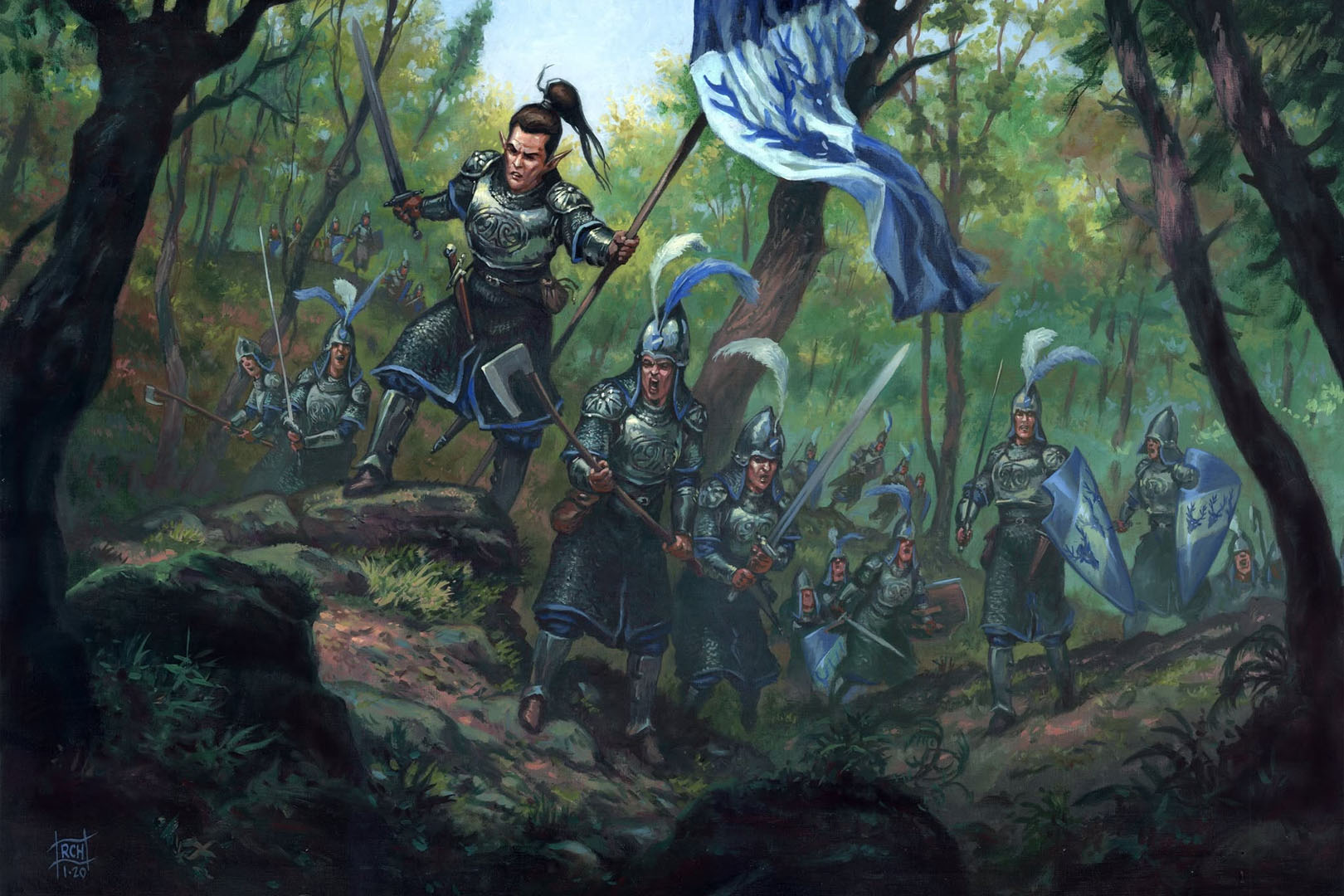
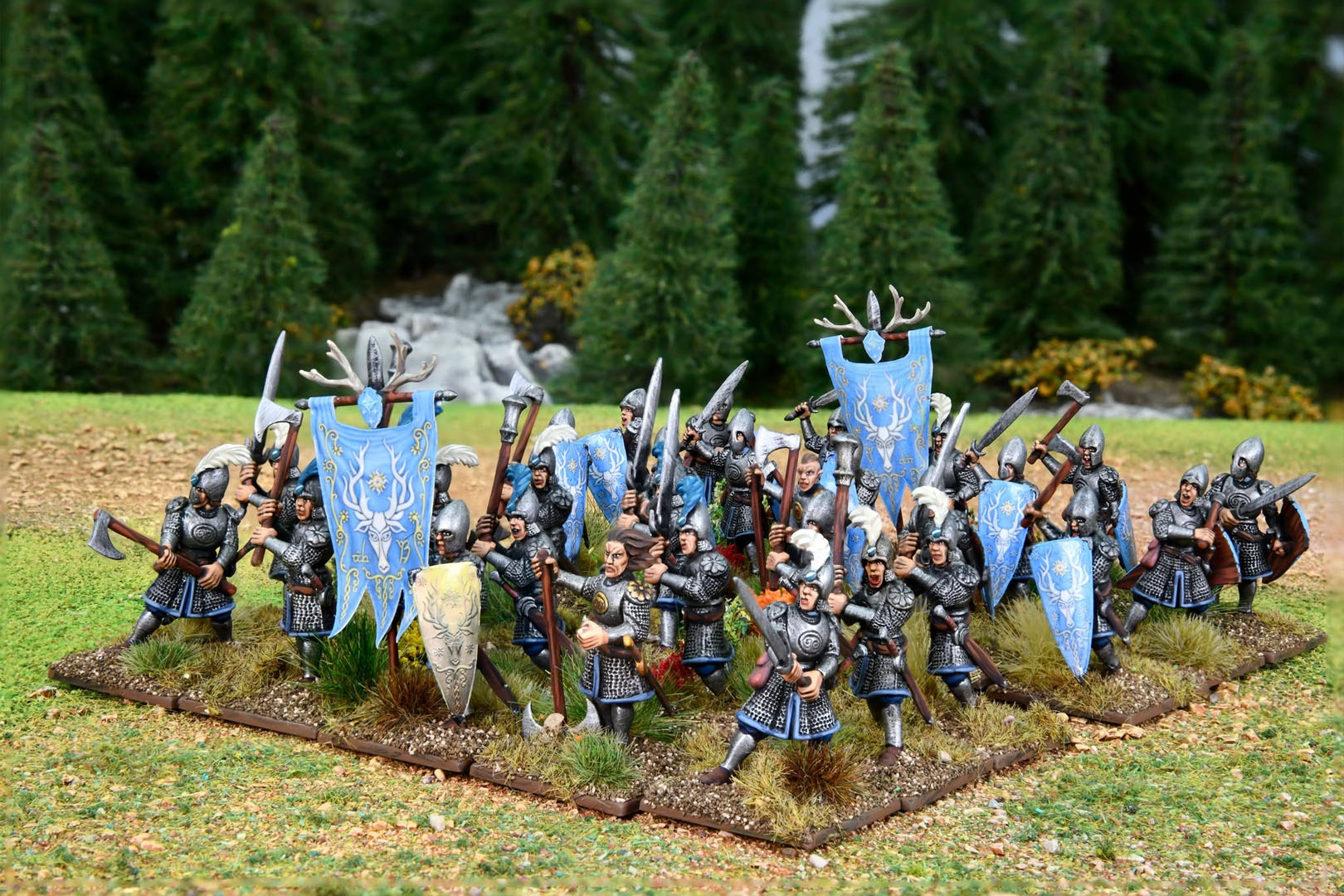
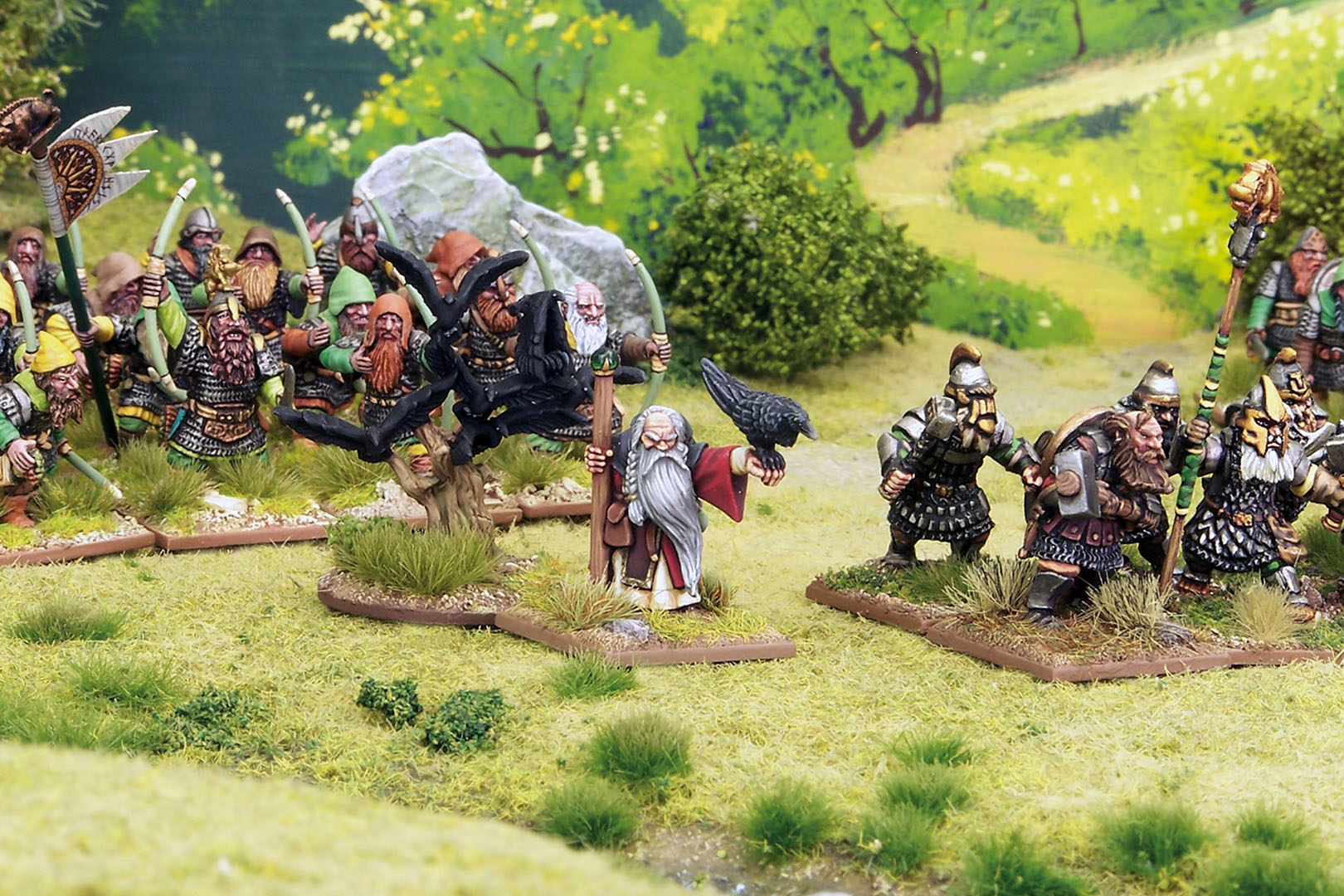
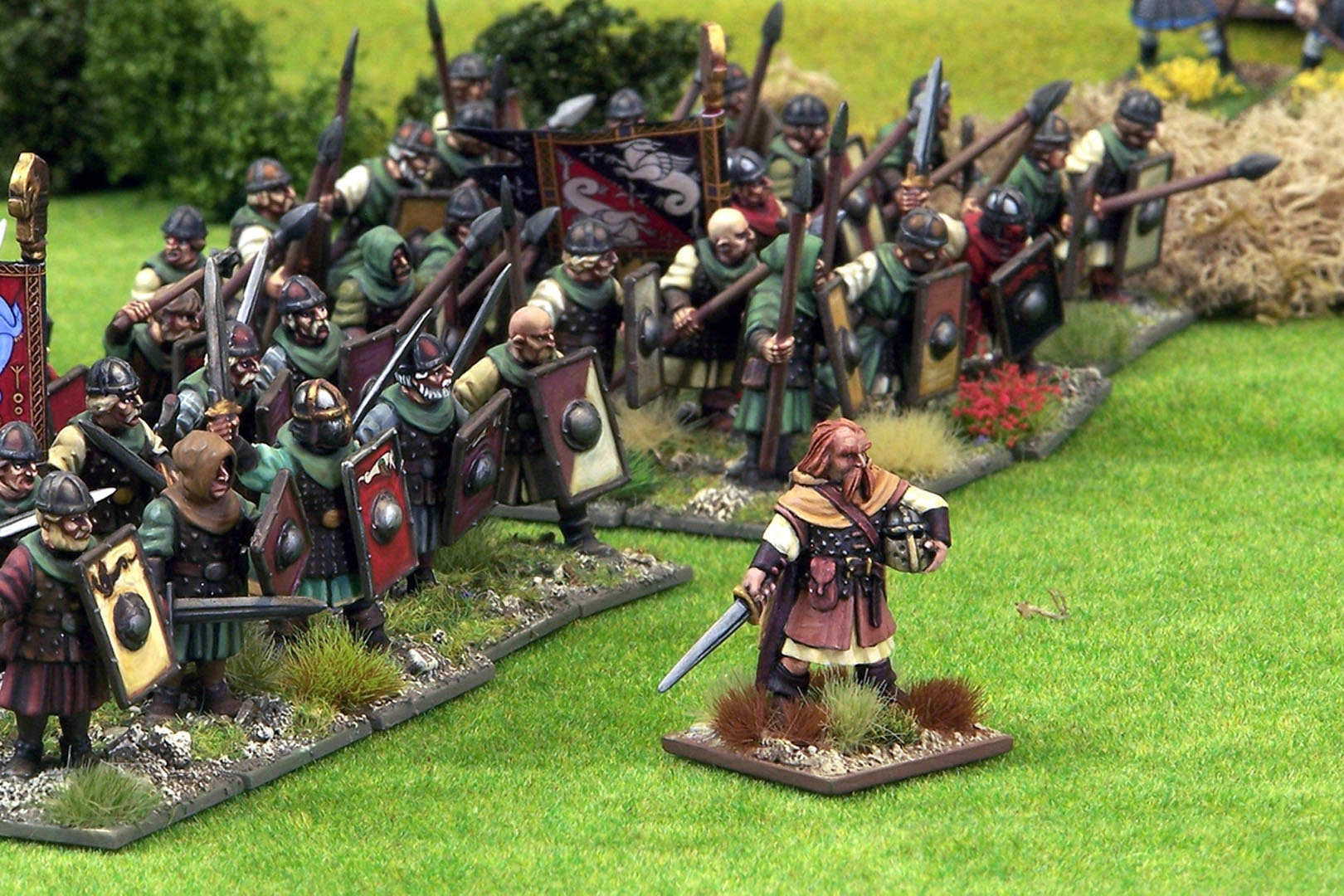
The book follows the first edition closely in its visual identity, and some of the illustrations from 2019 make a return. That is not a problem at all, because those were very good pieces of art to begin with. The credits list Jon Hodgson, Ralph Horsley, Alan Lathwell, Gloria Notarangelo, Jan Pospíšil and Joel Thomas as illustrators. The miniature photography comes from Kev Dallimore and Wargames Illustrated, and it shows the North Star range in well dressed scenic shots, often as small excerpts from larger battles. If I had to find something to complain about, it would be the lack of big double page spreads of full armies lined up for battle, the kind we all know from the Herohammer days of Warhammer. But that is complaining on a very high level.
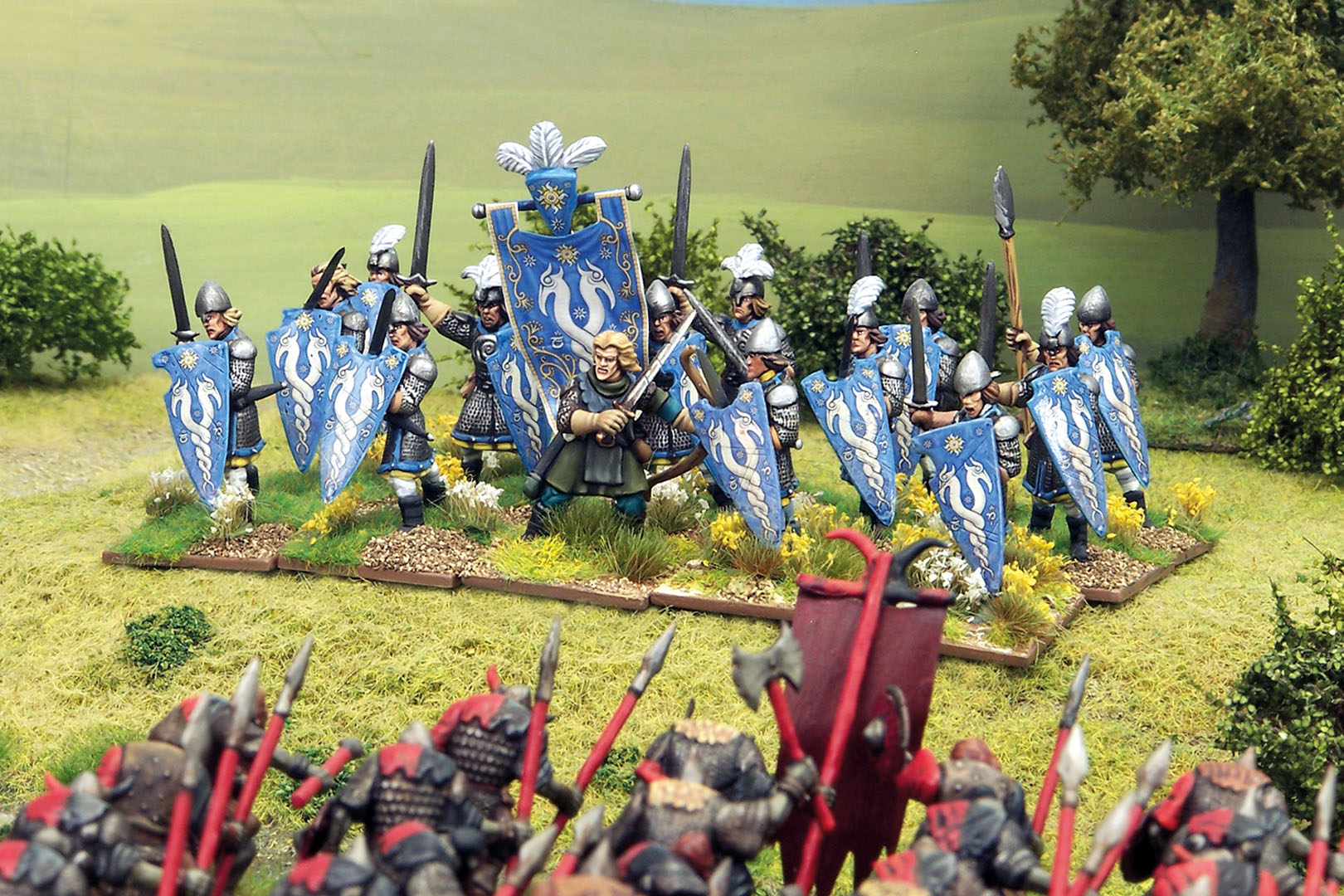
The structure of the book has changed compared to the first edition. The kingdom and campaign rules now come first, before the battle rules. That is a clear statement of intent. The chapters are:
- Introduction and The Lay of the Marches
- The Basics
- Creating a Kingdom
- The Campaign
- Fighting Battles
- Figure Lists
- Scenarios
- Appendix A: Attributes
- Appendix B: Spells
- Appendix C: Magic Items
- Appendix D: Legendary Heroes
At the back you find the Kingdom Sheet, the Army Roster, a Legendary Heroes Sheet and a quick reference sheet. The Lay of the Marches is a new short chapter that tells the history of the setting in the voice of a chronicler. It is a nice touch, and it fits the overall theme of a game that wants you to write your own history.
How does it play?
Building a kingdom
The heart of Oathmark is the Kingdom Sheet. It shows six concentric circles. The innermost circle is your capital, the next ring contains two territories, the one after that three, and so on. The outermost ring, Region 6, represents the borderlands of your realm. This is not a map in the strict sense, but rather a picture of how close each territory is to the seat of power.
First you choose your capital. There are six options: Dwarf City, Elf City, Human City, Goblin City, Orc City or Necropolis. Then you fill the surrounding regions with terrain. Each terrain type gives you access to certain units. Forges give dwarves access to warriors and linebreakers, Plains give humans their cavalry, Rivers bring trolls and a Dark Forest lets you field giant spiders or wulvers. Every terrain has a rarity value, and the further away from your capital a territory is, the rarer the terrain you may place there. Terrain from your own capital's list is easier to get than terrain from other lists.
This is what attracted me to Oathmark in the first place. If you want allies from another people, you need the lands to recruit them. An elf kingdom that wants goblin wolf riders has to hold Dark Hills. The examples in the book show this nicely. Lydia builds an elf kingdom and then adds goblin wolf riders, simply because she always wanted to paint some. Suddenly there is a story behind it: goblins carrying elvish shields, serving an elf queen. It is a mechanic that pulls the game away from a competitive meta and towards something with a roleplaying flavour. Your army has a background, and that background comes from the rules, not just from your imagination.
The book offers three starting levels. Beginners fill Regions 1 and 2, which means three territories. Moderate players go up to Region 3, experts up to Region 4. Small kingdoms mean small armies with few unit types, and that is intended. You grow your kingdom, and with it your collection. There are some limits when mustering an army. Territories without a fixed number allow four units of a type if they come from the capital and two from any other territory, and no single figure may cost more than 20% of your army's points.
McCullough also adds a chapter called Beyond the Kingdom Rules. It encourages you to design heraldry, draw maps, keep a chronicle or even create a family tree for your royal house. None of this has any effect on the game. It is there because it is fun, and I like that the book openly treats it as part of the hobby.
The campaign
Oathmark is played in campaign turns. Each one represents roughly a year in the history of your kingdom and usually contains one battle. You find an opponent, roll for the battle type, determine the points value, muster your army, choose a scenario, fight the battle and then modify your kingdom according to the result.
The battle types range from Exploratory Encounters, where both sides can gain new territory, to Deep Strikes against the heart of an enemy kingdom. Winning can mean occupying an enemy territory. Units drawn from an occupied territory suffer a penalty to their activation, so the more of your kingdom is occupied, the weaker your armies become. If your capital falls, your kingdom is finished.
The borderlands of Region 6 are a nice detail. Units recruited from there gain the Unreliable attribute. They cannot benefit from Command, and if they roll all ones on an activation, they switch sides. That is exactly how loyalty on the fringe of a realm should feel.
The points value can be agreed or rolled on a table that goes from 500 points for a minor skirmish up to 6,000 points for an epic battle. There is also an optional table for uneven battles, which gives the attacker between 5% fewer and 5% more points. A nice feature is that players do not need to play the same number of games. Somebody who plays twice a month can still face a friend who plays four times, because the size of a battle is not tied to the size of a kingdom.
Units, activation and actions
Infantry are based on 25mm squares and organised in ranks of five, up to twenty figures per unit. Cavalry stand on 25 x 50mm bases, large creatures on 50mm squares and the biggest monsters, chariots and artillery on 50 x 100mm. If your collection is based differently, a movement tray with the right footprint solves the problem. Distances are given in inches, and the game uses ten-sided dice exclusively.
The turn starts with an initiative roll. Then players alternate activating one unit at a time. To activate, you roll two dice against the unit's Activation stat. If either die beats it, the unit can take two actions. If both fail, it can only take a simple action, such as a move that does not end in combat. I welcome this approach. In mass battle games I always find it a bit sobering to sit and watch while the entire enemy army acts. It makes the first turn and lines of sight very powerful, because one side can potentially deal a huge amount of damage at once. With alternating activations, you are always involved, and the failed activation roll adds the friction of command that a battle of this scale should have.
Commanders help with this. A figure with Command (X) gives one extra activation die to all units within 6". If the commander's unit activates, you can try to activate X further units nearby at the same time. That makes positioning your generals an important part of the game.
Combat, the Champion Die and morale
Combat is simple to learn. Each unit rolls one Combat Die per figure in the front rank, to a maximum of five. The target number is the enemy's Defence minus your own Fight. Every full rank behind the first lowers the target number by one, so deep blocks really matter. Rolling the target number scores one hit, beating it by five scores two, beating it by ten scores three. Shields can be used to discard dice on both sides, which turns defensive units into anchors of the battle line.
The Champion Die is my favourite detail. Units with a champion, and all monsters, replace one of their Combat Dice with a differently coloured die. If it hits, it scores one extra hit. On a roll of ten, you can choose to direct those hits at the enemy officer or character. It gives a unit a real edge without the need to micromanage small heroes on the table. McCullough uses special dice like this in his other games as well, and it works very well here.
After taking casualties, a unit tests its morale. If it fails, it becomes Disordered. If a Disordered unit fails again, it breaks and leaves the field. Breaking units trigger Cascading Panic in friendly units within 8". The new Expected to Run attribute refines this nicely. Units that everybody expects to flee anyway, like militia, goblin slaves or wolves, no longer spread panic through the rest of the army. Only units with the same attribute have to test. It is a clever way to separate the morale of an army's core from its auxiliaries.
Peoples, monsters and magic
Each people now has its own character on the table. Dwarves are Children of Stone and shrug off Horrific creatures, Stone Gaze and some of the effects of dragon fire. Humans have Haste and can make a free half move after a manoeuvre. Orcs have Wild Charge, goblins Charge. The elves receive Eldest, which protects them against spells, but also means that every non-elf unit in their army counts as Expected to Run. That might look like a penalty for mixed armies at first, but I think it fits perfectly. It underlines the arrogance of the elves and how little they expect from those who are not of their kind.
The bestiary is full of creatures from European folklore rather than standard fantasy fare. Indrik, eachy, barghest, buggane, knucker, lindwurm and wulver sit next to trolls, giants and dragons. Monsters always fight alone and always roll the Champion Die. Spellcasters choose a number of spells equal to their level plus two from a general list and their own racial list. Magic items are rare, each army may only have one of each, and every character may carry only one.


Strange and Catastrophic Events
If a player rolls a double on initiative, a Strange Event happens. A sniper may kill an enemy officer, a hornet's nest may throw one of your units into disorder or a new hero may be born in the ranks. If both players roll the same double, a Catastrophic Event follows, from a meteor shower to two dragons fighting each other in the middle of the battlefield. These rules are optional, but I would always use them. They remind me of fumbled command rolls in Black Powder or the omens in Mortal Gods. I like it when a rulebook takes the unpredictable into account. You cannot rely on unit profiles alone, you have to keep a little reserve for the unexpected.
Legendary Heroes and scenarios
Any character with Champion, Command or Spellcaster can become a legendary hero with a Heroic Trait. These heroes gain experience points from battle to battle, can learn new traits and can be wounded, captured or killed. Combined with the kingdom rules, this is where the campaign really comes alive.
The book contains eight scenarios, from a classic Pitched Battle to fights over oathmarks, an ancient road, a river crossing, a storm that grows worse every turn or a ruined elven tower that throws lightning at the troops. They are short and simple, and McCullough explicitly invites you to write your own scenarios for your kingdom.
What has changed since the first edition?
The second edition is not a reprint with a new cover. The kingdom sheet now has six rings instead of five, rarity goes up to 6, and the most powerful creatures such as dragons or lindwurms can no longer be taken when you start a kingdom. Goblins and orcs now have separate lists, and the Necropolis joins as a sixth capital. New are the three starting levels, the random points table, the Exploratory Encounter battle type and the rule that units from the borderlands are Unreliable.
On the table, the Champion Die and Death of an Officer are now core rules rather than advanced ones. The move into combat follows a clear five step procedure with an extra box for edge cases. Shooting has minimum ranges and a penalty for targets at 12" or more. Artillery no longer rolls the Champion Die and has become considerably more expensive. Spellcasters know far more spells than before, and most casting numbers have dropped. Monsters have become less reliable with higher activation values, and the number of monsters a single territory gives you has been reduced. The scenario section grows from five to eight.
The bigger news concerns the supplements. Oathbreakers brought the undead and the rules for legendary heroes to the game. Both are now part of the core book, including revenants, skeletons, ghouls, wraiths, vampires, necromancers and even the barrow worm. Bane of Kings has been partly absorbed. The chariots for all peoples, the wainwright territories and the new general spells are in the core book now, and the chariots have even become cheaper. Not included are the special formations like Phalanx or Shield Wall, the animated stone constructs, the kingdom events and the military expeditions. Battlesworn has not been integrated at all. Battle honours for elite units, engineers and river boats are not (yet?) part of the second edition.
So, do you still need the old books? If you only want the undead, the answer is no. If you want the narrative extras like kingdom events, formations or the campaigns from the military expeditions, the old supplements remain usable. Some terms and points values have changed though, so expect to do a little conversion work.
Where does Oathmark stand?
Fantasy mass battle is a crowded field. Kings of War from Mantic Games is probably the most dominant of the alternatives to Warhammer, thanks to its well balanced and lean approach. Warhammer: The Old World from Games Workshop will always find enthusiastic players among those who grew up with Warhammer Fantasy Battle. Osprey has its own Dragon Rampant, which works on a smaller scale with a more abstract approach. And with Age of Fantasy, OnePageRules offers a free and universal challenger.
For me, one point is important. Oathmark is not a budget replacement for Warhammer miniatures. It is a solid and independent range of plastic fantasy miniatures for a game that sits well above skirmish size and above what you would call platoon scale. And the rulebook is not just a vehicle to sell those miniatures. It fully earns its place, not least because of its world building framework. Compared directly to Kings of War, Oathmark is less competitive. It is the game you play with a regular opponent or a small group, over months, with a kingdom that grows and suffers along the way.
The love for mass battle games does not go away just because you are a wargaming dad. What gets in the way is the workload of painting a big army, plus keeping up with updates, errata and, let us be honest, prices. Oathmark helps here, because you start small and grow with your kingdom. And if you already have a Warhammer or Kings of War army on the shelf, you can try Oathmark with what you already own, thanks to movement trays.


What's next?
For the first edition of Oathmark there were several supplements, and we've tackled their impact on the second edition briefly under What has changed since the first edition. I assume we will see further supplements, maybe an updated compendium of the things that didn't make it into the new core rules. It depends a bit on the success of the second edition as well as the capacities of both Osprey and McCullough.
Conclusion
Oathmark: Second Edition is a confident revision of a game that was already good. The core of the system remains the same, but McCullough has smoothed out many rough edges, clarified the rules where the first edition left room for discussion and brought the undead and legendary heroes into the core book. The hardback is well made, beautifully illustrated and full of classic fantasy atmosphere.
What sets Oathmark apart is the kingdom. Recruiting units through the lands you hold, losing territories to occupation and watching your realm change from battle to battle turns a mass battle game into something with a strong narrative and almost a roleplaying flavour. Add alternating activations, the Champion Die and a good dose of the unexpected through Strange and Catastrophic Events, and you have a ruleset that is easy to learn and full of character.
If you are looking for a tightly balanced tournament game, Kings of War will probably serve you better. If you want to build a fantasy realm, tell its story and fight its wars with friends, Oathmark is one of the best choices out there. And with North Star's plastic kits, that realm does not even have to break the bank. The undead have been calling me for a while, and the second edition has only made that call louder. In a follow-up article I'll maybe show what an Oathmark army looks like in practice, using an undead kingdom as an example. From the choice of capital and territories to the plastic kits needed to field it.
Oathmark - Battles of the Lost Age is a brand by Northstar Miniatures and Osprey Games.
The reviewed product item was provided by the manufacturer.
Enjoy this article?
Like us on Facebook

Follow me on Instagram

Categories
- battle report (5)
- events (213)
- fantasy (614)
- General (162)
- historical (651)
- Little Big Adventures (4)
- offtopic (5)
- reviews (557)
- science fiction (716)
- showroom (108)
- terrain (120)
- work-in-progress (424)









Leave a Reply