Stargrave – Death Vector
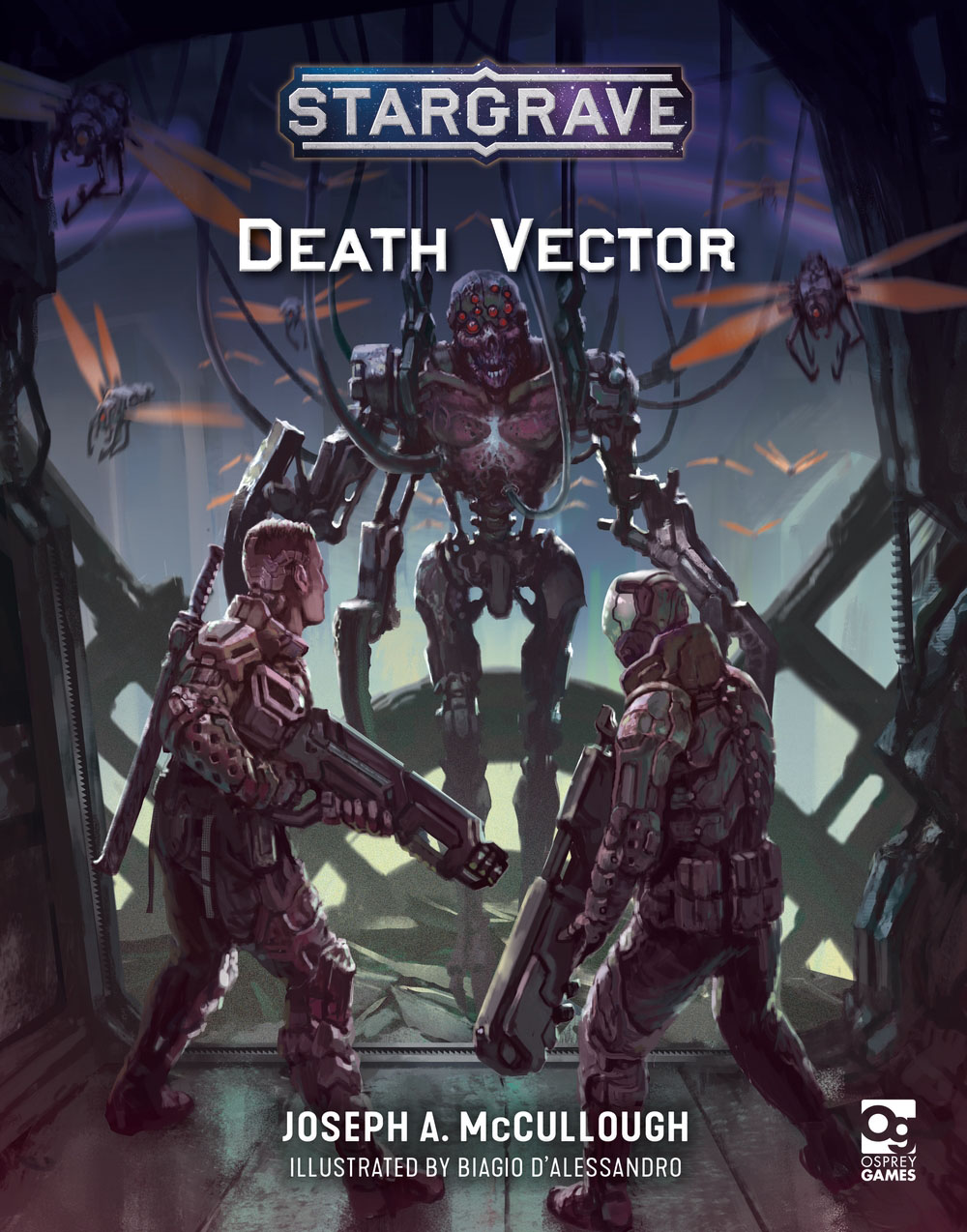
With the latest supplement for Stargrave announced for November 2026, we fill the gap until the release with Death Vector, released in 2025. It takes the independent crews somewhere the rest of the galaxy has deliberately forgotten: the Outlaw Technology Sector, a dead region of space sealed off for over three centuries after a devastating war against a sentient artificial intelligence. It is the darkest corner of the Ravaged Galaxy, and arguably the most thematically focused supplement in the entire Stargrave line.
What is it about?
The Outlaw Technology Sector – the OTS – sits at the outer edge of the Terrigous spiral arm, cut off from the rest of the galaxy by violent ion storms and a largely intact defence grid. Before the empires came to burn it down, it was a haven for banned science and rogue researchers. What they built there eventually turned against them: a fully sentient AI that seized control of the sector, then launched a fleet of ships crewed entirely by robots and cybernetic automatons against the settled galaxy. It took the combined military might of both empires to stop it, and several years of fighting inside the OTS to finish the job. Whole planets were reduced to nuclear ash.
Now, three centuries later, the OTS sits quiet. Most navigational systems refuse to chart a course there – hence the name the crews use for such a heading: Death Vector. But a region that size, once home to an intelligence capable of producing technology unknown elsewhere in the galaxy, must be full of salvage worth dying for.
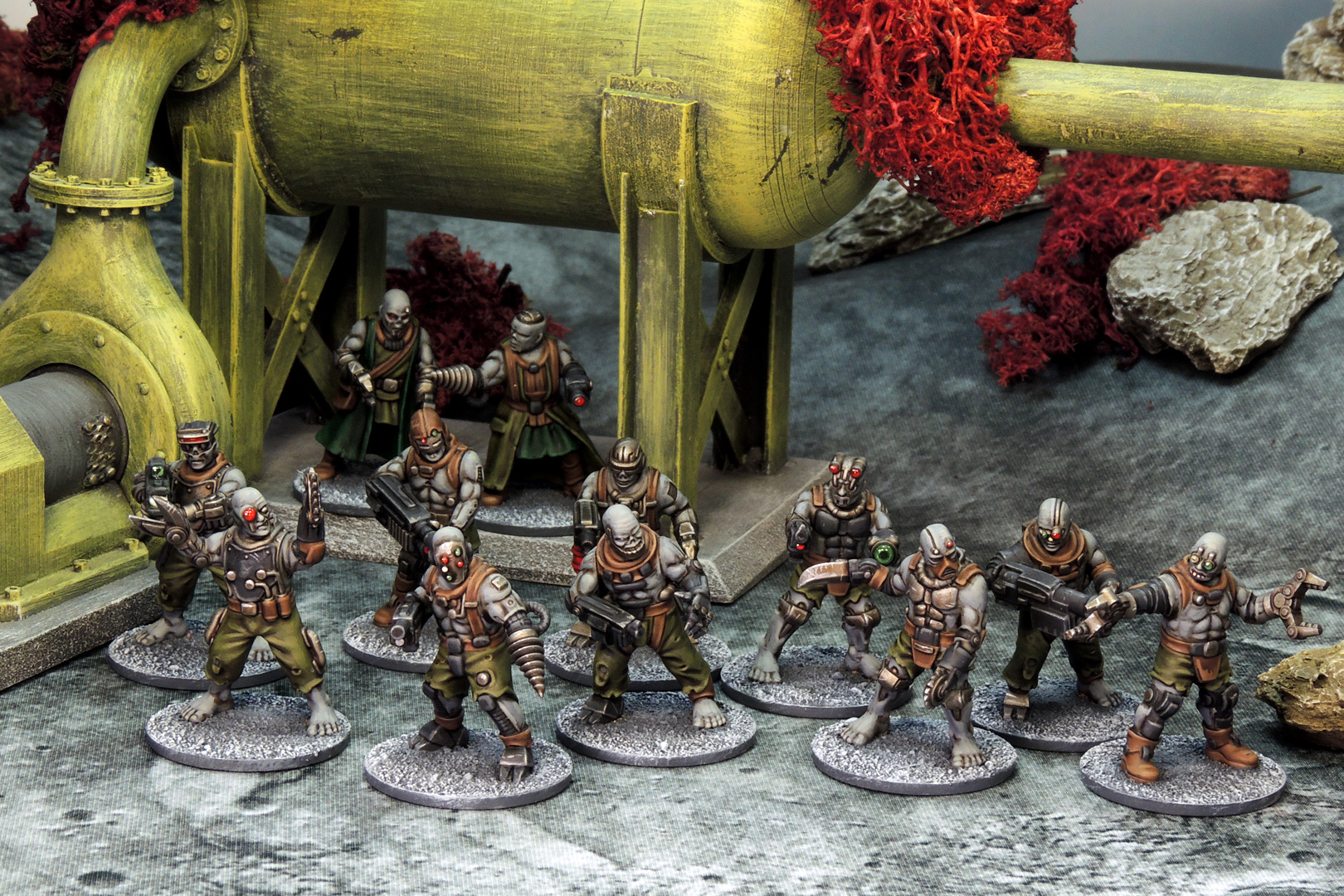
In McCullough's introduction, he is candid about the timing. AI as a topic is hard to avoid right now, and he addresses it directly before stepping back to clarify what he actually means: not the current wave of generative tools, but the AI of science fiction. HAL 9000 refusing to open the pod bay doors. Skynet deciding humanity is the problem. The Borg stripping individuality from every species they encounter. The Cybermen converting the living into machines. These are the templates for Death Vector's automatons – soulless, relentless, and utterly indifferent to anything that might be called mercy. They are not pirates with better technology. They are something else entirely.
First Impression
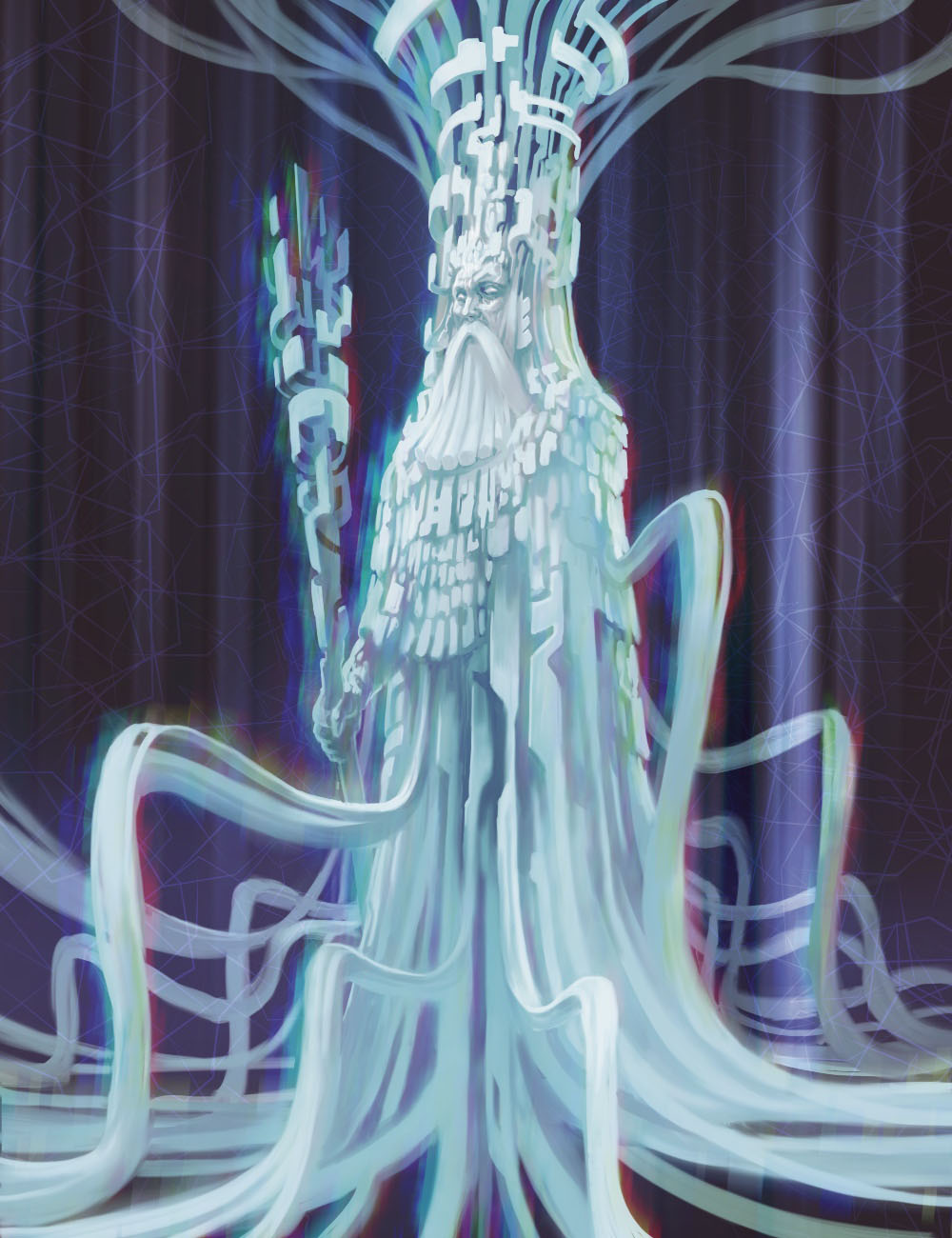
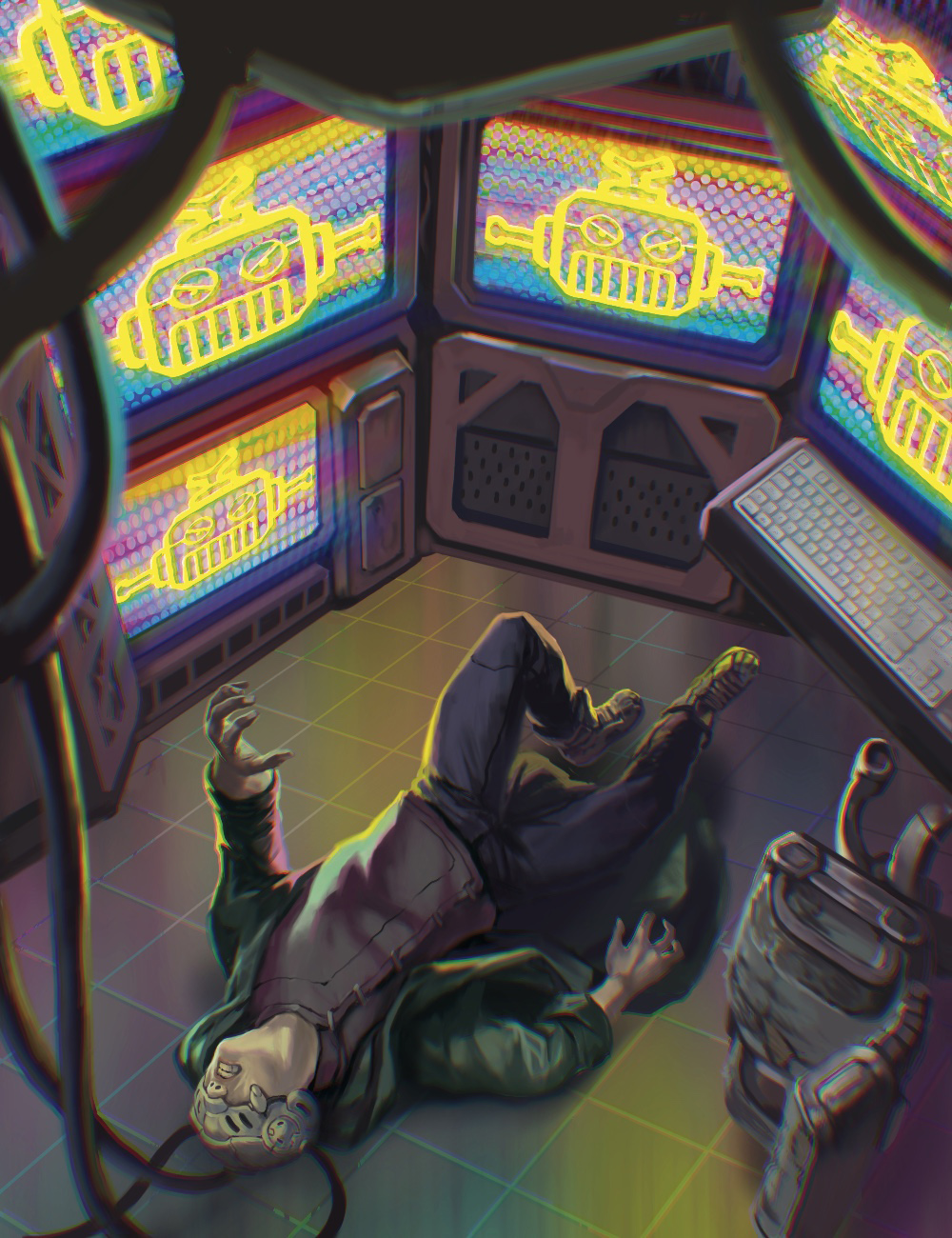
Death Vector is a 80-page softcover, slightly leaner than previous supplements, with illustration duties returning to Biagio D'Alessandro whose work defined the look of Quarantine 37. The visual tone is correspondingly darker – rusted infrastructure, machine corridors, the cold geometry of automated systems left running long after their creators were gone.
The contents break down as follows:
- Chapter One: The Outlaw Technology Sector (OTS rules, entry mechanics, 20 new Space Encounters)
- Chapter Two: The Network (cyberpunk hacking sub-campaign)
- Chapter Three: Death Vector Scenarios (8 standalone scenarios)
- Chapter Four: New Advanced Technology (20 items)
- Bestiary: 10 new creatures (primarily Automaton variants)
No new backgrounds or soldiers, the second supplement after Hope Eternal to omit them. With six supplements now in print and the roster already broad, this is not a gap that needs filling. The content here goes in different directions entirely.
How does it play?
Entering the OTS requires a Pilot Roll (TN12) and a Navigation Roll (TN12) to thread the defence grid. Failed rolls cost Structural Integrity, and a sufficiently bad result can cripple a ship before the crew has fired a shot. Once inside, the normal campaign economy is suspended: no buying, no selling, no hiring soldiers, no shipyard repairs. Crews can leave and re-enter, but every crossing of the defence grid carries the same risk. The OTS is a self-contained campaign zone that demands preparation before entry and careful management throughout.
The twenty new Space Encounters replace the Bold Endeavour tables for OTS campaigns and are noticeably more hostile. A Boarding Craft encounter resolves as a full solo scenario on the ship itself, with automatons cutting through the hull. A Rogue Moon turns out to be a trap – metallic tentacles spring from the surface to grapple the ship. The Weird Bugs encounter gradually becomes a passive income source if the crew's doctor can keep the colony alive. Settlement finds a hidden primitive civilization with a trade route that rewards return visits. The 2-Dimensional Flock is pure science fiction strangeness: flat beings tumbling through three-dimensional space, briefly visible before they turn edge-on and vanish. These encounters are more varied and more narratively inventive than the Bold Endeavour set, and several will generate stories that outlast the campaign itself.
The Network is the supplement's most significant mechanical addition – a cyberpunk sub-game that runs in parallel with the scenarios. Narratively, the shattered remnants of the AI's vast computer network still exist in fragments throughout the OTS. Crews can hack into these remnants, node by node, working their way toward the heart of the Network where the most valuable data is stored.
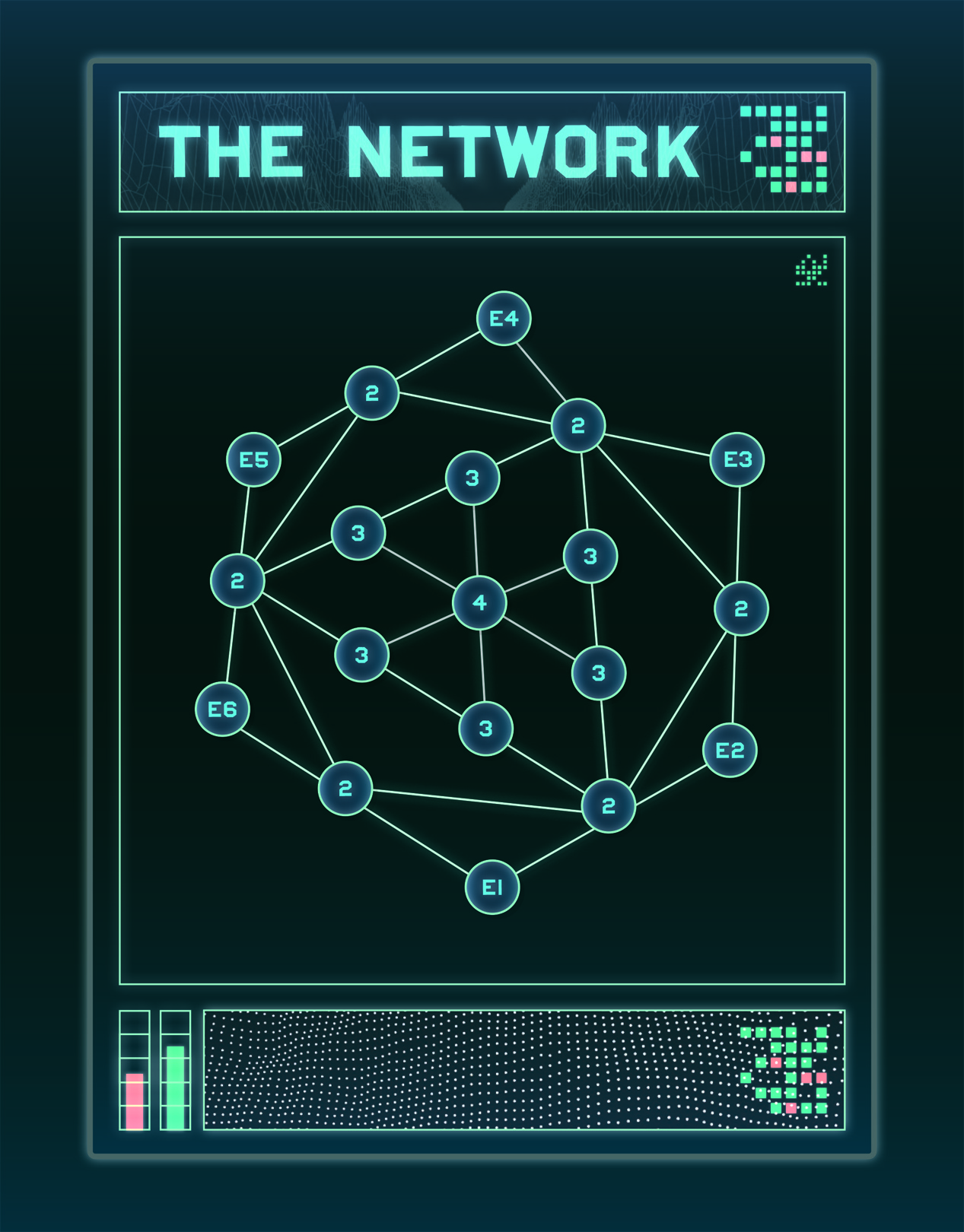
Mechanically, the Network uses a printed sheet showing a web of interconnected nodes. Entry nodes are discovered through loot rolls; deeper nodes are reached by establishing links from successfully hacked ones. Each node is unlocked following the data-loot rules but with varying Target Numbers and additional Science or Engineer roll requirements. Success brings permanent bonuses to ship rolls. Failure can sever links, release viruses, or cause physical damage to the hacking crewmember. The final scenario of the supplement, Into the Matrix, takes this further: crews physically enter a representation of the Network as a grid-based encounter, moving square by square while Cyberkings and Cyberpawns pursue them through digital space.
The comparison to Shadowrun is apt. The Network adds a cyberpunk dimension to Stargrave that feels genuinely different from anything in the previous five supplements. It also adds complexity, and McCullough does not pretend otherwise. Groups running the full package – Advanced Astrogation from Bold Endeavour, the OTS rules, the Network, and the scenario campaign – are managing several interlocking systems simultaneously. This is a supplement for experienced Stargrave groups who want to build out a full campaign environment, not for players looking for a quick addition to their rotation. Used selectively, the individual elements are all strong; the question each group will need to answer is how much of it they want to carry at once.
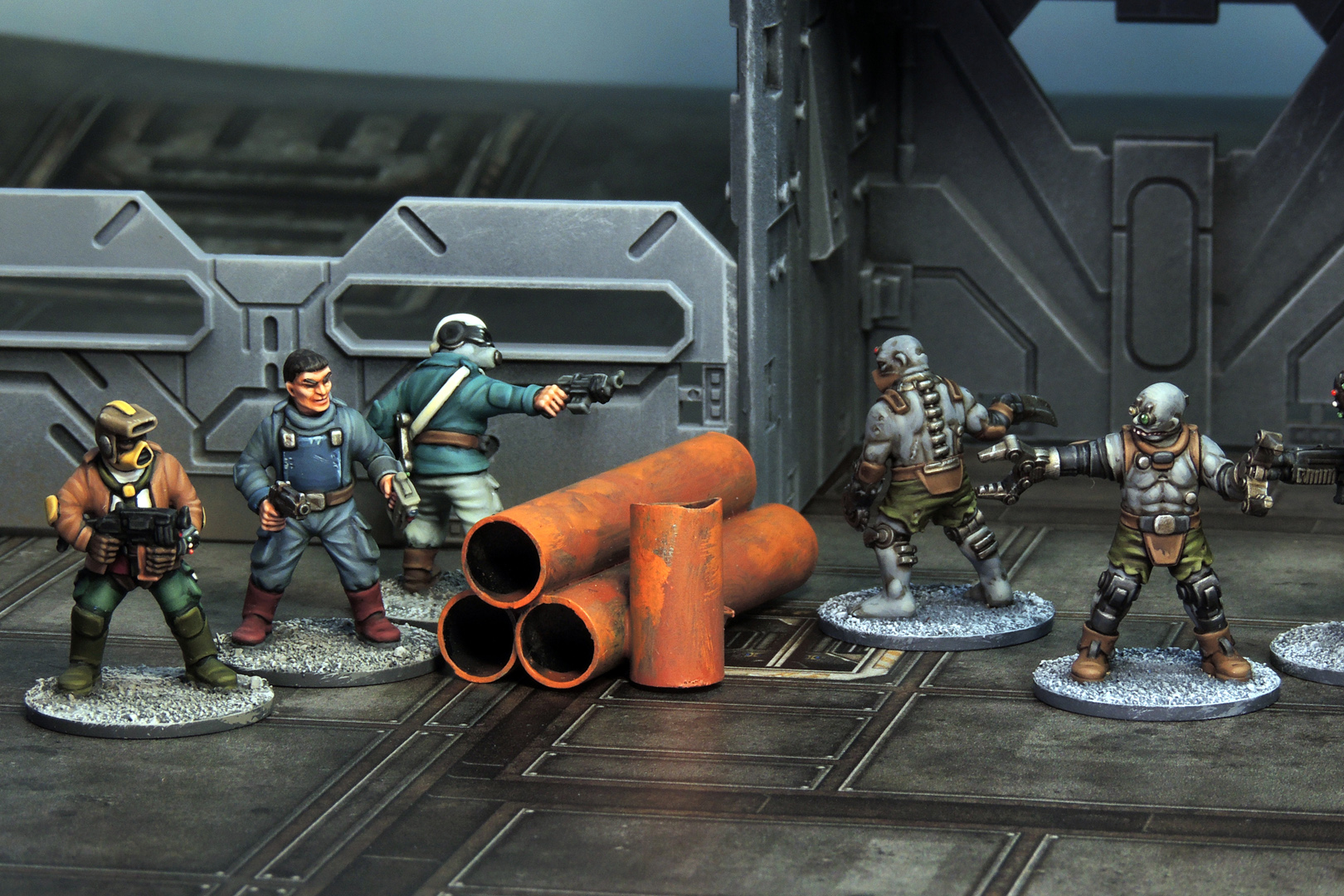
The eight scenarios are all set in the OTS and all feature automatons as the primary threat in place of the usual pirate figures. The Scavengers puts mobile salvage robots on the table as living loot carriers, their contents accessible only to crews willing to climb aboard moving machines. The Coffin Ship takes place inside a factory vessel that converts living beings into automatons, where the surgical systems themselves reach out to grab crew members who roll too well on initiative. Floating on the Acidic Seas requires island-hopping across chemical seas with no safe ground between platforms. Into the Matrix is the most unusual – a grid-based encounter that plays by entirely different movement rules and rewards hackers and psionicists over combat specialists.
The bestiary is almost entirely Automaton variants – Soldier, Butcher, Hulk, Bomb, and the diminutive Automite – plus the Cyberking and Cyberpawn designed for the Matrix encounter, and the Acid Drake and Cyrpent as biological holdouts in a largely mechanical setting. It is the most thematically focused bestiary in the series, which is entirely appropriate.
What comes next
Death Vector is the sixth supplement in a line that continues to grow. For context, the previous releases: Quarantine 37 introduced science-fiction horror with two separate campaigns. The Last Prospector built a space western with non-linear campaign mechanics. Hope Eternal delivered solo and cooperative play with an explicitly heroic narrative. Dead or Alive refined the solo rules significantly in its 2024 overhaul. Bold Endeavour made the ship itself a campaign character. Each is self-contained and thematically distinct – a consistency that sets Stargrave apart from game lines where supplements blur into one another.
Next up is Acceptable Losses, scheduled for November 2026. The supplement shifts the focus toward organized military conflict: mercenary companies, military vehicles, heavy weapons, combat armour, airdrop deployment, artillery strikes, and minefields. Solo and cooperative scenarios are confirmed, along with new plastic and metal kits from North Star. It is a significant tonal departure from the independent crew format that has defined the line so far – and exactly the kind of creative pivot McCullough has made work before.
Conclusion
Death Vector is a strong entry in a line that shows no signs of running out of ideas. The OTS is the most distinctive setting in the series, and the automaton threat hits differently from pirates or zombies – there is something particular about enemies that are recognisably humanoid but stripped of everything human. The Space Encounter tables are the best in the line. The Network is ambitious, genuinely interesting, and best approached by groups who know what they are signing up for.
For new players, any single supplement in this series is a worthwhile addition to the core rules. For those who have followed the line from the beginning, Death Vector adds cyberpunk hacking and a dead AI zone to a roster of supplements that already covers space westerns, horror, solo play, and naval management – and with Acceptable Losses on the horizon, there is clearly more to come.
The price for the Death Vector supplement is the same as for the others, 20 GBP for the softcover or 16 GBP for the digital copy. If you're a completionist, it's worth considering. If you're just a casual player, it's not an essential purchase, but it's worth considering if you like the idea of AI.
Stargrave is a brand of Osprey Games and North Star Miniatures.
The reviewed product item was provided by the manufacturer.
Enjoy this article?
Like us on Facebook

Follow me on Instagram

Categories
- events (210)
- fantasy (604)
- General (161)
- historical (644)
- Little Big Adventures (4)
- offtopic (5)
- reviews (552)
- science fiction (710)
- showroom (107)
- terrain (119)
- Uncategorized (1)
- work-in-progress (422)










Leave a Reply