Warhammer Colour – Part 1
I wrote this article in 2019 when the Contrast paints came out. Since then, so much has happened on the Games Workshop paint rack that an update was overdue: far more Contrast colours, reformulated Shades and, since March 2026, a new name for the whole range: Warhammer Colour.

The Citadel name has been with Games Workshop since the early days, when the company was more of a publisher and distributor than a miniatures manufacturer. The label covered miniatures (back then alongside Marauder and a few other ranges), but also paints and brushes. Glazes, Technicals and the like were still a long way off, yet those first paint pots left as much of a mark on many of us as the metal miniatures themselves.
If you're interested in the early days, there's no way around Mike McVey, who shaped the painting studio and 'Eavy Metal like few others. Realm of Chaos 80s has a great interview with him, which also shows the very first Citadel paints in their tall, round pots. That pot shape lives on to this day with Coat d'Arms. You'll often read that Coat d'Arms made the Citadel paints back then. That's not quite right: they were produced by HMG Paints in Manchester, and Black Hat Miniatures later took over the formulas from that era for their own Coat d'Arms range. If the pots look familiar even though you weren't around at the time, that's because Privateer Press used the same design for their P3 range, and so did Wargames Foundry.
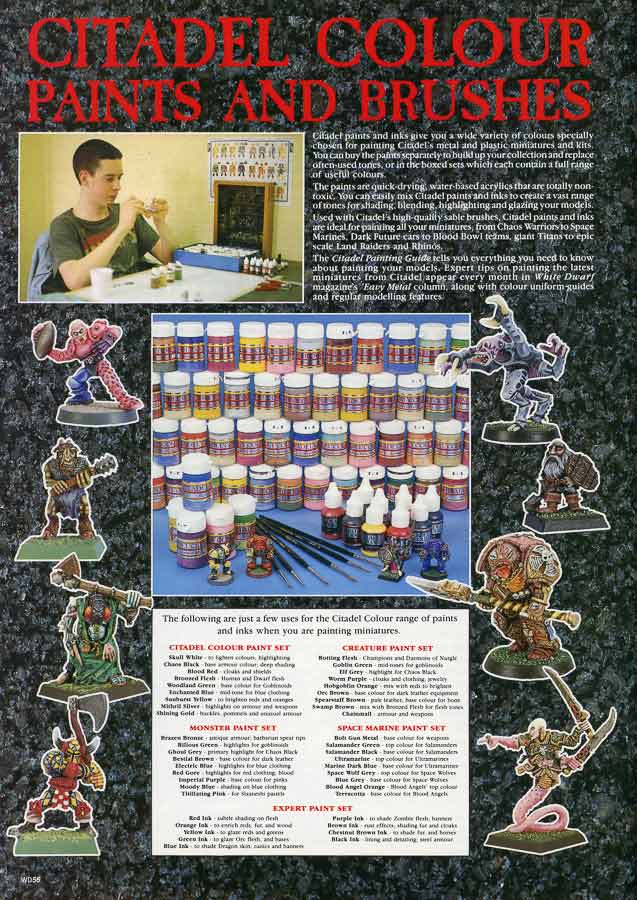
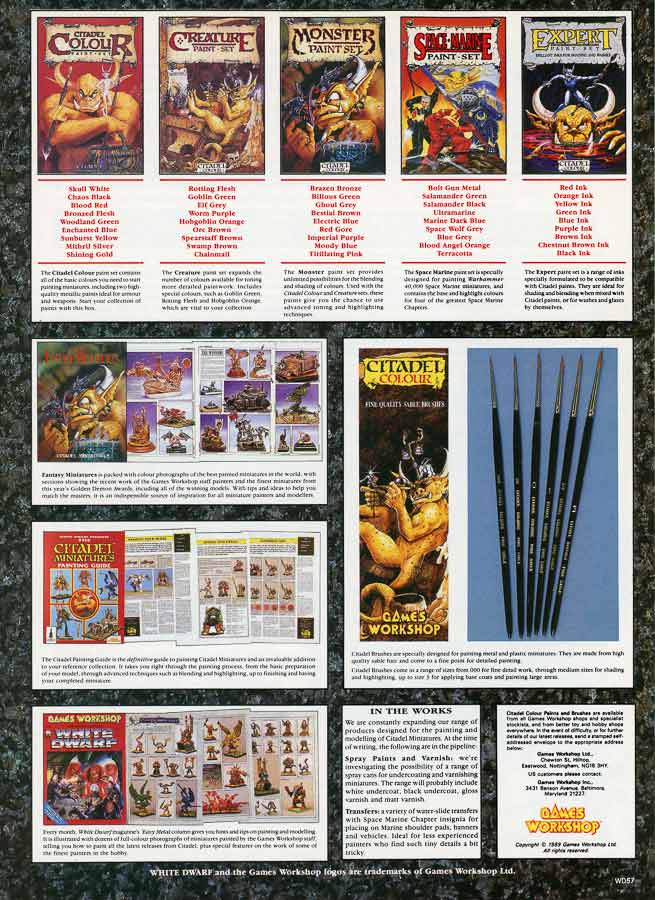
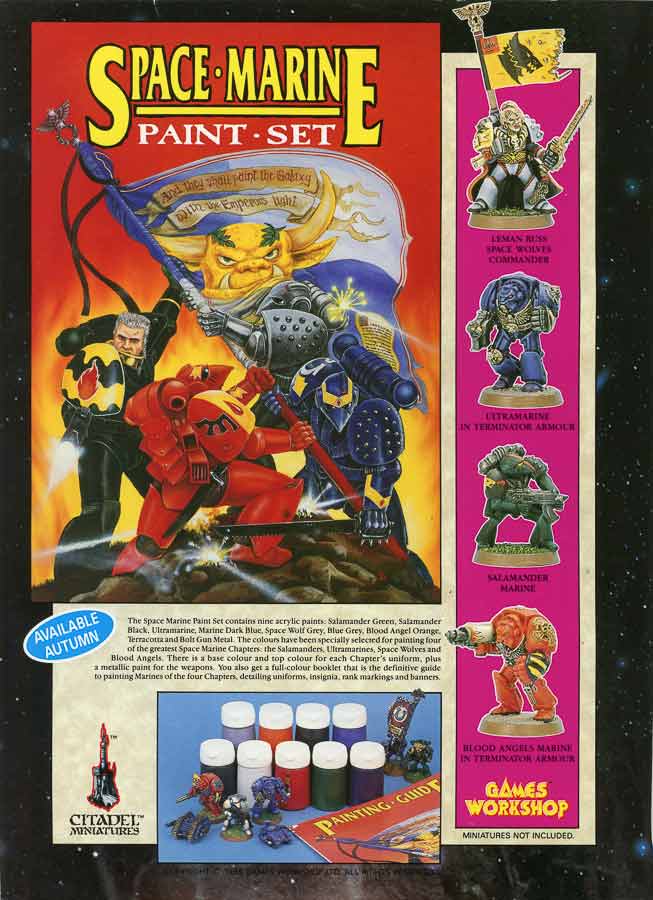
Even back then there was more than just opaque paint. Next to classics like Goblin Green (the colour for base rims for decades), Chaos Black, Skull White or Snakebite Leather, which returned as a Contrast paint in 2019, there were the Inks. These fluid, highly pigmented paints were perfect for shading and washes and still have something of a cult status today. The first Inks came in small dropper bottles, but quickly moved into the regular pots with a black lid. And back then, a pot still held 20 ml.
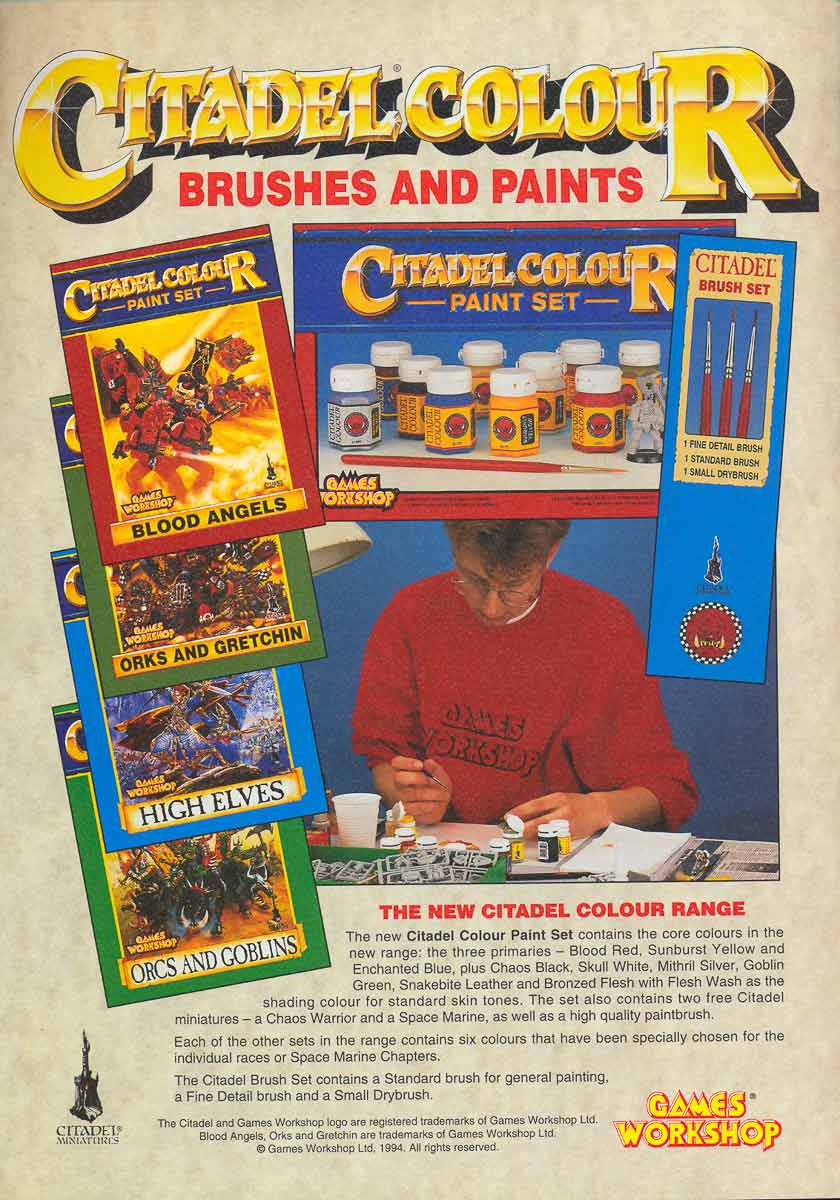
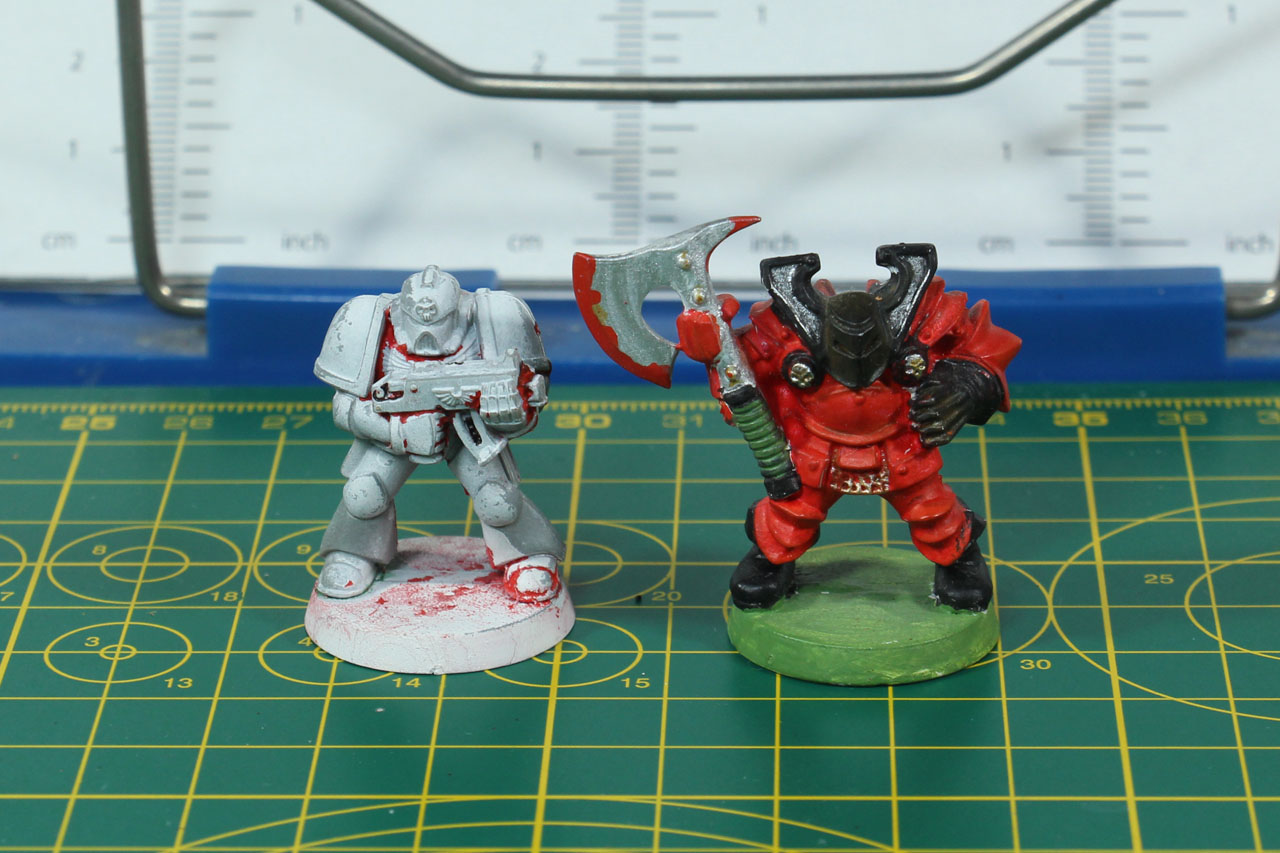
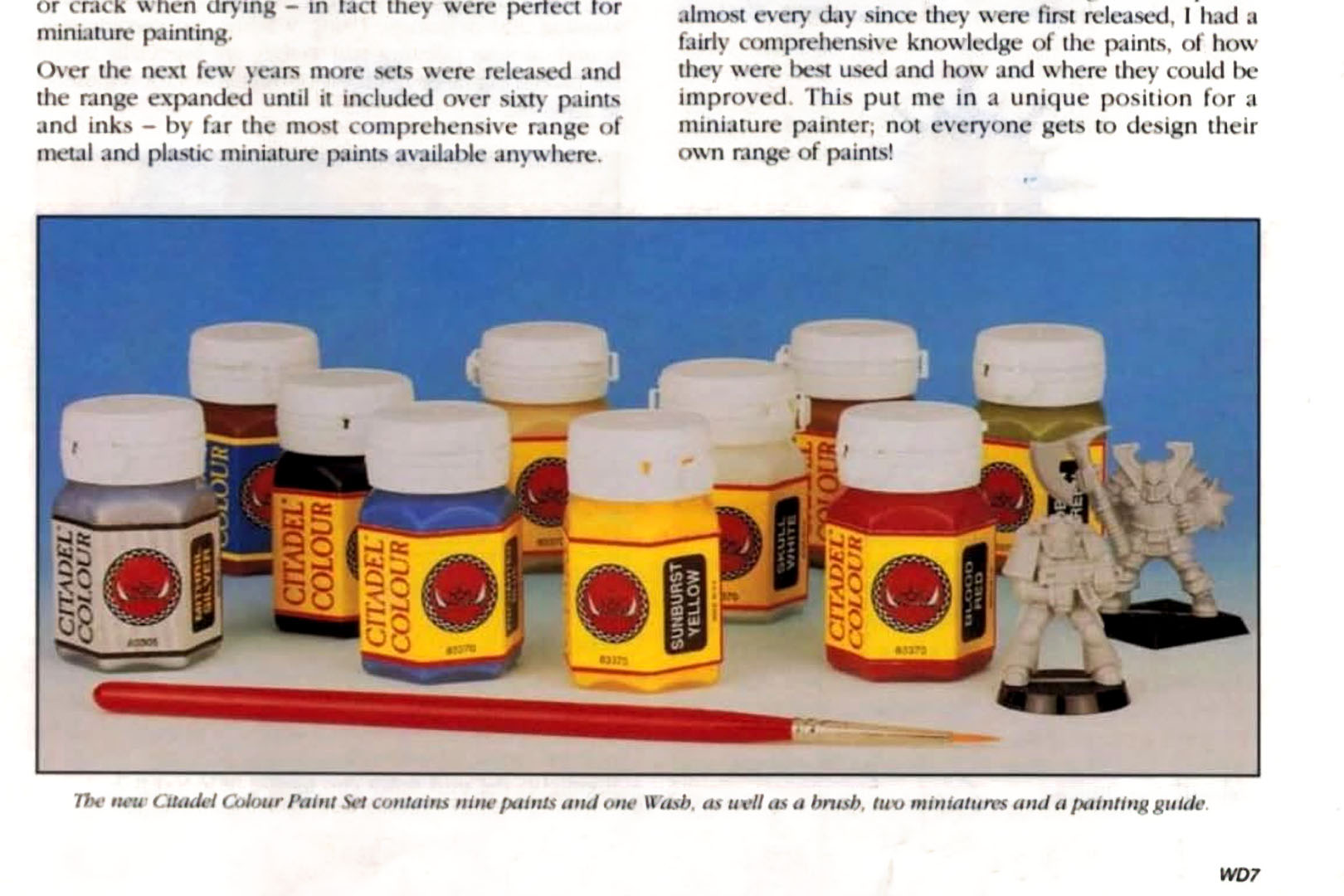
The 90s brought the hexagonal pots with flip-top lids. The names stayed, the range grew. White lids meant regular paints, black ones metallics and blue ones the Inks. You could buy them individually or in sets, and many of you will still remember the starter sets with eight paints, a metallic, an Ink, a brush and a plastic Space Marine and Chaos Warrior. I actually still have both miniatures from my set, and that Chaos Warrior is one of the very first miniatures I ever painted. With a Goblin Green base, of course!
If you want exactly this era back on your painting desk, you no longer have to hunt eBay for half-dried pots. Warcolours, a small paint maker from Cyprus, recreated the Citadel palette of the hexagonal pot era with Nostalgia '94. It started in 2023 with the ten paints from the original paint set and a few glazes, and the range now covers 75 colours including washes and metallics, plus sets for individual armies of the red period. Instead of pots, though, they come in 17 ml dropper bottles for 3.50 euros. Stahly tested them on Tale of Painters, and they came pretty close to the originals, quirks included: very vibrant colours, but rather thin, with weak coverage and an almost satin finish. So don't expect modern coverage, but for Oldhammer projects where Goblin Green simply has to be Goblin Green, they're just the thing. For the years before and after, Warcolours also offers Nostalgia '88 and '98.
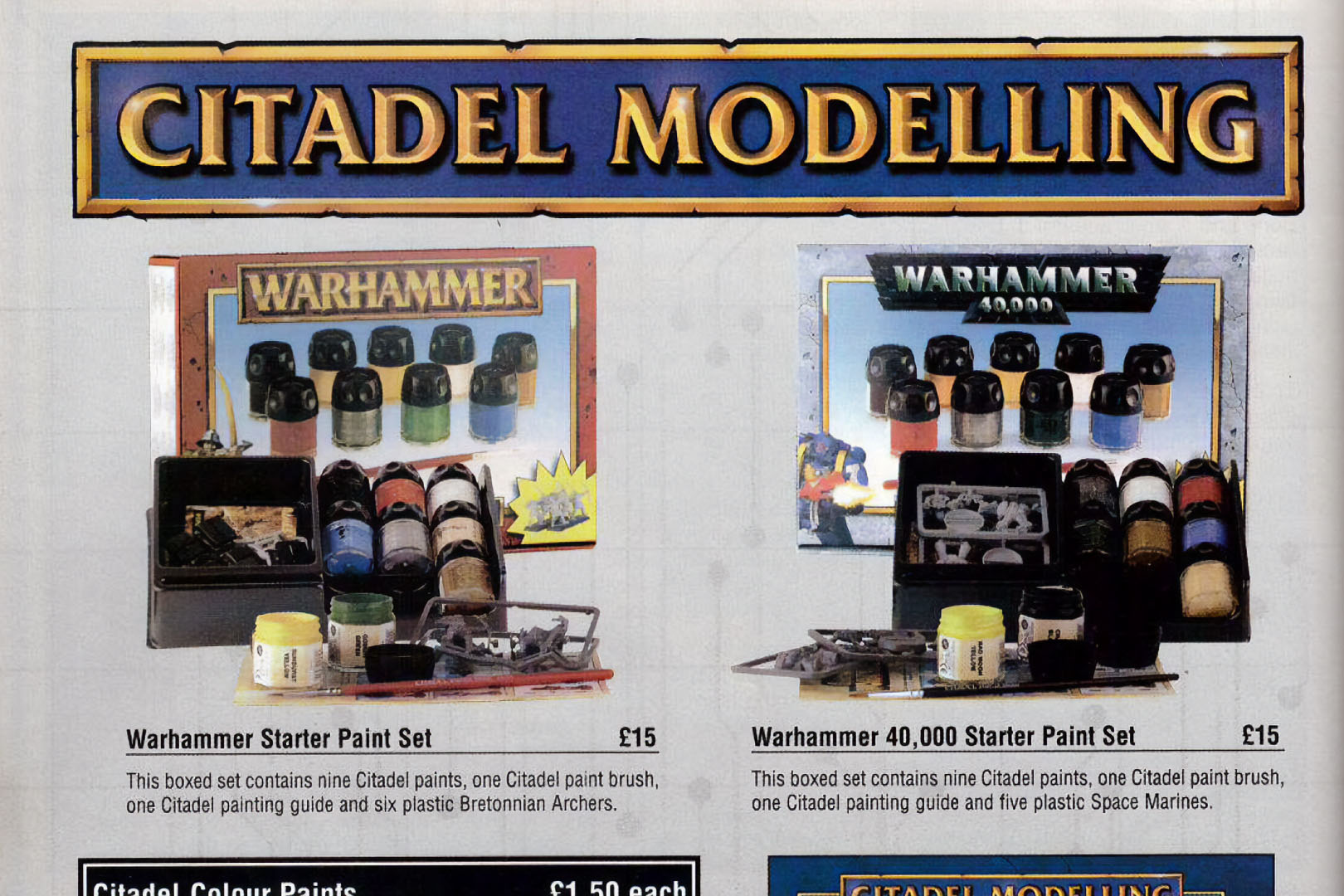
At the end of the 90s, new pots made of hard plastic arrived, clear at the bottom with a black, ridged screw cap, and the content shrank to 12 ml. They didn't last long: paint dried in the thread, the lids no longer closed properly, and sooner or later either the paint was gone or the pot wouldn't open at all. In the early 2000s the screw caps were therefore swapped back for flip-top lids.
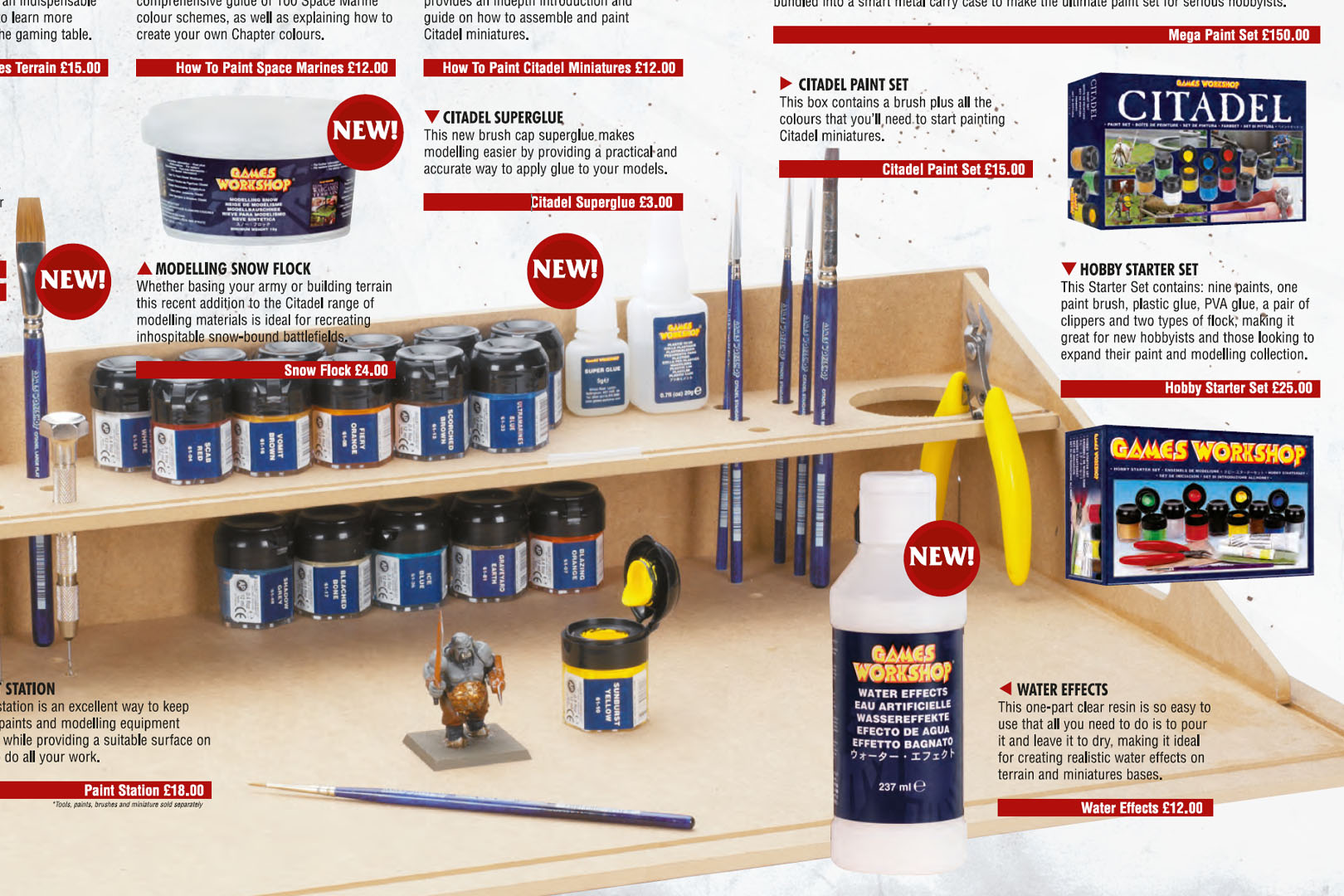
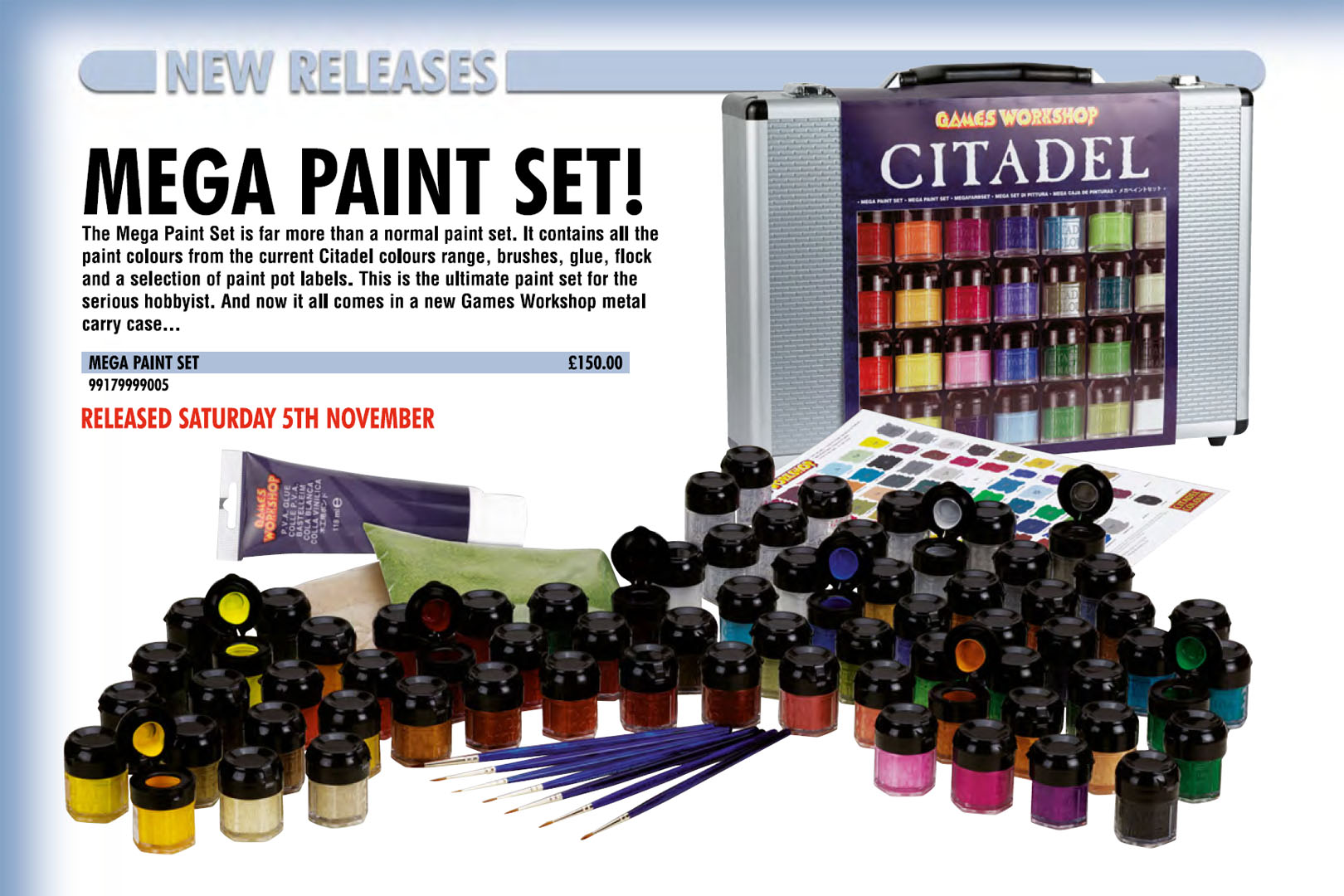
In 2007 and 2008, two new categories joined the range. First came the Foundations, shortly followed by the Washes, which more or less took over from the Inks. The Inks were dropped in return. Both new ranges came in conical pots with flip-top lids, white for the Foundations and black for the Washes. The Foundation paints were really thick and often covered with the first coat. Some of the colours were genuinely good, but pigment and medium liked to separate. Agitator balls helped a bit, but the paint was so thick that it tended to dry up along with the ball.
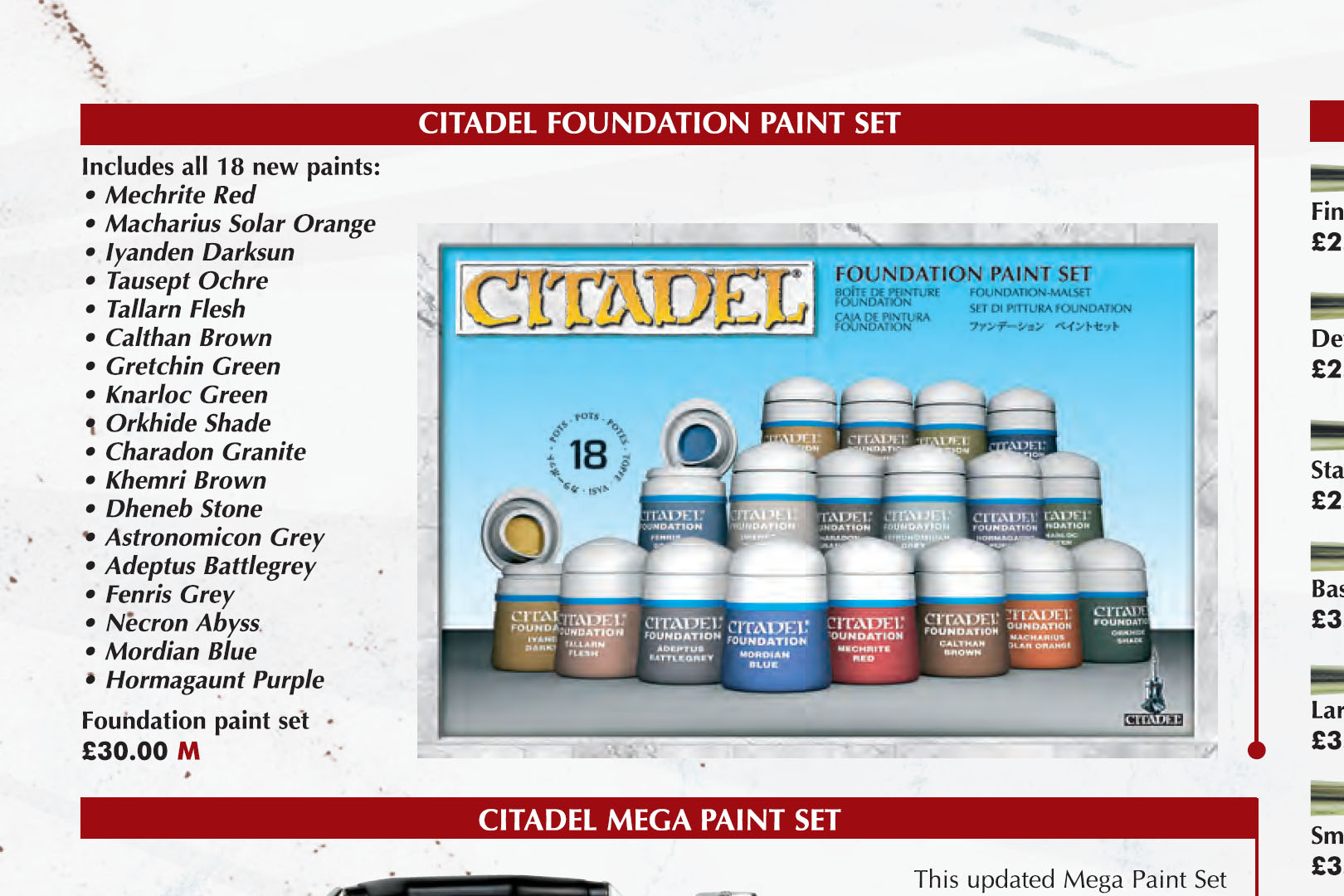
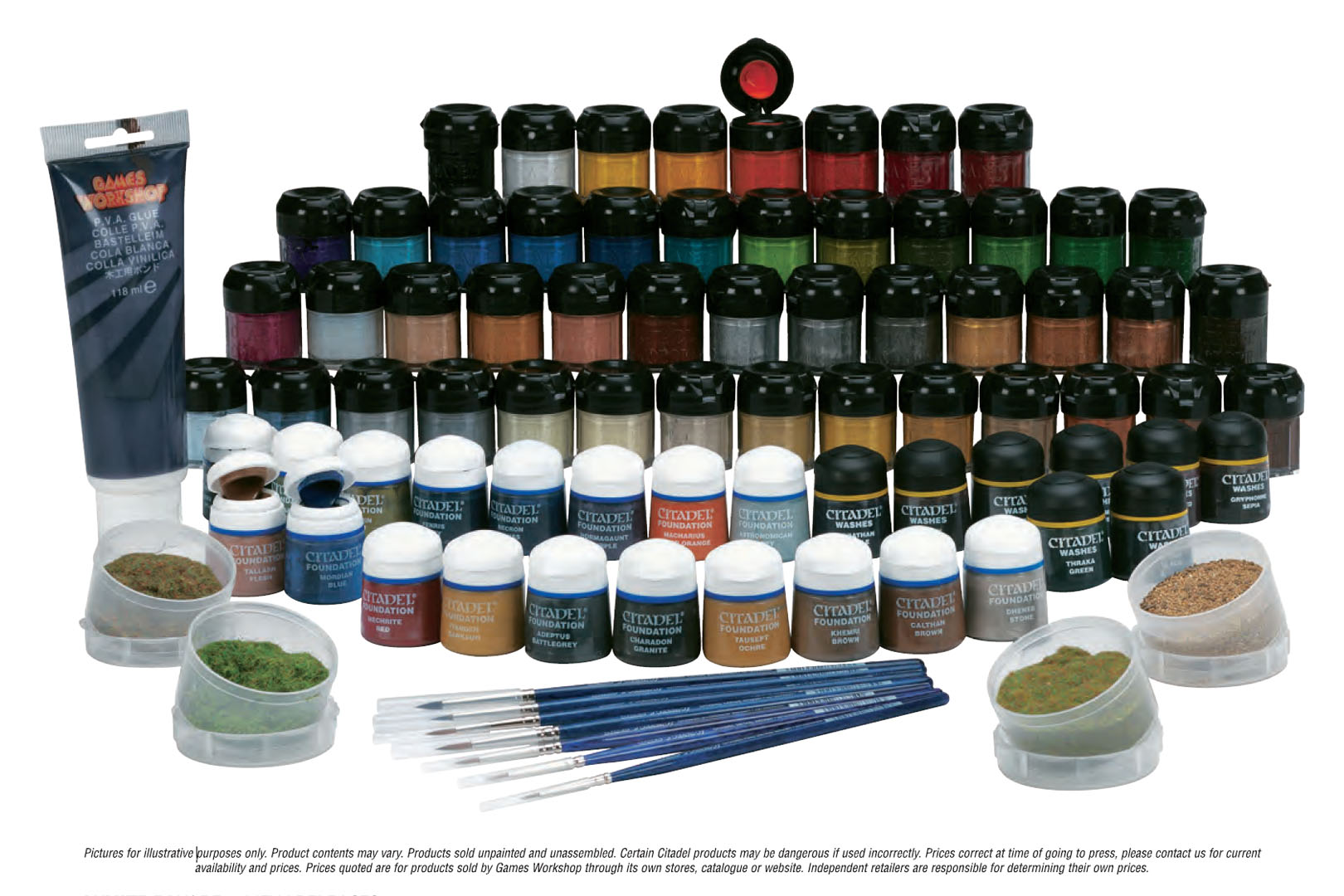
2012 brought the big cut. Games Workshop threw out the old pots, changed supplier and rebuilt the entire palette from scratch, with 145 paints and completely new names. There was a lot of speculation about why, for example disputes over the names or the supplier holding the rights to the formulas. The most plausible explanation is that Games Workshop wanted names it could trademark. Goblin Green became Warboss Green, for example, and Blood Red became Evil Sunz Scarlet. The old palette couldn't be transferred one to one, and the comparison chart in White Dwarf was only of limited help, as some colours were matched more than once. If you were in the middle of an army project, that was a real problem, and some people switched to other brands at the time. If you want to buy old colours from Coat d'Arms, keep in mind that their chart refers to the paints from before 2000. A lot of it matches, but not everything, and the washes in particular aren't Inks in the classic sense.
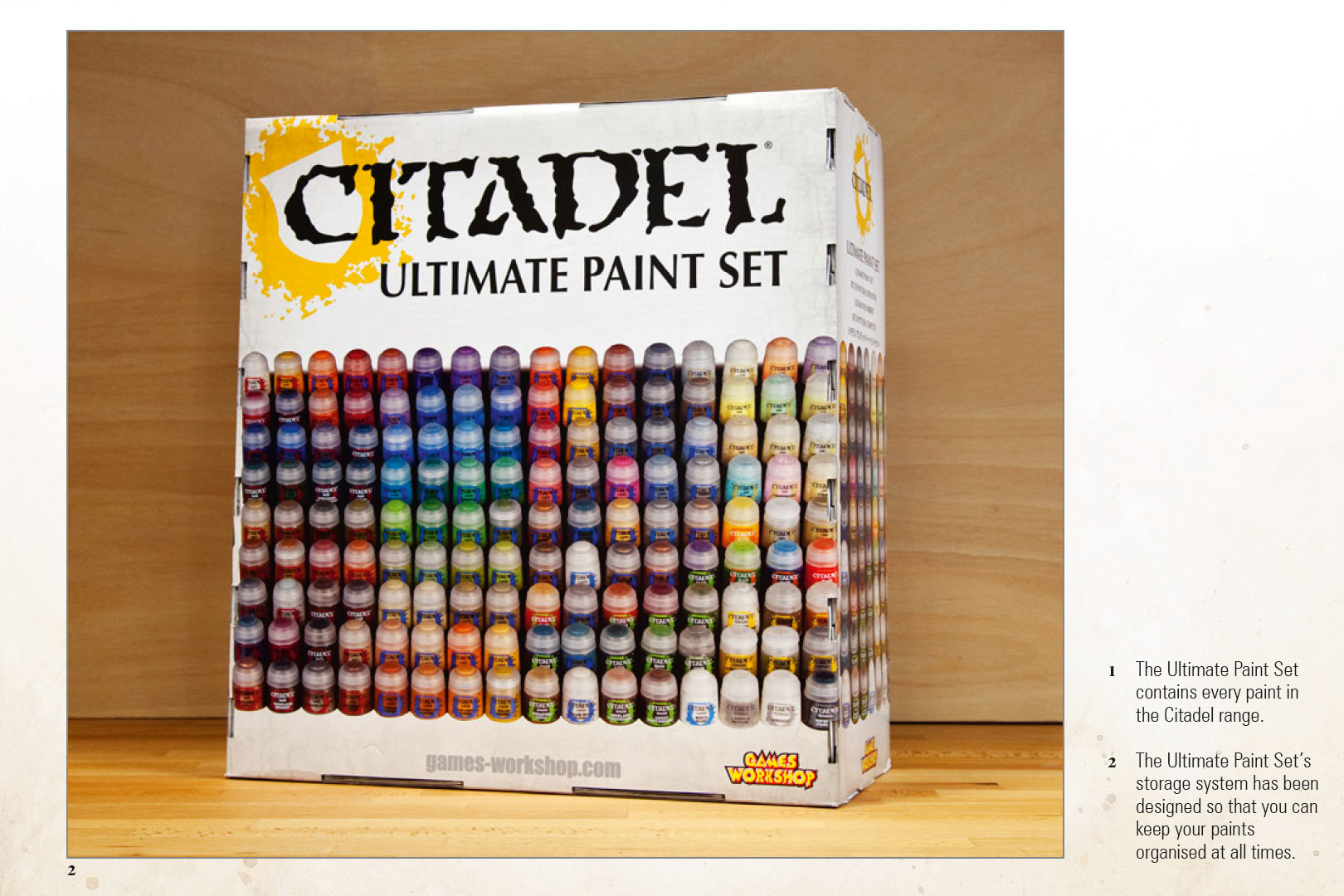
In June 2019 Citadel Colour Contrast arrived. The launch brought 34 colours, plus the colourless Contrast Medium and two spray primers matched to the new paints, Wraithbone and Grey Seer. The idea is simple: one coat over a light primer tints the raised areas and at the same time pools darker in the recesses, so base colour and shading happen in one go. In return, the Glazes left the rack. We showed how the colours look on the different primers back then in part 3.
In summer 2022, Games Workshop really stepped it up. 25 new Contrast colours were added, and Hexwraith Flame and Nighthaunt Gloom moved over from the Technicals to Contrast. Some of the new colours are much brighter, and not all of them behave like the first generation: some show a weaker Contrast effect and work better on smooth surfaces. At the same time, all Shades were reformulated to settle more cleanly into the recesses and mostly leave the raised areas alone. Seven new Shades were part of that as well. Since then, both ranges come in 18 ml pots, while the Shades used to hold 24 ml. On top of that came White Scar, a bright white spray primer. You'll find the colour chart from the Warhammer store in Chelmsford, showing all Contrast colours on seven different primers, in part 4.
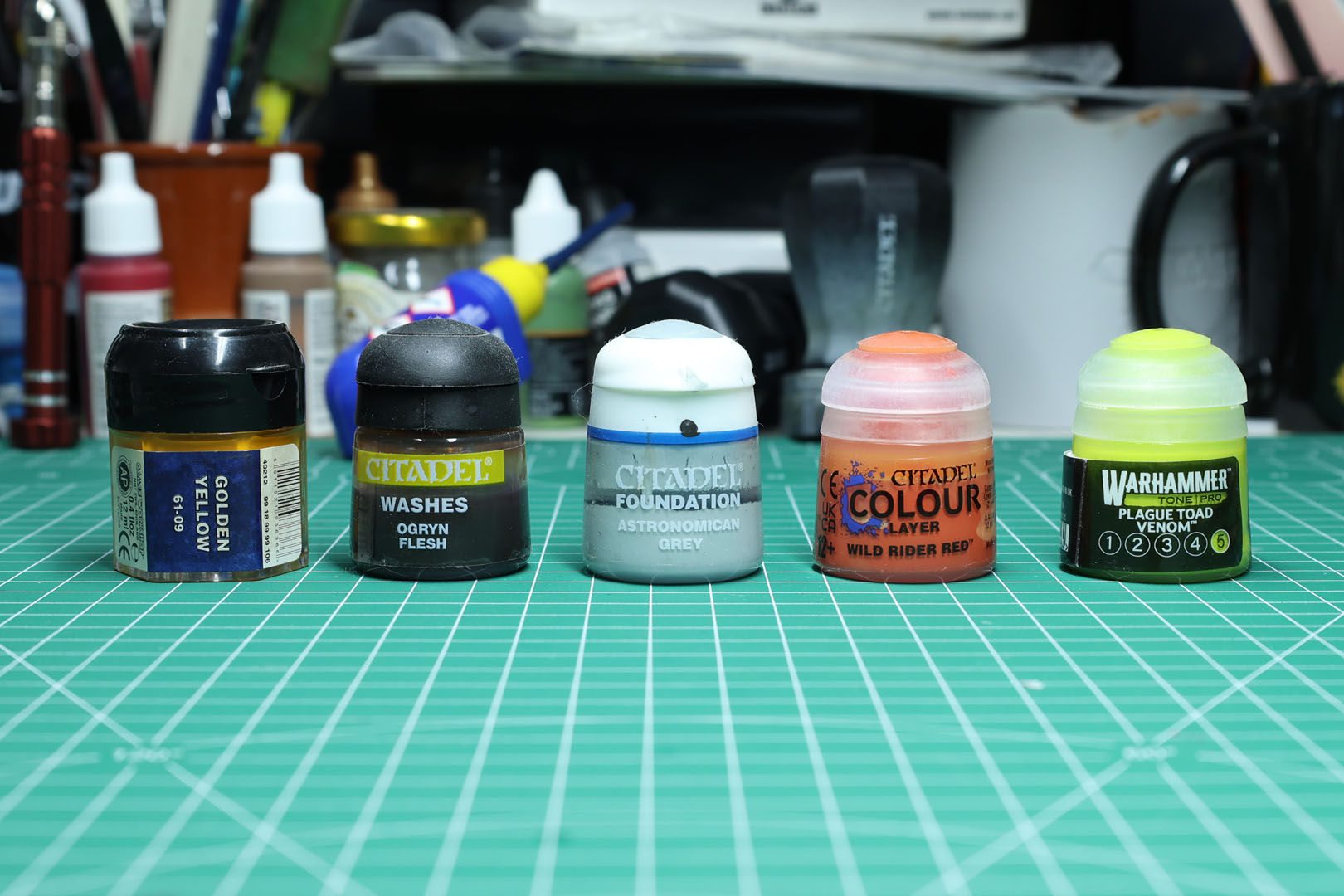
Standing in front of the paint rack today, you can choose between Base, Layer, Shade, Contrast, Dry, Technical and Air paints, each with its own coverage and consistency, depending on how you paint. The quick approach is familiar from the early days of The Army Painter: base colours on, Shade over it, maybe a quick drybrush, done. Contrast over a light primer is even faster. If you prefer something more elaborate, you go for a zenithal primer and build up light and shadow in several thin layers. And for snow, rust or cracked ground there are Technicals, where you used to have to dig through scale modelling tutorials.
The latest change concerns, of all things, the name this article is about. Since 6 March 2026, Citadel Colour has officially been called Warhammer Colour. Nothing changes about the paints themselves, formulas, colour names and range stay the same. Only labels and accessories are being switched over step by step. After Games Workshop stores already became Warhammer stores, another piece of old brand history disappears. At least this time nobody has to rewrite their paint recipes like in 2012, but anyone who grew up with Citadel pots and Citadel blisters will still miss the name a little.
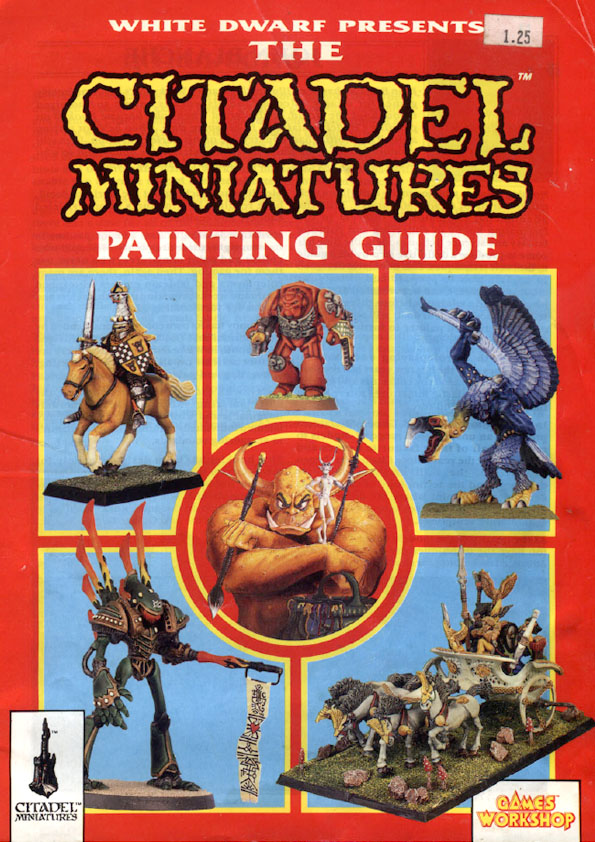
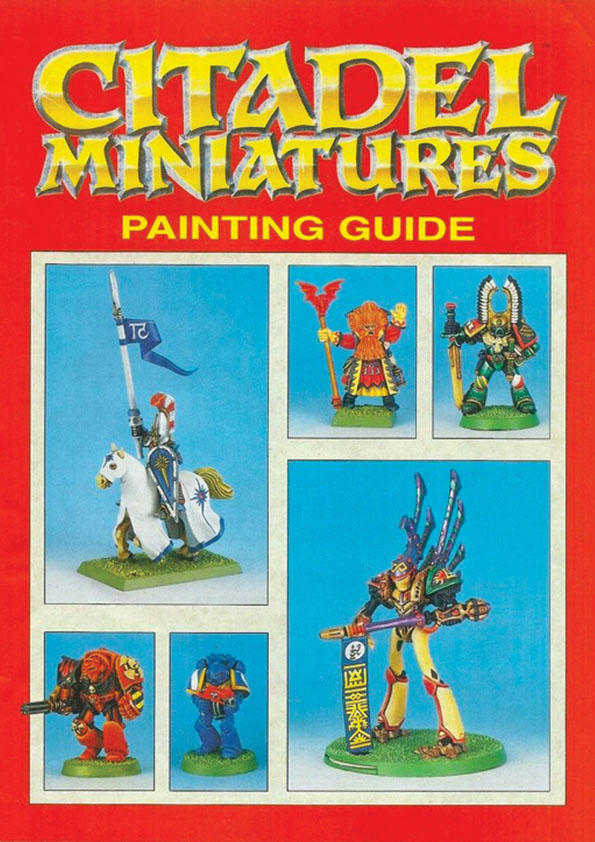
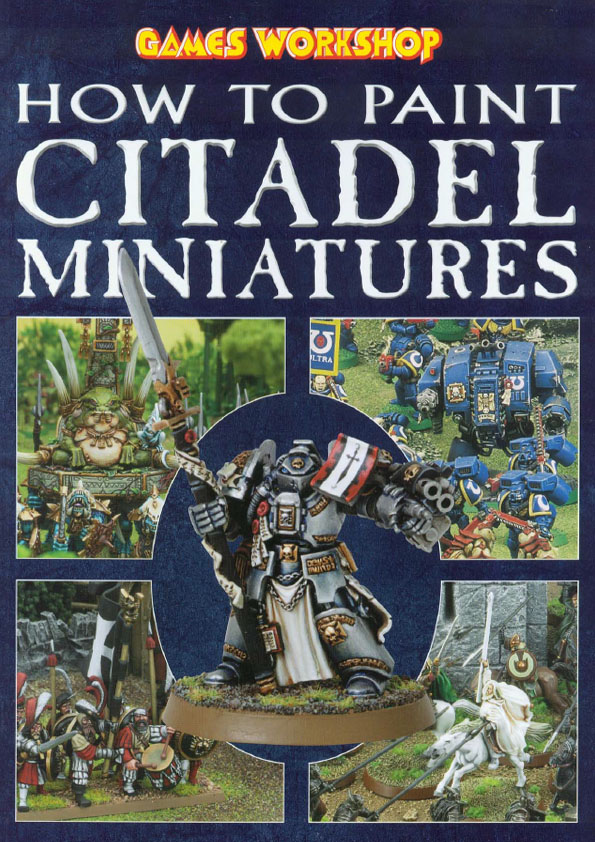
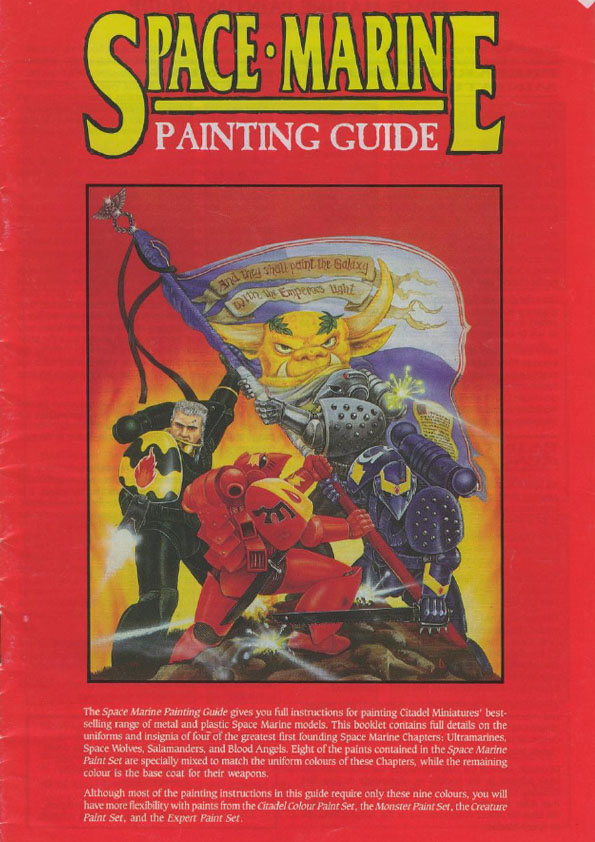
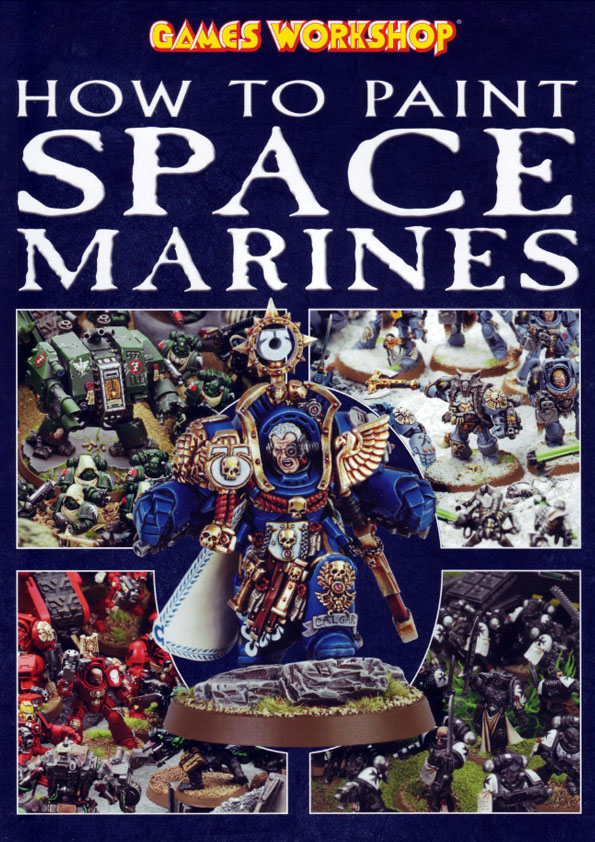
Besides the paints, there have been plenty of painting guides over the years, some general for Citadel miniatures, others more specific, for example for Space Marines. The really old editions are especially worth it, as a lot of the tips still work after more than 35 years. With a bit of luck you'll come across a cheap copy at a tabletop flea market or on eBay, and for fans of the red period it's a nice piece of hobby history.
Of course, Games Workshop is far from the only option. Many miniature companies have their own paint ranges, and just like Mantic Games or Warlord Games, The Army Painter was founded by former Games Workshop people. The Army Painter started out with three dips and now offers paints, washes and primers in every variety. Their answer to Contrast was Speedpaint, which was reworked as Speedpaint 2.0 in 2023, and since late 2023 there's also Warpaints Fanatic, a particularly highly pigmented range. Brands from traditional scale modelling, on the other hand, tend to go for more matt, muted colours that suit historical vehicles and soldiers well. The biggest advantage of Games Workshop's paints is that you can get them almost everywhere and try them out in store. Only a few independent shops offer that.
One more piece of advice that's close to my heart: there are cheaper paints, and you'll find some of them in any toy or model shop. Still, stay away from enamel paints. Almost 30 years ago, I stood in front of that shelf as a teenager myself and thought they'd do. The first brushstroke with proper acrylics was a real revelation afterwards, and I never want to go back to that unsatisfying phase of painting. Skip that detour and start with decent paints right away.
Further reading: Talk Wargaming has an article on the change of the Citadel paints, Tale of Painters looks back at the 1998 to 2012 range in a retro review and also tested the new Contrast colours from 2022 in detail. Warhammer Community presented the Contrast expansion in 2022 and the rename to Warhammer Colour.
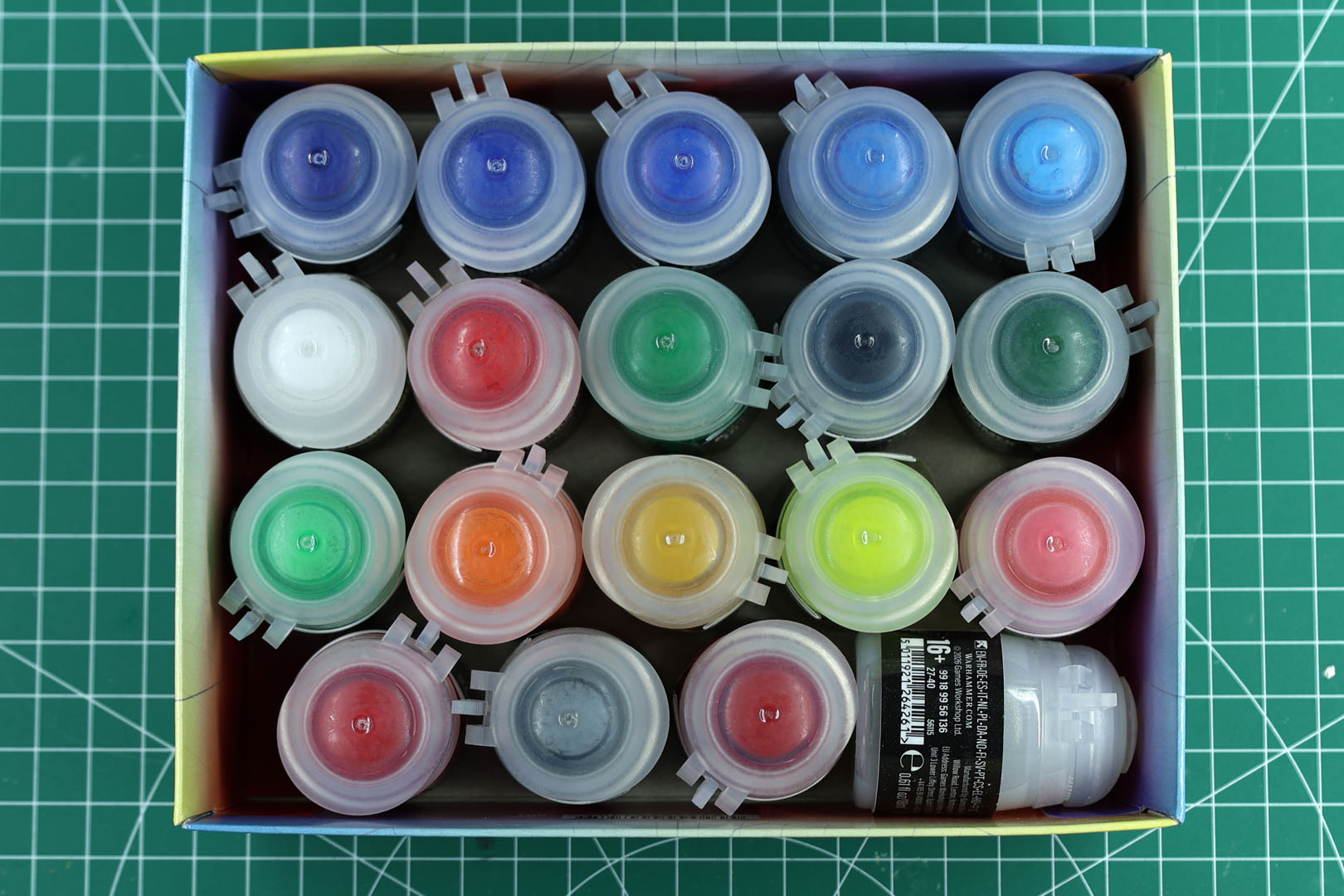
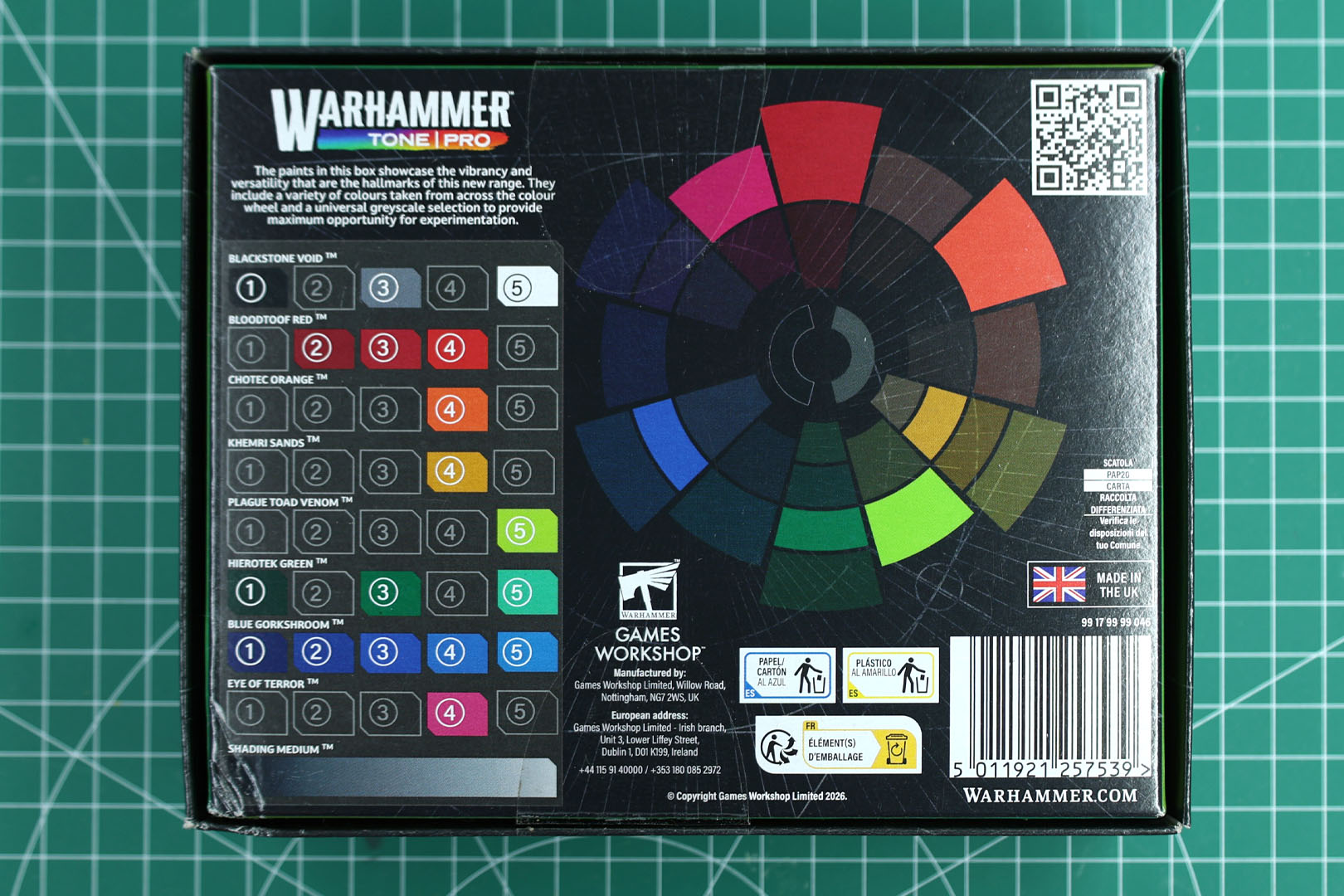
So much for the history of Citadel, or rather Warhammer Colour. We've already got the Warhammer Tone Pro Sampler with 18 paints and a medium on our desk, and the next article will be all about these paints and how to use them.
Enjoy this article?
Like us on Facebook

Follow me on Instagram

Categories
- events (212)
- fantasy (611)
- General (162)
- historical (648)
- Little Big Adventures (4)
- offtopic (5)
- reviews (553)
- science fiction (714)
- showroom (108)
- terrain (119)
- Uncategorized (1)
- work-in-progress (423)










Leave a Reply