Stargrave – Acceptable Losses
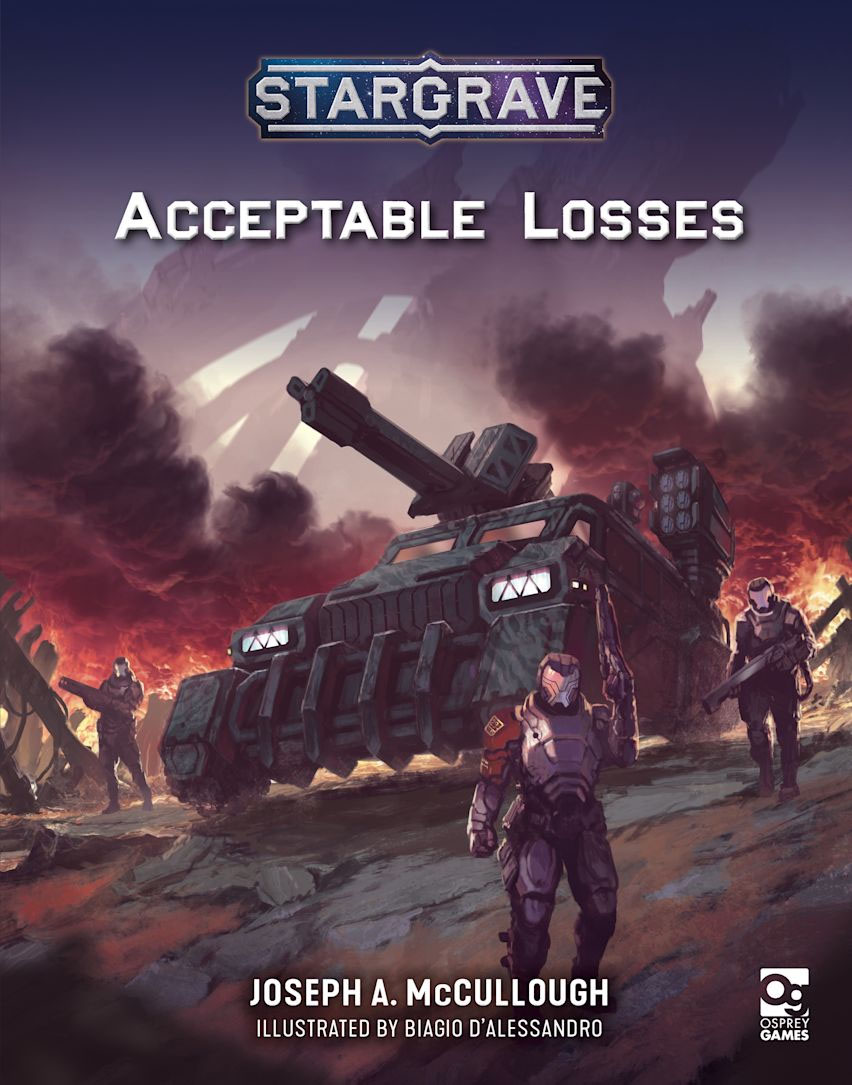
The latest supplement for Stargrave is due on 19 November 2026, and I received a review copy of Acceptable Losses ahead of the release. After the treasure hunts of the earlier books, Joseph A. McCullough points the independent crews at a different job: soldiers for hire. Instead of chasing loot tokens for their own profit, they take contracts, fight for an employer and get paid whether the mission goes well or not. To support that, the book brings heavier armour, vehicles, mines, drop deployment, teleportation and artillery.
What is it about?
The Last War is over, but its leftovers are still lying around: combat armour, tanks, teleporters and orbital weapons. Acceptable Losses lets independent crews put that hardware to use. McCullough spent 15 years at Osprey Publishing and calls himself a fan and student of military history, and the introduction makes clear how much he enjoys military science fiction. He even adds a list of his favourite books in the genre, from Armor and The Forever War to Gaunt's Ghosts.
The book does not try to turn Stargrave into a platoon level wargame. McCullough describes it as a collection of ideas, parts and pieces, and you can use one rule, a few of them or everything. If you want Stargrave with bigger guns, you can bolt a vehicle onto an otherwise normal scenario. If you want a more classic red versus blue game, the scenarios give you exactly that. He also adds a warning that fits the whole supplement: the point of Stargrave has never been building an unbeatable army, and there is no fun in fielding a main battle tank if your opponent has nothing that can hurt it. Stories and cinematic action come first.
First Impression
Acceptable Losses is a 96 page softback with illustrations by Biagio D'Alessandro, who already did work on Death Vector or Quarantine 37. It costs 20 GBP in print and 16 GBP as an ebook. My copy is a press copy, so small details can still change before the release. I have read the book carefully, but I have not yet played the new rules at the table, so what follows is an assessment of the design and not a report from a long campaign.
On paper, the idea behind the book makes sense to me. Stargrave already has rules for starships, but they work more as a base for your crew than as something you move around the table. Frostgrave had boats before, so adapting that mechanic for ground vehicles is a logical step. It also fits the skirmish scale: the rules can go into real depth without slowing the game down, which is hard to pull off in a platoon sized game without losing tempo. As in other McCullough books, the chapters are optional modules that you can pick from like a buffet, and none of them is meant to be used in every game. The book has six chapters:
- Chapter 1: Combat Armour, with new armoured specialists and upgrades
- Chapter 2: Vehicle Rules
- Chapter 3: Vehicle Garage, with seven vehicles and eleven vehicle attributes
- Chapter 4: Vehicular and Anti-Vehicular Weapons Systems
- Chapter 5: Military Tactics, covering air and space drops, mines, teleportation, artillery strikes, non-lethal damage and mercenary contracts
- Chapter 6: Mercenary Scenarios, with five scenarios and 17 secondary objectives
How does it play?
Combat Armour
The core rulebook knows only one soldier type in combat armour. Acceptable Losses adds seven more: Codebreaker, Casecracker, Medic, Commando, Grenadier, Burner and Gunner. They share the same frame with Fight +4, Armour 13 and 14 Health, and they differ in equipment and price, which runs quite high from 200 to 400 credits. As before, the armour has to be paid for through upkeep. If you cannot or will not pay, the soldier takes the field in the standard version of his class.
More interesting to me are the twelve upgrades. Some are practical, like Jump Jets, Powerlifter or Enhanced Movement. Others change the character of a figure: Chameleonic Skin, Combat Stimulants (Never Wounded), Assistance Armour, which compensates for a permanent injury, or Tuned, which halves the penalty that armour causes for powers. Every upgrade raises the upkeep, and Purpose Fitted costs 500 credits so that the suit takes up only one gear slot. Captain and first mate each get one suit from the general armoury for free, and extra suits cost 100 credits.
All of that reminded me of Shadowrun and its augmentations. You pay in money and upkeep, and in return your captain or first mate gets a personal note that goes beyond a plain bonus to the armour roll. Since armour makes a model a lot more durable, the high costs and the upkeep are justified. Groups that want a squad instead of a crew will find a short guide for a full combat armour campaign. It suggests more starting money and smaller crews, and it admits that the upkeep will be huge.
Vehicles
The vehicle rules and the garage take up almost 40 per cent of the book, and McCullough is upfront about them: they are not meant for standard Stargrave scenarios, because vehicles tip the balance of loot grabbing games. I think that is the right call. Armour, mobility and heavy weapons shift the balance of power on a skirmish table very quickly, as soon as you go beyond a light vehicle or something like a civilian car.
The idea itself makes sense to me. Bold Endeavour gave us starship rules, but the ship works mostly as a base between scenarios. Frostgrave already had boats, and the adapted mechanic fits the skirmish scale well. You can go into a decent depth without slowing the game down too much, which would not work in a rulebook of platoon size.
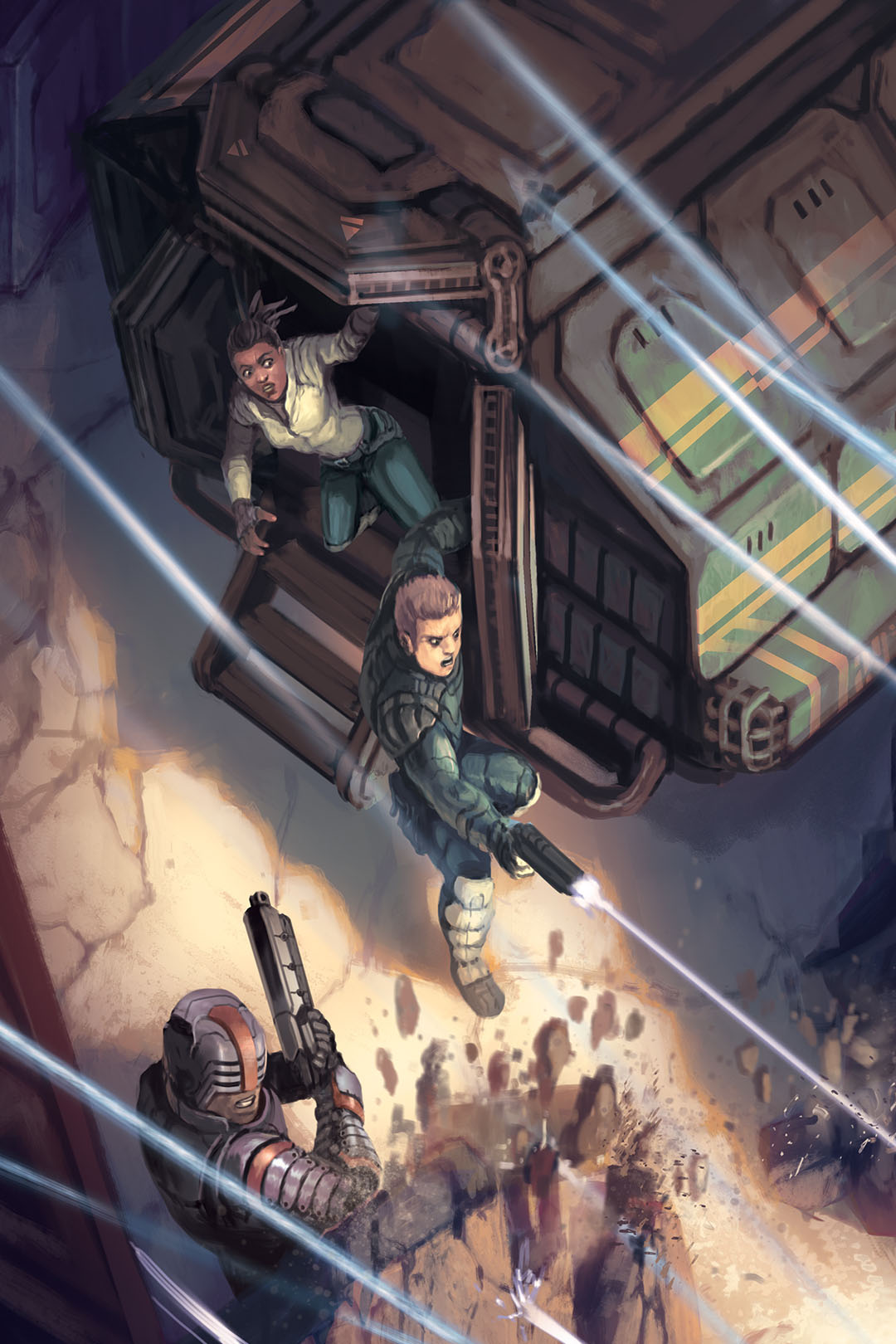
A vehicle has a profile with Move, Fight, Armour, Crew, Passengers, Rarity and Cost. The driver spends the first action on driving: stopping, pivoting or moving, with a turn of no more than 90 degrees. Everyone inside activates as a group. Collisions come in soft, medium and hard varieties, and the book keeps asking what would happen in the movie. Ramming only works if one vehicle is stationary or a collision cannot be avoided, so it does not become a standard tactic.
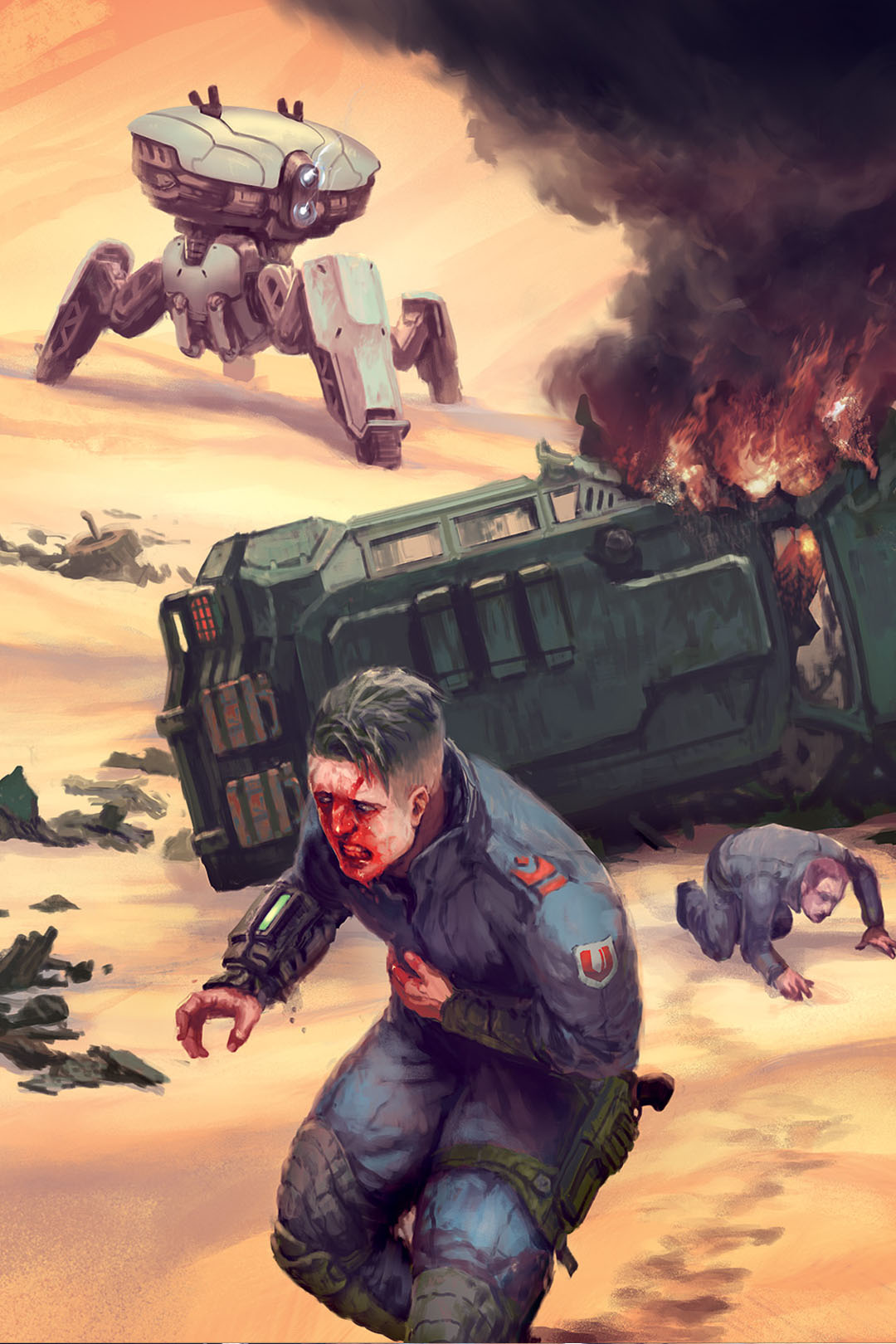
Shooting at vehicles uses its own table. You take the total of the attack, add weapon damage and subtract the Armour of the vehicle. Nothing happens below 20. Above that you get propulsion damage, steering damage, destroyed weapons, crew hits and, from 30 up, an explosion. Small arms can slowly wear a vehicle down, but only weapons with the Anti-Vehicular Weapon attribute can destroy a heavily armoured one, and critical hits bring no extra damage without it. An anti-vehicular missile costs 75 credits and takes one gear slot, while the light tank it threatens costs 5,000. That mismatch is intended, and it gives every vehicle scenario a built-in counter.
The soldiers get more safeguards. Figures cannot force combat with a vehicle, moving vehicles cannot be hit by grenades and nobody gets run over, apart from an optional rule for creatures, because squashing alien bugs is supposed to be fun. There are sections for the effects of powers, for buying, selling, upgrading and repairing vehicles (with an optional rule for variable prices) and for combining the vehicle rules with the ship rules from Bold Endeavour.
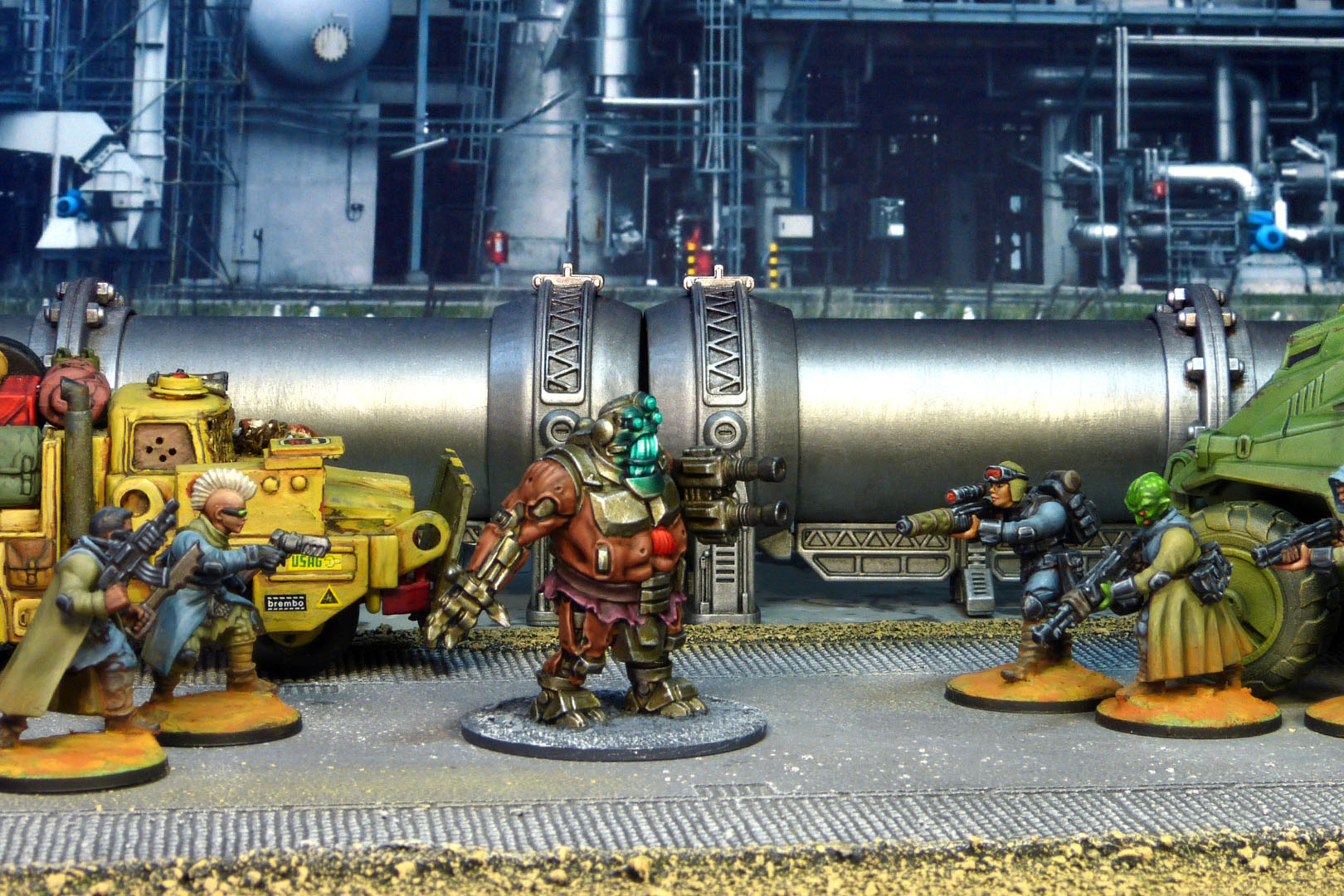
The Vehicle Garage lists seven vehicles, from the motorcycle through scout vehicles and the armoured personnel carrier to light and heavy tanks. The descriptions are generic on purpose. A vehicle can be a boat, a hover vehicle or a walker, and the book gives short notes on how to do that. For my own tables, I like that a patrol vehicle with a gun on the back, the science fiction cousin of a pickup truck, fits into the rules without any drama. It also gives me a way to bring speeder bikes and other vehicles into my Star Wars mashup, the Tales of the Outer Rim. I still want to see how well the rules cope with mechs and walkers. Stargrave already has the more compact exosuits, but being able to do what Gamma Wolves or Arsenal from Skull Forge do on the table would be interesting.
Chapter 4 adds the new weapons. Anti-vehicular grenades, rocket launchers and missiles have a minimum range and cannot target figures. The assault cannon is the exception and can fire at infantry. Blast and battle cannons hit with a concussive effect that also damages figures near the point of impact.
Military Tactics
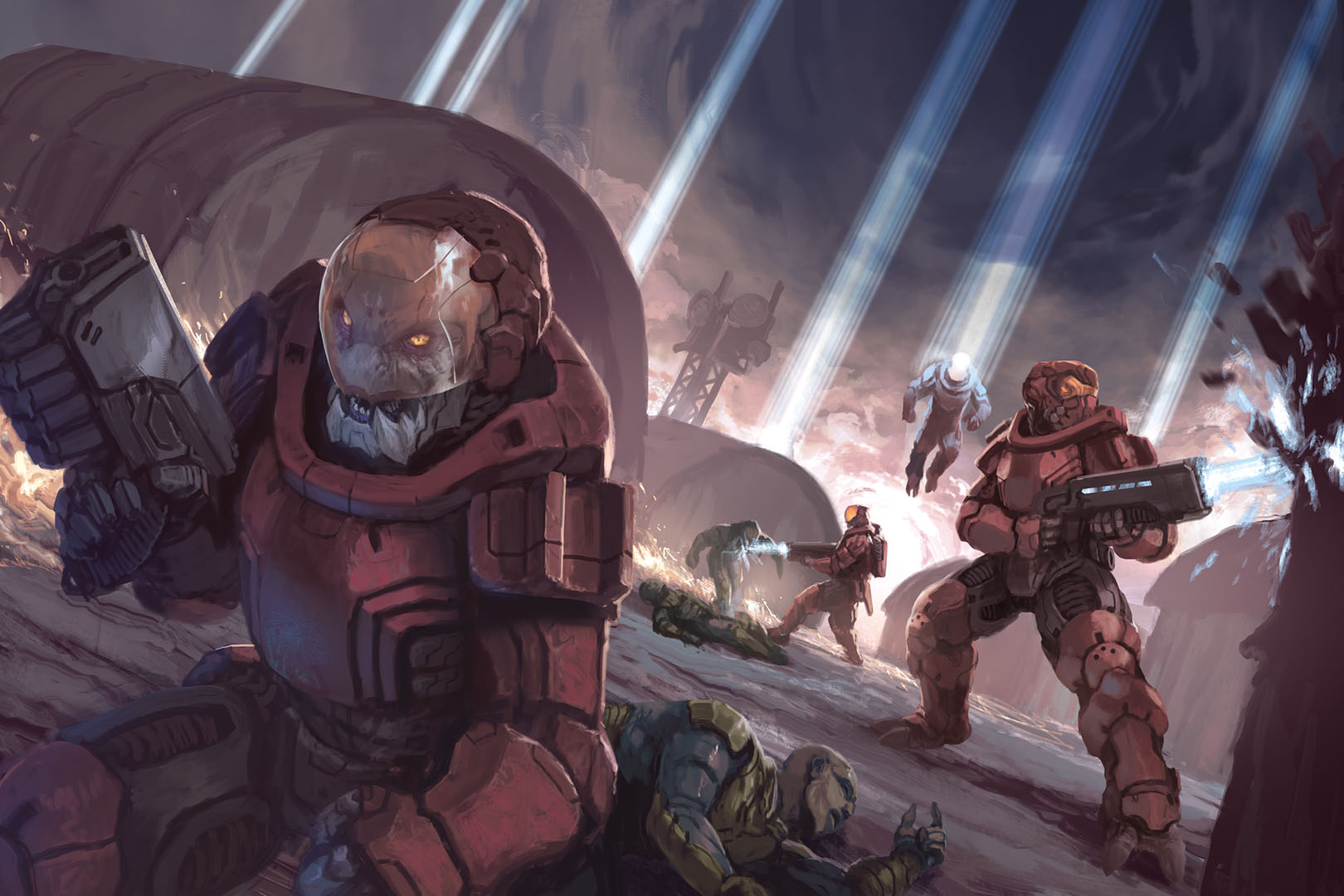
This chapter is the most modular part of the book. I see it as a set of special elements for particular scenarios, to support the story or the tension of a given mission, and not as something you apply to every game. Air drops use arrestor suits and a Move Roll table. Space drops are reserved for combat armour and dropshells, which McCullough describes as a hot, jarring ride that ends with a bone crunching impact. Minefields use real and fake mines, plus a random variant for neutral ground. The bookkeeping is simple, which matters in a game where every casualty hurts, and a text box warns against putting too many mines on the table.
The teleportation rules come in three flavours: blind teleport, homing teleport and teleport pads. I love the Mishap Table. Teleportation is unreliable even in the big science fiction franchises, so it should not be a gimmick when mercenaries use it in less than ideal conditions. The results range from a simple failure to switched bodies and a trip to another universe. For the DNA modification result the book points to the Grave Mutations table, or to the permanent injury table if you do not own it.
Artillery is powerful, and the book frames it well. It suggests three uses: a small opening barrage that stuns the defenders, a growing bombardment as a timer at the end of a scenario, or a forward observer who has to get line of sight to call in a strike. Ordnance runs from mortars to orbital strikes, and the observer gets more accurate as long as he stays put. The new Unwanted Attention rules work like the normal ones, but with escalating barrages instead of pirates, and they are the default as soon as vehicles or more than three suits of combat armour are on the table.
Mercenary Contracts and Scenarios
The mercenary contracts are the part that changes the character of a campaign. Each player rolls for an upfront payment and a balance, and can add a complication such as salvage rights, free repairs, payment in advanced weapons or payment in instalments. Once you roll a complication, you have to keep it. Attacker and defender get their assignment, there are optional secondary objectives and a separate experience table for mercenary scenarios. It fits well next to the missions in Dead or Alive, one of the first supplements for Stargrave. You are not only a hired killer, you can also be asked to evacuate people, hold a road, upload a virus or take a prisoner, each with matching risks and rewards. The Mercenaries plastic kit is an obvious fit for this theme.
The five scenarios are Steal the..., Destroy the..., Locate the..., Capture, Assassinate or Rescue... and Break Through... They are deliberately generic and come with narrative hooks, so you can reuse them with a different setting each time. Each one has sections for attacker and defender, rewards, allowed tactics and a short solo part. The solo guidance is only a guideline, and McCullough prefers the simple instruction to play the enemy smart over a full set of solo rules. I find that appropriate for a supplement this late in the line. Stargrave, especially at this stage, is not a game for complete beginners but for hobbyists who adapt things themselves, and the author gives that kind of advice in his comments at the start of the chapters, similar to the hard mode suggestions in The Silver Bayonet. For real solo play, Dead or Alive is still the better foundation, and the book points there as well.
What's next?
No further Stargrave supplement has been announced so far. A look back shows how much ground the line already covers. We have the core rulebook, Dead or Alive for solo play and bounty hunts, the horror of Quarantine 37, the space western of The Last Prospector, the solo and cooperative campaign Hope Eternal, the ship rules of Bold Endeavour and the dead zone of Death Vector. With Acceptable Losses the military side is covered as well.
One thing needs a note: Grave Mutations is primarily a Frostgrave supplement. It can be used for Stargrave, and Acceptable Losses refers to it, but it is not part of the Stargrave line itself. I don't see many themes left that would need a book of their own. What is still missing is a detailed ship versus ship combat mode, but to me that would be a different rulebook and not Stargrave anymore.
Conclusion
Acceptable Losses is a well thought out supplement for players who want to take Stargrave in a military direction. The combat armour upgrades add personality to a captain, the vehicle rules fit the skirmish scale without slowing the game down, and the military tactics and contracts are modular enough that you can pick what suits your table. The author is honest about when you should leave things out, and that is part of the charm.
At 20 GBP for the softback it is the usual price for a Stargrave supplement, not cheap but fairly priced. Almost 40 per cent of the book is vehicle rules. If vehicles do not interest you, the mercenary missions and the combat armour alone make the price high, and you can probably skip it. If your group leans towards role playing and already handles military ideas and vehicles with house rules, you now have the official blessing of Joseph McCullough for it. And if you want patrol vehicles, speeders or maybe a walker on your table, this book is worth picking up.
Stargrave is a brand of Osprey Games and North Star Miniatures.
The reviewed product item was provided by the manufacturer.
Enjoy this article?
Like us on Facebook

Follow me on Instagram

Categories
- battle report (5)
- events (213)
- fantasy (616)
- General (162)
- historical (652)
- Little Big Adventures (4)
- offtopic (5)
- reviews (558)
- science fiction (718)
- showroom (108)
- terrain (120)
- work-in-progress (425)









Leave a Reply