Sword and Sorcery Adventures – Part 1
There’s always something magical about a new project, even if it isn’t entirely new. After all, I started a few smaller fantasy projects quite some time ago, but never finished them. I plan to change that now by piecing together all those little project snippets into a bigger picture.
But one thing at a time, because I’m using a little trick here. Like most hobbyists, I have a veritable cornucopia of ideas at home and just as many miniatures lying around, all roughly in the classic 28mm scale. But how do you motivate yourself to actually paint such a large pile of quite diverse models?
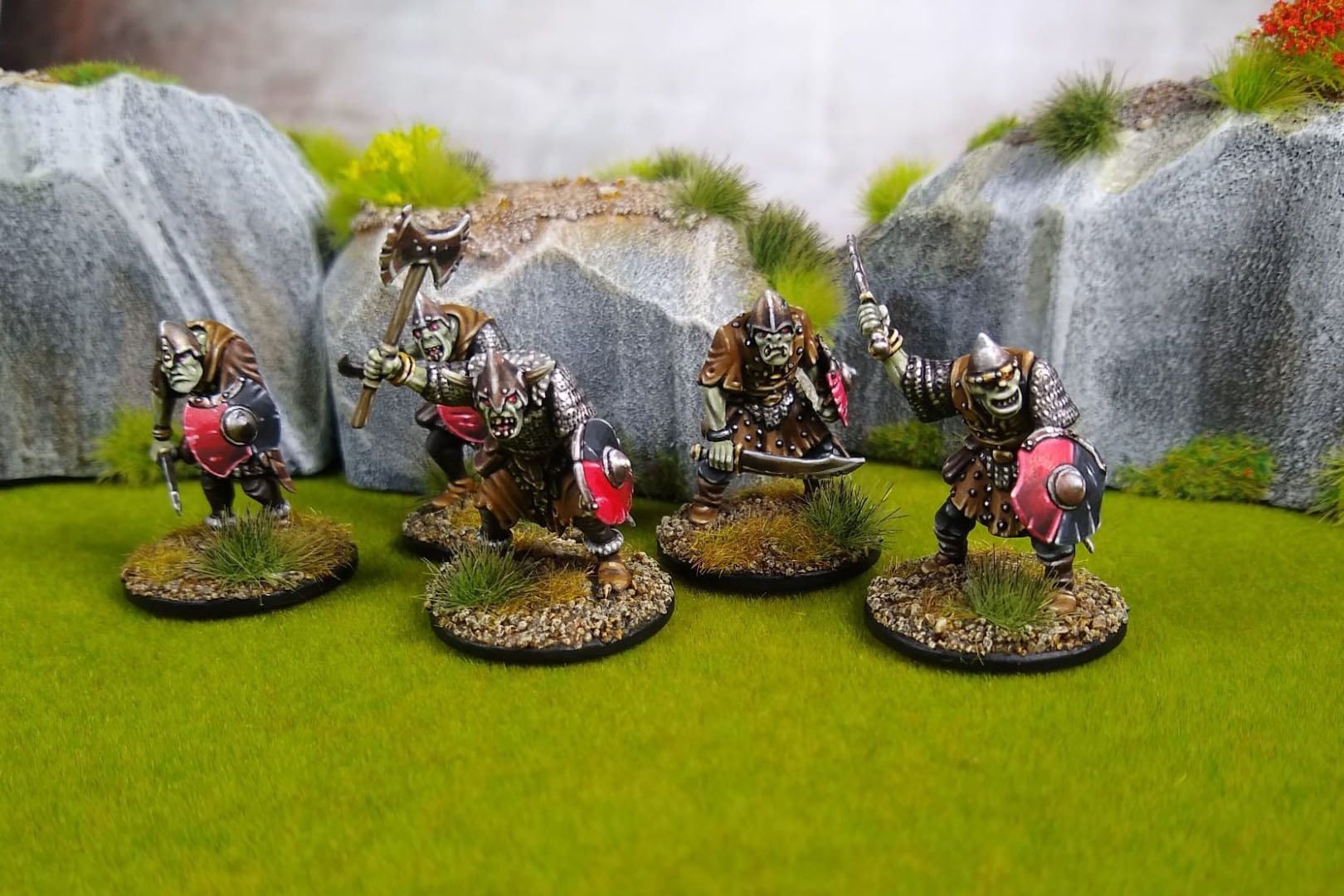
The solution comes in the form of a story that spans multiple game systems, allowing you to take your time getting to know the various protagonists and antagonists. Since the past ten years have enriched the hobby with a variety of fantasy skirmish games and solo-play systems, it’s entirely possible to paint smaller groups of miniatures for different systems and still play occasionally.
Necromunda Roleplay – What happened in the Underhive?
When Games Workshop showed Necromunda: Roleplay during this year's Big Autumn Preview, it looked like a done deal, and I was instantly reminded of Inquisitor, the 54mm scale Specialist Games title from 2001, or rather of the later community adaptation known as Inq28 / Inquisimunda, which moved the entire game into 28mm scale and quite often into the Underhive.
The announcement of eighteen miniatures, a 224-page rulebook, character creation, two adventures, an Arbitrator's screen, handouts and dice brought the presentation close to a classic roleplaying game, as you know it from Dungeons & Dragons or, in Germany, from Das Schwarze Auge (The Dark Eye), but set in the Underhive. The announcement, which combined the recently updated Necromunda range with a classic d100 roleplaying core, was labelled "coming soon" and then left without any further information. That is not how you present a concept; that is how you present a product that is about to hit the shelves.
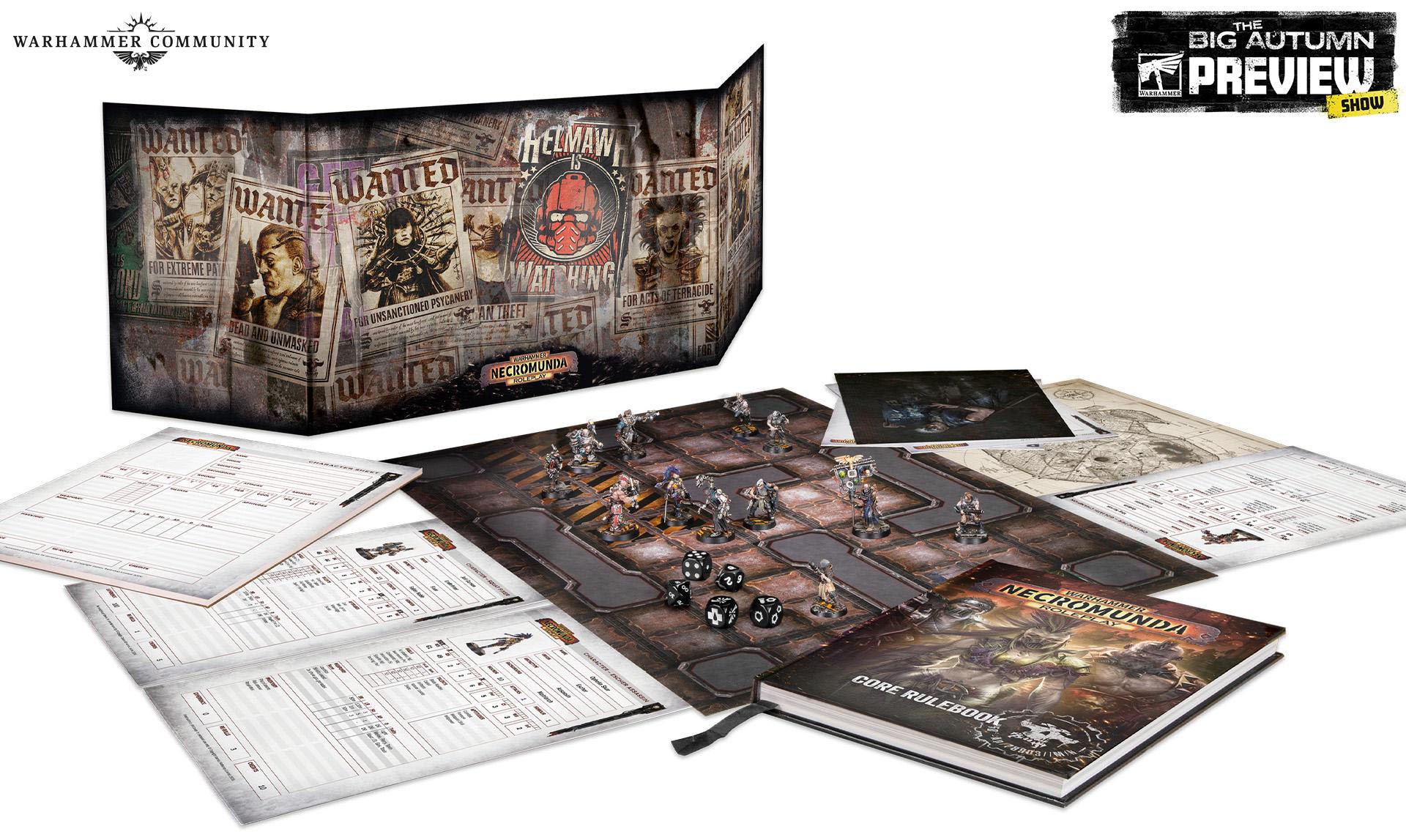
Shortly after, the Warhammer Community article returned a 404, and the game had been removed from the numbered roundup of the preview as well. The recording of the stream still showed it, but everything else was gone. Then, on Friday, October 23rd, a brief note appeared in an article about Necromunda in 2027: there won't be a Necromunda: Roleplay.
Games Workshop's own explanation is short. After careful consideration, they decided to focus their efforts on "even more great minis for the core game". All the miniatures shown in the Big Autumn Preview are still on their way and will be available for use in standard games of Necromunda. As I understand it, the miniatures will be repacked for the core game, while the printed RPG parts will simply be binned and written off.
There have been fumbled product launches in the past. There were issues with Warhammer Quest: Cursed City, and there were issues with the initial launch of Legions Imperialis. So what was behind it this time? Beyond the statement above, we do not know. My own guess was licensing, as Cubicle 7 holds the licence for Warhammer roleplaying games, from the Old World through the Mortal Realms to the 41st millennium. Licensing is a big deal for Games Workshop: in 2024/25 it brought in around 52.5 million GBP, roughly 8.5 percent of the group's 617.5 million GBP revenue (annual report). The current year is expected to land lower, at roughly 30 million GBP, but that is still far more than at the beginning of the 2020s, when licensing brought in single-digit millions. So licensing could have been an issue, but Cubicle 7 has dismissed this: screenshots of a statement by their head of marketing, as well as comments by Cubicle 7 on Facebook, state that they do not hold the licence for Necromunda as a roleplaying game.
There is also an unconfirmed rumour, from several different sources, that members of the board stopped the product because it would stray too far from Games Workshop being first and foremost a miniatures company, even though it had already been announced. I cannot verify this, but it is in line with the official statement above. From a business perspective, I can understand such a stance to some degree: adding an in-house product to a category that you license out could cannibalise and/or devalue the licence, and those numbers are important as you just read.
But don't worry: if you fancy the idea of miniature-based roleplaying in the 41st millennium, we are going to talk about options and alternatives in this article.
Warhammer 40,000 – JoyToy Imperial Fists Mk III Legionary
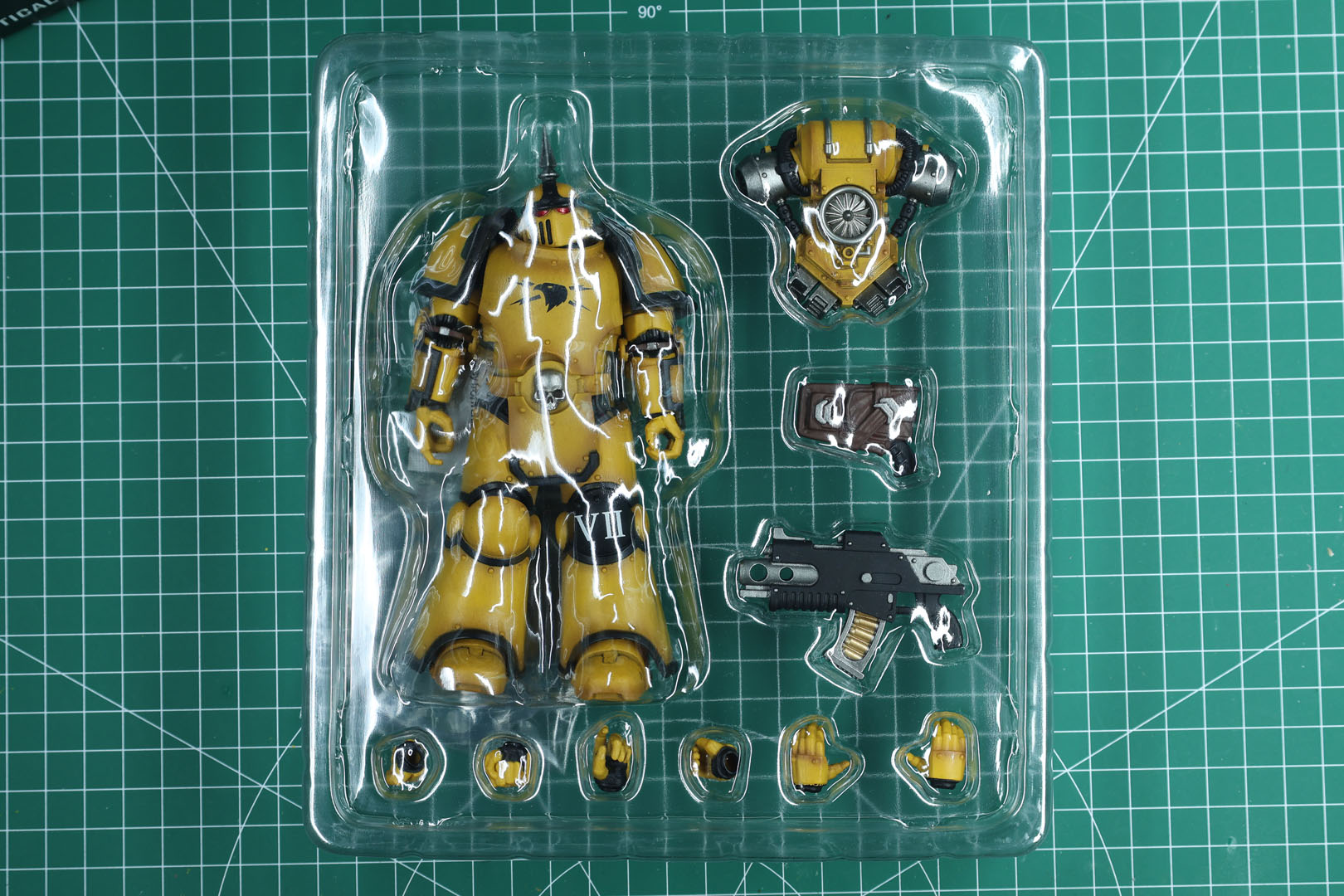
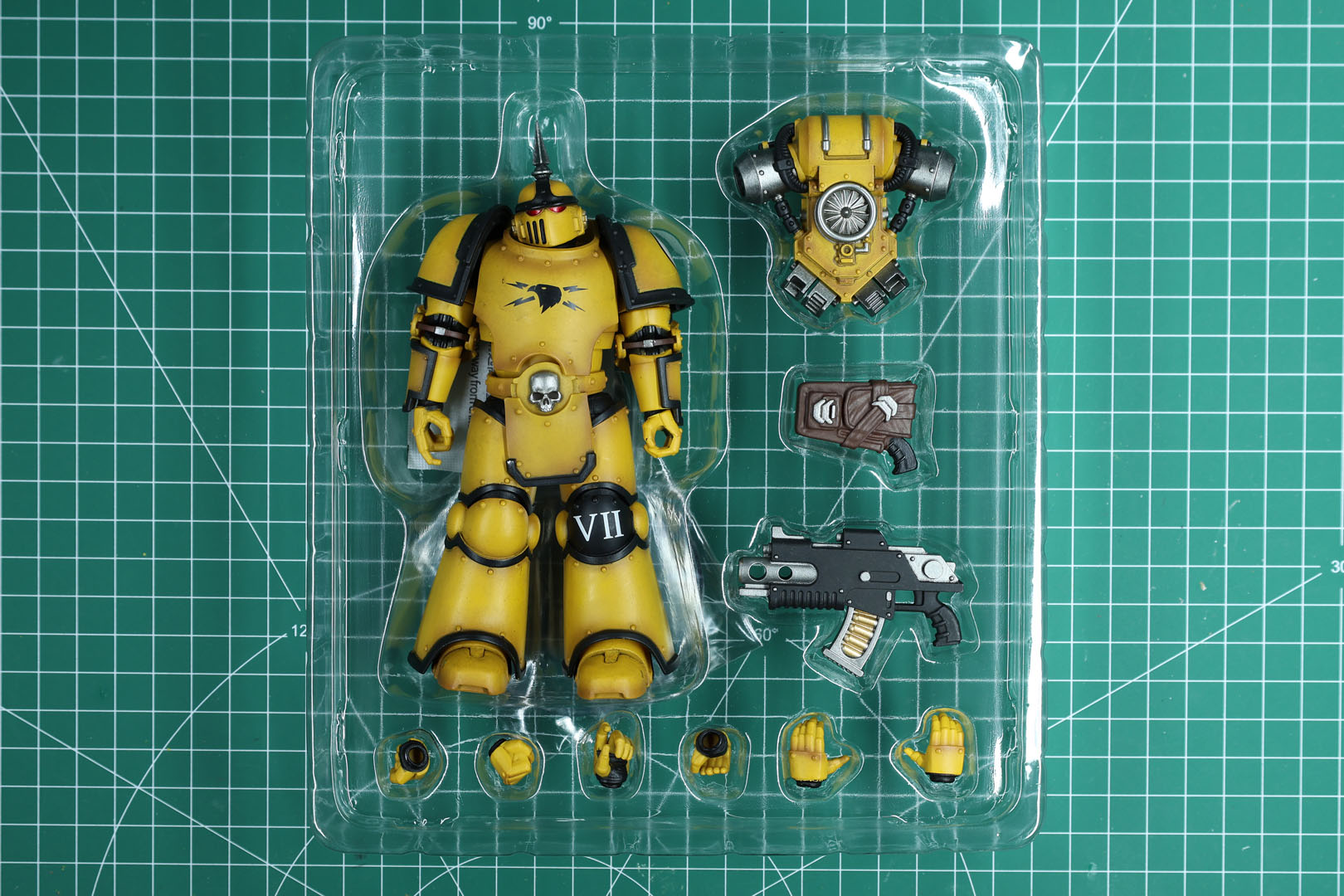
This JoyToy model has been on my wishlist for quite some time. Not the Legionary, a Breacher to be honest, but availability is an issue and prices vary quite a bit, so I pulled the trigger on a regular Imperial Fists Tactical Legionary in Mk III armour instead.
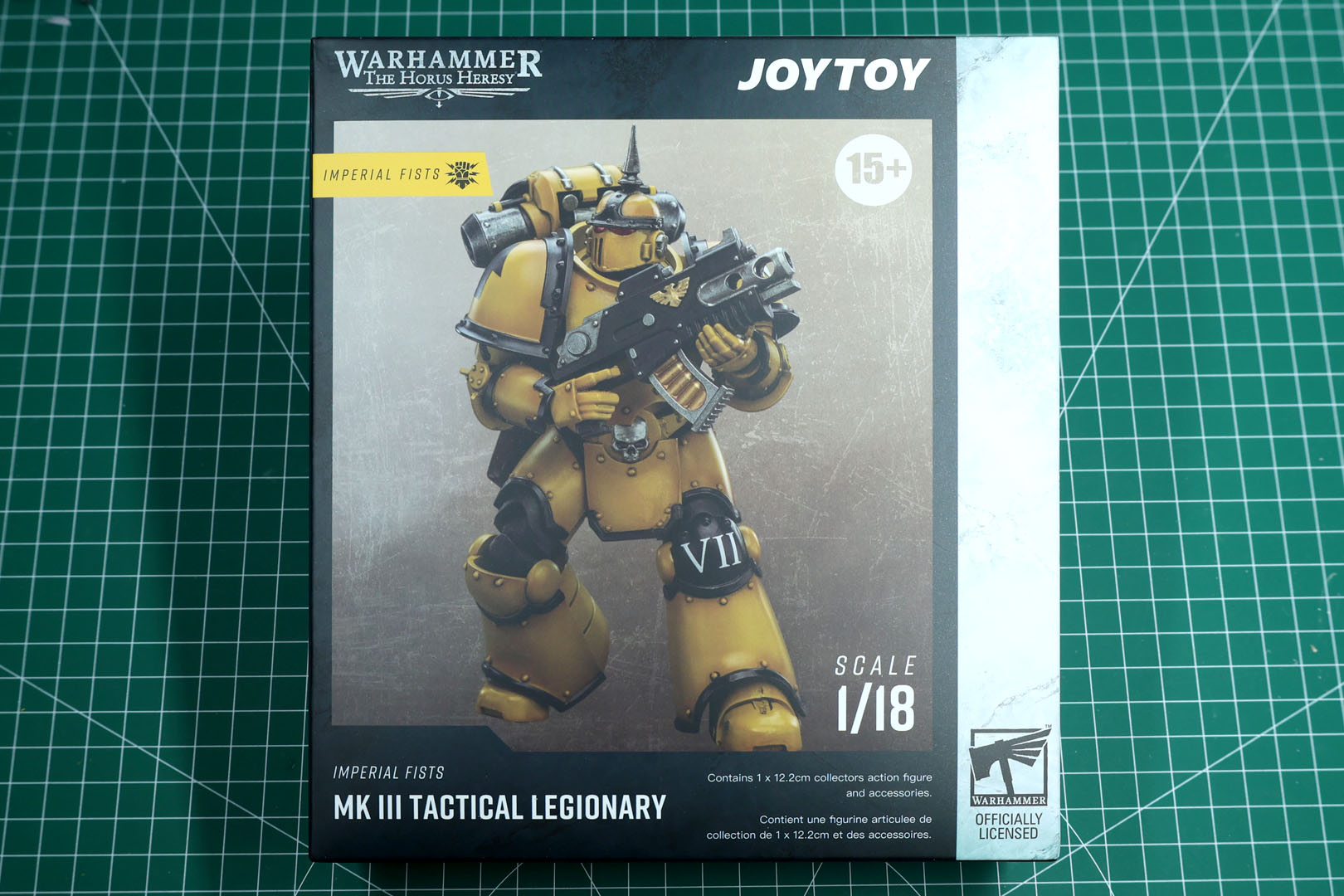
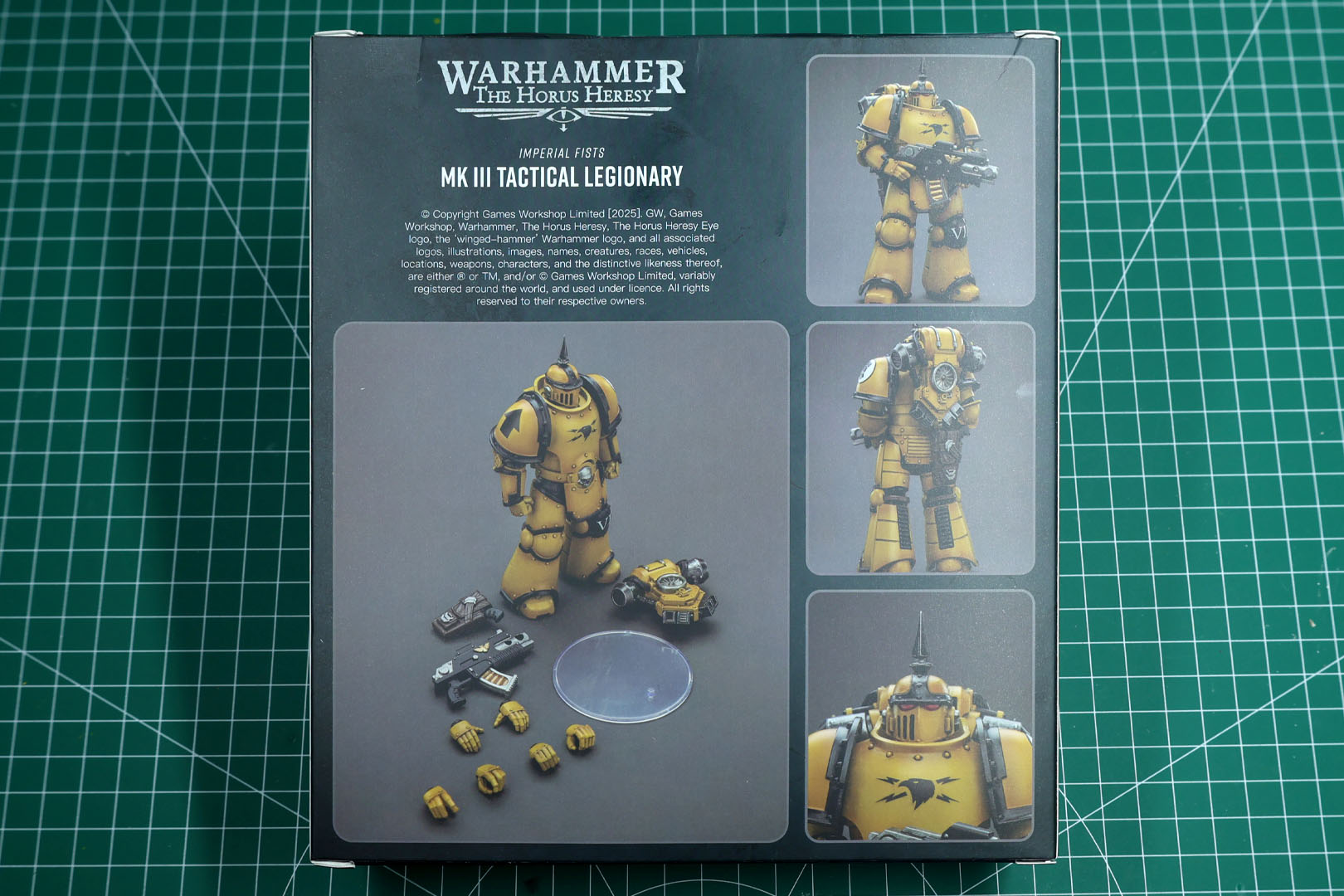
This is not my first larger-scale Warhammer figurine. I own a Funko Pop, a McFarlane Primaris Space Marine in the creator's variant (so you can paint it yourself), and an Ultramarine from the old Weta Workshop / Sideshow Collectible collaboration. And now one of JoyToy's, in 1/18 scale!
JoyToy is a Chinese collectibles manufacturer, founded back in 2015, and they've built their name on highly articulated, pre-painted 1/18 scale sci-fi and mecha action figures. Since 2021 they've held an official licence from Games Workshop, so we're talking about roughly five years now of JoyToy putting out proper Warhammer action figures. It started with a handful of Space Marines and has since grown into a massive range covering Primarchs, vehicles, Chaos Space Marines, Necrons, and most recently their first Age of Sigmar figures with the Blacktalons.
As I mostly collect regular tabletop miniatures and Lego, this is a bit of a side step, so I might not be familiar with all the proper terms for these. The Tactical Legionary comes with a bit less gear than some of the other figures available; it has a Phobos-pattern boltgun, four pairs of different hands, a holstered bolt pistol and a separate backpack. I paid roughly 30 EUR including shipping for this one. The Breacher costs about 60-80 EUR and comes with a breacher shield, bolt pistol, special weapon and an empty holster on top. There are further poses and variants for Sergeants or different weapons as well.
Pricing is honestly all over the place. There's an official MSRP from China, but most eBay listings I found actually ship from France, while on Amazon the offers come straight from China, with delivery times of up to three months. So it pays off to check where a listing is actually shipping from before you order.
Dead Man’s Hand – Standing Horses
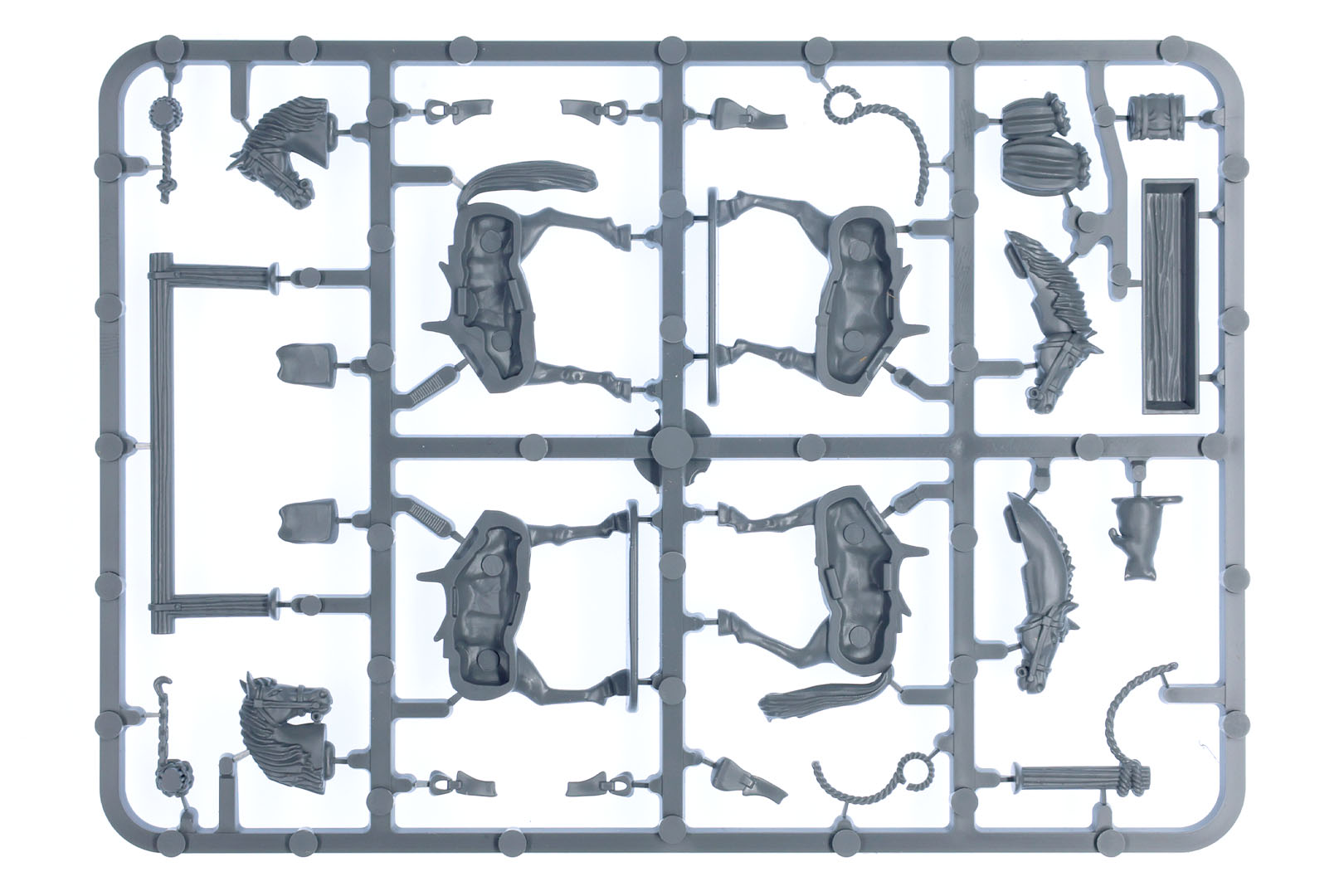
Great Escape Games has sent us one of their novelties for Dead Man's Hand. It is a scatter terrain sprue covering standing horses with a few extras, and we're going to take a closer look at it.
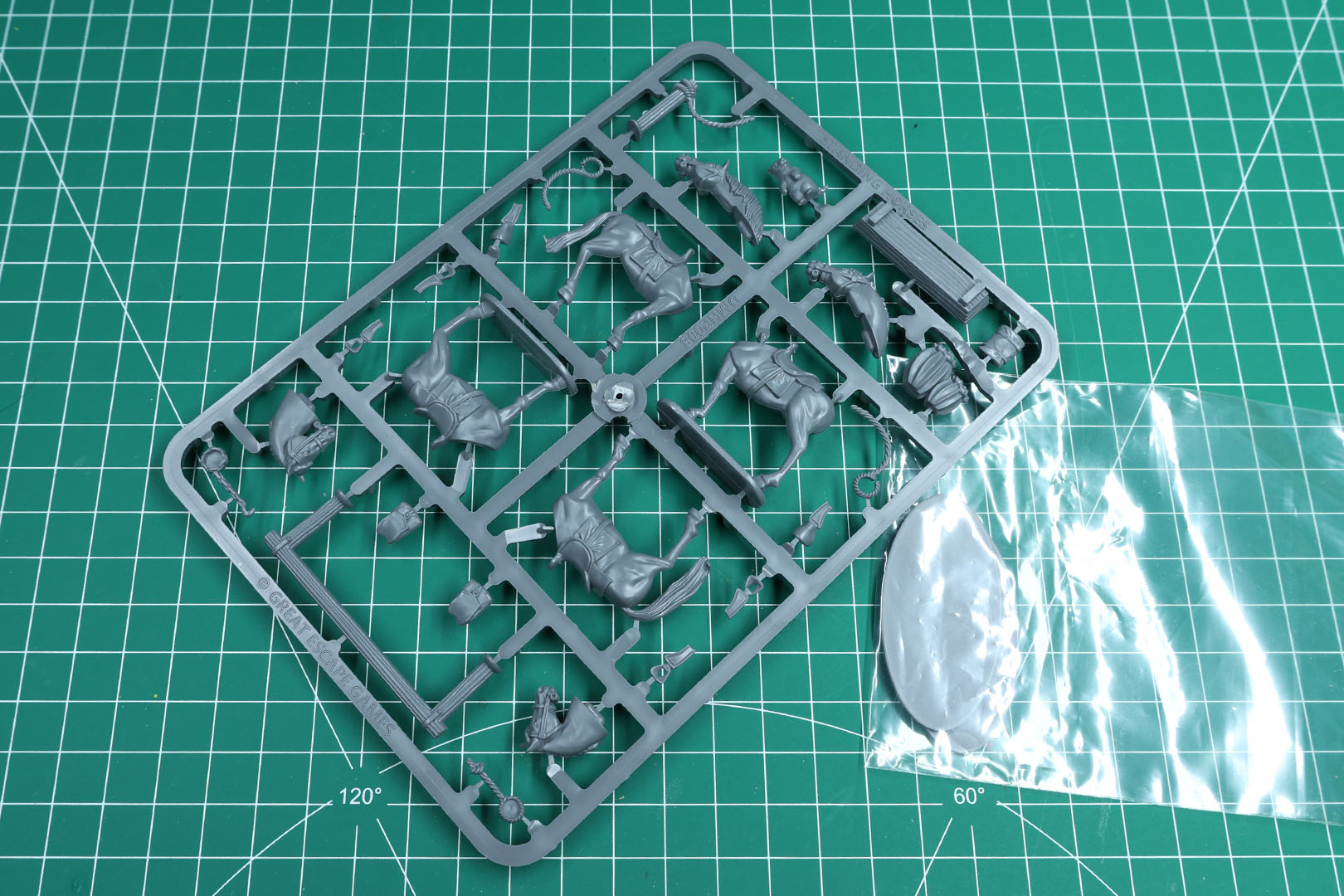
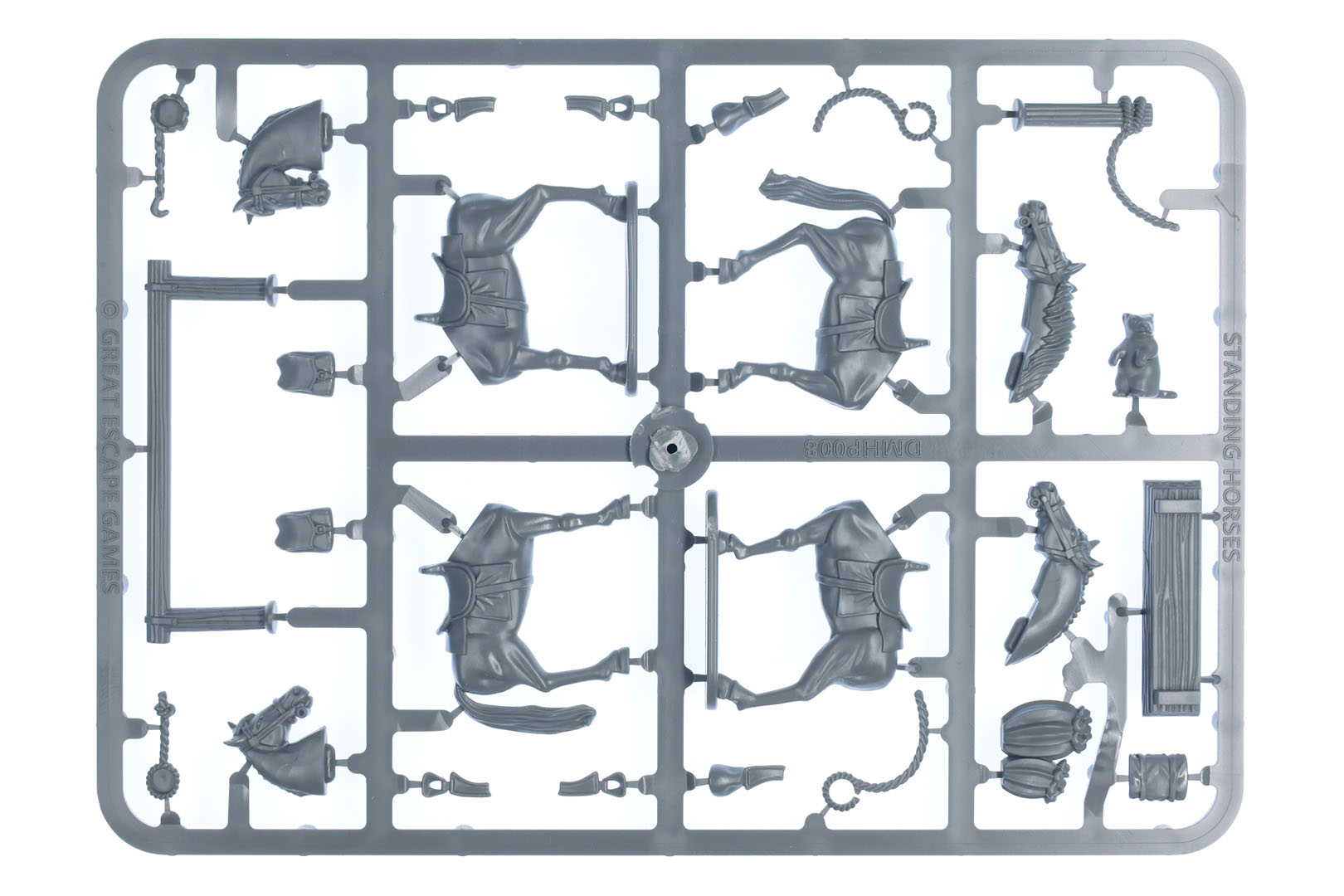
The Dead Man's Hand - Standing Horses set covers four standing horses (two sprues) at 13 GBP, and there are bundles of 3 sets for 33 GBP instead of 39 GBP and 5 sets for 50 GBP instead of 65 GBP. Each set includes two of the sprues shown below, along with another sprue of 5 oval bases.
Casting overall was solid. Crisp details, but mould lines were an issue, as they were quite present. This might be due to the fact that we got an early production sprue for the review and they are still dialing them in. Nevertheless, all the details were captured properly and removing mould lines is less time-consuming than filling in gaps.

Graal Miniatures – Marius Mules Legends of Rome
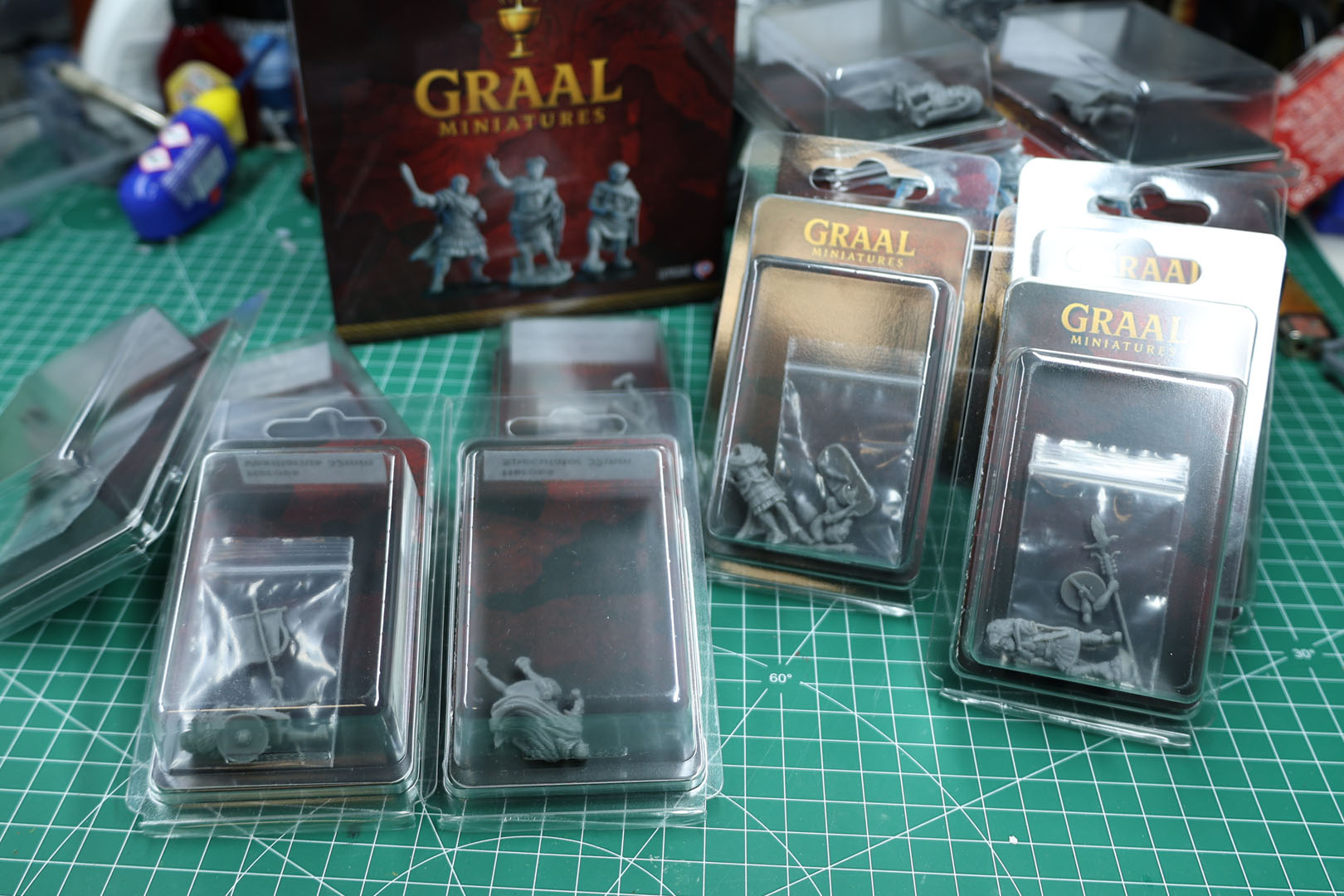
Earlier this month we gave you a short introduction to Graal Miniatures, and today we are taking a closer look at the infantry from the currently running Kickstarter, which covers Romans in 32mm scale. We have a few of the characters in blisters and a unit from one of the boxed sets on the desk.
Although Graal Miniatures also offers digital products via their Patreon, the crowdfunding campaign is purely about physical, resin 3D-printed models, intended for game systems such as Saga: Age of Caesars, Hail Caesar or Swordpoint.
But first, a bit of context, because Romans are a safe bet in tabletop gaming and are already available in 25-32mm from plenty of manufacturers, in metal as well as plastic. But not all Romans are the same. We will keep this brief and simplified to give you a quick overview, rather than turning it into a multi-volume master's thesis. Simply put, when people talk about Rome they usually mean the period from 509 BC to 476 AD (referring primarily to the Western Roman Empire, as the Eastern Roman Empire, or Byzantium, lasted until 1453). That is a span of roughly 1,000 years, and we will leave the Regal Period before the Roman Republic aside for now.
The Roman Republic, from 509 to 27 BC, can be divided into three eras: the Early Republic, in which Rome gradually conquered Italy, the Middle Republic with the Punic Wars and expansion across the Mediterranean, and the Late Republic, which includes Caesar, the Roman civil wars, the Marian reforms and the Gallic Wars. Even these three phases show differences in the soldiers' armour and weapons. The Republic was followed by the Imperial period (27 BC until the division of the empire into West and East in 395 AD), during which the Roman Empire reached its greatest extent in 117 AD. After that comes Late Antiquity, lasting until the end of the Western Roman Empire in 476 AD. To simplify things once more, in tabletop terms you can roughly split them into Republican Romans and Imperial Romans, which is where the most obvious visual differences lie. Set apart from those are the Late Romans of Late Antiquity, who look quite different again.
Warhammer Colour – Part 1
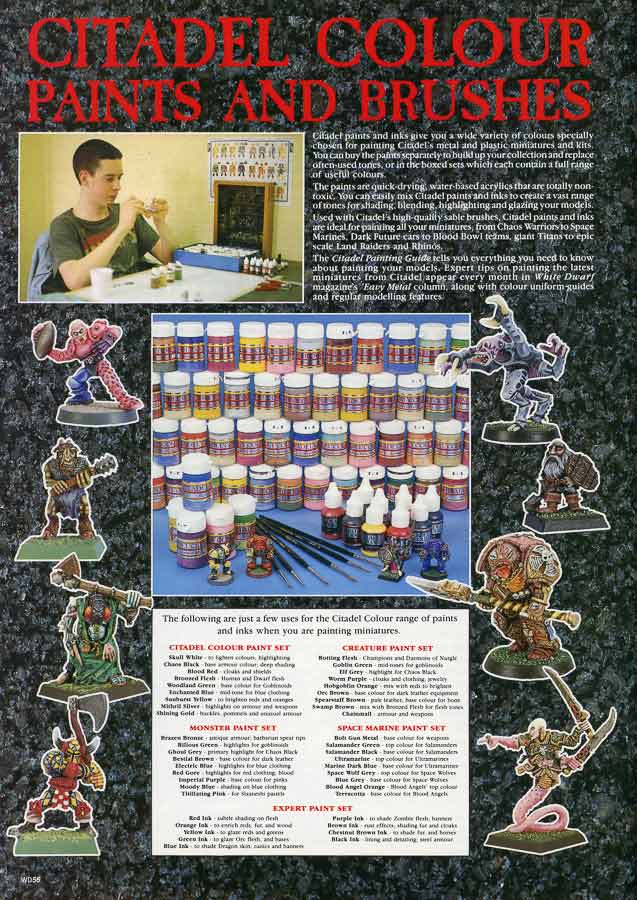
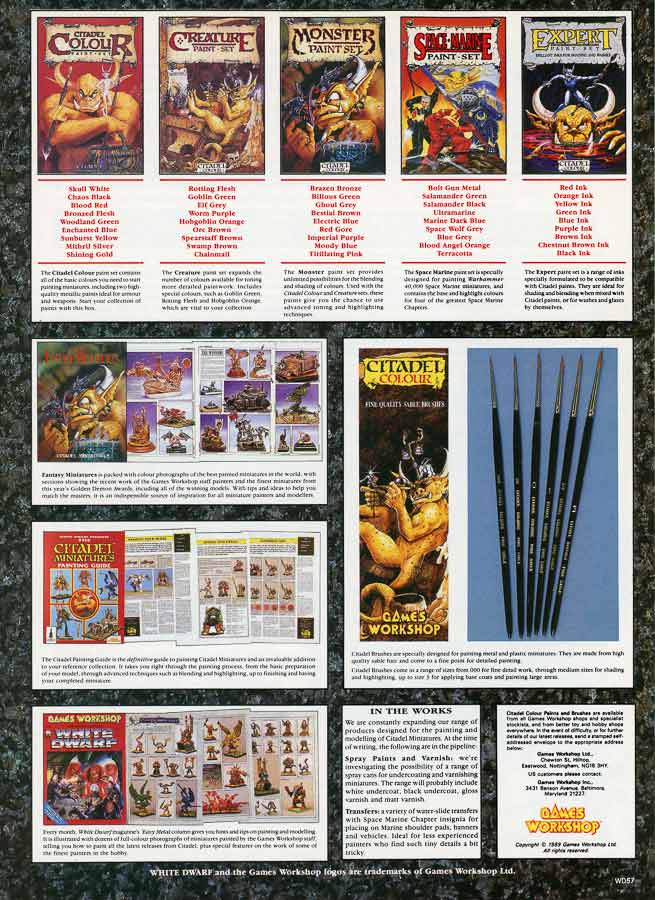
I wrote this article in 2019 when the Contrast paints came out. Since then, so much has happened on the Games Workshop paint rack that an update was overdue: far more Contrast colours, reformulated Shades and, since March 2026, a new name for the whole range: Warhammer Colour.

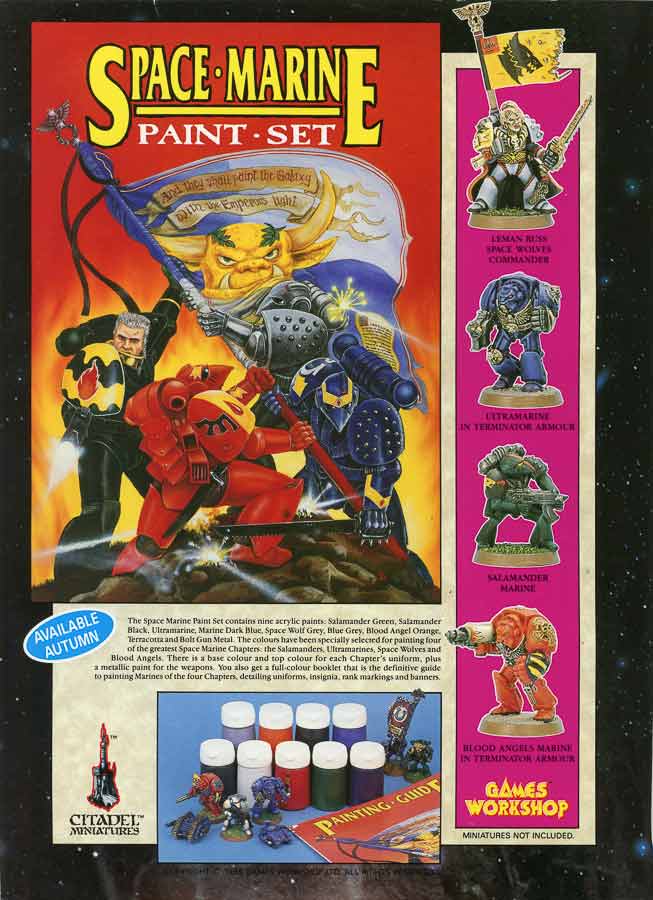
The Citadel name has been with Games Workshop since the early days, when the company was more of a publisher and distributor than a miniatures manufacturer. The label covered miniatures (back then alongside Marauder and a few other ranges), but also paints and brushes. Glazes, Technicals and the like were still a long way off, yet those first paint pots left as much of a mark on many of us as the metal miniatures themselves.
If you're interested in the early days, there's no way around Mike McVey, who shaped the painting studio and 'Eavy Metal like few others. Realm of Chaos 80s has a great interview with him, which also shows the very first Citadel paints in their tall, round pots. That pot shape lives on to this day with Coat d'Arms. You'll often read that Coat d'Arms made the Citadel paints back then. That's not quite right: they were produced by HMG Paints in Manchester, and Black Hat Miniatures later took over the formulas from that era for their own Coat d'Arms range. If the pots look familiar even though you weren't around at the time, that's because Privateer Press used the same design for their P3 range, and so did Wargames Foundry.
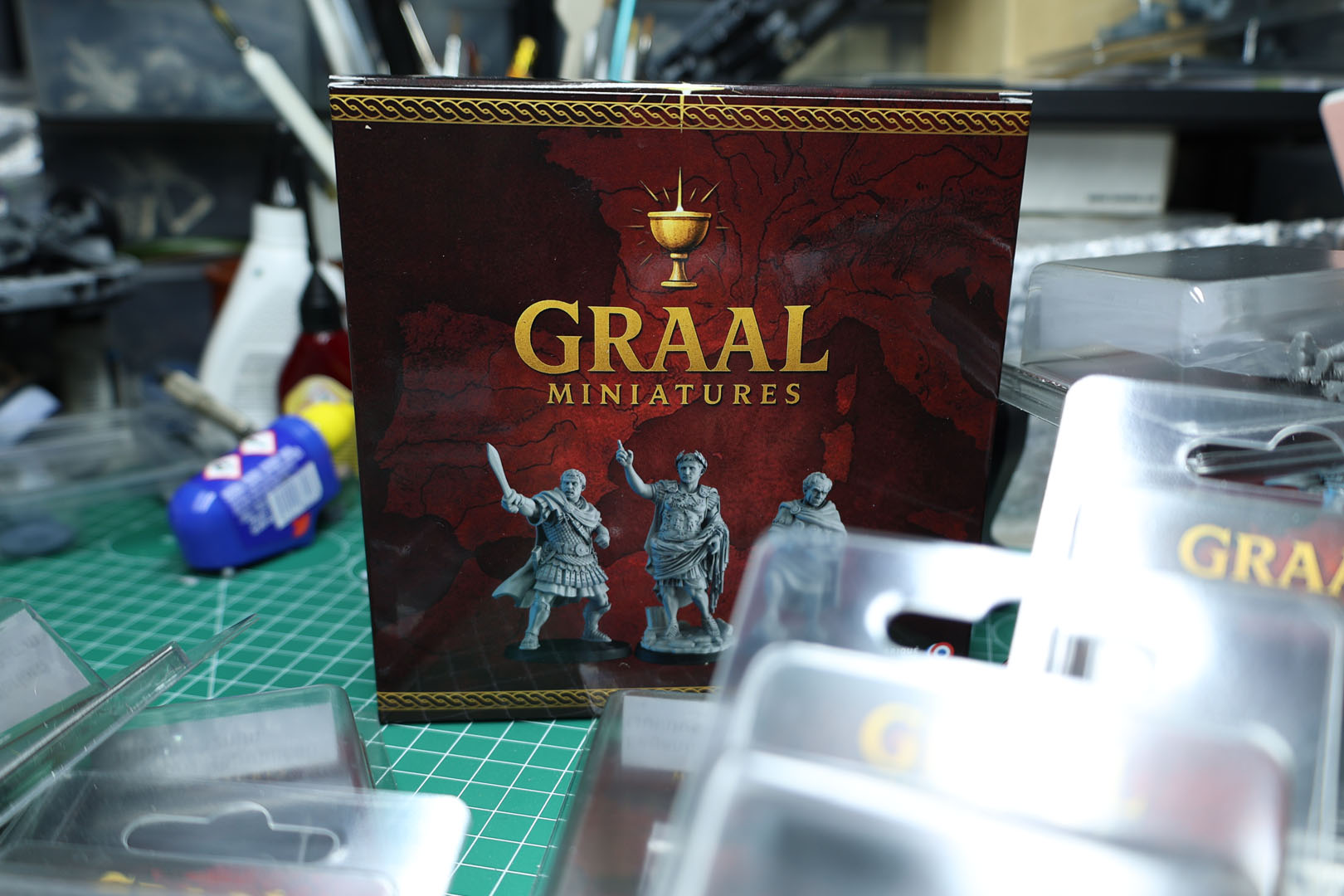
Graal Miniatures – Marius Mules Roman Kickstarter Teaser
Graal Miniatures is a new name, and Marius' Mules: Legend of Rome is its first project. Behind the label is Quentin Renaud, a French 3D artist who sculpts every miniature himself. The Kickstarter went live on Tuesday, 6 October, and Quentin was kind enough to send me a broad selection of models in advance, from regular legionaries to several character models.
Which Romans?
The range covers the late 2nd century BC, a period that rarely gets attention in 28mm. This is the army of Gaius Marius during the wars against the Cimbri and Teutones, the moment the Republic's legions began turning into the professional force that would later conquer Gaul. The name is a nod to the nickname Marius' soldiers earned for carrying their own kit on the march.
The range is designed as a complete army rather than a handful of display pieces. It includes legionaries, cavalry, auxiliaries, officers and historical characters. A command group with centurion, signifer and tubicen is part of it, and characters like Quintus Servilius Caepio and Lucius Cornelius Sulla show where the range is headed. Poses and equipment are modular, so your units won't look like twenty copies of the same man.
Asmodee Event Exclusive at SPIEL 2026 for Star Wars Legion and Marvel Crisis Protocol
Two Convention Exclusives at SPIEL 2026: Concept Boba Fett and Mephisto
Asmodee is bringing two of this year's Atomic Mass Games convention exclusives to SPIEL in Essen, and for once you don't have to sprint to the booth on Thursday morning to get one. Both miniatures can be reserved in advance through a ticket system, so the usual first come, first served scramble is off the table.
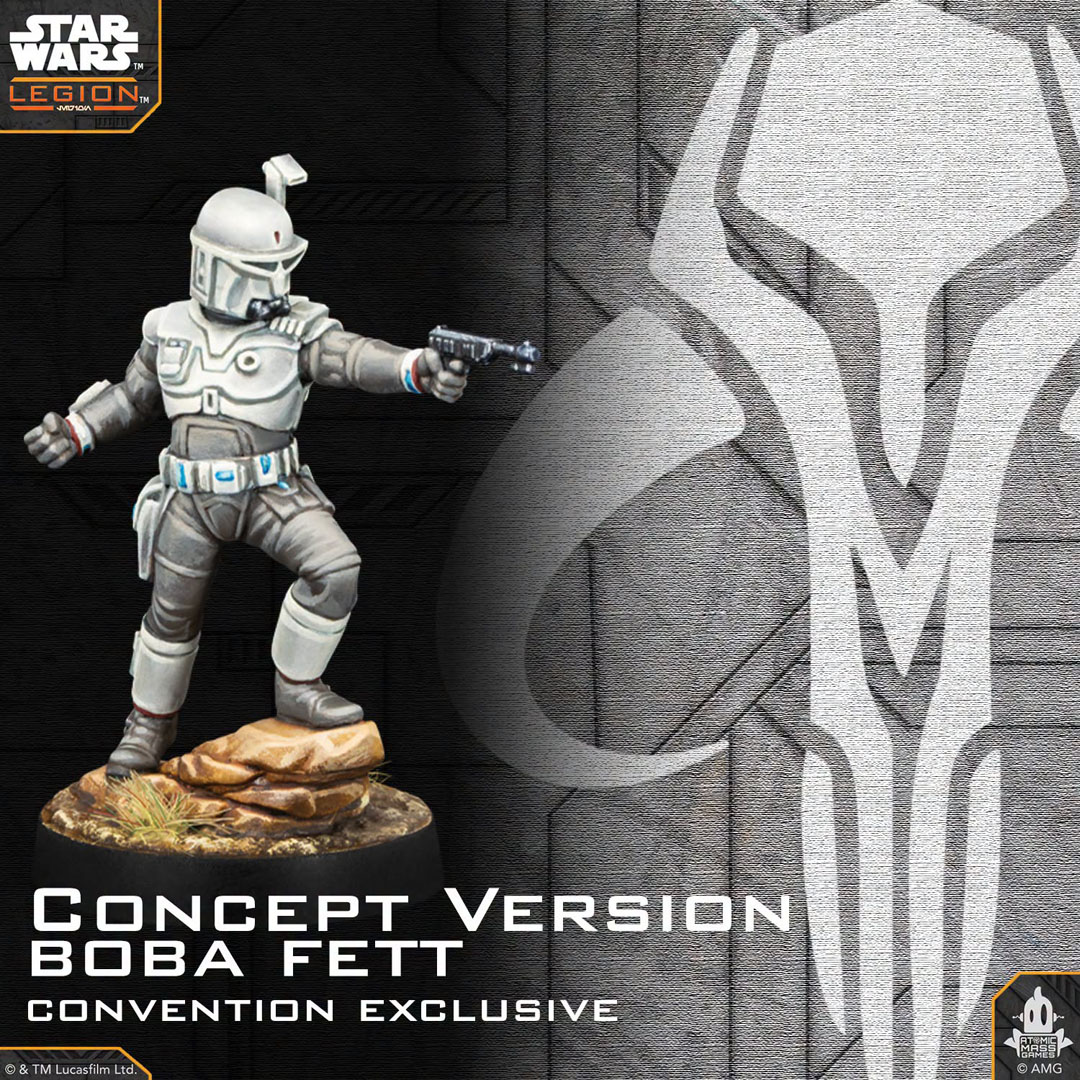
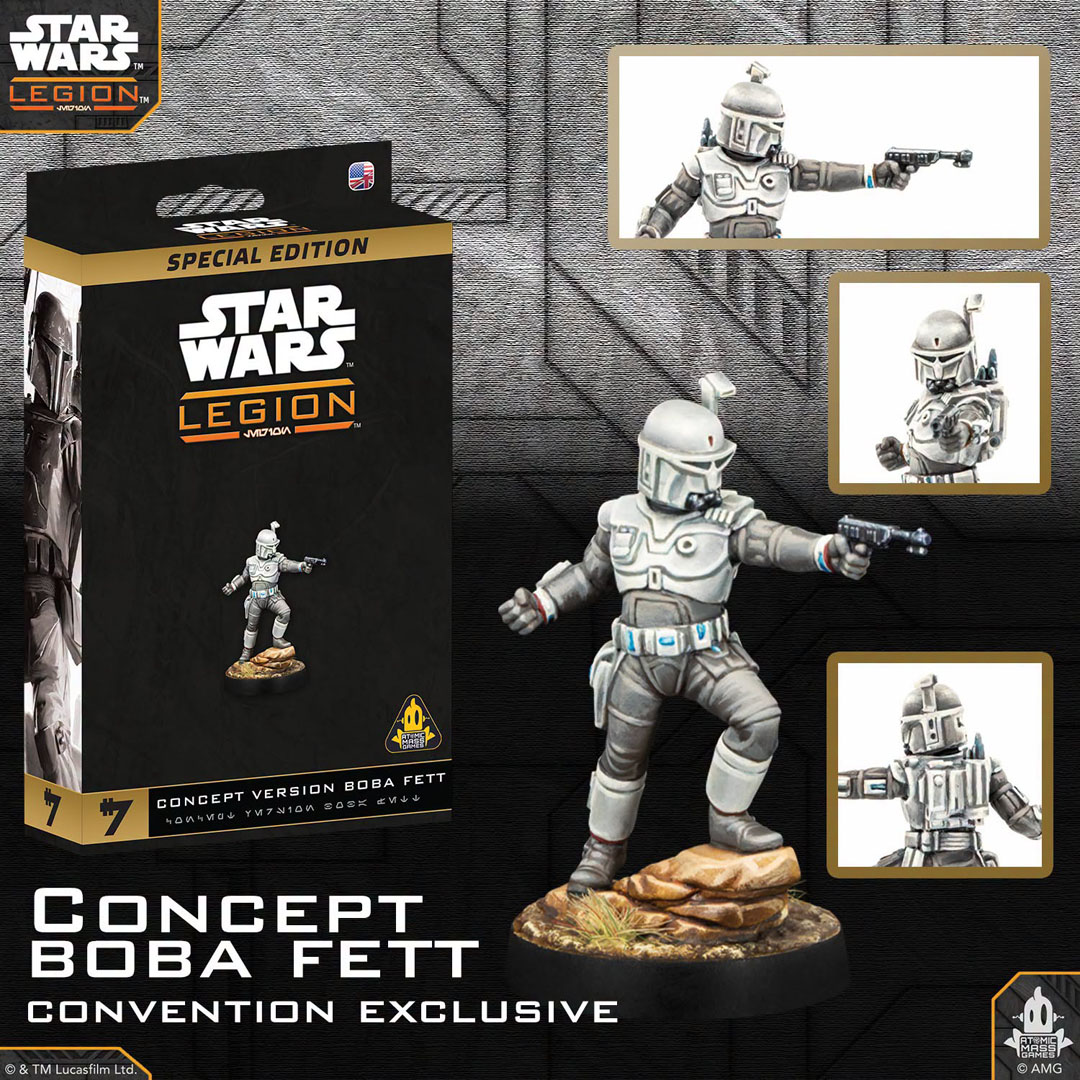
Star Wars: Legion, Concept Boba Fett
Before Boba Fett became the battered green bounty hunter we know from The Empire Strikes Back, he was a very different design. This exclusive recreates Fett as he appeared in the original concept art for Empire Strikes Back, in the all-white look of the early design. The resin miniature comes with two helmet options, showing how the design evolved from concept to screen, plus foil game cards. It is meant as a stand-in for the regular Boba Fett in your games, so there are no tokens in the box. Price: 40 EUR.
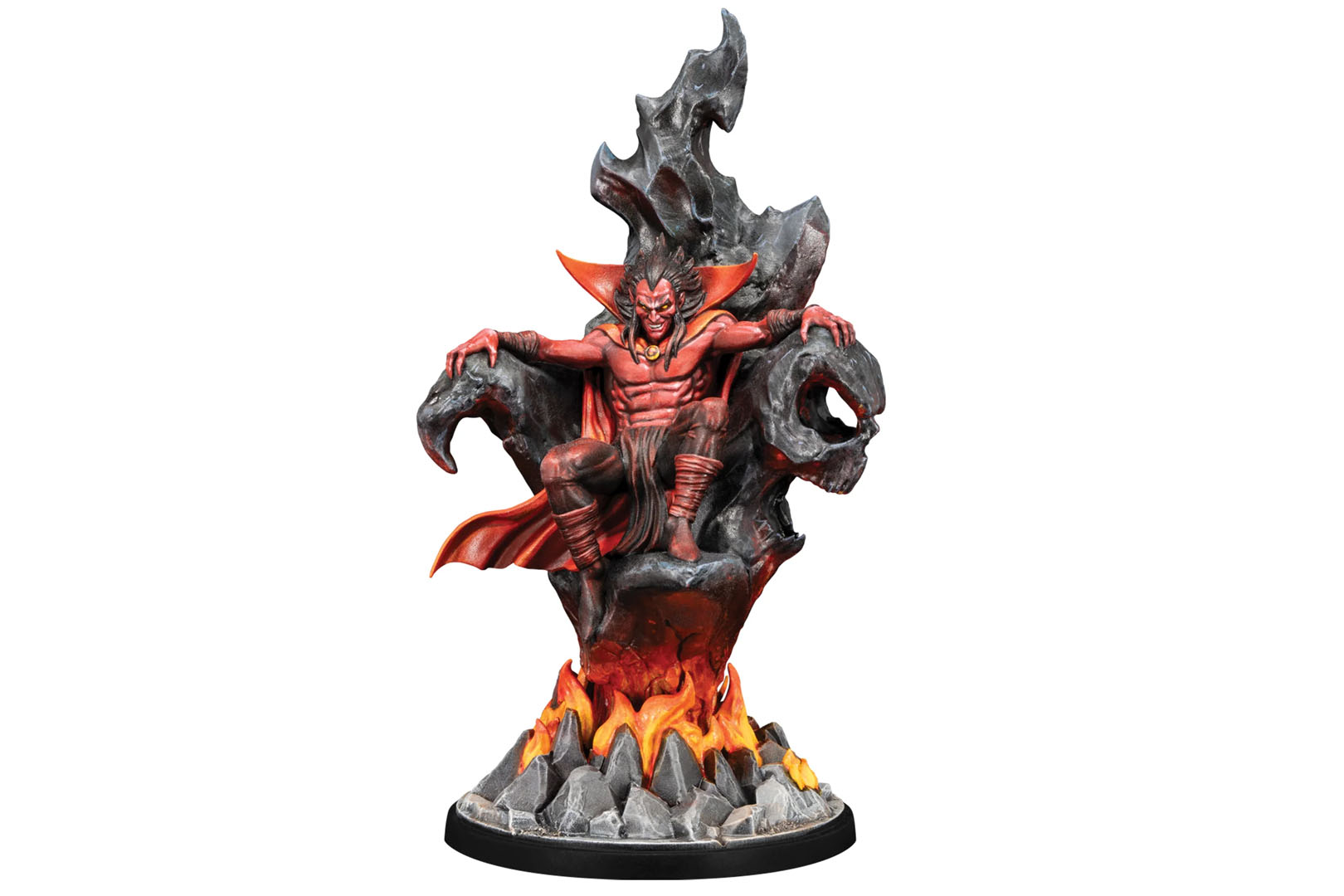
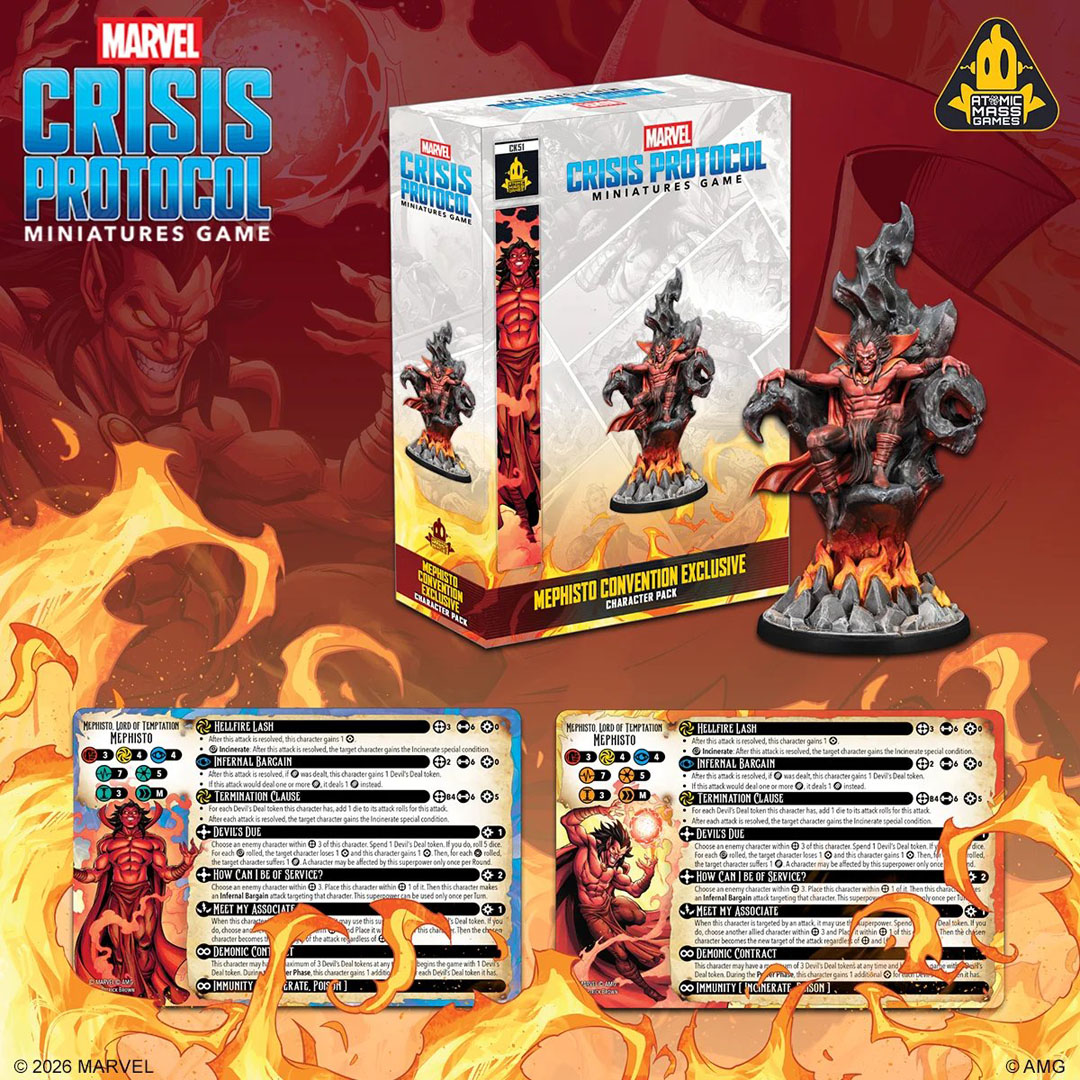
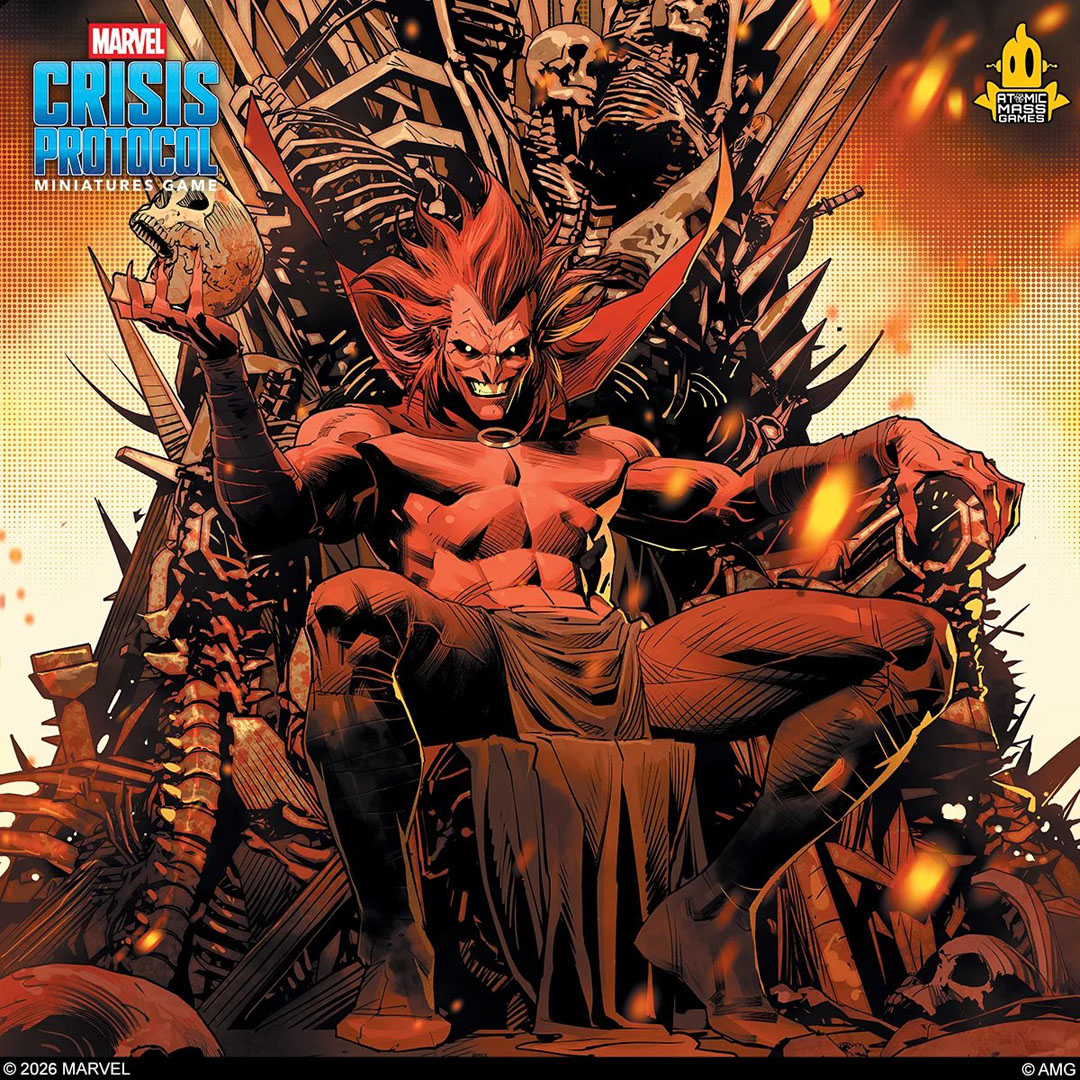
Marvel: Crisis Protocol, Mephisto
Warhammer Fantasy – Through the Ages Part 1
As the article on Warhammer 40k through the ages was so popular, I decided to write something similar on Warhammer Fantasy. Actually this draft has been sitting on my desk for a while now, and I finally pulled through to finish it.
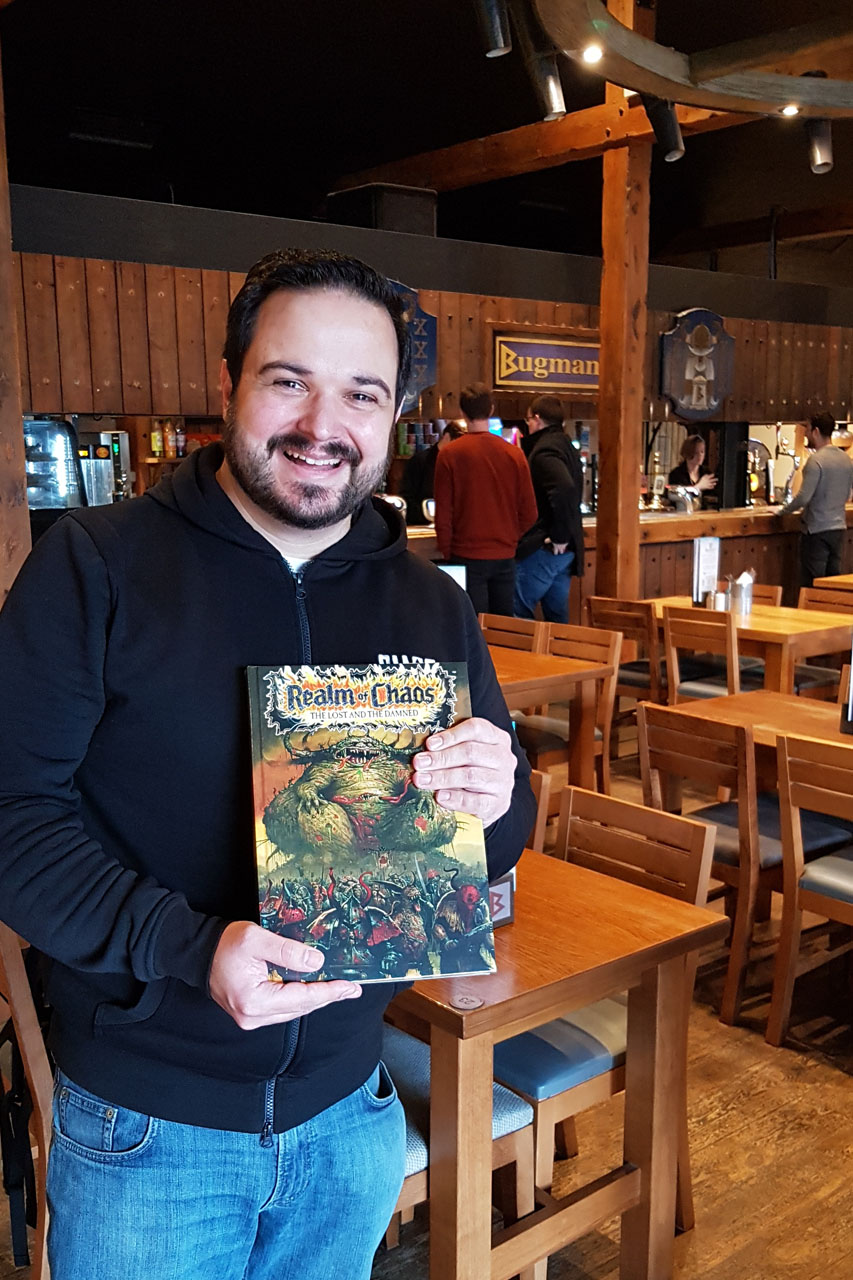
On November 15 of 2019 an article on Warhammer Community created a lot of buzz - Old World? New Warhammer! With a teaser the day before on social media, everything comes round again, even squares.
The post announced the return of the Old World of Warhammer Fantasy, a game system and lore that had been discontinued in 2015 with the End Times and replaced by the new brand of Age of Sigmar. But why was this the case? For that, we have to go back to where Warhammer Fantasy started. It is quite the journey, so I split it into two parts: part one covers Warhammer Fantasy Battles from 1983 to the End Times, part two covers Age of Sigmar and the return of The Old World.

1983 Warhammer - The Mass Combat Fantasy Role-Playing Game (1st Edition Logo)
The first edition of Warhammer was released in 1983. The idea behind it was to create a rule set, which made it possible for role players to use their miniatures in skirmishes and mass combat. There are multiple books on the origins of Games Workshop and Citadel Miniatures, for example Dice Men or Talking Miniatures, but to put it briefly Games Workshop was a distributor of role playing games and Citadel Miniatures a company that produced Ral Partha miniatures under license in the UK until 1984 and their own unique ranges as well. To promote sales of these miniatures set of rules was needed and Rick Priestley and Richard Halliwell, who wrote the Reaper Fantasy Wargame Rules in the late 70s, would be the authors of the first edition of Warhammer, together with Bryan Ansell.
Warhammer Fantasy – Through the Ages Part 2
In part one we followed Warhammer Fantasy Battles from three little booklets in a white box in 1983 to the End Times, when Games Workshop did the unthinkable and destroyed its own world. But the story didn't end there. It split into two paths: Age of Sigmar, the new game that replaced Warhammer Fantasy in 2015, and The Old World, which brought regiments and square bases back in 2024. So let's pick up where we left off.

2015 Warhammer - Age of Sigmar
All of this was answered in July 2015 with the release of Warhammer - Age of Sigmar. The regiments were gone, square bases were gone, the lore was gone ... well, altered and "further" developed. In the beginning there weren't even points. Balance was left to scenarios and sudden death conditions for uneven armies, until the General's Handbook introduced matched play points in 2016. The game was more of a platoon sized skirmisher, than the mass combat experience of Warhammer Fantasy Battles. But that was the point, the world had changed. Games Workshop transferred a lot of the experience they made with 40k towards their new fantasy universe.
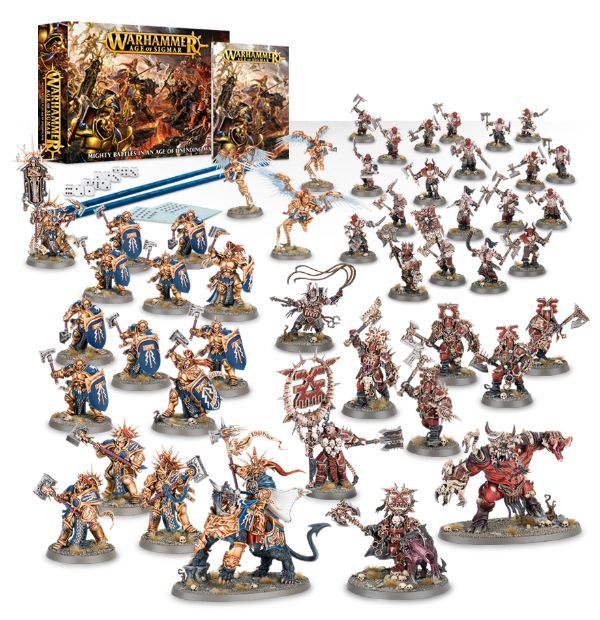
2015 Warhammer Age of Sigmar - 1st Edition Launch Box
The first starter set pitted the Stormcast Eternals against the Khorne Bloodbound. The core rules came on just four pages and were free to download, square bases became round, and army books were replaced by warscrolls – one profile per unit with everything you need. An idea that 40k adopted two years later with the datasheets of its 8th edition.
Like us on Facebook

Follow me on Instagram

Categories
- battle report (5)
- events (212)
- fantasy (613)
- General (162)
- historical (651)
- Little Big Adventures (4)
- offtopic (5)
- reviews (556)
- science fiction (716)
- showroom (108)
- terrain (120)
- work-in-progress (424)
Blogroll










Tags
Archives
Recent Comments
- on Legions Imperialis – Warlord Titan with Volkite Destructor and Macro-Gatling Blaster
- on Legions Imperialis – Warlord Titan with Volkite Destructor and Macro-Gatling Blaster
- on Necromunda Roleplay – What happened in the Underhive?
- on Horus Heresy – Mechanicum Adsecularis Tech-thralls
- on Warhammer Fantasy – Through the Ages Part 1